White Crappie vs Black Crappie Differences
One of the most common questions I get from fellow Mississippi anglers, especially those new to crappie fishing or even seasoned folks trying to nail down their catch, is how exactly to tell the difference between a white crappie and a black crappie. It can be tricky, as at first glance, they might seem pretty similar when you pull them from the water. But understanding these distinctions isn't just about showing off your fish ID skills; it’s actually crucial for things like adhering to specific regulations that might vary between the two species, or even adapting your fishing techniques to where each prefers to live. This guide is here to walk you through all those subtle (and not-so-subtle) cues so you can confidently identify your crappie catch.
The Tale of the Spots: Visual Identification
When you've got a crappie on the line, your first instinct might be to just enjoy the fight. But once it's in the boat, take a moment to really look at it. There are some key visual markers that will help you tell if you've landed a white crappie or a black crappie. It's often easier than you might think once you know what to look for, and it can save you a headache later when you're tallying up your Mississippi Creel and Size Limits.
Spotting the Difference: Body Markings and Coloration
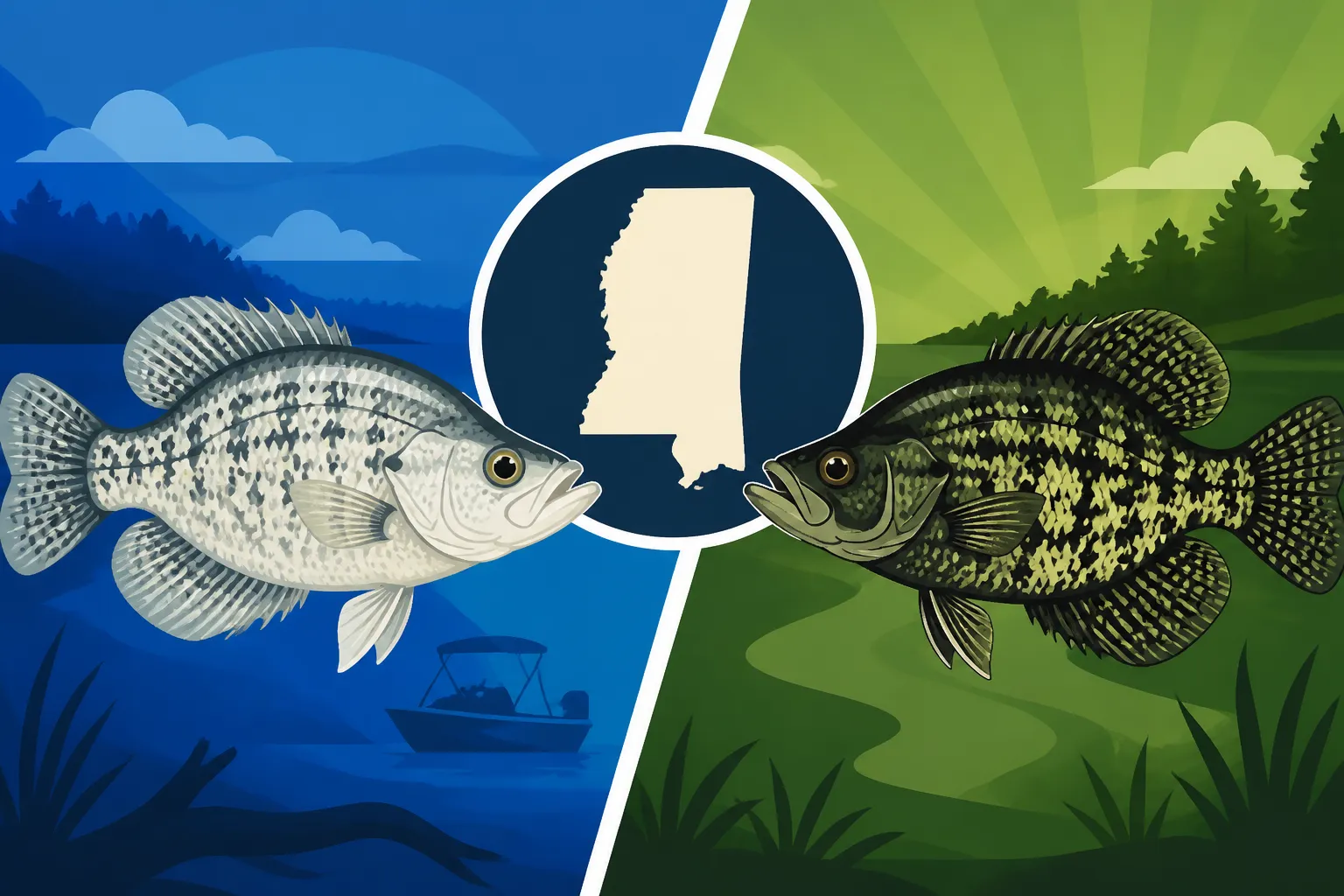
The most obvious clue, and usually the first thing anglers notice, is the pattern of the spots on the fish's body. White crappie, true to their name, tend to have a lighter, more silvery body color, often with distinct vertical bars or stripes that extend down their sides. These bars are usually darker than the rest of their body and give them a somewhat "zebra-striped" appearance, though sometimes these bars can be quite faint, especially in very clear water or depending on their mood. Their overall body might have a mottled appearance with some darker spots, but the vertical bars are the giveaway.
Black crappie, on the other hand, are typically darker overall, often with a more uniform, irregular speckling of black spots all over their body. Think of it less like stripes and more like someone took a salt-and-pepper shaker and sprinkled it liberally. These spots are usually randomly distributed, without forming any clear vertical patterns. Their base color can range from silvery-green to a much darker, almost olive-green or brownish hue, depending on the water clarity and vegetation of their environment. If you're comparing two crappie side-by-side, the presence or absence of those distinct vertical bars versus the overall "peppered" look will be your strongest indicator. Sometimes, if a black crappie comes from very murky water, its spots might be less defined, but the lack of vertical bars usually remains constant.
Dorsal Fin Spines: A Clear Cut Indicator
Beyond the spots, there's a highly reliable anatomical difference that even a novice can use to tell the two species apart: counting the spines in their dorsal fin. This is perhaps the most definitive way to differentiate them, as it's a structural feature rather than a variable coloration. The dorsal fin is the fin located on the fish's back.
White crappie consistently have six rigid spines in their dorsal fin. These spines are easy to feel if you gently run your finger along the leading edge of the fin (be careful, they're sharp!). Count them carefully, and if you get six, you've got yourself a white crappie. This characteristic is so consistent that it’s often used in scientific identification. It's a quick, unmistakable check that can clarify any doubt caused by faded spots or unusual coloring.
Black crappie, in contrast, will have seven or eight dorsal fin spines. While it's slightly more variable (seven or eight instead of a consistent six), either count immediately tells you it's not a white crappie. So, if you count more than six spines, you can be confident you're holding a black crappie. This little trick is invaluable, especially when you're out on the water and need a fast, reliable identification. It's a key piece of information you'll often find in a good Crappie Identification Guide for Mississippi Anglers, which you can often find great versions of on Amazon, packed with helpful diagrams.
Body Shape and Mouth Structure Nuances
While the spots and dorsal fin spines are the primary identifiers, there are also some subtle differences in their body shape and mouth structure that can become more apparent with experience. White crappie tend to have a slightly more elongated, torpedo-shaped body compared to the black crappie. Their body depth, from back to belly, might seem a bit less pronounced, giving them a more streamlined profile. This can be very subtle, so it’s not as reliable as the dorsal fin count, but if you handle enough of both, you’ll start to notice it.
The mouth structure also presents a minor difference. In white crappie, the length from the eye to the front of the upper lip is usually longer than the diameter of the eye itself. This gives them a slightly more "pointed" or elongated snout appearance. Black crappie, conversely, tend to have a more compressed body and a shorter distance from the eye to the tip of the upper lip, often equal to or less than the diameter of the eye. Their overall head shape might appear a bit more blunt or rounded. These subtle distinctions become easier to spot once you've gained some familiarity with both species. For example, some fishing enthusiasts swear that the black crappie seems a little "chunkier" overall, especially when you compare fish of similar lengths.
Habitat Preferences and Behavioral Traits
It's not just about how they look; where you find them and how they behave can also give you clues as to whether you're dealing with white crappie or black crappie. Understanding their environmental preferences is a huge part of successful Crappie Fishing Techniques for Mississippi Lakes. Knowing which species prefers which type of water or cover can help you decide where to cast your line.
Water Clarity and Cover Choices
One of the most significant differences between white and black crappie lies in their preferred habitat, especially concerning water clarity. White crappie are generally more tolerant of turbid or murky water. You'll often find them thriving in the often-stained waters of larger rivers, flood-control reservoirs, and shallower, more nutrient-rich lakes with silty bottoms. They don't seem to mind less-than-crystal-clear conditions, and their lighter coloration and vertical bars might even provide better camouflage in such environments. They tend to relate to open water structures like ledges, creek channels, and submerged timber.
Black crappie, on the other hand, typically prefer clearer, cooler waters with abundant submerged vegetation or brush piles. Think of your classic clear-water lakes, oxbow lakes, and reservoirs with good visibility. They are often associated with weeds, lily pads, standing timber, and brush where they can ambush prey. Their dappled pattern provides excellent camouflage among dappled sunlight and shadows in these clearer, more vegetated environments. This distinction is so prevalent that if you’re fishing a gin-clear lake with lots of hydrilla, you’re far more likely to encounter black crappie than their white cousins. Conversely, if you’re on a big, muddy river, expect to see more white crappie. This knowledge helps immensely in narrowing down your search, influencing your approach from boat position to lure choice.
Schooling Habits and Feeding Tendencies
Both crappie species are known to school, but their tendencies can differ slightly. White crappie often form larger, more loosely associated schools, especially in open water during feeding frenzies or when suspended over deeper structures. They might be found roaming extensive flats or following creek channels, making them a prime target for Trolling for Crappie on Mississippi Reservoirs. When you find one white crappie, there's a good chance many more are nearby, often spread out over a wider area. They tend to be more active feeders in slightly warmer waters, particularly during the pre-spawn and post-spawn periods.
Black crappie tend to form tighter, more structured schools, especially when relating to specific cover. You might find them tightly packed in a brush pile, around a stump, or nestled in dense lily pads. They are often more ambush predators, holding tight to cover and darting out to snatch unsuspecting baitfish or insects. Their preference for cover often makes them excellent targets for specific Jig Fishing for Crappie techniques, where you methodically work a bait through structure. While both species will feed on small fish, insects, and crustaceans, black crappie might lean more towards insect larvae and aquatic invertebrates in their clearer, more vegetated environments. Understanding these subtle behavioral differences helps tailor your presentation.
Angling Strategies and Regulatory Considerations
Knowing the difference between white and black crappie isn't just an academic exercise; it has real-world implications for your fishing trip. From the bait you choose to the regulations you follow, these distinctions can significantly impact your success and compliance. Mississippi's waters are rich in both, but how you approach catching them might shift based on which species you're targeting.
Tailoring Your Approach: Bait and Lure Selection
Given their habitat and behavioral differences, you might find yourself adjusting your bait and lure choices depending on whether you're after white or black crappie. For white crappie, especially in open water or over deeper structures, traditional minnows are often kings. Their schooling nature and willingness to suspend make them excellent targets for live bait presentations, such as a simple minnow under a bobber or on a tight line. Spinnerbaits and small crankbaits can also be effective when white crappie are actively chasing baitfish. Because they are often found in more turbid waters, brighter colored jigs or those with more vibration might be more effective at attracting their attention.
Black crappie, favoring clearer water and dense cover, often respond exceptionally well to small jigs, especially those fished vertically or slowly retrieved through brush. Soft plastic grubs, tubes, and tiny swimbaits on light jig heads are incredibly popular. Their ambush nature means you want to get your lure right into their living room. You might find that more natural, subdued colors or those that mimic common forage in clear water work best. Crappie jigs, often found in multi-packs on Amazon, are a staple for targeting black crappie hiding in structure. For the ultimate in tailored angling, many dedicated crappie anglers carry separate tackle boxes, or at least separate sections, designed for each species, anticipating their distinct preferences. Choosing the Best Bait for Crappie in Mississippi often comes down to knowing which crappie you’re after and the conditions you’re fishing.
Navigating the Rulebook: Size and Creel Limits
This is where identifying your crappie accurately becomes truly important. While many areas in Mississippi have blanket regulations for "crappie" regardless of species, there are specific lakes or bodies of water where regulations might differentiate between white and black crappie. For instance, some lakes might have a specific slot limit or a different daily creel limit for one species over the other, depending on population management goals. Always check the current Mississippi Fishing Regulations Explained before you head out, and if you’re unsure, look specifically at the rules for Mississippi Crappie Regulations by Lake.
For example, a lake might have a Grenada Lake crappie daily limit that applies to both, but another might have unique rules. The Mississippi Department of Wildlife, Fisheries, and Parks works hard to manage our fish populations, and these regulations are designed to ensure sustainable fishing for generations to come. Mistaking a white crappie for a black crappie (or vice versa) when specific regulations are in place could lead to fines or penalties. It's not just about following the law; it's about being a responsible angler and contributing to the conservation efforts that keep our Mississippi waters bountiful. When you're out there, a simple measurement and a quick glance at the dorsal fin spines can confirm you're in compliance.
Where to Find Them in Mississippi's Waters
Mississippi is truly a crappie paradise, boasting fantastic populations of both white and black crappie across its diverse waterways. While both species can sometimes coexist in the same body of water, their preferred habitats mean you'll often find one species more dominant than the other in certain lakes or river systems. Understanding these general distributions helps immensely in planning your next trip, especially when considering Mississippi Freshwater Fish Species Guide.
Mississippi's Prime White Crappie Waters
If you're looking to target white crappie, you'll generally want to focus on Mississippi's larger flood-control reservoirs and river systems. These waters often have the more turbid, stained conditions that white crappie prefer, along with expansive open-water areas where they can roam and school. Lakes like Ross Barnett Reservoir, Arkabutla Lake, and the vast waters of the Mississippi River are renowned for their white crappie populations. These areas frequently feature broad creek channels, extensive flats, and numerous submerged structures that white crappie relate to.
Consider a trip to Sardis Lake, particularly the main lake body, where white crappie thrive. You'll find anglers having great success trolling or tight-lining minnows along the old river channel or over submerged humps. The Pearl River also holds significant numbers of white crappie, especially in its deeper pools and oxbows. These environments provide the perfect blend of food availability, cover, and water conditions for white crappie to grow large and plentiful. They are often less sensitive to fluctuating water levels and moderate current, making them a consistent target throughout various seasons, though knowing What Month Do Crappie Spawn in Mississippi? is always helpful.
Discovering Black Crappie Hotspots Across the State
For those who prefer the challenge and reward of targeting black crappie, seek out Mississippi's clearer lakes, often those with abundant aquatic vegetation or extensive standing timber. Many of the state's smaller, clearer reservoirs and oxbow lakes on river systems are fantastic black crappie destinations. Think about lakes known for their consistent water clarity and good cover. Grenada Lake, famous for its trophy crappie, actually holds a healthy population of both, but you'll often find black crappie relating more tightly to the brush piles and submerged timber in its clearer sections.
Eagle Lake in Warren County and Lake Washington are also known for their excellent black crappie fishing, especially around the abundant lily pads and cypress trees. These are places where pitching small jigs into dense cover can be incredibly effective. The Tishomingo State Park lakes, often smaller and very clear, can also be fantastic for black crappie, offering a different angling experience. When you're fishing these clearer waters, remember that stealth and precise presentations are often key. Look for those hidden brush piles, submerged weed lines, and areas with dappled sunlight penetrating the water, as these are black crappie havens.
Key Differences at a Glance
To summarize, here's a quick comparison of the main differences between white and black crappie:
| Feature | White Crappie | Black Crappie |
|---|---|---|
| Body Markings | Distinct vertical bars/stripes on a silvery body | Irregular, scattered dark spots on a darker body |
| Dorsal Fin Spines | Exactly 6 | 7 or 8 |
| Body Shape | More elongated, streamlined | More compressed, "chunkier" |
| Mouth/Head | Longer snout, eye to mouth > eye diameter | Shorter snout, eye to mouth <= eye diameter |
| Preferred Water | More tolerant of turbid, murky water | Prefers clearer, cooler water |
| Preferred Cover | Open water structures, ledges, creek channels | Dense submerged vegetation, brush piles |
| Schooling | Often larger, looser schools, open water | Tighter, more structured schools, in cover |
Understanding these differences will make you a more informed and successful angler in Mississippi's abundant crappie waters. Happy fishing, and may your cooler be full of whichever crappie you prefer!
Disclaimer
This article is for general informational purposes only and does not constitute professional advice. Laws, prices and regulations vary by location and change over time. Consult a qualified professional for guidance on your specific situation.