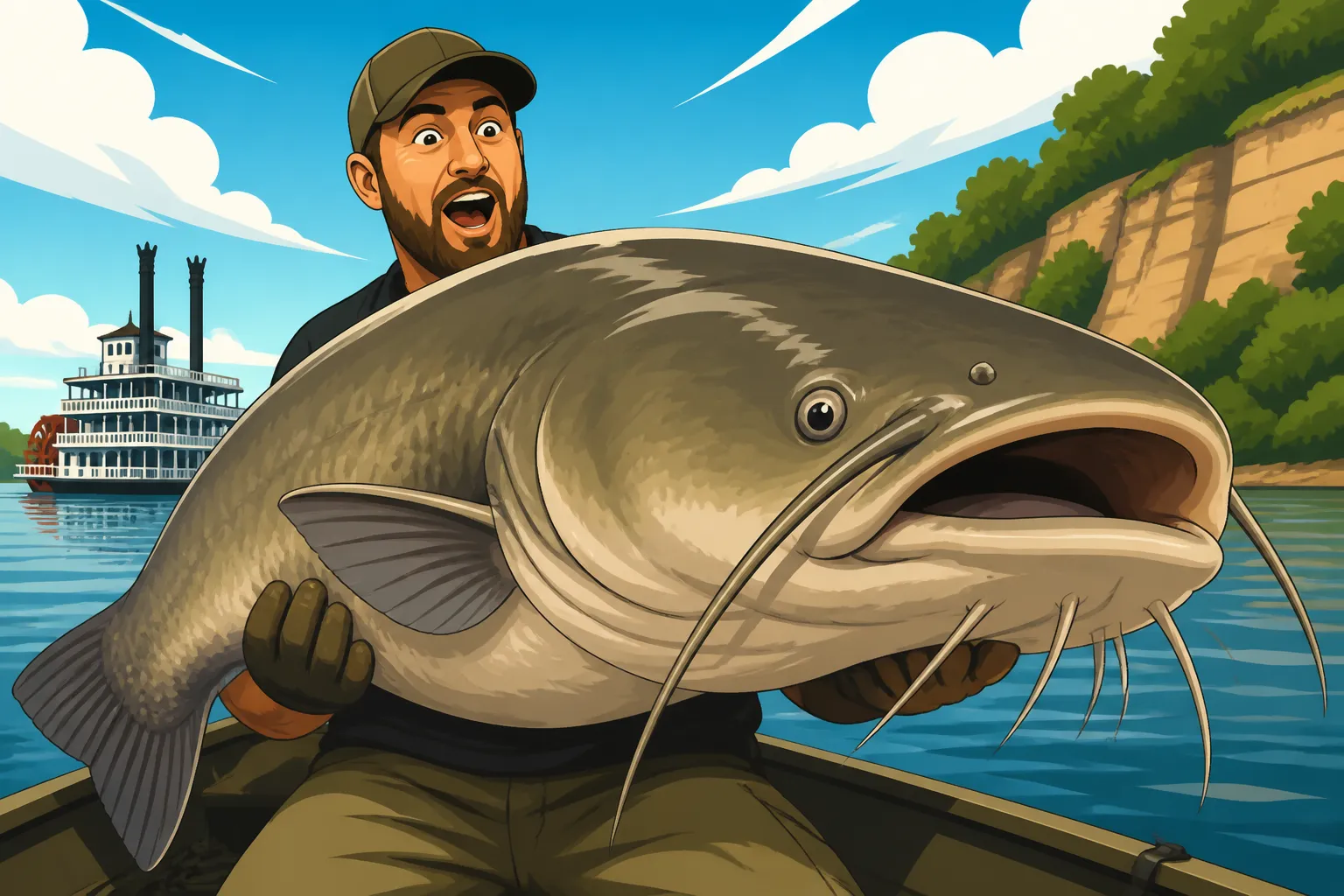
Biggest Catfish Ever Caught in the Mississippi River
For many anglers, the thought of wrestling a true river monster is the ultimate fishing dream. And when it comes to gargantuan catfish, no body of water holds more legendary status than the mighty Mississippi River. It’s a vast, powerful system that truly breeds giants, leaving many of us wondering just how big these whiskered beasts can get. If you've ever cast a line into its murky depths, you know the anticipation of a tug from something truly massive. This guide is dedicated to exploring the tales and truths behind the biggest catfish ever reportedly caught in this iconic waterway, giving you a glimpse into what lurks beneath the surface and how you might pursue your own record-breaking catch.
The Lure of the Mighty Mississippi and its Giant Catfish
The Mississippi River isn't just a river; it's an entire ecosystem, a colossal artery stretching across the heart of America. Its sheer scale, rich biodiversity, and constant flow create the perfect incubator for some of the largest freshwater fish in North America, especially catfish. Anglers often feel a unique pull to this river, a sense of adventure that comes with its powerful currents and hidden depths. There's a certain respect you develop for a body of water that can hold such incredible creatures, and a healthy dose of humility when you realize how much is still undiscovered beneath its surface.
Why the Mississippi River Breeds Giants
Think about the sheer volume of water, the diverse habitats, and the endless food supply that the Mississippi River offers. This isn't your average farm pond. The river provides an incredibly rich environment that allows catfish to not only survive but thrive and grow to immense proportions. Deep channels, submerged timber, intricate backwater sloughs, and countless feeder creeks all contribute to a complex underwater landscape. These areas offer shelter, prime ambush points for feeding, and protection from predators, allowing catfish to grow old and incredibly large. The constant influx of nutrients and a vast array of forage fish, from shad to various panfish, mean that these catfish have a consistent and abundant food source, fueling their growth year after year. It's a natural buffet that helps turn a small fingerling into a true heavyweight.
When you're out on the water, whether you're navigating the main channel or exploring a quiet oxbow lake, you can feel the history and the potential of the river. It's not just about the current; it's about the decades, even centuries, of natural processes that have shaped this incredible fishery. This ecological richness is precisely why Mississippi is renowned for its trophy catfish, drawing dedicated anglers from all over. Many of us have spent countless hours dreaming of the next big catch, knowing that the river always holds the promise of something truly monumental.
The Big Three: Blue, Flathead, and Channel Catfish
When we talk about giant catfish in the Mississippi River, we're primarily focused on three species, each with its own characteristics and potential for immense size. Understanding these species is key to appreciating the variety of monster catches that come out of the river. You'll often hear anglers discuss which of the three is the "king" of the river, and honestly, they all have a legitimate claim to the throne. For more general information on these whiskered wonders, check out Catfish Fishing in Mississippi.
-
Blue Catfish: These are arguably the true giants of the Mississippi. Blue catfish are known for their massive size potential, reaching well over a hundred pounds. They prefer the main channels and deeper, swift-moving waters of large rivers, where they can ambush prey. Their diet primarily consists of other fish, and their impressive growth rate is directly tied to the abundant food sources in the Mississippi. If you're targeting a state record or something truly legendary, a blue cat is often your best bet. They are powerful fighters, and bringing a big one to the boat is a battle you won't soon forget. You can learn more about targeting these behemoths in Blue Catfish Fishing in Mississippi.
-
Flathead Catfish: While perhaps not reaching the sheer top-end weight of a blue cat, flatheads are formidable adversaries and can also grow to incredible sizes, often exceeding 70-80 pounds in the Mississippi. They have a distinct flat head and a mottled, olive-brown coloration. Unlike blue cats, flatheads prefer live bait and tend to inhabit areas with heavy cover, such as logjams, submerged trees, and rock piles, often in slower currents or deep holes. They are ambush predators, and their incredible strength makes them a challenging catch. For tips on where to find these elusive giants, explore Flathead Catfish Habits and Habitat.
-
Channel Catfish: Channel cats are the most widespread and recognizable catfish species, found throughout the Mississippi River system. While they typically don't reach the gargantuan sizes of blue or flathead catfish, trophy-sized channel cats can still be impressive, often exceeding 20-30 pounds, with some exceptional specimens pushing much heavier. They are opportunistic feeders, eating a wide variety of bait, from stink bait to cut bait and even insects. They adapt well to various habitats, from main channels to tributaries and backwater areas. While you might not set a "biggest ever" record with a channel cat, landing a 20-pounder from the Mississippi is still an incredible achievement. Dive deeper into their fishing specifics with Channel Catfish Fishing in Mississippi.
| Catfish Species | Typical Habitat in Mississippi River | Primary Diet | Potential for Trophy Size | Fight Characteristics |
|---|---|---|---|---|
| Blue Catfish | Deep main channels, strong currents | Fish, mussels, crawfish | Very High (100+ lbs) | Powerful, sustained runs |
| Flathead Catfish | Heavy cover (snags, logs), deep holes, slower currents | Live fish | High (70-80+ lbs) | Stubborn, deep dives |
| Channel Catfish | Varied, adaptable to most habitats | Omnivorous (cut bait, worms, insects, fish) | Moderate (20-30+ lbs) | Energetic, strong surges |
Tales of the Giants: Unofficial and Official Records
The pursuit of the biggest catfish isn't just a hobby; it's a passion that has birthed countless stories and legends along the banks of the Mississippi. Everyone has a tale of the "one that got away" or the old-timer who pulled a fish out of a hidden hole that "looked like a hog." But distinguishing between campfire stories and verifiable records can be a murky business, much like the river itself.
The Elusive "Biggest Ever": Separating Fact from Legend
When you talk about the "biggest catfish ever caught in the Mississippi River," you're stepping into a realm where legend and verifiable fact often intertwine. The challenge is that the Mississippi River is so vast, spanning multiple states, each with its own record-keeping system. A true "Mississippi River record" that covers the entire length of the river is virtually impossible to establish and certify, as fish freely cross state lines and are caught in waters technically within different state jurisdictions.
Historically, before official state record programs were as robust as they are today, many truly monstrous catfish were caught, weighed on unofficial scales, or simply measured by eye, and then consumed. Think of the old photographs from the early 20th century showing anglers dwarfed by catfish that look like small sharks! These catches, while incredible, often lack the precise documentation required for an "official" record. Local fishing communities still buzz with stories of river captains who pulled 150-pound flatheads from a hidden eddy or blue cats that tipped the scales at well over 200 pounds in a small town's general store. These stories, passed down through generations, are part of the river's rich tapestry, but they do make it difficult to pinpoint a single, definitive "biggest ever" catch for the entire river. The truth is, the biggest might have been caught by an unknown angler, decades ago, without a proper certified scale or even the desire to document it beyond a good meal.
Mississippi River State Records and the MDWFP
While a unified "Mississippi River" record may be a fisherman's fantasy, individual states bordering the river maintain their own records, and many of these record-holding fish were indeed caught in the mighty river itself or its associated backwaters. For anglers in Mississippi, the Mississippi Department of Wildlife, Fisheries, and Parks (MDWFP) is the authority for state record fish. These records require specific documentation, including certified scales and witness verification, ensuring accuracy.
For example, Mississippi's state record for blue catfish is a truly colossal fish that demonstrates the river's potential. While it might have been caught in a lake connected to the river system or a specific stretch of the river, it highlights the type of massive fish that Mississippi waters can produce. It's a testament to the fact that these giants are not just folklore, but a tangible reality for dedicated anglers. Each state along the Mississippi River has its own story, its own record holders, and its own deep respect for the powerful fish inhabiting its waters. Understanding these rules is crucial, so always check Mississippi Fishing Regulations Explained before heading out.
Notable Catfish Catches on the Mississippi River System
While pinpointing the single biggest catfish ever caught on the entire Mississippi River system is a challenge due to varying state records and historical documentation, we can certainly highlight some truly monumental catches that stand as testament to the river's trophy potential. These are the kinds of fish that solidify the Mississippi's reputation as a world-class catfish fishery.
One of the most famous and well-documented blue catfish catches that illustrates the river's capacity was a monstrous fish caught in the Missouri River (part of the greater Mississippi River system) that weighed over 130 pounds. While not in Mississippi proper, it exemplifies the genetic potential present throughout the entire system. Another notable catch, often cited by anglers, was a blue catfish from the main stem of the Mississippi in Illinois that came in at an astonishing weight, showing that these behemoths are indeed still lurking.
Mississippi's own state record blue catfish, while not necessarily caught in the main channel of the Mississippi River, was taken from the Mississippi River system and showcases the incredible potential of these waters. These records aren't just numbers; they're stories of perseverance, skill, and a little bit of luck. They ignite the dreams of countless anglers who believe that their next cast could be the one that hooks into a living legend. Each report of a massive blue, flathead, or even an exceptionally large channel cat caught within the Mississippi's vast network adds to the ongoing narrative of this legendary river and its incredible fish. These incredible fish also represent critical breeding stock, making catch-and-release for trophy specimens increasingly important. Many anglers who are dedicated to this pursuit often target a particular kind of trophy, such as those discussed in Trophy Catfish in Mississippi Waters.
Pursuing Your Own River Monster: Tips for Targeting Huge Catfish
The dream of catching a true river monster in the Mississippi is within reach for dedicated anglers, but it requires the right approach, the right gear, and a deep understanding of these powerful fish. It's not just about luck; it's about preparation and technique.
Essential Gear for Battle-Ready Anglers
You wouldn't bring a butter knife to a sword fight, and you certainly shouldn't bring light tackle when targeting giant catfish on the Mississippi River. These fish are incredibly strong, and the river itself poses significant challenges with its strong currents and submerged obstacles. Investing in heavy-duty, reliable gear is not just a recommendation; it's a necessity.
- Rods and Reels: Look for stout, heavy-action catfish rods, typically 7 to 9 feet long, capable of handling significant weight and absorbing powerful runs. Pair these with large, robust baitcasting reels that have excellent drag systems and high line capacity. Many anglers prefer reels specifically designed for saltwater big-game fishing, as they can withstand the abuse a giant blue or flathead can dish out. Brands like Penn, Abu Garcia, and Daiwa offer excellent options. You can find a wide array of heavy-duty catfish rods and reels on platforms like Amazon.
- Line: This is not the place to skimp. You'll want heavy-test monofilament (at least 50-80 lb test) or braided line (60-100 lb test) with a strong abrasion resistance. The Mississippi River is full of snags, rocks, and mussels that can easily fray weaker lines. A good quality fishing line is your direct connection to that monster fish, and you don't want it to fail. For more guidance, read up on Best Fishing Line for Catfish.
- Hooks: Use strong, sharp circle hooks or Kahle hooks ranging from 7/0 to 12/0, depending on your bait size. Circle hooks are particularly effective for catfish as they tend to hook in the corner of the fish's mouth, making for easier release and less harm to the fish.
- Weights: You'll need heavy lead or no-roll sinkers, often 3-8 ounces or even more, to keep your bait on the bottom in strong currents. The goal is to keep your bait stationary in the prime strike zone, not tumbling downstream.
- Other Essentials: Don't forget heavy-duty pliers for hook removal, a large landing net (specifically designed for big catfish), and thick gloves to protect your hands when handling these powerful fish. A quality fish finder can also be invaluable for locating deep channels and submerged structure where these giants lurk.
Best Baits and Techniques for Trophy Catfish
Giant catfish in the Mississippi are not typically finicky eaters, but they do have preferences, and certain baits and techniques are more effective for targeting true trophies.
- Cut Bait: For blue and channel catfish, fresh cut bait is king. Shad, skipjack herring, mullet, and even carp are excellent choices. Cut them into steaks or chunks that match the size of baitfish these large predators would naturally consume. The fresher the bait, the better. Make sure your pieces are large enough to attract big fish but not so large that smaller fish can't get a hook in their mouth.
- Live Bait: Flathead catfish are particularly fond of live bait. Sunfish, bullheads, and small carp are prime choices. Make sure your live bait is healthy and active to entice a strike. Hook them through the back or lips to keep them lively on the hook.
- Trotlines and Jug Lines: For anglers looking to cover more water and increase their chances, trotlines and jug lines can be highly effective. These passive fishing methods allow you to set multiple baited hooks along a stretch of river or in a large pool. Always check local regulations for specific rules regarding the use of trotlines and jug lines, as they can vary by state and even by river section. If you're considering this method, make sure to read Jug Fishing and Trotline Setup.
- Rod and Reel Techniques:
- Bottom Fishing: The most common method involves using a heavy sinker to keep your bait on the bottom in deep holes, along ledges, or near submerged structure. Use a slip-sinker rig or a three-way swivel rig to allow the fish to take the bait without feeling immediate resistance.
- Drifting: In some sections of the river, drifting cut bait or live bait along ledges or through deep troughs can be very effective, allowing you to cover a wider area and present your bait naturally.
- Anchoring: Often, the most productive method for targeting trophy catfish is to anchor upstream from a promising piece of structure, a deep hole, or a current break, and let your bait settle into the prime feeding zone. Patience is key here.
For more detailed strategies on how to entice those massive fish, check out How to Catch Big Blue Catfish in Rivers.
Understanding Catfish Habitats in the River
To consistently catch giant catfish, you need to think like a catfish. These fish are masters of their environment, using the river's unique features to their advantage for feeding and resting. Getting to know the specific areas where they thrive is paramount. A good Mississippi River Fishing Guide can give you an overview of the river's general characteristics.
- Deep Holes and Channels: Big blue cats, especially, love the deepest parts of the main river channel. These areas offer stable water temperatures, less current pressure, and often hold abundant baitfish. Look for sharp drop-offs and depressions using your electronics.
- Submerged Timber and Logjams: Flatheads, in particular, are drawn to heavy cover. Huge logjams, fallen trees, and underwater brush piles provide ambush points and protection from the strong current. Fishing these areas requires heavy tackle and the willingness to lose some rigs, but the reward can be immense.
- Current Seams and Eddies: Catfish will often position themselves just out of the main current, in "seams" where fast water meets slower water, or in large eddies behind points or islands. These spots allow them to rest while still having easy access to food washing down the river.
- Ledges and Bends: River bends often create deeper holes and scour out ledges where catfish can hold. Look for areas where the river channel takes a sharp turn, as these can be productive hotspots.
- Tributary Mouths: Where smaller rivers or large creeks feed into the Mississippi, they can create current breaks and bring in additional food sources, making these junctions prime catfish feeding grounds.
- Bridge Pilings and Rock Piles: Man-made structures also offer excellent habitat. Bridge pilings create current breaks and scour holes, while rock piles provide cover and attract baitfish.
Remember, the Mississippi River is constantly changing, so what was a productive spot last year might be different this year due to floods or shifting sands. Always pay attention to river conditions, water levels, and current flow.
Responsible Angling for River Giants
The thrill of catching a giant catfish from the Mississippi River is immense, but it comes with a responsibility to protect these magnificent fish and the incredible fishery they inhabit. As stewards of the river, our actions today impact the future of fishing for generations to come.
Catch and Release for Future Generations
When you hook into a true river monster—a blue cat over 50 pounds, a massive flathead, or an exceptionally large channel cat—you've encountered a truly special fish. These big fish are often mature breeders, crucial for the long-term health and genetic strength of the catfish population. While keeping a smaller fish for a meal is perfectly fine and encouraged, consider practicing catch and release for your biggest catches.
Handling these giants requires care. Use a large, knotless landing net to minimize damage to their fins and slime coat. If possible, avoid dragging them onto rough surfaces. When removing the hook, use heavy-duty pliers or a hook remover, and if the hook is deeply set, consider cutting the line close to the hook to leave it in rather than causing further trauma. Get your photos quickly and efficiently, supporting the fish horizontally, and return it to the water as swiftly as possible. Revive the fish if necessary by holding it gently in the water, facing into the current, until it swims away under its own power. The satisfaction of knowing that fish is out there, growing even larger and continuing to breed, is a reward in itself.
Safety First on the Mighty Mississippi
The Mississippi River is undeniably powerful and awe-inspiring, but it demands respect. Its strong currents, vastness, and commercial traffic can pose significant hazards if you're not prepared. Safety should always be your top priority, whether you're bank fishing or out in a boat.
- Boating Safety: If you're fishing from a boat, ensure your vessel is in good working order and that you have all required safety gear, including life jackets for everyone on board (and wearing them!), a working horn, navigation lights, and a first-aid kit. The Mississippi River sees a lot of barge traffic, so always be vigilant, give commercial vessels a wide berth, and understand the rules of navigation. Checking Mississippi Boat Registration Requirements for Fishermen is a good start. Be aware of changing weather conditions; storms can blow up quickly, turning calm water into a dangerous chop.
- Currents and Submerged Hazards: The river's current can be deceptively strong. Be mindful of areas with heavy snags, wing dams, or submerged rock piles, especially if you're unfamiliar with the stretch of water. Always let someone know where you're going and when you expect to return.
- Bank Fishing: Even from the bank, exercise caution. Riverbanks can be steep, muddy, and slippery. Be aware of your surroundings, especially at night. Bring appropriate lighting and avoid fishing alone in isolated areas.
- Sun Protection and Hydration: Long days on the water mean exposure to the sun. Wear sunscreen, a wide-brimmed hat, and protective clothing. Stay hydrated by drinking plenty of water, even on cooler days.
- Communication: Always have a fully charged cell phone or, better yet, a marine radio on your boat. If you run into trouble, being able to communicate is crucial.
The pursuit of giant catfish on the Mississippi is an incredible adventure, but it's one that requires preparation, respect for the environment, and a commitment to safety. By following these guidelines, you can ensure a memorable and responsible fishing experience on one of America's most legendary rivers.
Disclaimer
This article is for general informational purposes only and does not constitute professional advice. Laws, prices and regulations vary by location and change over time. Consult a qualified professional for guidance on your specific situation.