Invasive Fish Species in Mississippi
It's disheartening, isn't it? You head out to your favorite fishing hole, expecting to tangle with some good old Mississippi bass or crappie, only to find the water teeming with unfamiliar, sometimes outright problematic, fish species. These uninvited guests can seriously mess with the natural balance of our precious waterways, making it tougher for our beloved native fish to thrive. This guide is here to shed some light on the issue of invasive fish species in Mississippi, explaining who they are, how they got here, the damage they cause, and what you, as a fellow angler, can do to help protect our beautiful aquatic ecosystems.
Understanding the Threat: What Are Invasive Fish Species?
When we talk about invasive species, it’s not just about a fish being "new" to a body of water. There's a much deeper, more concerning definition at play, and understanding it is the first step toward appreciating the scale of the challenge we face in Mississippi. It's a really complex issue, and it's easy to get confused about what's truly a problem and what's just an interesting new catch.
Defining "Invasive" in Mississippi Waters
So, what exactly makes a fish "invasive" rather than just "non-native"? This is a crucial distinction that often gets overlooked, leading to misunderstandings. A non-native species, sometimes called an exotic or introduced species, is simply one that originates outside of a specific ecosystem. Think about rainbow trout in some western states, for instance. They weren't naturally there, but they might not cause significant harm. In fact, sometimes non-native species can even be beneficial or just coexist without major issues.
However, an invasive species is a non-native species whose introduction causes or is likely to cause economic or environmental harm, or harm to human health. That's the key differentiator. It's not just about being from somewhere else; it's about the negative impact they have once they establish themselves. For us here in Mississippi, that harm often manifests as direct competition with native fish for food and habitat, predation on native species, or the introduction of diseases that our local fish aren't equipped to handle. These invaders are often incredibly hardy, adaptable, and prolific, giving them a serious edge over our indigenous species who have evolved over millennia to fit into a specific niche within our local waters.
The long-term impact on our fisheries can be devastating. Imagine a small pond where crappie and bream have always thrived, then suddenly a new species arrives that out-eats them, out-competes them for spawning grounds, and even changes the water quality. The natural balance, which took eons to perfect, can be completely thrown into disarray in a very short amount of time. It's not just about individual fish; it's about the entire ecosystem's health.
How Invasive Species Arrive and Spread
It might seem like these foreign fish just magically appear, but their introduction and spread are almost always linked to human activities, whether intentional or accidental. It’s a bitter pill to swallow, knowing that our actions, however well-meaning or careless, are often the root cause. This isn't just a Mississippi problem; it's a global one, and our state's waterways are particularly vulnerable due to their connectivity.
One common pathway is through intentional introductions, often with unforeseen consequences. Historically, some species were introduced for aquaculture purposes, like certain types of carp meant for food production or aquatic vegetation control, that inevitably escaped their confines. Other times, species might have been brought in as bait fish by anglers who didn't realize the potential harm of releasing unused bait at the end of a fishing trip. You might think a few minnows won't hurt, but if those minnows are a non-native species with a high reproductive rate, they can quickly establish a foothold and begin to outcompete native baitfish. This is why strict regulations on bait use and disposal are so important, as detailed in guides like Mississippi Fishing Regulations Explained.
Then there are the unintentional pathways, which are often harder to control but equally destructive. One significant source is the aquarium trade. When people get tired of their pet fish, or if they grow too large, some unfortunately release them into local ponds and rivers, thinking they are doing the fish a favor. A beautiful, exotic Pleco that looks great in a tank can become an ecological nightmare in a Mississippi waterway. Another pathway can be through ballast water carried by ships, especially in coastal areas and major river systems like the Mississippi River. Ships take on water in one port and release it in another, potentially carrying microscopic organisms, fish eggs, or even small fish from across the globe. These examples highlight why education and personal responsibility are paramount in preventing further introductions.
The Most Notorious Invasive Fish in Mississippi
When you think about the biggest threats to Mississippi's native fish, a few infamous names immediately spring to mind. These are the species that are already causing significant headaches for our fisheries and wildlife agencies, and for local anglers like us. They aren't just a nuisance; they're actively reshaping our aquatic landscapes.
The Asian Carp Menace: Silver, Bighead, and Grass Carp
If there's one group of invasive fish that strikes fear into the hearts of Mississippi anglers and conservationists, it's the Asian carp. These aren't your typical pond carp; they're a force of nature, especially the Silver and Bighead varieties, and they pose a significant threat to our freshwater ecosystems. You can learn more about their presence and impact in articles like Silver Carp and Asian Carp in Mississippi Waters.
Let's start with the Silver Carp. These fish are perhaps the most famous (or infamous) due to their spectacular and frankly dangerous jumping behavior. When startled by boat motors, they launch themselves feet into the air, creating a real hazard for boaters and anglers. I've heard countless stories of folks getting knocked out cold or injured by a flying carp while trying to enjoy a day on the water. Beyond the aerial acrobatics, Silver Carp are voracious filter feeders, consuming vast quantities of plankton – the very base of the food web. This directly competes with native planktivorous fish, including the juvenile stages of many game fish like crappie and bass, as well as crucial native species like Paddlefish (Spoonbill) in Mississippi Rivers. They essentially vacuum up the food supply, leaving little for the fish that are supposed to be there. You can delve deeper into their jumping antics in Why Silver Carp Jump Out of the Water.
Then we have the Bighead Carp, another filter-feeding cousin that, while not known for jumping, shares the same problematic diet as the Silver Carp. Bighead Carp are also incredibly prolific and grow to massive sizes, further increasing their competitive edge. They are direct competitors with many native filter feeders, including the important commercial and ecological species like Buffalo Fish Identification and Where They Live. Their presence can significantly reduce the amount of food available for native larval fish and baitfish, indirectly impacting the entire food chain up to our trophy bass and catfish. The sheer biomass of these carp can overwhelm an ecosystem, making it difficult for anything else to thrive.
Finally, there's the Grass Carp. Unlike their plankton-eating relatives, Grass Carp are herbivorous, meaning they primarily eat aquatic vegetation. While they were originally introduced in some areas for vegetation control, their uncontrolled spread has often led to unintended consequences. They can decimate entire beds of submerged vegetation, which are critical habitats for native fish, offering cover from predators and spawning grounds. Imagine a thriving lake with lush grass beds suddenly turning into a barren aquatic desert. That's the kind of habitat destruction Grass Carp can wreak, fundamentally altering the environment for countless native species.
Armored Catfish: The Pleco Problem
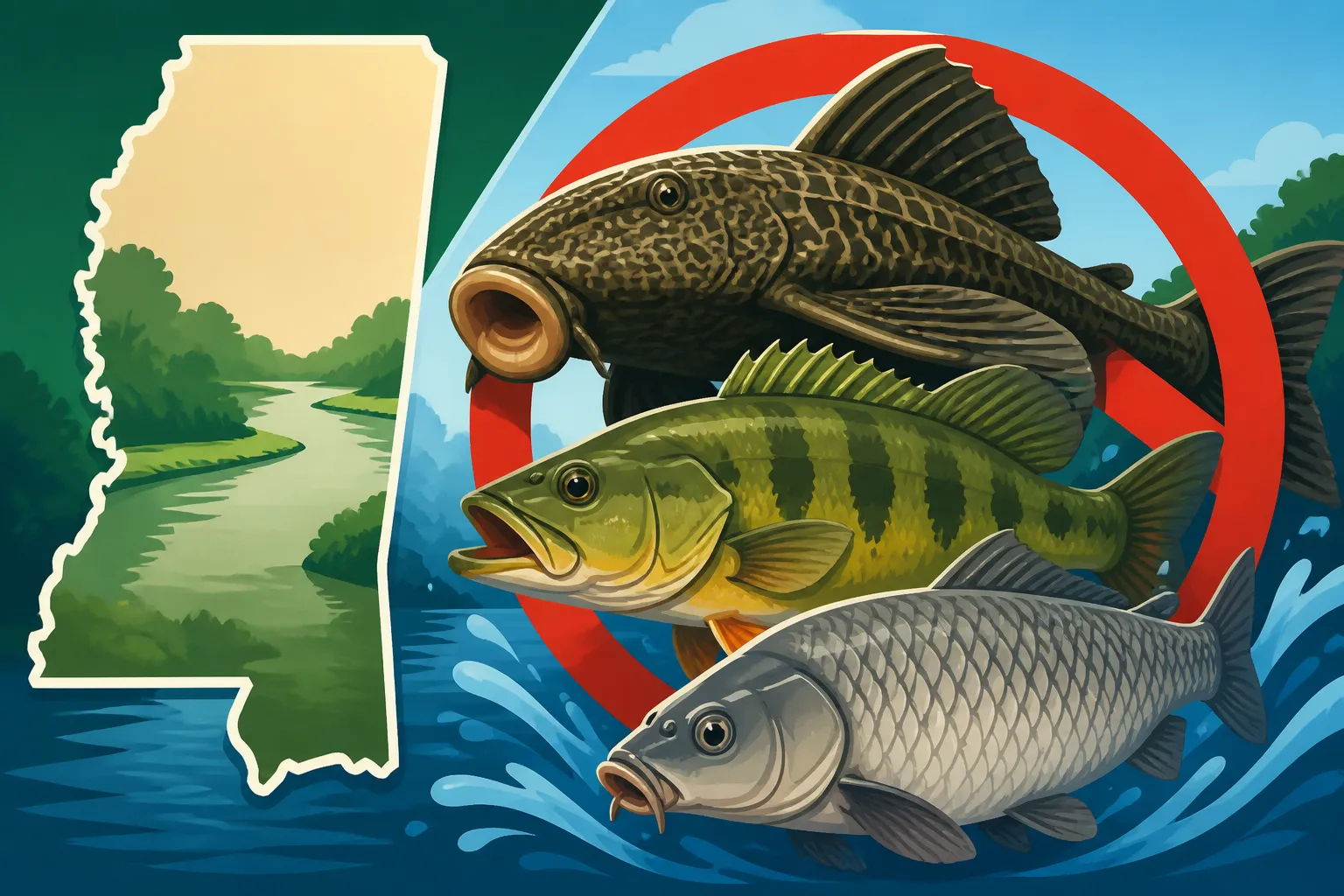
Another significant and increasingly common invasive species in Mississippi is the armored catfish, more commonly known as Plecos (short for plecostomus). These fish are instantly recognizable by their distinct armor plates and their suckermouths, designed for grazing algae. They are almost exclusively escapees or releases from the aquarium trade, and unfortunately, once they're in our natural waterways, they are incredibly difficult to remove.
Plecos are incredibly hardy fish. They can tolerate a wide range of water conditions, from clear lakes to muddy rivers, and even low oxygen levels that would kill many native species. This resilience allows them to establish populations in diverse habitats throughout the state. Their suckermouths, while great for cleaning aquarium glass, are used in the wild to graze on algae and other organic matter on the bottom. This puts them in direct competition with native bottom-dwelling fish, like our smaller native catfish and various species of suckers, for limited food resources.
Beyond just competition, Plecos have another destructive habit: burrowing. They will dig deep burrows into riverbanks and lake bottoms, especially during spawning season or to escape harsh conditions. This burrowing activity can destabilize banks, lead to erosion, and even undermine infrastructure like docks and levees. It also stirs up sediment, which can reduce water clarity and negatively impact light penetration for aquatic plants, further degrading the habitat for native species. Once established, their populations can explode, and their armored bodies make them unpalatable to most native predators, giving them a significant survival advantage. Many anglers struggle with how to deal with these fish, wishing they had an easily accessible guide on Amazon for identification.
Other Notable Invaders and Emerging Threats
While Asian carp and Plecos are perhaps the most widespread and well-known invasive fish in Mississippi, they are by no means the only ones, and new threats are always on the horizon. It’s a constant battle to monitor and manage these populations before they become insurmountable problems.
One species that concerns conservationists, though not yet widely established in Mississippi, is the Zander. This fish, native to Europe and Asia, is a predatory species that bears some resemblance to a walleye. While it might seem appealing to some anglers to have another predatory game fish, the introduction of a new top predator into an established ecosystem can have catastrophic effects. Zander are highly adaptable and efficient hunters, and if they were to gain a foothold, they could easily outcompete or prey upon native game fish like bass and crappie, further disrupting the delicate food web. Preventing their introduction is far easier than trying to eradicate them once they are established.
Another species that causes significant concern is the Northern Snakehead. This highly aggressive, air-breathing predatory fish from Asia has already established populations in other parts of the U.S., particularly in the mid-Atlantic states. Northern Snakeheads are incredibly resilient; they can survive out of water for extended periods and even "walk" short distances over land to find new water sources. This makes them exceptionally good at colonizing new habitats. If Northern Snakeheads were to become established in Mississippi, they would be an apex predator, capable of devastating native fish populations, including those we cherish for sport fishing. Their ability to survive in diverse conditions and their relentless predatory nature make them a true nightmare scenario for aquatic ecosystems.
The Ecological and Economic Impact on Mississippi Fishing
The presence of invasive fish species isn't just an interesting biological phenomenon; it has real, tangible consequences for Mississippi's natural environment and the people who enjoy it. These impacts can be subtle at first, then snowball into significant problems that affect everything from the clarity of our water to the health of our favorite fishing spots and even our wallets.
Disrupting the Delicate Balance: Ecosystem Impacts
Mississippi's lakes, rivers, and coastal waters have evolved over millennia to support a specific array of plants and animals, all interconnected in a delicate web. Invasive species act like a wrecking ball, smashing through those connections and throwing everything into disarray. It’s like introducing a bull into a china shop – things are going to get broken.
One of the most immediate and profound impacts is food web disruption. Invasive species often outcompete native fish for food resources. For example, Silver and Bighead Carp devour plankton, which is the primary food source for larval native fish and many baitfish. When this plankton is gone, the native fish simply starve, leading to declines in populations of crappie, bass, and other game fish further up the food chain. Other invasives might prey directly on native eggs or young fish, further reducing recruitment for our beloved species. It's a double whammy: less food, and more predators or competitors.
Beyond food, invasive fish can cause significant habitat alteration. Grass carp, for instance, can completely strip a lake of its aquatic vegetation. While this might seem beneficial if you're battling excessive weeds, those plant beds are crucial for native fish as spawning grounds, nursery areas for juveniles, and cover from predators. Without them, fish like Largemouth Bass Fishing in Mississippi and Crappie Fishing in Mississippi lose vital components of their life cycle, leading to population crashes. Armored catfish (Plecos) with their burrowing habits can destabilize banks, increase erosion, and muddy the water, making it harder for sight-feeding fish to hunt and for aquatic plants to photosynthesize. These changes can fundamentally transform a thriving ecosystem into a much less biodiverse and productive one.
Furthermore, invasive species can introduce diseases and parasites to which native fish have no immunity. They can also lead to genetic pollution by hybridizing with closely related native species, diluting the genetic integrity of our indigenous populations. This means that even if a species doesn't directly compete or predate, its mere presence can still weaken native populations and make them less resilient to environmental changes.
Anglers' Frustrations: Impact on Game Fish and Recreation
For those of us who live to cast a line in Mississippi, the ecological impacts of invasive species translate directly into frustrating experiences on the water and a diminished quality of life. The problem isn't just theoretical; it hits us right where it hurts – our fishing opportunities.
Firstly, the most obvious frustration is the decline in native game fish populations. If invasive carp are eating all the plankton, there's less for juvenile bass and crappie. If grass carp are destroying weed beds, bass and crappie lose their homes and spawning grounds. This means fewer bites, smaller fish, and ultimately, a less rewarding fishing experience. Anglers who once bragged about their daily limits of Mississippi Crappie Regulations by Lake or Mississippi Black Bass Regulations might find themselves struggling to catch anything at all. It's truly demoralizing when you see the effects firsthand.
Secondly, the recreational impact extends beyond just catch rates. The jumping behavior of Silver Carp, as mentioned before, turns a peaceful boat ride into a potentially dangerous obstacle course. Nobody wants to be dodging airborne fish when they're trying to enjoy a leisurely day of fishing or watersports. This safety concern can deter people from visiting certain waterways, affecting local tourism and businesses that rely on recreational activities. Imagine taking your kids fishing for the first time, only to be constantly worried about a flying fish hitting them. It takes the fun right out of it.
Finally, there's the economic cost. State agencies, like the Mississippi Department of Wildlife, Fisheries, and Parks (MDWFP), have to pour significant resources into monitoring, managing, and attempting to control invasive species. This money could otherwise be used for habitat restoration, stocking native fish, or improving angler access. Additionally, the decline in game fish populations and recreational appeal can lead to a decrease in fishing license sales, tackle purchases, and other related expenditures, hitting local economies that depend on outdoor tourism. It's a costly problem all around, and it's a burden we all share.
What Mississippi is Doing and How Anglers Can Help
Facing the challenge of invasive fish species can feel overwhelming, but thankfully, a lot of dedicated people and agencies are working hard to combat the problem. More importantly, as anglers and outdoor enthusiasts, we have a vital role to play in protecting our state's precious waterways. We're all in this together, and every little bit helps.
State Efforts: Monitoring, Control, and Prevention
The Mississippi Department of Wildlife, Fisheries, and Parks (MDWFP) is at the forefront of the battle against invasive fish species. It’s their team of biologists, researchers, and enforcement officers who are constantly working to understand the problem and implement solutions. Their efforts are multi-faceted, focusing on early detection, containment, and management where possible. For a broader understanding of statewide efforts, What Mississippi Is Doing About Asian Carp is a great resource.
One of their primary roles is monitoring. This involves regular surveys of waterways to detect new invasive populations as early as possible. Early detection is absolutely critical because it offers the best chance for successful eradication or containment before a species becomes too widespread. They're looking for telltale signs, unusual catches, and working to map the spread of known invaders. This detective work is constant and demanding, requiring careful observation and scientific analysis across countless miles of diverse habitats.
When it comes to control, MDWFP employs various strategies. For species like Asian carp, they might implement programs to encourage commercial harvest, turning a problem into a potential resource, or they might explore specialized netting techniques to remove large numbers of fish from targeted areas. In some cases, localized chemical treatments might be used, but these are carefully considered due to potential impacts on native species. For more entrenched populations, the focus often shifts from eradication to containment and population reduction to minimize their impact.
Perhaps most crucial are the prevention programs and public awareness campaigns. Education is one of our strongest tools. MDWFP regularly publishes guides and information about identifying invasive species, the dangers of releasing bait or aquarium fish, and the "Clean, Drain, Dry" protocol for boats and gear. They work with boat ramps, fishing tournaments, and local communities to spread the word. These campaigns emphasize that prevention is always better – and far cheaper – than trying to cure an infestation once it's taken hold. After all, once a species is widely established, complete removal is almost impossible.
Your Role as a Responsible Angler
You might think, "What can I do? I'm just one person." But believe me, every single angler has a powerful role to play in protecting Mississippi's waters. Your actions, collectively, make a monumental difference. It all boils down to adopting a few responsible habits that help prevent the spread of these unwelcome visitors.
The first, and arguably most important, mantra is "Clean, Drain, Dry". This applies to anything that touches the water. When you're moving your boat, trailer, or even waders from one body of water to another, you could unknowingly be transporting invasive species, their eggs, or larvae.
- Clean: Remove all visible aquatic plants, animals, and mud from your boat, trailer, and fishing gear (including anchors, ropes, and fishing lines) before leaving the access area. Inspect everything thoroughly.
- Drain: Drain all water from your boat, livewells, bilge, and bait buckets before leaving the access area. Never transport water from one lake to another.
- Dry: Allow all equipment to thoroughly dry for at least five days before using it in another body of water. If you can't dry it for that long, consider power washing it with hot water (140°F/60°C). This simple routine is your best defense against inadvertently introducing a new threat.
Secondly, never release bait or aquarium fish. This seems like common sense, but it’s still a major pathway for introductions. If you have leftover live bait, dispose of it properly in the trash, not back into the water or down a storm drain. The same goes for aquarium fish; if you no longer want your pet fish, find it a new home or, as a last resort, humanely euthanize it. Releasing it into a local pond is not an act of kindness; it's an act of environmental vandalism. Many resources, including guides available on Amazon, can help you understand the impact of species like Plecos that originate from the aquarium trade.
Finally, be vigilant and responsible about reporting suspicious catches. If you catch a fish that you don't recognize, or one that looks like a known invasive species (especially one you know isn't supposed to be in that particular waterbody), take photos, note the location, and report it to MDWFP. Do not release it back into the water. This rapid reporting can be the difference between a minor problem and a full-blown ecological disaster. Knowledge is power, and being informed about what to look for, even with a quick glance at a species identification chart, is invaluable.
Identifying and Handling Invasive Species Responsibly
Knowing what to look for and what to do when you catch an invasive species is crucial. It’s not just about avoiding them; it’s about actively participating in the solution. Don't be shy about asking questions or consulting resources if you're unsure. The more eyes we have on the water, the better protected our native fish will be.
Key Identification Features of Common Invasive Fish
Being able to identify an invasive species on sight is an invaluable skill for any angler in Mississippi. While some might be obvious, others can be confused with native fish, so knowing the key features is paramount. Having a good, waterproof fish identification guide, perhaps one you picked up on Amazon, can be a great asset.
Let's quickly review some of the most common invasive species you might encounter:
-
Asian Carp (Silver and Bighead):
- Silver Carp: The most distinctive feature is their eyes, which are positioned very low on their head, almost below their mouth. They have a smooth, scaleless keel running along their belly. Their bodies are typically silvery, though they can have a darker back. They have no scales on their head.
- Bighead Carp: Also have a very large head (hence the name) and their eyes are also low-set, though perhaps not as dramatically as the Silver Carp. Their bodies are typically grey or mottled with irregular dark blotches, and they have very large, prominent scales compared to many native carp.
- Grass Carp: These are more torpedo-shaped, with large scales that often have a dark edge, giving them a somewhat cross-hatched appearance. Their dorsal fin is relatively short. They generally lack the barbels (whiskers) that many native catfish and true carp possess.
-
Armored Catfish (Plecos): These are quite distinct and usually hard to confuse with native fish.
- Armor Plates: Their bodies are covered in bony plates, not smooth scales.
- Suckermouth: They have a prominent downturned mouth adapted for suction-feeding on surfaces.
- Large Dorsal Fin: Many species have a very large, sail-like dorsal fin that can be quite striking.
- Varied Coloration: They come in many patterns, from mottled brown to black, often with spots or stripes.
To help you keep these distinctions straight, here's a quick comparison table:
| Invasive Species | Key Identification Features | Primary Ecological Impact | Handling Advice (General) |
|---|---|---|---|
| Silver Carp | Eyes below mouth; smooth belly keel; no scales on head; silvery body | Consumes plankton; jumps from water; competes with baitfish & native filter feeders | Do not release; harvest if legal (check MDWFP for regulations) |
| Bighead Carp | Large head; eyes low; large, blotchy scales; mottled coloration | Consumes plankton; competes with native filter feeders (e.g., Paddlefish (Spoonbill) in Mississippi Rivers) | Do not release; harvest if legal (check MDWFP for regulations) |
| Grass Carp | Torpedo-shaped body; large scales with dark edges; short dorsal fin | Destroys aquatic vegetation; alters habitat for native fish | Do not release; harvest if legal (check MDWFP for regulations) |
| Armored Catfish (Pleco) | Armored body plates; suckermouth; prominent dorsal fin; varied patterns | Burrows into banks; competes with native bottom feeders; impacts water quality | Do not release; humanely dispose of (do not keep as pets for re-release) |
What to Do If You Catch an Invasive Species
This is where the "responsible angler" really shines. Your actions after catching an invasive fish are critical to preventing its further spread and protecting our native fisheries. The overarching rule is simple: do not release it back into the water.
For Asian Carp (Silver, Bighead, and Grass Carp), the general guidance from MDWFP is to harvest these fish and remove them from the water. Many people actually find them quite good to eat, though they can be bony. If you're curious about preparing them, Are Invasive Carp Edible? offers some insights. If you choose not to eat them, dispose of them in a sealed bag in the trash. Never, ever use them for cut bait and then release any unused portions back into the water, as this could unintentionally spread them or diseases.
For Armored Catfish (Plecos) and other aquarium-trade escapees, the advice is similar: do not release. These fish are generally not considered palatable for eating due to their bony structure and often strange taste, so the best course of action is humane disposal. Again, never release them, thinking they'll find a new home, and certainly don't take them home as a "rescue" to re-release later. Their ability to survive and thrive in new environments makes them a persistent problem.
If you catch a fish that you suspect is an invasive species but aren't 100% sure, take a clear photo (if possible), make a note of the exact location (GPS coordinates are ideal), and then ethically dispatch the fish. Once you have documented it, contact MDWFP to report your catch. They can help confirm the identification and guide you on any further actions. Your quick action can be a huge benefit to conservation efforts across the state, ensuring that our beautiful Mississippi Freshwater Fish Species Guide remains vibrant and healthy for generations to come.
Disclaimer
This article is for general informational purposes only and does not constitute professional advice. Laws, prices and regulations vary by location and change over time. Consult a qualified professional for guidance on your specific situation.