Sheepshead Fishing on the Mississippi Coast
The Mississippi Coast offers some truly unique fishing opportunities, but few fish provide the same blend of frustration and immense satisfaction as the sheepshead. If you've ever tried to catch these striped "convicts" only to have them expertly strip your bait clean time and again, you know the feeling. This comprehensive guide is dedicated to helping you decode the mysteries of sheepshead fishing, from understanding their sneaky habits to pinpointing their favorite hangouts and arming you with the best gear and techniques for success right here on our beautiful coast.
Understanding the Elusive Sheepshead
Sheepshead are a fascinating and challenging target for any angler along the Mississippi Coast. They’re known for their distinctive appearance and even more distinctive biting style. Getting to know them better is the first step toward landing one.
Sheepshead Identification and Unique Features
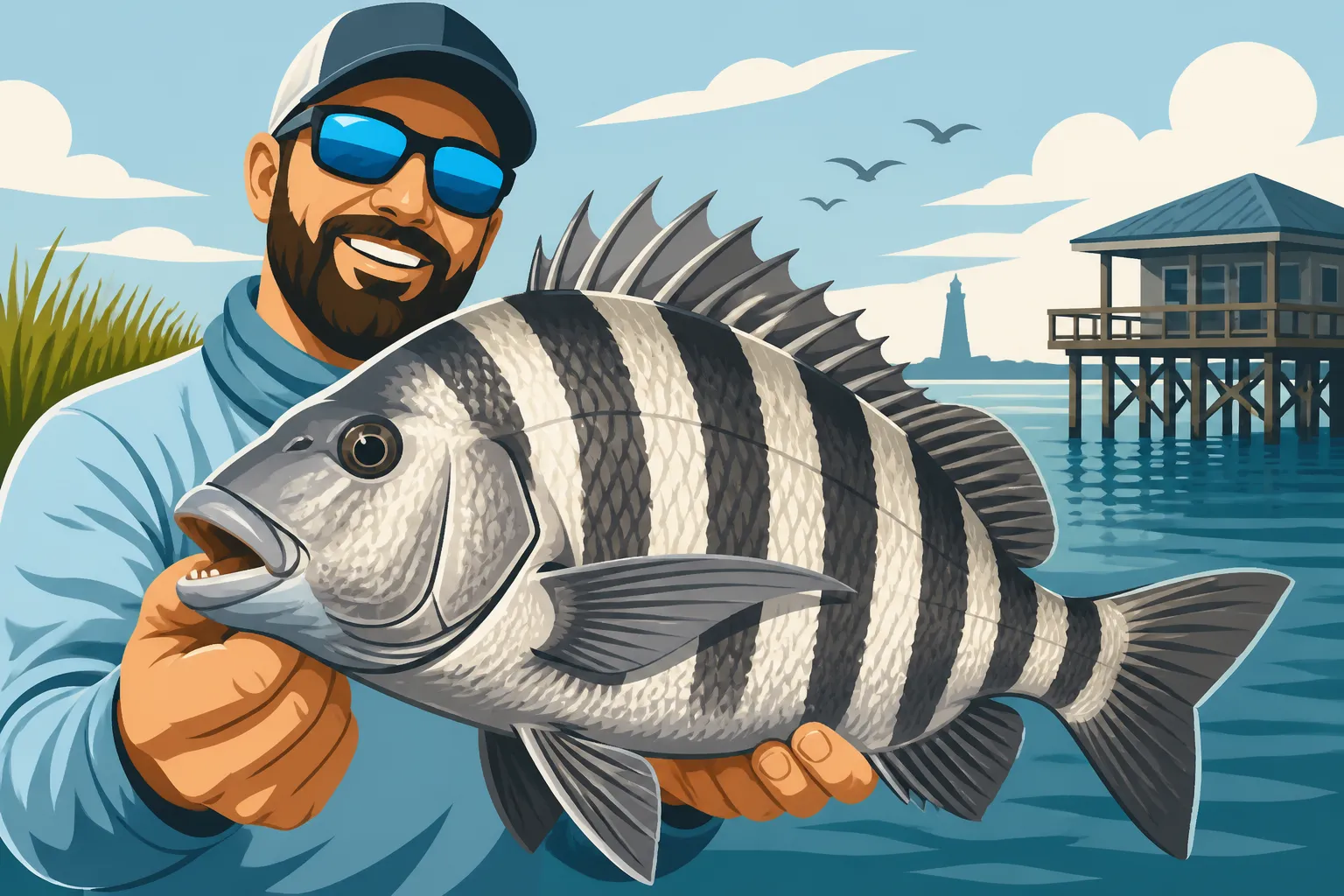
Sheepshead, often affectionately (or perhaps not-so-affectionately, depending on your luck) called "convict fish," are instantly recognizable by their vertical black and white stripes, which give them their common nickname. These stripes usually number five or six, contrasting sharply against their silvery-gray body. But their most striking feature, and the one that often causes the most angler frustration, is their mouth. They possess a set of robust, human-like incisors at the front, perfect for crushing the shells of their preferred prey. Behind these, they have molars designed for grinding. These teeth aren't just for show; they're formidable tools for survival and make them incredibly adept at bait-stealing.
When you manage to get a good look at one, you'll see why they're such a unique creature of our coastal waters. They typically range from a pound or two up to five or six pounds, though trophy-sized sheepshead pushing into the double digits are certainly out there and a true test of skill. Their stocky bodies are built for power, allowing them to cling to structures and fight hard when hooked. Understanding Why Sheepshead Is Called the Convict Fish helps paint a picture of their intriguing nature.
Habitat Preferences on the Mississippi Coast
Sheepshead are structure-oriented fish, plain and simple. If there's something hard in the water that can grow barnacles or harbor crabs, chances are good you'll find sheepshead lurking nearby. Along the Mississippi Coast, this means they are incredibly fond of bridge pilings, oyster reefs, rock jetties, dock pilings, old submerged debris, and even artificial reefs. They love these spots because it provides them with a constant buffet of their favorite meals. Barnacles, small crabs, mussels, and oysters are their primary food source, and these structures are absolutely teeming with them.
They’re not typically found patrolling open sandy bottoms; instead, they hug these hard structures, often positioning themselves to pick off a tasty morsel with minimal effort. This habit is critical to remember when you're targeting them, as getting your bait right up against (but not snagged on) the structure is paramount. The current around these structures also plays a role, bringing them fresh food and oxygen, making these areas productive even during slower times. If you're looking for where they like to hang out, think about anything that breaks the current and offers a natural larder.
The Challenge of Catching Sheepshead
Anyone who's seriously pursued sheepshead knows the profound frustration they can inflict. They are notorious for their incredibly subtle bite. Unlike a bass that might smash a lure or a redfish that gives a solid thunk, a sheepshead often just gives a gentle "tap," "tap," or sometimes it feels like nothing at all. They're experts at mouthing the bait, delicately nibbling it off the hook with those strong, sharp teeth without ever truly taking the hook into their mouth. This is why they've earned their reputation as bait thieves. You'll feel a tiny tick, set the hook, and come up empty, only to find your carefully presented shrimp or crab missing.
This finicky nature means you have to be incredibly attentive, patient, and quick to react. It's not about brute force; it's about finesse and feeling that almost imperceptible difference between the bait brushing against a barnacle and a sheepshead's gentle inquiry. The frustration is real, but the reward of finally hooking one, feeling that powerful head shake, and bringing it to the boat is immense. It's a true angler's fish, demanding skill and persistence.
Prime Sheepshead Haunts on the Mississippi Coast
Knowing what sheepshead are like is one thing, but knowing where to find them on the Mississippi Coast is the next crucial step. Our coastline, with its mix of natural and man-made structures, offers plenty of fantastic opportunities.
Piers and Jetties: Public Access Hotspots
For many anglers, piers and jetties are the most accessible and productive spots for sheepshead fishing. Along the Mississippi Gulf Coast, you'll find several popular spots where these striped beauties congregate. Think about places like the Biloxi Fishing Pier, the Gulfport Municipal Pier, or the jetties around Pass Christian Harbor. These structures are absolute magnets for sheepshead because they're covered in barnacles and other small invertebrates that sheepshead love to munch on.
When fishing these areas, you'll want to get your bait as close to the pilings or rocks as possible without getting snagged. Sometimes, the fish are right up against the structure, while other times they might be a few feet off. The key is finding that sweet spot where they're actively feeding. The convenience of pier fishing means you don't need a boat, making it a great option for beginners or those just looking for a relaxed day out. Just be prepared for company, as these spots can get crowded, especially on weekends. For more details on these accessible locations, check out Best Gulf Coast Piers for Fishing in Mississippi.
Bridge Pilings and Causeway Structures
Beyond piers, the numerous bridges and causeways that span our coastal waters are prime sheepshead territory. The Biloxi Bay Bridge, the Bay St. Louis Bridge, and the bridges over the Pascagoula River are classic examples. The sheer number of pilings provides a vast habitat for barnacles, and the constant current flowing around these structures ensures a steady food supply. Sheepshead will often hold tight to the pilings, picking off food as the current brings it to them.
Fishing these spots often requires a boat to position yourself effectively, though some bridge access points allow for bank fishing near the pilings. When approaching bridge pilings, pay attention to the current and how it’s flowing around the structure. Sheepshead will typically face into the current, waiting for their meals. Getting your bait to drift naturally alongside a piling, or dropping it straight down next to one, can be incredibly effective. Be mindful of boat traffic and navigation rules when fishing near these busy structures. For those looking to explore these areas by boat, a charter might be a good option. Consider exploring Mississippi Gulf Coast Fishing Charters to find a knowledgeable local captain.
Oyster Reefs and Submerged Structures
While not as visible as piers or bridges, natural oyster reefs and other submerged structures are equally important sheepshead habitats. These underwater havens, often found in the bays and bayous behind the barrier islands, provide extensive feeding grounds. Oyster reefs, in particular, are a favorite because they are literally made of food for sheepshead. You might also find them around sunken barges, old crab traps, or other debris that has become encrusted with marine growth.
Finding these spots often requires local knowledge, good electronics like a fish finder, or even just a keen eye for subtle changes in water movement that might indicate an underwater structure. These locations can sometimes yield larger, less pressured sheepshead than the more easily accessible public areas. Fishing these spots usually means anchoring upcurrent and allowing your bait to drift back naturally onto the reef or structure. Be prepared for snags, as the very structure that attracts the fish can also claim your tackle.
Essential Gear and Tackle for Sheepshead
To tackle the "convict fish," you need the right tools for the job. Sheepshead fishing isn't about heavy gear, but rather precise, sensitive tackle that can detect their notoriously light bite and stand up to their strong, short runs.
Rods and Reels for Sheepshead Success
Choosing the right rod and reel is perhaps the most critical aspect of sheepshead fishing, precisely because of their finicky bite. You're not looking for a broomstick; you need sensitivity. A medium-light to medium power spinning rod, typically 6'6" to 7'6" in length, is ideal. Look for a rod with a fast action tip – this means the top third or quarter of the rod bends easily, allowing you to feel those subtle taps, while the backbone of the rod remains stiff enough to set the hook into their tough, bony mouths and pull them away from structure. A graphite rod will offer superior sensitivity over fiberglass.
Pair this with a reliable 2500-sized to 4000-sized spinning reel. It doesn't need to hold hundreds of yards of heavy line, but it does need a smooth, consistent drag system to handle their powerful initial runs and be resistant to saltwater corrosion. A quality reel from a reputable brand designed for saltwater use will last much longer in our coastal environment. You can find a great selection of these robust reels on Amazon, often with reviews from fellow anglers, which can be super helpful when deciding. For more general advice on selecting your setup, consider Choosing the Right Rod and Reel for Mississippi Fishing.
Line Choices and Terminal Tackle
Your line choice is crucial for feeling those faint bites. Many anglers prefer to spool their reels with 10-20 lb braided line as their main line. Braid offers exceptional sensitivity due to its lack of stretch, transmitting even the slightest tap directly to your fingertips. Its thin diameter also allows for longer casts and less drag in the current. To this, you'll want to attach a fluorocarbon leader, typically 15-30 lb test, using a strong knot like an FG knot or an Albright knot. Fluorocarbon is nearly invisible underwater, which can be an advantage for wary sheepshead, and more importantly, it offers excellent abrasion resistance against sharp shells and barnacles.
For hooks, forget the big, beefy hooks you might use for reds or trout. Sheepshead have small mouths and are expert bait pickers. You’ll want small, incredibly sharp hooks, generally in sizes #1 to 1/0. Kahle hooks, small J-hooks, or even strong octopus hooks work well. The key is a hook with a short shank and a wide gap, allowing the point to be exposed for a solid hookset. For sinkers, pyramid sinkers or egg sinkers are common, in weights ranging from 1/4 ounce to 1 ounce, depending on the current and depth. The goal is just enough weight to hold your bait near the bottom without excessive movement.
Rigging Strategies for Finicky Biters
The way you rig your bait can make all the difference when targeting sheepshead. The most popular and effective rig is often a simple Carolina rig or a knocker rig. For a Carolina rig, you'll slide an egg sinker onto your main line, then tie on a barrel swivel. To the other end of the swivel, attach a fluorocarbon leader (12-24 inches) and then your hook. This allows your bait to move more naturally. A knocker rig is even simpler: the sinker (usually an egg or bullet style) slides directly onto your leader, resting right on top of your hook. This keeps your bait and weight incredibly close, which is excellent for feeling those subtle bites when fishing tight to structure.
The critical aspect of any rig for sheepshead is keeping your bait snug to the hook. They're masters at pulling off loose bait. For crabs, you might thread the hook through the crab's leg socket or simply impale a small piece of crab meat firmly. For shrimp, a small piece threaded onto the hook, leaving the point exposed, works best. The less dangling, the better. Your presentation needs to be natural and the bait needs to be securely attached to withstand their nibbling.
Mastering Sheepshead Baits and Techniques
Sheepshead are notorious for their highly specialized diet, which means choosing the right bait is paramount. Once you have the bait, presenting it effectively to these master bait thieves requires a delicate touch and quick reflexes.
The Best Baits to Entice Sheepshead
When it comes to sheepshead, fresh, natural bait is king. These fish are primarily crustaceans and mollusk eaters, so you need to appeal to those preferences. The undisputed champion bait for sheepshead is the fiddler crab. Their small size, hard shell, and natural presence around structures make them irresistible. You can catch fiddler crabs yourself in marshy areas or sometimes find them at bait shops. Hermit crabs and small blue crabs (cut into small pieces) are also excellent choices. Simply break off a leg or cut a small piece of the crab, exposing some meat, and thread it onto your small, sharp hook.
Other highly effective baits include live or fresh-dead shrimp (peeled and cut into small pieces is often best), small pieces of oyster, or even barnacles scraped directly from the pilings you're fishing. The key is small pieces of fresh bait. Sheepshead have tiny mouths and are incredibly adept at picking off just the edges of your bait if it's too large or presented poorly. Remember, What Sheepshead Eat Near Jetties gives you a direct clue about what baits to focus on. For those harder-to-find specialty hooks or even crab traps if you want to catch your own bait, Amazon can be a surprisingly useful resource.
Presenting Your Bait: The Art of the Nibble
This is where sheepshead fishing truly becomes an art. Once you've cast your bait to the desired structure, you need to be hyper-focused. Keep a light grip on your rod, with your index finger often touching the blank of the rod above the reel. This allows you to feel the slightest vibrations. When fishing near pilings or jetties, drop your bait straight down or cast just past the structure and let it drift naturally into place. The moment your sinker hits bottom, reel up the slack until your line is taut but not stretched, keeping direct contact with your bait.
Now, wait for it. You won't feel a huge strike. Instead, you'll feel subtle "taps" or "ticks," almost like your bait is bumping against the structure, but a little softer, more rhythmic. This is the sheepshead picking at your bait. The moment you feel that definitive "tap-tap" that is clearly a fish, set the hook hard and fast. Don't wait for them to "run" with it; by then, your bait is likely gone. A quick, powerful snap of the wrist is often all it takes to drive that small, sharp hook into their bony mouth. It's a game of patience, stealth, and lightning-fast reflexes. Best Bait for Sheepshead Near Jetties provides more specific bait advice.
Advanced Tactics for Stubborn Sheepshead
Sometimes, sheepshead can be incredibly stubborn, even with the perfect bait. That's when you might need to employ a few advanced tactics. One effective method is chumming. By crushing up oysters or barnacles and dropping them near the structure you're fishing, you can create a scent trail that attracts sheepshead and gets them into a feeding frenzy. A mesh bag weighted down and hung from a pier or boat can also work wonders.
Another tactic, especially for deeper water or around larger structures, is vertical jigging with small bucktails or artificial baits tipped with a small piece of shrimp or crab. The jig action can sometimes provoke a strike from less aggressive fish. Pay close attention to current changes. Often, the bite will be best during the slower periods of a tide, just before or after the peak current, when the fish don't have to fight the water as hard to feed. Experiment with slight lifts and drops of your bait to mimic a crab or shrimp trying to escape, which can sometimes trigger a reactionary bite.
Timing Your Sheepshead Adventures
Like any form of fishing, timing can play a huge role in your success when chasing sheepshead on the Mississippi Coast. Understanding the best seasons, tides, and weather conditions can greatly increase your chances of a productive trip.
Best Seasons for Sheepshead Fishing on the Coast
While sheepshead can be caught year-round on the Mississippi Coast, there are certainly prime seasons when they are more abundant and often larger. The late winter and early spring are generally considered the absolute best times for sheepshead fishing. This is when the fish aggregate in larger numbers for their spawning season, often moving into shallower, more accessible waters around bridges, jetties, and reefs. During this period, you have the best chance of encountering schools of larger "bull" sheepshead.
As the water warms into summer, sheepshead are still present, but they tend to spread out more and can be harder to locate in concentrated numbers. They may also move into deeper, cooler waters during the hottest parts of the day. Fall can also be a productive time as water temperatures cool, and fish become more active, feeding heavily before the cooler winter months. If you're looking for consistent action and bigger fish, aim for late February through April.
The Influence of Tides and Currents
Sheepshead are inextricably linked to moving water. Tides and currents are paramount for successful sheepshead fishing. They use the current to bring food to them and to help them access their preferred feeding grounds on structures. Generally, a moving tide – either incoming or outgoing – is better than a completely slack tide. However, excessively strong currents can also make it difficult to fish effectively, as your bait will be swept away too quickly, and it will be harder to feel those light bites.
The sweet spot often lies just before or after the peak current, or during moderate tidal flows. When the current is just right, sheepshead will position themselves on the leeward side of pilings or rocks, waiting for crabs, shrimp, or barnacles to wash past. It's crucial to understand How to Read Tide Charts for Gulf Coast Fishing for your specific area to plan your trips accordingly. By knowing when the tide will be moving, but not raging, you can optimize your time on the water.
Weather Conditions and Their Impact
Stable weather conditions are generally preferred for sheepshead fishing. Light winds, especially those that don't churn up the water too much, make it easier to detect those subtle bites and maintain good boat control. Overcast days can sometimes be productive, but sheepshead don't seem to mind bright, sunny days as long as the water is clear enough for them to see their prey.
One situation to be wary of is fishing immediately after a strong cold front passes. Like many coastal species, sheepshead can become sluggish and less willing to bite following a sharp drop in temperature or prolonged periods of strong, gusty winds. Give the water a day or two to stabilize after a significant weather event before heading out. While you can't control the weather, choosing days with calm, consistent conditions will undoubtedly improve your sheepshead success rate.
Rules, Regulations, and Conservation
As with any species you target, understanding and adhering to Mississippi's fishing regulations is not just about staying legal; it's about being a responsible angler and contributing to the conservation of our precious fisheries.
Understanding Mississippi's Sheepshead Limits
The Mississippi Department of Wildlife, Fisheries, and Parks (MDWFP) sets specific regulations for saltwater species, including sheepshead, to ensure sustainable populations for future generations. These regulations typically include daily creel limits (how many fish you can keep per day) and size limits (the minimum or maximum length a fish must be to be legally harvested). It's incredibly important to familiarize yourself with these rules before you head out on the water.
These limits can sometimes change, so always check the most current MDWFP regulations online or in their annual fishing guide. Never rely on old information or hearsay. Misunderstanding or ignoring these rules can lead to significant fines and penalties. For comprehensive information on what you can and cannot keep, review the Mississippi Saltwater Fishing Regulations Explained. Keeping a measuring device handy and knowing how to properly measure a fish from the tip of the snout to the tip of the tail is essential.
Responsible Angling and Conservation Practices
Beyond just following the legal limits, responsible angling practices are vital for sheepshead conservation. This includes practicing catch and release, especially for fish you don't intend to eat or those that are at the smaller end of the legal size spectrum. When releasing fish, handle them gently, minimize their time out of the water, and ensure they are revived before letting them go. Wet your hands before handling fish to protect their slime coat, which is crucial for their health.
Avoid overfishing known hotspots. If you find a pile of sheepshead, take only what you need for a meal and consider moving on or switching to catch-and-release. Additionally, always pack out everything you pack in. Leaving no trace means no discarded fishing line, bait containers, or other trash left behind on piers, jetties, or in the water. These small actions collectively make a huge difference in maintaining healthy ecosystems for sheepshead and all other marine life.
Licensing Requirements for Coastal Fishing
Before you even cast a line for sheepshead on the Mississippi Coast, you must possess a valid Mississippi saltwater fishing license. This applies to both residents and non-residents, with different license types and fees for each. The funds generated from license sales directly support the management and conservation efforts of the MDWFP, benefiting all anglers.
There are various license options available, from annual licenses to shorter-term permits, which might be suitable for tourists or those just visiting for a brief fishing trip. You can typically purchase these licenses online through the MDWFP website, at authorized bait and tackle shops, or at MDWFP offices. Always carry proof of your license while fishing. While you can't buy your fishing license on Amazon, you can certainly pick up essential accessories like a good pair of polarized sunglasses or a quality cooler there. To ensure you have the correct documentation, consult the Mississippi Saltwater Fishing License Guide for all the details relevant to your situation.
| Bait Type | Pros | Cons | Best Use |
|---|---|---|---|
| Fiddler Crabs | Top choice, natural, irresistible | Can be hard to find, small, may need to catch yourself | All sheepshead situations, especially around pilings and jetties |
| Blue Crabs (cut) | Readily available, larger pieces for bigger fish | Can be picked off if pieces are too large | When fiddlers aren't available, for larger sheepshead, around bridge pilings |
| Live Shrimp | Effective for many species, sheepshead like it | Easily stolen, expensive, attracts other fish | When sheepshead are actively feeding, in lighter current |
| Fresh Dead Shrimp | Easier to keep on hook than live | Less enticing than live bait, still easily stolen | As a backup, when fishing slower currents |
| Oysters / Barnacles | Very natural, direct food source | Hard to keep on hook, messy, time-consuming | Chumming, when sheepshead are extremely picky, fishing direct structures |
Disclaimer
This article is for general informational purposes only and does not constitute professional advice. Laws, prices and regulations vary by location and change over time. Consult a qualified professional for guidance on your specific situation.