How to Catch Bream on a Fly Rod
If you've ever found yourself looking at the calm surface of a Mississippi lake or pond, watching bluegill dimple the water, and felt a yearning for a more engaging, perhaps more traditional, way to fish, you're not alone. The frustration of feeling disconnected from the subtle art of angling is real, especially when conventional tackle can sometimes feel like overkill for our feisty panfish. This comprehensive guide is dedicated to helping you master the art of catching bream on a fly rod, transforming those quiet moments into truly rewarding experiences.
Why Fly Fishing for Bream is Such a Joy and a Challenge
There's a certain magic that happens when you trade your spinning rod for a fly rod, especially when targeting humble bream here in Mississippi. It might seem like an unnecessary complication for a fish often caught on worms and crickets, but trust me, it elevates the experience to an entirely new level. It brings a mindful, almost meditative quality to your time on the water, forcing you to slow down, observe, and connect with nature in a profound way.
The Underrated Fight of Mississippi Bream
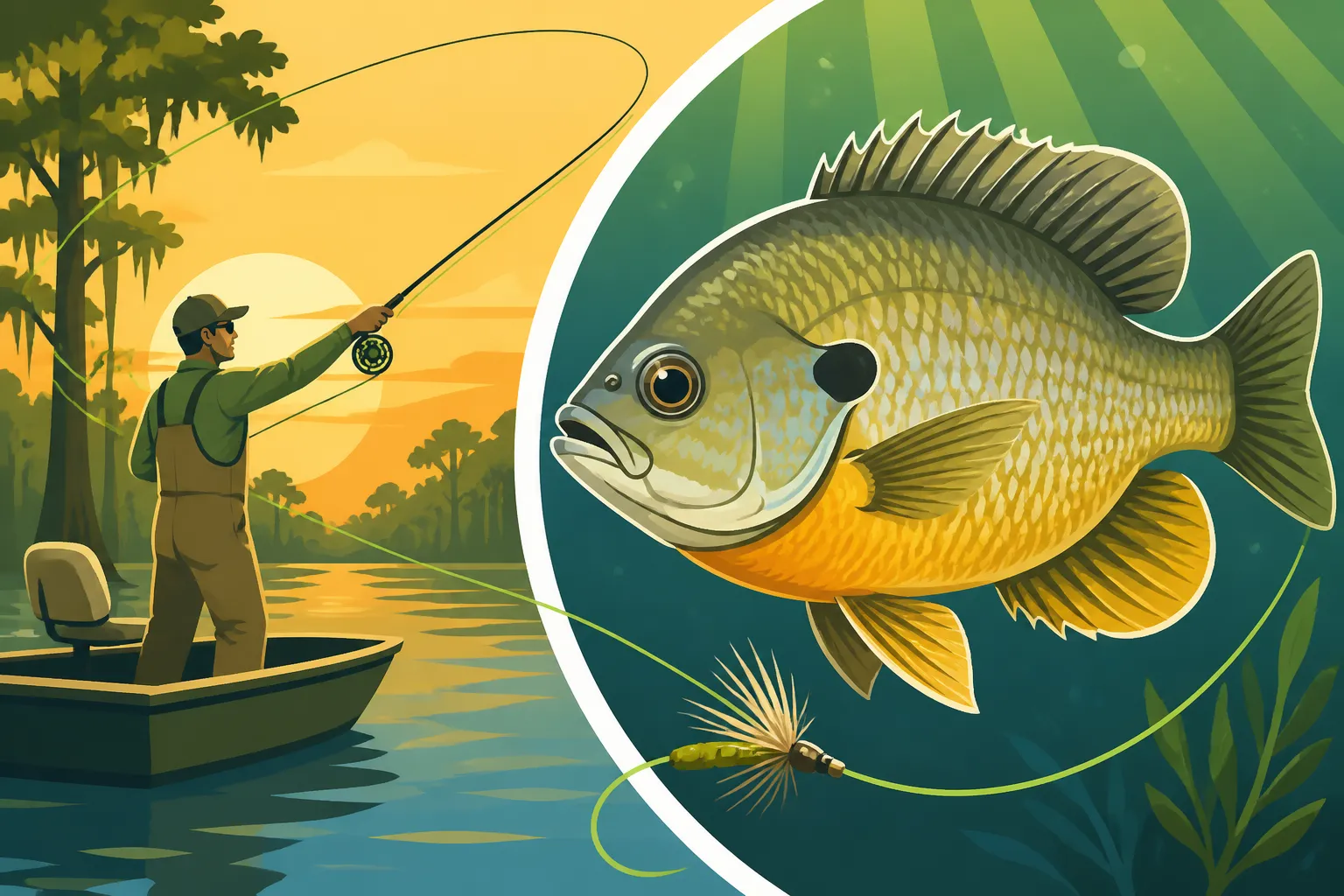
Anyone who dismisses bream as "just panfish" hasn't truly felt the pull of a feisty bluegill on ultralight tackle, let alone a fly rod. When hooked, particularly a chunky Mississippi bluegill or redear sunfish, they turn broadside and fight with a surprising tenacity that belies their size. On a light fly rod, this fight is amplified; every head shake, every dive, is felt directly through the cork handle, making even a palm-sized fish feel like a heavyweight contender. They're abundant in nearly every body of water, from our major reservoirs like the Ross Barnett Reservoir to countless farm ponds, meaning consistent action is almost guaranteed. This accessibility and their willingness to strike a fly make them perfect targets for both seasoned fly anglers and those just dipping their toes into the sport. If you're looking for consistent action and a genuinely spirited fight on appropriate gear, bream on a fly rod offer an incredible experience.
The Art of the Presentation: More Than Just Casting
Fly fishing for bream isn't just about throwing a fly out there; it's about the dance, the delicate presentation that makes your artificial insect look like a natural meal. It demands a different kind of skill set than conventional fishing, one that prioritizes accuracy, subtlety, and observation. You learn to "read the water" in a deeper sense, identifying subtle currents, hidden structure, and the exact lanes where bream are actively feeding. Mastering the delicate cast, whether it's dropping a tiny popper without a splash near a lily pad or drifting a nymph naturally along a creek bank, becomes a rewarding challenge. It's a skill that translates across all forms of fly fishing, making bream an excellent species to hone your techniques on. The patient pursuit, the careful observation, and the triumphant take make every caught bream a small victory in the larger art of angling.
Essential Gear for Fly Rod Bream Fishing in Mississippi
One of the beautiful things about fly fishing for bream is that you don't need a boatload of expensive gear to get started. In fact, some of the most enjoyable days on the water happen with a very minimalist setup. However, choosing the right components will significantly enhance your experience and increase your success rate.
Choosing Your Rod, Reel, and Line Combo
For bream fishing in Mississippi, a lighter fly rod is definitely the way to go. Forget those heavy salmon or bass rods; we're talking about a more delicate touch.
- Fly Rod: A 3-weight, 4-weight, or 5-weight fly rod is generally perfect. A 3-weight offers the most sporting fight and is incredibly sensitive, but can be a bit challenging in windy conditions. A 4-weight is a fantastic all-around choice, providing a good balance of sensitivity and casting power. A 5-weight is a bit more versatile if you think you might also target smaller bass, but it might feel a little heavy for smaller bream. Rod lengths typically range from 7.5 to 9 feet. A 9-foot rod offers better line control and casting distance, which can be advantageous from the bank.
- Fly Reel: For bream, your reel is primarily a line holder, not a drag-fighting machine like it would be for larger species. A simple click-and-pawl reel or an entry-level disc drag reel will serve you perfectly. Look for one that balances well with your chosen rod. You can find excellent, affordable options on Amazon, often bundled with a rod and line, which is a great way to start.
- Fly Line: A weight-forward (WF) floating fly line matched to your rod's weight is essential. This type of line has a heavier front taper that helps load the rod quickly for easier casting and turns over flies effectively. The floating aspect is crucial because most bream fly fishing involves topwater presentations or flies suspended just under the surface. Make sure the line is specifically designed for freshwater and is the correct weight (e.g., WF-4-F for a 4-weight rod).
- Backing: You'll need about 50-75 yards of 20-pound dacron backing. While bream are unlikely to peel off all your fly line into the backing, it's there as a safety net and helps fill the spool for better line management.
Leader and Tippet: The Invisible Connection
The leader and tippet are perhaps the most overlooked yet critical components of your fly fishing setup. They provide the invisible connection between your thick fly line and your tiny fly, allowing for natural presentation.
- Leader: You'll want a tapered leader, typically 7.5 to 9 feet long. The taper means it's thicker at the butt end where it connects to your fly line and gradually thins out to a finer point. This taper helps transfer casting energy smoothly, allowing your fly to land softly. For bream, a leader with a 4X or 5X tippet rating is usually ideal. Many anglers swear by fluorocarbon leaders for their invisibility underwater, but monofilament works just fine for bream.
- Tippet: Tippet is a smaller diameter line that you tie onto the end of your tapered leader, and then attach your fly to it. It's designed to be the weakest link in your system, so if you get snagged, you only lose the fly and a short piece of tippet, not your entire leader. For bream, 4X, 5X, or even 6X tippet material is appropriate. The "X" rating indicates the diameter – the higher the number, the thinner the line. Thinner tippet allows for more natural fly movement and is less visible to cautious fish. It's a good idea to carry spools of a couple of different tippet sizes, like 5X and 6X, to adapt to different fly sizes and water clarity.
The Right Flies for Mississippi Bream
This is where the fun really begins! Bream are opportunistic feeders, and they'll strike a wide variety of flies. Your fly box for bream should include a mix of topwater and subsurface patterns. You can find excellent assortments of bream flies on platforms like Amazon or at your local fly shop.
- Topwater Flies (Poppers and Terrestrials): These are arguably the most exciting flies to fish for bream.
- Poppers: Small foam or cork poppers in sizes #8 to #12 are incredibly effective. Colors like chartreuse, white, black, and yellow are popular. The "pop" they make on the surface mimics an insect struggling or a small baitfish, drawing aggressive strikes.
- Rubber-legged Spiders/Foam Beetles: These realistic-looking patterns, often tied with splayed rubber legs, imitate terrestrial insects that have fallen into the water. Bream absolutely love them. Sizes #10 to #14 work well in natural colors like black, brown, or olive.
- Crickets/Grasshoppers: Imitations of these larger insects can be deadly, especially in late summer and fall when natural terrestrials are abundant.
- Subsurface Flies (Wet Flies and Nymphs): When bream aren't looking up, these flies get down to where they're feeding.
- Small Wet Flies/Soft Hackles: Patterns like a small Prince Nymph, Hare's Ear Nymph, or even a simple Woolly Bugger (size #10 to #14, in olive, black, or brown) can be very effective. They imitate aquatic insects, larvae, or small baitfish.
- Bead-head Nymphs: The bead adds a bit of weight, getting the fly down faster, especially useful in deeper water or when fishing vertically around structure.
- San Juan Worm: While controversial in some circles, this simple worm imitation is incredibly effective on nearly any freshwater species, including bream, particularly after a rain when worms are washed into the water.
- Tiny Streamers: Micro-streamers or simple Marabou Jigs (size #12 to #16) can imitate small minnows and are great for larger bream or even accidental encounters with smaller bass.
Mastering Techniques for Bream on the Fly
Understanding the gear is just the first step. The real magic happens when you combine that knowledge with effective techniques, learning how to present your fly in a way that bream can't resist. It’s a rewarding journey that will sharpen your angling skills immensely.
Reading the Water and Finding Bream Hotspots
Bream, like all fish, are creatures of habit and prefer certain types of habitat for feeding, spawning, and protection. Learning to identify these spots will drastically increase your success. Our amazing Mississippi waters offer a diverse range of environments where bream thrive.
- Shallow Flats and Weed Beds: These are prime feeding grounds, especially in the mornings and evenings. Bream will cruise the edges of weed lines, picking off insects and small crustaceans. Look for emergent vegetation like lily pads, hydrilla, or coontail moss. These areas provide cover and a rich food source.
- Submerged Structure: Any kind of underwater structure offers a sanctuary for bream. This includes submerged logs, brush piles, rock piles, and even old tires. Fish will hold tight to these features, darting out to grab a meal. Fan-casting around these structures is a good strategy.
- Docks and Piers: Man-made structures often attract bream, providing shade and cover from predators. Casting flies tight to the pilings or under the docks can be very productive. Remember to cast gently to avoid spooking the fish in these high-traffic areas.
- Creek Mouths and Inflows: Areas where smaller creeks or drains flow into a larger lake or pond can concentrate bream, especially after rain, as new food sources are washed in. The slightly cooler, oxygenated water can also attract them.
- Open Water (for schooling bream): Sometimes, particularly larger bream, will school up in open water, feeding on plankton or small baitfish. If you see signs of surface activity, don't hesitate to cast a small streamer or a popper into the fray. For more insights on where to find these fish, check out our guide on the Best Fishing Spots in Mississippi.
Casting and Presentation: Delicate Touches for Skittish Bream
Unlike bombing a lead sinker with conventional gear, fly casting for bream demands finesse. Accuracy and a soft landing are far more important than distance. Bream can be surprisingly skittish, especially in clear, shallow water.
- Accuracy Over Distance: You don't need to cast 60 feet to catch bream. Often, the fish are just a few yards from the bank or your boat. Practice placing your fly precisely where you want it – near that lily pad, under that overhanging branch, or right along the edge of the weed line.
- Soft Landings: When using a topwater fly, you want it to land as gently as a natural insect. A hard splash can send bream scattering. This comes with practice, focusing on a controlled forward cast that allows your leader to turn over smoothly, letting the fly "float" down to the surface.
- Roll Casts and Short Pitches: Sometimes, obstacles like trees or thick brush behind you prevent a traditional overhead cast. Learning a roll cast, or even just a short, controlled pitch, can be invaluable for presenting your fly in tight spots.
- Leader First: Aim to have your leader, and then your fly, land on the water first. The fly line should follow, but ideally, not land directly on top of your target fish. This minimizes disturbance and looks more natural.
The Retrieve: Making Your Fly Irresistible
Once your fly is on the water, the retrieve is what brings it to life and entices a strike. Different flies require different retrieves.
- Topwater Poppers and Terrestrials: For poppers, a "pop-pause" retrieve is classic. Cast it out, let it sit for 5-10 seconds, then give it a gentle "pop" or two by quickly stripping the line, and then pause again. The pause is often when the strike occurs, as the bream investigate the disturbance. For foam spiders or beetles, a slow, subtle twitch-and-pause retrieve often works best, mimicking an insect struggling on the surface.
- Subsurface Flies (Nymphs, Wet Flies, Small Streamers): When fishing these patterns, the goal is often a natural drift or a slow, deliberate movement.
- Dead Drift: If you're fishing a nymph or wet fly in a current (like near a creek mouth), letting it "dead drift" downstream, completely drag-free, is often the most effective. Bream will pick it up as it tumbles naturally.
- Slow Strip: In still water, a very slow, short strip-and-pause retrieve can imitate a swimming insect or small baitfish. Sometimes, just letting the fly sink and then twitching it subtly will trigger a bite.
- Figure-Eight Retrieve: This is a slow, continuous retrieve where you use your fingers to form a figure-eight pattern with the line, imparting a constant, subtle motion to the fly. It can be deadly for wary bream. Pay close attention to your line during the retrieve; bream often hit very softly, and a slight twitch or hesitation in your line might be the only indication of a bite.
Practical Tips for a Successful Mississippi Bream Outing
Beyond the gear and techniques, a few practical considerations can significantly impact your success and enjoyment when fly fishing for bream in Mississippi. Remember, preparation and mindful angling are key.
Timing Your Trip: When Bream are Biting Best
Just like any other species, bream have peak activity times that you can leverage for better fishing. Understanding the Mississippi Fishing Seasons Calendar and the Best Time of Year to Fish in Mississippi can help immensely.
- The Spring Spawn: Without a doubt, spring is prime time for bream. As water temperatures rise (typically into the 60s Fahrenheit), bream move into shallow water to spawn. They become incredibly aggressive and territorial, making them easy targets for a well-placed fly. This period, roughly from April through June, can offer non-stop action, especially in areas with sandy bottoms or dense vegetation.
- Early Mornings and Late Evenings: During the warmer months, bream are often most active during the cooler parts of the day. In the low light of dawn and dusk, they move into the shallows to feed more confidently. During the harsh midday sun, they'll often retreat to deeper, shadier cover.
- Warm, Sunny Days: While extreme heat can slow them down, bream generally prefer warm, stable weather. A few consecutive days of sunshine with light breezes can really get them active. Overcast days with stable barometric pressure can also be excellent, as it keeps them feeding throughout the day.
- Stable Weather Patterns: Rapid changes in weather, like a sudden cold front, can shut down the bite. Bream, like most fish, prefer stable conditions. If you can, plan your trip during a consistent weather pattern.
Ethical Angling and Conservation
As anglers, we have a responsibility to protect our natural resources and ensure that future generations can enjoy the same incredible fishing experiences we do. Fly fishing, with its often catch-and-release ethos, naturally aligns with conservation principles.
- Know Your Limits: Always be aware of the Mississippi Statewide Creel Limits for bream and other panfish. While fly fishing often leads to catch and release, if you decide to keep some for a delicious meal, respect the regulations.
- Handle Fish Gently: If you're practicing catch and release, minimize handling time. Wet your hands before touching the fish to protect its slime coat, and use barbless hooks (or pinch down the barbs on your regular hooks) for easier, less damaging releases. Use a pair of forceps or hemostats to quickly remove the hook.
- Leave No Trace: Pack out everything you pack in. Don't leave discarded line, fly packaging, or any other trash behind. Our lakes and rivers are precious, and it's up to us to keep them clean.
- Respect Private Property: Always be mindful of land ownership. If you're fishing on a private pond, make sure you have permission. If you're fishing on public lands, understand the access rules, which sometimes includes specific permits for state park lakes. Our guide on Mississippi State Park Lake Fishing Permits can help clarify this. By following these guidelines, you contribute to the health of Mississippi's fisheries and uphold the angling tradition with integrity.
Here's a quick look at some popular fly types for bream:
| Fly Type | Description | Best for | Retrieval Style | Example Colors |
|---|---|---|---|---|
| Foam Popper | Floats on surface, creates disturbance when stripped. | Aggressive, surface-feeding bream | Pop-pause, short strips | Chartreuse, White, Black, Yellow |
| Rubber-Legged Spider | Floats on surface, realistic leg action. | Finicky, wary surface-feeders | Twitch-pause, dead drift | Black, Brown, Olive |
| Bead-Head Nymph | Sinks slowly, imitates aquatic larvae/insects. | Subsurface feeding, deeper water, current | Dead drift, slow strip | Olive, Brown, Black, Tan |
| Small Woolly Bugger | Streamer that imitates baitfish or leeches. | Larger bream, cooler water, targeting structure | Slow strip, jigging motion | Olive, Black, Brown |
| San Juan Worm | Simple worm imitation. | After rain, muddy water, highly effective year-round | Dead drift, subtle twitch | Red, Pink, Chartreuse |
| Small Wet Fly | Sinks just below surface, mimics emerging insects. | Subtle feeding, general purpose | Slow swing, slight twitch, dead drift | Hare's Ear, Prince Nymph, Caddis Larva |
Disclaimer
The information provided in this guide is for general informational purposes only and does not constitute legal advice. Fishing regulations and conditions in Mississippi can change. Always consult the official Mississippi Department of Wildlife, Fisheries, and Parks (MDWFP) website or their latest regulations pamphlet before heading out on the water. It is the angler's responsibility to know and follow all current laws and regulations.