Best Topwater Lures for Early Morning Bass
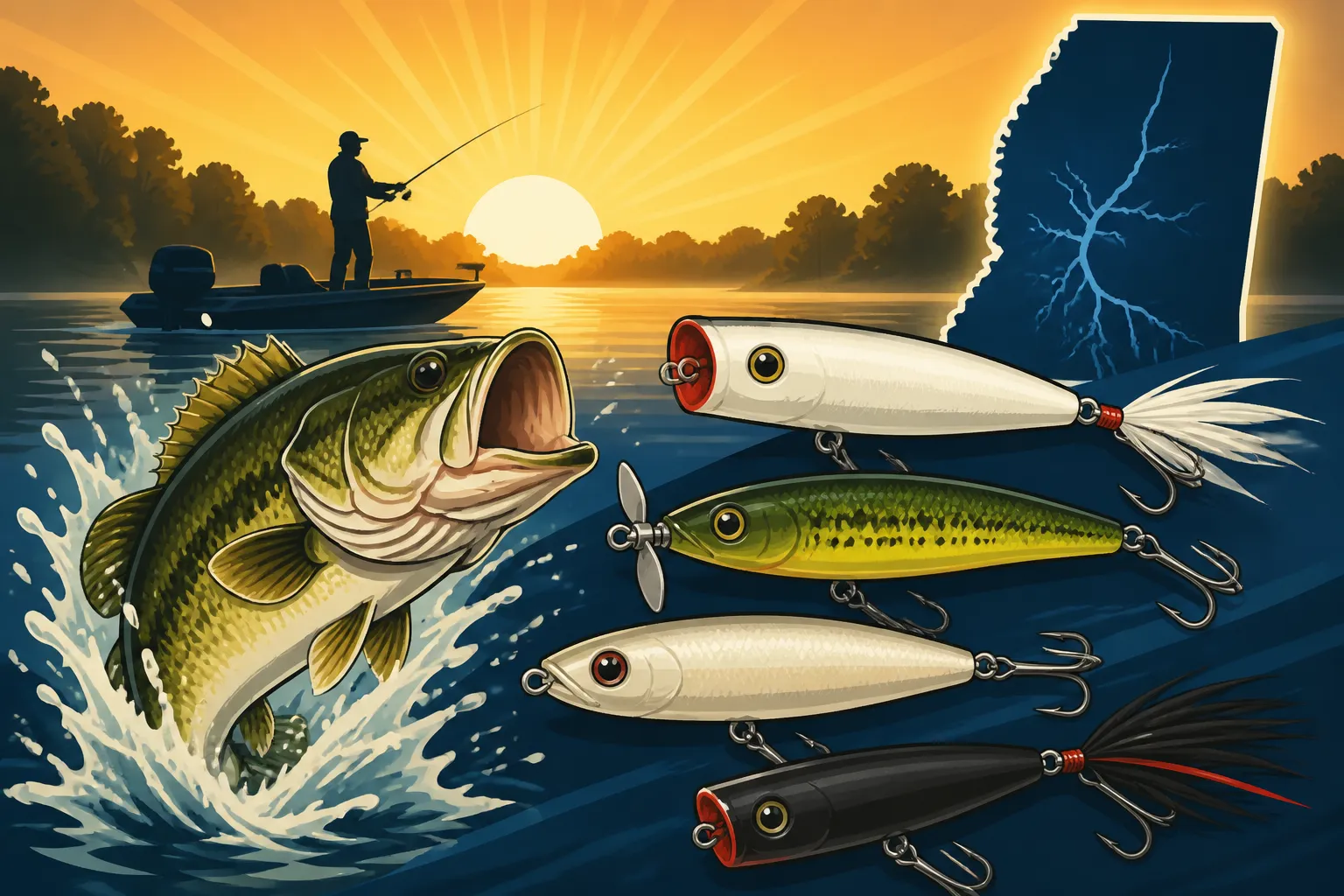
There's nothing quite like the anticipation of that first cast as the sun barely cracks the horizon, painting the sky with soft hues. You know the feeling – that quiet hope that a monster largemouth bass will absolutely obliterate your lure on the surface. But let's be honest, getting those explosive topwater bites isn't always a given, and picking the right lure for those early morning hours can feel like a daunting task with so many options out there. This comprehensive guide is here to cut through the noise, helping you understand precisely which topwater lures excel in the pre-dawn and early morning light for chasing Mississippi bass, and how to fish them effectively to maximize your chances of a truly memorable strike.
Why Early Morning is Prime Time for Bass
Anyone who has spent time on Mississippi's lakes and reservoirs knows that fishing during the heat of midday can be tough. The bass often go deep, become lethargic, or simply disappear into thick cover. But as the night gives way to dawn, a magical transformation occurs, making early morning an absolute sweet spot for targeting aggressive bass, especially with topwater presentations.
The Magic Hour and Bass Behavior
As the sun begins its ascent, but before it truly blazes down, you hit what anglers often call the "magic hour" or "golden hour." During this low-light period, several factors combine to make bass more active and willing to chase surface baits. First, the water temperatures are at their coolest point after the overnight hours, which can invigorate bass after a warm day. This cooler water often brings them closer to the surface, making them more accessible to topwater presentations. Second, the dim light significantly reduces a bass's ability to scrutinize your lure. They rely more on sound and silhouette, making them less wary and more prone to reactionary strikes. This is when their predatory instincts kick into high gear, sensing an opportunity to feed before the bright sun sends them scurrying for deeper, shadier retreats.
They're often cruising the shallow flats, along weed lines, or near woody cover, actively hunting baitfish like shad or bream that are also moving in the low light. It's a prime feeding window, and your topwater lure, mimicking a struggling baitfish or an unsuspecting frog, becomes an irresistible target. If you've ever wondered about the broader fishing patterns, our Mississippi Fishing Seasons Calendar offers an excellent overview of when different species are most active throughout the year, but for bass, early morning in almost any season is often a winner.
Understanding Bass Ambush Tactics
Bass are master ambush predators. They love to position themselves in places where they can hide and spring out to surprise their prey. In the early morning, with its softer light, these ambush points become even more effective. Think about it: shadows are longer, less defined, and provide fantastic cover. Bass will tuck themselves under overhanging trees, along the edges of lily pads, inside dense grass mats, or beside submerged timber and docks. From these positions, they can peer upwards, their dark backs camouflaged by the dim conditions, waiting for something to break the surface.
When you cast a topwater lure near these structures, you're not just presenting a meal; you're triggering a primal strike response. The sudden splash, the rhythmic walk, or the frantic gurgle of a topwater lure near their hiding spot is often too much for an opportunistic bass to resist. This is particularly true in Mississippi's abundant shallow waters, where cover is plentiful. If you're focusing on bass, our comprehensive Largemouth Bass Fishing in Mississippi guide dives deeper into their habits and preferred habitats across the state.
Topwater Lure Categories for Early Morning Success
When it comes to topwater fishing for early morning bass in Mississippi, you're looking for lures that create commotion, present a clear silhouette, and can be worked effectively in low light conditions. Not all topwater baits are created equal, and understanding the strengths of each type will help you choose the perfect one for the specific conditions you encounter.
Poppers and Chuggers
These are often the first topwater lures many anglers reach for, and for good reason. Poppers and chuggers are characterized by their concave or cupped faces, designed to push water and create a "pop" or "chug" sound when retrieved. This action mimics a struggling baitfish, a frog jumping, or even a bug falling into the water.
In the early morning, their ability to create a distinct, audible disturbance is a huge advantage. The sound travels well in calm water and low light, drawing bass from nearby cover that might not see a more subtle presentation. Popular choices include the classic Rebel Pop-R, often found in various sizes on platforms like Amazon, or the larger, more aggressive Rapala Skitter Pop. You'll want to experiment with your retrieve: a series of quick pops followed by a pause, or a slower, more deliberate chug with longer pauses. These lures are especially effective around docks, laydowns, and sparse grass lines in relatively calm conditions.
Walking Baits (Spooks)
Walking baits, often referred to as "spooks" after the iconic Heddon Super Spook, are perhaps one of the most satisfying topwater lures to fish. They are typically cigar-shaped, lipless, and designed to move from side to side in a "walk-the-dog" retrieve. This erratic, gliding action perfectly imitates a wounded baitfish darting across the surface.
Early morning is absolutely prime time for walking baits, especially when bass are actively chasing shad in open pockets of water or along extended points. The Heddon Super Spook, and its smaller counterpart, the Super Spook Jr., are legendary for a reason. Other excellent options include the Zara Spook or even the more refined Lucky Craft Sammy. The key here is the retrieve, which we'll cover in more detail shortly, but it's that consistent, rhythmic side-to-side sashay that bass can't ignore. The silent, gliding motion with a slight wiggle is less aggressive than a popper but can often be more effective in clearer water or when bass are being a bit more finicky, especially on lakes like Ross Barnett Reservoir. For more insights on how to specifically target bass, our guide on Bass Fishing Techniques for Mississippi Anglers will give you a deeper dive.
Prop Baits
Prop baits feature one or more small propellers, typically at the front and/or back of the lure. As you retrieve them, these props spin, creating a churning, sputtering action that mimics a struggling or fleeing baitfish. The noise and disturbance can be incredibly effective in calling bass up to the surface.
These lures shine in early morning conditions, particularly when you're looking to cover water quickly or when there's a slight ripple on the surface that might mask a more subtle presentation. The action is often more continuous than a popper, but still offers good versatility with pauses. Examples include the Boy Howdy or the Zoom Horny Toad (though the Horny Toad is a soft plastic, it falls into a similar action category when rigged on a hook and retrieved on the surface). They are excellent for fishing over submerged grass beds or along stump fields where bass might be lurking just beneath the surface. You can often find a wide selection of prop baits to compare prices on Amazon or at local tackle shops across Mississippi.
Frogs and Toads
Soft plastic frogs and toad baits are designed to be fished over heavy cover where other topwater lures would snag instantly. Think lily pads, dense hydrilla mats, and thick brush. Their weedless design allows them to glide effortlessly over the slop, imitating a frog or a mouse struggling across the vegetation.
Early mornings, especially during the warmer months, are absolutely fantastic for frog fishing. Bass often seek refuge and ambush points within thick vegetation, and a frog lure presented correctly can pull them out of the densest cover. Brands like Stanley Ribbit frogs, Strike King Sexy Frog, or LIVETARGET frogs are very popular. The key is to work them slowly over the top of the cover, pausing them in open pockets or along the edges, inviting an explosive strike. The anticipation of a bass blowing up through a thick mat of vegetation is truly one of fishing's greatest thrills. Learning How to Fish Grass Beds for Bass is crucial for mastering these lures.
Buzzbaits
Buzzbaits are characterized by a large, rotating blade at the front that churns and gurgles water, creating a highly visible and audible disturbance on the surface. They are designed for speed and aggression.
While many topwater lures excel with stop-and-go retrieves, buzzbaits are meant to be reeled in consistently and relatively fast. This high-speed, noisy retrieve is incredibly effective in low light conditions, especially when bass are super aggressive. The constant commotion draws attention from a distance, making them perfect for covering large areas quickly in search of active fish. They're particularly good early in the morning when bass are actively hunting baitfish on flats or along shallow banks. Consider a chartreuse and white buzzbait or a black one in very low light. The Z-Man ChatterBait with a surface blade offers a similar, unique hybrid action that can also be deadly. For an even more intense early morning experience, some anglers explore How to Catch Bass at Night using similar principles of sound and silhouette.
Mastering Topwater Retrieves for Mississippi Bass
It's not enough to simply throw a topwater lure out there; the retrieve is paramount to unlocking its full potential. Each type of lure demands a slightly different approach to truly entice those early morning Mississippi bass.
Popping and Pausing Perfection
For poppers and chuggers, the name of the game is often a series of "pop, pop, pause" or "chug, chug, pause." To execute this, cast your lure to your target – perhaps a shady bank, a dock pilings, or an isolated laydown. Let it sit for a few seconds. This initial pause often triggers strikes from bass that heard the splash and are now investigating.
Then, give your rod tip a sharp, downward twitch, causing the lure to "pop" or "chug" water. The key is to move only the lure, not to drag it forward excessively. After one or two pops, let it sit again. The length of the pause can vary; sometimes a quick twitch-twitch-pause works, while other times a long, drawn-out pause of 5-10 seconds is what it takes for a hesitant bass to commit. Pay attention to the bass's mood. If they're aggressive, you can speed up your retrieve. If they're a bit more finicky, lengthen those pauses. This patience, combined with the explosive pops, is what makes these lures so effective in the dim, early morning light.
The Art of the Walk
The "walk-the-dog" retrieve for walking baits is an iconic topwater technique. It takes a little practice but is incredibly rewarding. After casting your lure, let it settle. Then, point your rod tip slightly downward, towards the water, and begin a rhythmic twitching motion with your wrist while simultaneously reeling in the slack created by each twitch.
The rhythm is crucial: twitch, reel, twitch, reel. Don't move the rod too much; it's mostly in the wrist. This combination of rod work and reel work makes the lure glide from side to side, creating that irresistible wounded baitfish action. The key is to find your cadence. Some days a fast, frantic walk is best, while other days a slower, wider glide is more effective. Again, pauses can be incorporated, especially after a particularly wide "walk," but often a consistent, rhythmic walk is what draws those explosive strikes. Walking baits are fantastic for covering water and calling up active bass, especially if you're trying to figure out What Is the Best Time to Fish for Bass in Mississippi? on a given day.
Buzzing Through the Pads
Buzzbaits are perhaps the most straightforward of the topwater lures to retrieve, but still require attention to detail. The main goal is to keep the blade spinning and the lure on the surface from the moment it hits the water.
Cast your buzzbait past your target area, then immediately begin reeling at a steady, moderate to fast pace. You want the blade to create a consistent "bloop-bloop-bloop" sound and a visible wake. The faster you reel, the more commotion it creates. This technique is fantastic for covering lots of water quickly, particularly along weed edges, sparse lily pads, or across shallow flats. The key is consistency; don't let the lure sink. If a bass strikes and misses, keep reeling! Sometimes they'll turn around and hit it again. If they don't, make another cast to the same spot. The aggressive nature of a buzzbait is often what triggers those big, reactionary strikes in the low light.
Essential Gear and Tips for Early Morning Topwater
Beyond choosing the right lure and mastering the retrieve, having the correct gear and understanding a few key environmental factors can significantly boost your success during those prime early morning hours.
Rod, Reel, and Line Selection
For topwater fishing, particularly with heavier baits like walking baits or frogs, a medium-heavy to heavy power baitcasting rod between 6'10" and 7'6" is generally preferred. This rod power provides the backbone needed for accurate casting, working the lures effectively, and battling powerful bass, especially when fishing around cover. A fast tip is also beneficial for precise lure manipulation.
Pair this with a baitcasting reel that has a gear ratio in the 7.1:1 to 8.1:1 range. The faster retrieve allows you to quickly pick up slack, maintain control during the retrieve, and respond instantly to a strike. For line, many anglers prefer monofilament or braided line. Monofilament (12-20lb test) floats, which helps keep topwater lures riding high, and its stretch can be forgiving on aggressive strikes. Braided line (30-65lb test, depending on cover) offers incredible strength, no stretch for better hooksets, and excellent castability. If you use braid, consider adding a short fluorocarbon leader (15-20lb) in clear water, though in low light, many bass won't notice the braid. Getting your setup right is crucial, and our article on Choosing the Right Rod and Reel for Mississippi Fishing provides even more detailed guidance. You can find excellent quality rods and reels suitable for topwater bass fishing on Amazon or at local sporting goods stores like Bass Pro Shops.
Color Choices and Water Clarity
While sound and action are paramount in low light, lure color still plays a role, especially as the sun begins to rise. For very low light conditions (pre-dawn), dark colors like black, dark blue, or purple often create the best silhouette against the dimly lit sky, making them easier for bass to track. Think about a black buzzbait or a dark-colored frog as the first rays of light are just beginning to appear.
As the sun gets a little higher and you have slightly more ambient light, natural baitfish patterns (shad, chrome, bone) or frog patterns become very effective. If the water is stained or murky, brighter colors like chartreuse, white, or firetiger can stand out more. In very clear water, especially as the sun gets higher, more subtle colors and translucent finishes can be more appealing. Always have a few different color options on hand, but don't overthink it too much in the early morning; action and noise usually trump color in the lowest light.
The Importance of Stealth and Presentation
Early morning often means calm, still water, which makes bass very sensitive to disturbances. Stealth is absolutely critical when approaching your fishing spots. Keep noise to a minimum – avoid slamming tackle box lids, stomping your feet in the boat, or running your trolling motor on high. Approach your target areas slowly and quietly.
Your cast needs to be accurate and land softly. A loud splash from a poorly executed cast can easily spook nearby bass, sending them scattering. Aim to land your lure just beyond your target, and then retrieve it into the strike zone. Pay particular attention to shady banks, overhanging cover, and any pockets within vegetation. These are the prime ambush points where bass will be waiting. Even if you're not specifically targeting crappie, understanding general fish behavior can be helpful, so check out our guide on Best Time of Day to Catch Crappie as well for insights into how light affects other popular Mississippi game fish.
Disclaimer
Fishing involves inherent risks, and conditions can change rapidly. Always prioritize safety, wear appropriate personal flotation devices, and be aware of your surroundings. Regulations, seasons, and limits can change, so always consult the latest Mississippi Department of Wildlife, Fisheries, and Parks (MDWFP) official guidelines before heading out on the water. This guide is for informational purposes only and does not constitute professional advice.