Best Lure Colors for Muddy Water Bass Fishing
There's nothing quite as frustrating as waking up for a planned bass fishing trip on your favorite Mississippi lake, only to find the water has turned a murky, opaque brown overnight after a heavy rain. That beautiful clear water you scouted now looks like chocolate milk, and suddenly, all your go-to lures feel useless. Many anglers get disheartened, thinking the fishing is ruined, but that's simply not true! Bass are still there, they're still eating, but you need to adjust your approach. This comprehensive guide will dive deep into understanding why certain lure colors shine in muddy water, giving you the confidence and knowledge to successfully target bass when conditions get tough in Mississippi.
Understanding the Challenges of Muddy Water Fishing
When a strong storm rolls through or heavy rains persist for days, our beloved Mississippi lakes and rivers can quickly transform. The once clear, inviting waters become stained with sediment, creating what we call "muddy water" or "stained water." This drastic change isn't just a visual nuisance; it fundamentally alters the underwater environment and how bass perceive their surroundings. It's easy to assume the fish just disappear, but they're still there, merely adjusting their hunting strategies.
How Bass React to Reduced Visibility
In clearer waters, largemouth bass are highly visual predators. They rely heavily on their eyesight to spot prey, track movement, and strike. When the water turns muddy, this primary sense is severely hampered. Imagine trying to hunt in a dense fog – it's tough! Bass experience something similar. Their hunting range shrinks dramatically, and they can't see lures from a distance. This means they need to feel or hear a lure much closer before they can even consider striking it. They often retreat to areas where they feel more secure, like heavy cover, stumps, or deep-water structure, or they may move to shallower, slightly less affected areas where baitfish might be disoriented. For more insights on how these powerful fish behave, check out our guide on Largemouth Bass Fishing in Mississippi.
Light Penetration and Its Impact on Lure Visibility
The biggest factor with muddy water is how little light can penetrate. Clear water allows a full spectrum of sunlight to reach significant depths, but suspended particles in muddy water scatter and absorb light very quickly. Different wavelengths of light penetrate water at varying rates. Red light, for instance, is the first to be absorbed, disappearing within the first few feet of water. Blue and green light penetrate deeper in clear water, but in heavily stained conditions, even these wavelengths are quickly diminished. This means that a vibrant red lure might look like a dull brown or even black just a few feet below the surface, rendering its intended visual appeal moot. Understanding this is crucial when selecting your lure colors, as what looks good to you above water might be completely invisible to a bass below.
The Science of Color and Contrast in Low Visibility
It's a common misconception that fish don't see color. They absolutely do, but how they perceive it is heavily influenced by light availability and water clarity. In muddy water, the visual component of a lure becomes less about its exact shade and more about its ability to create a strong, discernible presence.
Why Contrast Matters More Than Hue
When direct light penetration is minimal, the goal isn't to perfectly mimic natural baitfish colors. Instead, you want to create a stark contrast against the dark background of the muddy water. Think of it like a silhouette. A dark object against a lighter background, or a very light object against a very dark background, will stand out. In dark, stained water, dark lures create a clear, solid profile that bass can more easily detect, especially if they are close. Similarly, incredibly bright, fluorescent colors can often "pop" more than subtle, natural shades because they reflect what little light is available, or they possess pigments that react strongly to ultraviolet (UV) light, which can penetrate slightly deeper. This is a fundamental shift from clear water strategies, where mimicking prey's natural colors is often paramount.
The Role of UV Reflectance in Murky Water
Some lure colors, particularly bright fluorescents like chartreuse, neon green, and hot orange, contain pigments that are highly reflective of ultraviolet (UV) light. While visible light is quickly absorbed in muddy water, UV light can sometimes penetrate slightly further or be more easily perceived by a fish's eye, depending on the species and conditions. These UV-active lures aren't "glowing" in the dark, but rather, they're taking advantage of wavelengths that might still be present and visible to a bass, making them more apparent than a lure that lacks these properties. This can give them an edge by appearing more vibrant and distinct to a bass even in extremely low light or murky conditions. Many modern soft plastics and hard baits integrate these UV-enhancing properties, and you can often find them explicitly labeled when browsing options on sites like Amazon.
Top Lure Color Families for Muddy Water Bass
Given the challenges, what colors should you be reaching for when Mississippi's waters are anything but clear? The strategy boils down to maximizing visibility through strong contrast or through highly reflective, bold hues.
Dark and Opaque Colors: Creating a Strong Silhouette
When visibility is poor, think about creating a strong profile. Dark colors are king here. Black, junebug (a dark purple with green or blue flake), black-and-blue, or plum are excellent choices. These colors absorb most of the ambient light, creating a clear, solid silhouette that a bass can easily distinguish against the murky backdrop as it swims by.
- Black: Simple, effective, and always a go-to. A black jig with a blue or black trailer, or a black worm, provides a strong, undeniable presence. It doesn't rely on light reflection; it relies on definition.
- Junebug: This color is a staple in the Southern states for good reason. It’s a very dark purple, often with green or blue flake, that offers the best of both worlds: a dark profile with just enough subtle flash to catch any stray light. It’s particularly deadly when paired with soft plastics like worms, creature baits, or even jigs.
- Black-and-Blue: Another classic combination, especially for jigs and spinnerbait skirts. The black provides the silhouette, while the blue offers a hint of color that some anglers believe bass react positively to, perhaps mimicking a crawfish. You can easily find a wide variety of black-and-blue jigs and trailers on Amazon.
These dark colors work because they present a clear, dark object that stands out. Bass can then rely on their lateral line to detect the vibration and their sense of smell to locate the offering once it's close enough.
Bright and Fluorescent Colors: Maximizing Visibility
On the opposite end of the spectrum, extremely bright and fluorescent colors can also be incredibly effective. These colors are designed to "pop" even in low light, grabbing a bass's attention through sheer vibrancy.
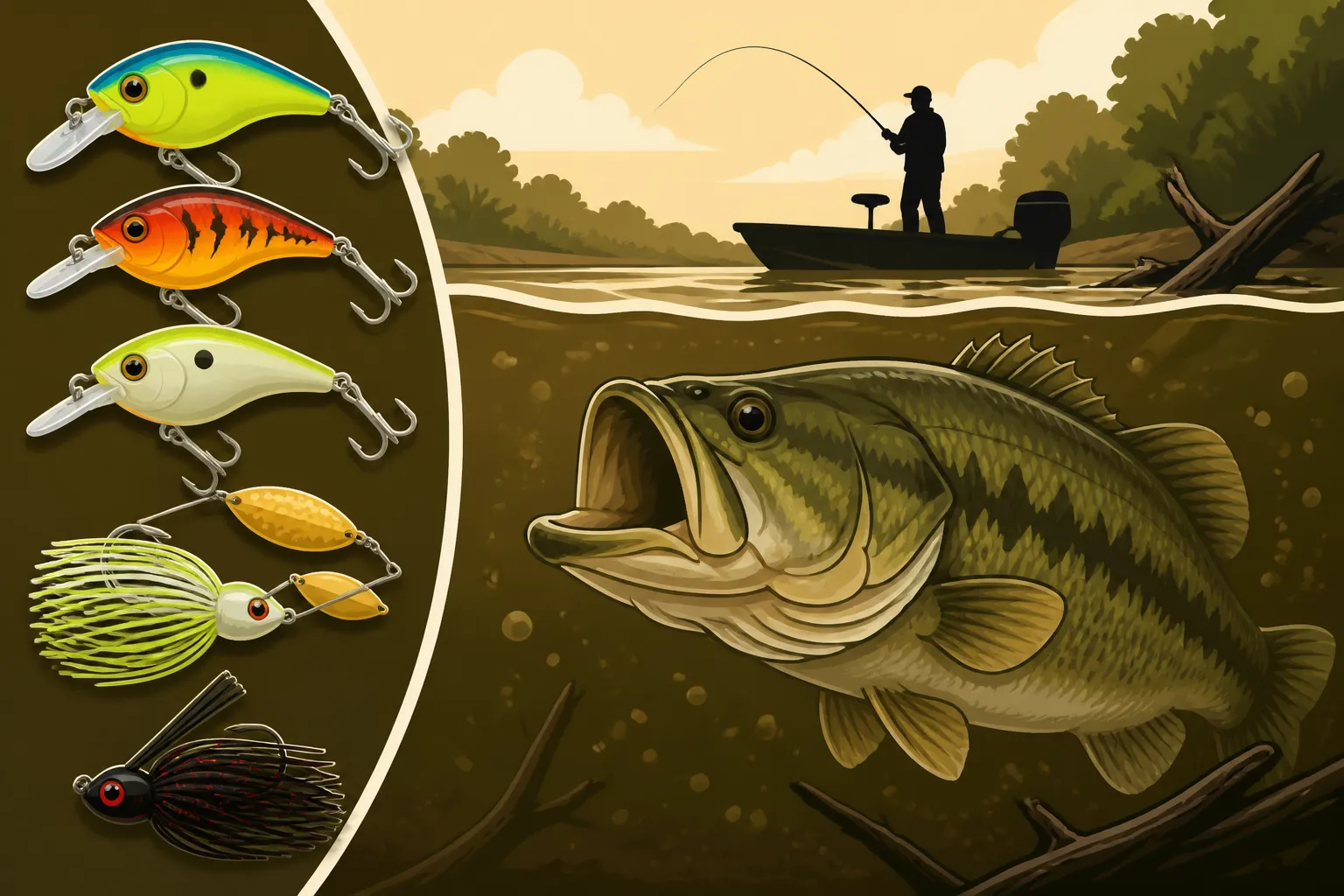
- Chartreuse: This neon yellow-green is arguably the most famous muddy water color. It's incredibly bright and reflects available light strongly, making it highly visible. It's fantastic on spinnerbait blades, crankbaits, ChatterBaits, and even soft plastic trailers.
- Neon Green and Orange: Similar to chartreuse, these vibrant hues offer maximum visibility. They can be particularly effective on lures that create a lot of disturbance, like bladed jigs or lipless crankbaits, where the visual "flash" can combine with vibration to draw strikes.
- White: While not fluorescent, a stark white lure can also create excellent contrast against dark water. Think of a white spinnerbait or a white swim jig. It stands out like a beacon.
The key with these bright colors is their ability to grab attention quickly. While a bass may not be able to identify the exact shade, the intense visual signal often triggers an investigatory strike, especially when paired with strong vibration.
Natural Colors with a High-Contrast Edge
Sometimes, a subtle approach can still work, but it needs an edge. Even in muddy water, bass occasionally prefer something that hints at a natural forage, but with an added element to ensure it's noticed.
- Brown with Orange/Chartreuse: This combination often mimics crawfish, a prevalent forage for bass in Mississippi. A brown jig with an orange or chartreuse trailer gives a natural base with a "pop" of color that can be irresistible. This offers a more subtle profile than pure chartreuse but still ensures visibility.
- Red: While red light is quickly absorbed, a solid red lure can sometimes work, especially in slightly stained rather than completely muddy water. It creates a dark, blood-like profile that can imitate injured bait or a crawfish. Some anglers swear by red crankbaits or lipless crankbaits in these conditions.
The trick here is finding that balance where the natural appeal is enhanced by a high-visibility element, making it detectable without being overly aggressive in appearance.
Combining Color with Lure Action and Scent
Simply picking the right color isn't a silver bullet. In muddy water, you need a holistic approach that combines color with other sensory triggers. Bass in low visibility environments rely more heavily on their other senses: sound (lateral line detection), vibration, and scent.
The Indispensable Role of Vibration
Since sight is compromised, vibration becomes paramount. Lures that displace a lot of water or create distinct sounds are critical. These provide the bass with a "feel" of the lure's presence, allowing them to home in even if they can't see it.
- Spinnerbaits: With large thumping blades (like Colorado blades), spinnerbaits are vibration machines. Pair a chartreuse or black/blue skirt with gold or silver Colorado blades for maximum thumping power and flash. This combination makes it easier for bass to locate the lure using their lateral line.
- ChatterBaits/Bladed Jigs: The oscillating blade on these lures creates an irresistible vibration and flash, making them incredibly effective in muddy conditions. Again, dark colors or bright chartreuse are excellent choices for the skirt.
- Crankbaits with Rattles: Deep-diving crankbaits that have internal rattles create sound waves that travel well through murky water. Their erratic swimming action also displaces a lot of water. Look for models with loud rattles and choose colors like chartreuse, red, or black-and-blue.
- Lipless Crankbaits: These lures are fantastic for covering water and creating a lot of vibration and noise. Their tight wobble and loud rattles make them easy for bass to detect. Colors like chrome/black, red, or chartreuse are popular choices. When you're fishing these in Mississippi's muddy rivers, remember to consider the current; bass will often hold tight to structure.
Remember, a bass's lateral line is incredibly sensitive to pressure changes in the water. A lure that creates a strong "thump" or "wobble" is essentially shouting its presence to any nearby fish. This is a key technique for Bass Fishing Techniques for Mississippi Anglers.
Increasing Lure Profile and Adding Scent
In muddy water, a bigger meal is easier to find. Don't be afraid to size up your lures. A larger profile soft plastic, a bulkier jig, or a bigger crankbait will displace more water and present a more substantial target for a bass that's relying on feel.
- Bulkier Soft Plastics: Instead of a thin worm, opt for a creature bait, a large chunk trailer, or a bulky swimbait. These offer a more substantial target. Colors like junebug, black-and-blue, or black are ideal.
- Scent Attractants: This is where you can truly capitalize on another one of a bass's keen senses. Adding a strong scent to your soft plastics, jigs, or even hard baits can make a significant difference. Brands like Berkley PowerBait or Yum often infuse their plastics with scent, but you can also purchase topical attractants (gels, sprays, or dyes) to apply to any lure. This gives the bass an additional sensory input to track down your offering, even if they can't quite see or feel it distinctly. You can easily find these scent products on Amazon to add to your tackle box.
Table: Muddy Water Lure Color and Type Guide
Here's a quick reference for common muddy water scenarios in Mississippi:
| Water Clarity Level | Recommended Lure Type & Action | Best Color Choices | Why it Works |
|---|---|---|---|
| Heavily Stained (Chocolate Milk) | Bladed Jigs (ChatterBaits), Spinnerbaits (Colorado Blades), Rattle Traps, Heavy Jigs | Black/Blue, Junebug, Black, Chartreuse | Strong silhouette, max vibration & contrast. |
| Moderately Stained (Coffee w/ Cream) | Crankbaits (rattling), Swim Jigs, Vibrating Jigs, Large Worms/Creature Baits | Chartreuse, Red, Junebug, Black/Blue, White | Good vibration, visible flash, strong profile. |
| Slightly Stained (Dingy) | Squarebill Crankbaits, Soft Jerkbaits, Finesse Jigs, Texas Rigs | Natural Browns/Greens with bright accents (orange/chartreuse), Watermelon Red | Mimics natural forage with a visible "kick." |
When fishing a Texas Rig for Bass in these conditions, ensure your soft plastic has a high-contrast color or strong scent.
Mississippi-Specific Considerations for Muddy Water Bass
Mississippi's diverse waterways, from the mighty Mississippi River to its numerous reservoirs like Ross Barnett or Grenada Lake, all experience periods of muddy water. Each system might have slightly different characteristics, but the core principles remain.
Regional Differences in Water Color
While the general rule of dark and bright colors applies statewide, understanding the local forage and typical water color can give you an edge. For instance, some lakes might have naturally tannic or tea-stained water even when not muddy, which can slightly alter how colors appear. In major river systems, the influx of sediment can be much heavier and persist longer.
- Reservoirs (e.g., Ross Barnett, Grenada, Sardis): These large impoundments often turn turbid quickly after significant rainfall. Look for bass to pull closer to shallow cover like flooded timber, brush piles, or stump fields. The color choices discussed (chartreuse, black/blue, junebug) are consistently effective here.
- River Systems (e.g., Pearl River, Mississippi River): River systems can stay muddy for extended periods. Current also plays a huge role. Bass will position themselves out of the main current, often behind log jams, wing dams, or in oxbow lakes. Here, the biggest, loudest, and most vibrant lures often perform best to cut through the heavy flow and stain. Deep-diving crankbaits and heavy jigs are key. You'll often find that knowing how Rain Affects Crappie Fishing can also give you clues about river levels and clarity for bass.
It's always a good idea to check local fishing reports or talk to bait shop owners in the area you plan to fish. They can offer specific insights into current water conditions and what's been working.
Adapting Techniques for Muddy Conditions
Beyond lure selection, your technique needs to change. Forget fast retrieves or subtle presentations. In muddy water, you need to slow down and get noisy.
- Slow Down: Bass need more time to find your lure. Work your presentations slowly, deliberately, and methodically. This gives them the opportunity to feel the vibrations or catch the scent.
- Target Cover: Bass will often be buried deep in cover, as it offers a sense of security and often holds baitfish. Pitching jigs, creature baits, or Texas-rigged worms into dense brush, laydowns, or stump fields is highly effective. Remember, the fish are likely holding tight to this cover. Understanding How to Find Bass Around Submerged Timber becomes especially critical.
- Consider Water Depth: While bass can be found shallow in muddy water, especially if seeking warmer water or disoriented baitfish, don't overlook deeper structure. Bass might pull off banks to deeper points or creek channels, where the water might be slightly clearer or more stable. A big, rattling crankbait or a thumping jig worked slowly along these contours can draw strikes.
- Don't Be Afraid to Experiment: While the guidelines are strong, sometimes bass have a preference you can only discover by trying different things. Carry a variety of colors and lure types. If one isn't working after a reasonable time, switch it up. This is part of the art of Best Time of Year to Fish in Mississippi and adapting to whatever conditions Mother Nature throws at you.
Fishing in muddy water can be challenging, but it's far from impossible. By understanding how bass react to low visibility and by strategically selecting lures based on color, vibration, and scent, you can turn a potentially frustrating day into a successful one. Don't let a little "chocolate milk" keep you off the water; embrace the challenge and watch your skills grow.
Disclaimer
The information provided in this guide is for general informational purposes only. Fishing regulations, conditions, and best practices can change frequently. Always consult the latest regulations from the Mississippi Department of Wildlife, Fisheries, and Parks (MDWFP) and use your own judgment regarding safety and ethical angling practices.