Best Time to Fish Grenada Lake for Crappie
It’s a tale as old as time for Mississippi anglers: you get to a fantastic spot like Grenada Lake, excited for a day of crappie fishing, only to find the bite is completely off. It’s incredibly frustrating to put in the time and effort, rigging up your gear and navigating the waters, only to feel like you’re missing some secret handshake with the fish. The truth is, timing is everything when it comes to consistently catching crappie on a sprawling, productive lake like Grenada. This comprehensive guide will pull back the curtain on those timing secrets, offering you a detailed look into the absolute best times to fish Grenada Lake for crappie, ensuring your next trip is filled with bent rods and full livewells.
Understanding Grenada Lake's Seasonal Crappie Patterns
Grenada Lake is renowned as a crappie fishing paradise, but its vastness means that crappie behavior changes dramatically with the seasons. What works in April won't necessarily yield results in August. Knowing these seasonal shifts is the bedrock of successful crappie fishing here, allowing you to anticipate where the fish will be and what they'll be doing.
The Spring Crappie Spawn Bonanza
Ah, spring! This is arguably the most anticipated time for crappie anglers on Grenada Lake, and for good reason. As water temperatures begin to climb into the upper 50s and low 60s Fahrenheit, crappie move from their deeper winter haunts into the shallower waters to spawn. This is when they become incredibly accessible, often concentrated in predictable areas. The window for peak spawning activity on Grenada typically runs from late March through April, sometimes stretching into early May depending on weather patterns and water temperatures. For more detailed insights into this period, check out our guide on What Month Do Crappie Spawn in Mississippi?.
During the spawn, crappie are focused on reproduction, and their guard is often down. You'll find both black and white crappie moving into flooded timber, brush piles, submerged bushes, and even shallow grass beds in just a few feet of water. They're looking for firm bottoms to lay their eggs, and the males will aggressively guard the nests. This makes them relatively easy targets, especially for those casting jigs or slow-trolling live minnows right up against cover. Many anglers enjoy the sheer volume of fish they can catch during this period, often finding multiple fish in a single brush pile.
Summer's Deep Water Challenges and Rewards
Once the spring spawn concludes and water temperatures rise into the 70s and 80s, crappie on Grenada Lake transition to deeper, cooler, and more oxygenated waters. This shift can be a real head-scratcher for anglers accustomed to the easy pickings of spring. The fish move to main lake channels, creek beds, and deeper timber, often suspending over structure or relating tightly to the thermocline if one forms. While summer crappie fishing requires more sophisticated techniques and equipment, the reward can be substantial, with many anglers finding larger, post-spawn crappie.
Finding these deep-water crappie involves using your electronics – a good fish finder is invaluable for locating submerged timber, channel edges, and schools of baitfish. Vertical jigging or spider rigging with multiple poles, presenting jigs or minnows at various depths, are popular and effective strategies. The key is patience and persistence, as you might need to try several spots and depths before hitting a productive pattern. Don't be discouraged if your usual shallow spots are barren; the crappie are simply elsewhere, and adapting your approach will pay dividends. Our guide on Deep Water Crappie Fishing Techniques offers more in-depth strategies for this period.
Fall's Transition: Following the Bait
As the scorching Mississippi summer gives way to cooler autumn temperatures, Grenada Lake crappie undergo another significant transition. The dropping water temperatures, often from the mid-70s down to the 60s, signal a shift in baitfish behavior. Shad, the primary forage for crappie, begin to school up and move into shallower coves and creek arms, often chasing plankton blooms. The crappie, in turn, follow this abundant food source, putting on weight in preparation for winter. This fall "feeding frenzy" can be an incredibly exciting time to fish.
You'll often find crappie moving back into shallower depths, though generally not as shallow as during the spring spawn. They might be concentrated around creek channel bends, submerged points, or brush piles along these migration routes. Trolling jigs or crankbaits that imitate shad can be highly effective, as can casting small jigs or minnows into visible schools of bait. The fall bite can be exceptionally strong, offering anglers a chance to catch both good numbers and quality fish as they aggressively feed. Many local guides listed on platforms like FishingBooker often highlight fall as a prime time for consistent action on Grenada Lake.
Winter's Chill: Concentrated Rewards
Don't let the colder temperatures deter you from fishing Grenada Lake in winter; in fact, some of the most consistent and rewarding crappie fishing can occur during these months. As water temperatures drop into the 40s and low 50s, crappie become more lethargic but also highly concentrated. They seek out stable, deeper environments, often gathering in large schools along the main lake channel, deep creek beds, or in massive submerged timber stands. These schools can be enormous, and once you locate them, the action can be non-stop. If you want to dive deeper, our Winter Crappie Fishing in Mississippi article has even more tips.
The key to winter crappie fishing on Grenada is precision and electronics. Slow-trolling, vertical jigging, or "tight-lining" minnows directly over these deep-water schools are the go-to techniques. It's not uncommon to catch dozens of crappie from a single spot once you've found the school. The bite might be subtle, so using sensitive rods and light line is crucial. While the fish might not fight as hard as in warmer months, their sheer numbers and often impressive size make winter a highly productive season for the dedicated crappie angler.
Daily Timing and Environmental Influences on the Crappie Bite
Beyond the seasonal macro-patterns, daily factors like time of day, weather, and water conditions play a huge role in determining when Grenada Lake crappie will bite. Ignoring these nuances can mean the difference between a memorable day and a frustrating blank.
Early Morning and Late Evening Prime Windows
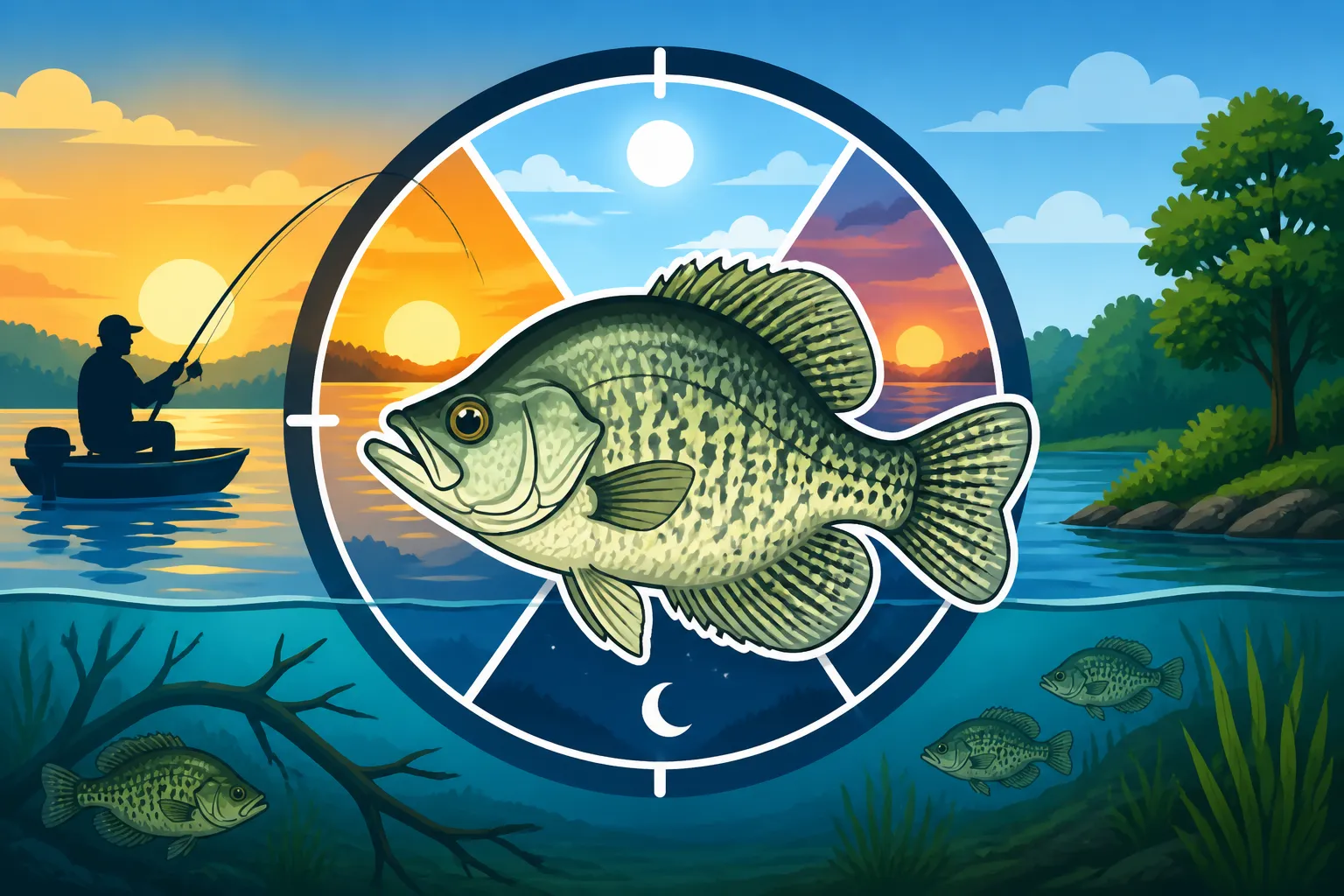
For much of the year, particularly from spring through fall, the bookends of the day – early morning and late evening – often offer the most productive crappie fishing on Grenada Lake. As the sun rises or sets, light levels are lower, and water temperatures are typically at their most stable or undergoing gradual changes. This is when crappie, like many other fish, tend to be more active and willing to feed.
In the early morning, crappie might move shallower or rise higher in the water column to ambush baitfish that are also more active with the dim light. Similarly, in the late evening, as the sun dips below the horizon, crappie often become more aggressive, feeding before settling into their nighttime patterns. These low-light conditions provide a sense of security for the fish, making them bolder in their pursuit of food. Whether you're casting jigs, slow-trolling, or fishing with live minnows, focusing your efforts during these twilight hours often yields superior results.
Midday Challenges and Adaptations
Midday fishing on Grenada Lake, especially during the brighter, hotter months of summer, can be notoriously tough. The high sun pushes crappie deeper and into the densest cover, making them harder to locate and entice. The increased boat traffic can also put them on edge, reducing their willingness to bite. It's easy to get discouraged when the midday sun is high and the bite turns off completely, leading many anglers to pack up and head home.
However, a smart angler can still find success by adapting. Instead of beating the banks, focus on deeper water, submerged brush piles, and creek channels. Use your electronics to pinpoint suspended schools or fish holding tight to structure. Vertical presentations, dropping your bait directly onto the fish, become crucial. Sometimes, a subtle change in lure color or a slower retrieve can trigger a strike from these finicky midday crappie. Don't be afraid to experiment with different depths, even if it's just a few feet up or down from where you initially mark fish.
The Impact of Weather Fronts and Water Conditions
Weather patterns are undeniable game-changers for crappie fishing on Grenada Lake. A strong cold front rolling through can completely shut down the bite for days, while stable, overcast conditions can turn a slow day into a red-letter one. Understanding how crappie react to these atmospheric shifts is vital for choosing the best time to fish. High, stable barometric pressure, often associated with clear skies after a front has passed, can sometimes be a great time to fish. However, immediately after a strong cold front, crappie often become lock-jawed and move deeper, taking time to adjust to the new conditions.
Conversely, approaching warm fronts or overcast, drizzly days can often stimulate crappie activity. The reduced light penetration from cloud cover makes crappie feel more secure and encourages them to feed more aggressively throughout the day, even in shallower water. Heavy rains can muddy up the water, which can be good or bad depending on the extent. Slightly stained water can be beneficial, providing cover for crappie, but heavily muddied water can disperse fish and make them harder to find. Always check the local weather forecast and recent lake reports before heading out to Grenada.
Crappie Behavior and Feeding Patterns: Reading the Fish
To truly master the timing of crappie fishing on Grenada Lake, you need to understand not just when conditions are right, but why they're right – delving into the instinctual behaviors that drive crappie movements and feeding habits.
Spawning Instincts and Nest Protection
As mentioned, the spring spawn is a major event. Crappie are driven by a powerful instinct to reproduce, and this overrides much of their usual cautious behavior. Males will fan out beds, often in relatively shallow water (2-10 feet), around structure like fallen trees, stumps, and brush. They'll actively guard these nests, striking at anything that comes too close, whether it's a rival fish or a well-presented jig.
During this period, female crappie will move in, lay their eggs, and then often retreat to slightly deeper water nearby, recuperating before potentially spawning again in waves. Knowing this helps you target both the aggressive males on the beds and the slightly deeper, larger females recovering. The key is to be respectful of the spawning process while taking advantage of their vulnerability. Observing the water for visible beds or subtle movements in shallow cover can be a dead giveaway to active spawning areas.
Forage Movement and Thermocline Effects
Crappie are predators, and their movements throughout the year are largely dictated by the availability and movement of their primary food source: shad. When shad are shallow, crappie will follow. When shad move deep, crappie won't be far behind. Learning to identify schools of shad on your fish finder, or even visually observing them "flipping" on the surface, can be a direct path to finding active crappie.
In summer, the formation of a thermocline in deeper sections of Grenada Lake is a critical factor. A thermocline is a layer within the water column where the temperature changes rapidly with depth. Below this layer, oxygen levels can be too low for fish. Crappie will often suspend right above or within the thermocline, finding optimal oxygen and temperature conditions, and congregating where baitfish also prefer to hang out. Your fish finder will show this as a distinct line or band of activity. Targeting this specific depth zone can unlock incredible summer fishing.
Essential Techniques for Maximizing Your Grenada Lake Crappie Trips
Knowing when to fish is only half the battle; knowing how to fish effectively during those prime windows is just as crucial. Different times of year and different conditions call for specific approaches to entice those Grenada Lake crappie.
Vertical Jigging and Spider Rigging for Deeper Fish
When crappie are holding deep, especially in summer and winter, or when they are suspended over main lake channels, vertical presentations are often the most effective. Vertical jigging involves dropping a small jig or a live minnow directly down to the fish you see on your electronics. This method offers precise bait placement and allows you to work a specific depth zone thoroughly.
Spider rigging is another powerful technique for deeper, scattered crappie, particularly popular on large reservoirs like Grenada. This involves deploying multiple long rods from the front of the boat, each presenting a jig or minnow at a different depth or distance from the boat. You can slowly troll or drift, covering a wide area and finding the preferred depth and structure. Many successful Grenada Lake crappie anglers, some of whom you can find on FishingBooker, swear by spider rigging to fill their livewells, especially during tough bites. Check out our guide on Crappie Fishing Techniques for Mississippi Lakes for a detailed breakdown.
Trolling Jigs and Crankbaits for Active Crappie
When crappie are actively feeding and somewhat dispersed, such as during the fall transition or even in certain spring conditions, trolling can be incredibly productive. Trolling allows you to cover vast amounts of water quickly, locating schools of active fish. You can troll with jigs, often tipped with a minnow for added attraction, or with small crappie-specific crankbaits.
The depth at which you troll is critical and depends on the season and where the fish are holding. Using a depth finder to monitor the bottom and identify submerged cover, while also watching your rod tips for bites, is the key to success. Varying your speed and the colors of your lures can help you dial in the pattern. Many anglers find trolling around creek channels, submerged points, and across main lake flats to be very effective at Grenada. To learn more about this method, explore our article on Trolling for Crappie on Mississippi Reservoirs.
Live Bait and Artificial Lures: The Right Choice for the Right Time
While Grenada Lake crappie will eat both live bait and artificial lures, the "best" choice often depends on the season, water conditions, and the fish's mood. Live minnows are almost universally effective, especially when crappie are lethargic in cold water or finicky in hot water. They offer a natural presentation and scent that crappie find hard to resist. Fishing with a minnow under a slip bobber or tight-lining it to deep-water schools are classic, productive methods.
Artificial lures, particularly small jigs (1/32 to 1/8 ounce), offer versatility and allow you to cover more water. Soft plastic bodies in various colors and shapes, from tubes to curly tails, can imitate baitfish or insects. Jig colors can be crucial; in clear water, natural colors might work best, while in stained or muddy water, brighter colors like chartreuse or orange can be more visible. Experimentation is key. Don't be afraid to try different jig sizes, colors, and retrieve speeds until you find what the crappie are biting. Our guide on Best Bait for Crappie in Mississippi provides an extensive overview.
Table: Grenada Lake Crappie Fishing – Best Times & Techniques
| Season | Best Time of Day | Typical Water Temp (°F) | Crappie Location | Recommended Techniques | Key Considerations |
|---|---|---|---|---|---|
| Spring | Morning & Evening | 58-68 | Shallows (2-10 ft), brush piles, flooded timber | Casting jigs, shallow trolling, slip bobbers | Spawn aggression, easy access, watch for beds |
| Summer | Early Morning & Late Evening | 75-88 | Deep channels, submerged timber, thermocline (15-30+ ft) | Vertical jigging, spider rigging, deep trolling | Electronics crucial, subtle bites, seek cool water |
| Fall | All Day (peak mornings) | 65-75 | Creek channels, points, migrating with baitfish | Trolling jigs/crankbaits, casting jigs | Following shad, aggressive feeding, transition zones |
| Winter | Midday (stable weather) | 40-55 | Deep channels, large timber stands (20-40+ ft) | Vertical jigging, tight-lining minnows | Highly concentrated fish, light tackle, slow retrieve |
Remember, while these are general guidelines, local conditions on Grenada Lake can always vary. Always pay attention to real-time factors and don't be afraid to adjust your strategy. Be sure to be familiar with the current How Many Crappie Can You Keep on Grenada Lake? regulations before your trip.
Final Thoughts on Timing Your Grenada Lake Crappie Adventure
Successfully timing your crappie fishing trips on Grenada Lake is a blend of understanding the seasons, paying attention to daily environmental cues, and being adaptable with your techniques. It’s not about finding one magical hour, but about appreciating the bigger picture of crappie behavior throughout the year and even within a single day. The frustrations of an unproductive trip often stem from not aligning your efforts with these natural rhythms.
By focusing on the prime seasonal windows—the shallow spring spawn, the deep-water summer, the chasing-bait fall, and the concentrated winter bite—you significantly stack the odds in your favor. Combine this with hitting the water during those crucial early morning and late evening periods, and adapting to weather changes, and you'll transform those frustrating outings into triumphant ones. Grenada Lake is a crappie angler's dream, and with this knowledge, you’re now equipped to make the most of every cast, no matter when you decide to go. If you're looking for an expert to show you the ropes, remember that many seasoned Grenada Lake Fishing Guides are available to book, often through platforms like FishingBooker, offering invaluable local insights that can jumpstart your success.
Disclaimer
The information provided in this guide is for general informational purposes only and is subject to change. Fishing regulations, conditions, and fish behavior can vary. Always consult the latest Mississippi Department of Wildlife, Fisheries, and Parks (MDWFP) regulations and local weather and lake conditions before planning any fishing trip. Adherence to all local, state, and federal laws is the sole responsibility of the angler.