Mississippi Sturgeon Fishing Regulations
Navigating the diverse waters of Mississippi offers anglers incredible opportunities, but it also comes with a serious responsibility: knowing and respecting the rules that protect our precious aquatic wildlife. Among the most critical regulations are those surrounding sturgeon, ancient and incredibly vulnerable fish that call our rivers home. If you're not absolutely clear on the rules, an accidental catch could lead to severe penalties. This guide will meticulously break down Mississippi's sturgeon fishing regulations, helping you understand why these magnificent creatures are protected and how you, as a responsible angler, can contribute to their survival.
The Critical Status of Sturgeon in Mississippi Waters
Sturgeon are often called "living fossils" because their lineage traces back millions of years. These fascinating fish are a vital part of Mississippi's natural heritage, yet their populations have faced incredible challenges. Understanding their precarious status is the first step toward appreciating the strict regulations in place. It's not just about rules; it's about protecting an irreplaceable part of our ecosystem.
Why Sturgeon Are So Vulnerable
Decades of habitat loss, river alteration, and historical overfishing have pushed many sturgeon species to the brink. In Mississippi, we primarily focus on two species: the Pallid Sturgeon and the Gulf Sturgeon. The Pallid Sturgeon, an inhabitant of the Mississippi River and its larger tributaries, is critically endangered. It's a bottom-dweller, feeding on invertebrates and small fish, and its life cycle is heavily impacted by altered river flows and sediment changes. The Gulf Sturgeon, found in coastal rivers and estuaries that flow into the Gulf of Mexico, is listed as a threatened species. These magnificent fish are migratory, spending parts of their lives in freshwater spawning grounds and then moving to saltwater for feeding. Both species grow slowly, mature late, and have specific habitat requirements, making them particularly susceptible to environmental changes and human pressures.
When you think about these ancient fish, imagine them navigating rivers that are vastly different from what they once were. Dams block migration routes, dredging alters their feeding grounds, and pollution can directly impact their health and reproductive success. Every individual sturgeon is incredibly valuable to the survival of its species, which is why the protection measures are so stringent. Even seemingly minor interactions can cause undue stress, further jeopardizing their already fragile existence.
Federal and State Protections
The protections for sturgeon in Mississippi are not merely state guidelines; they are deeply rooted in federal law. Both the Pallid Sturgeon and the Gulf Sturgeon are listed under the U.S. Endangered Species Act (ESA). This federal designation means that any activity that harms, harasses, or kills these fish is strictly prohibited and carries severe legal consequences. The Mississippi Department of Wildlife, Fisheries, and Parks (MDWFP) works in conjunction with the U.S. Fish and Wildlife Service to enforce these federal mandates within state waters.
This dual layer of protection—state and federal—underscores the gravity of their conservation status. For anglers, this means that ignorance of the law is absolutely no excuse. You are expected to be aware of which species are protected, how to identify them, and what to do if you accidentally catch one. It’s a collective responsibility that extends to every person who casts a line into Mississippi waters, ensuring that these iconic species have a fighting chance at recovery. For more general information on statewide regulations, you might want to check out our comprehensive guide on Mississippi Fishing Regulations Explained.
Identifying Sturgeon: A Crucial Skill for Responsible Anglers
Before you even cast a line, it's paramount that you can distinguish a sturgeon from other species you might encounter. Misidentification can lead to inadvertent violations, which can still result in serious penalties. A moment of confusion could have lasting repercussions, both for you and for the protected fish.
Key Distinguishing Features
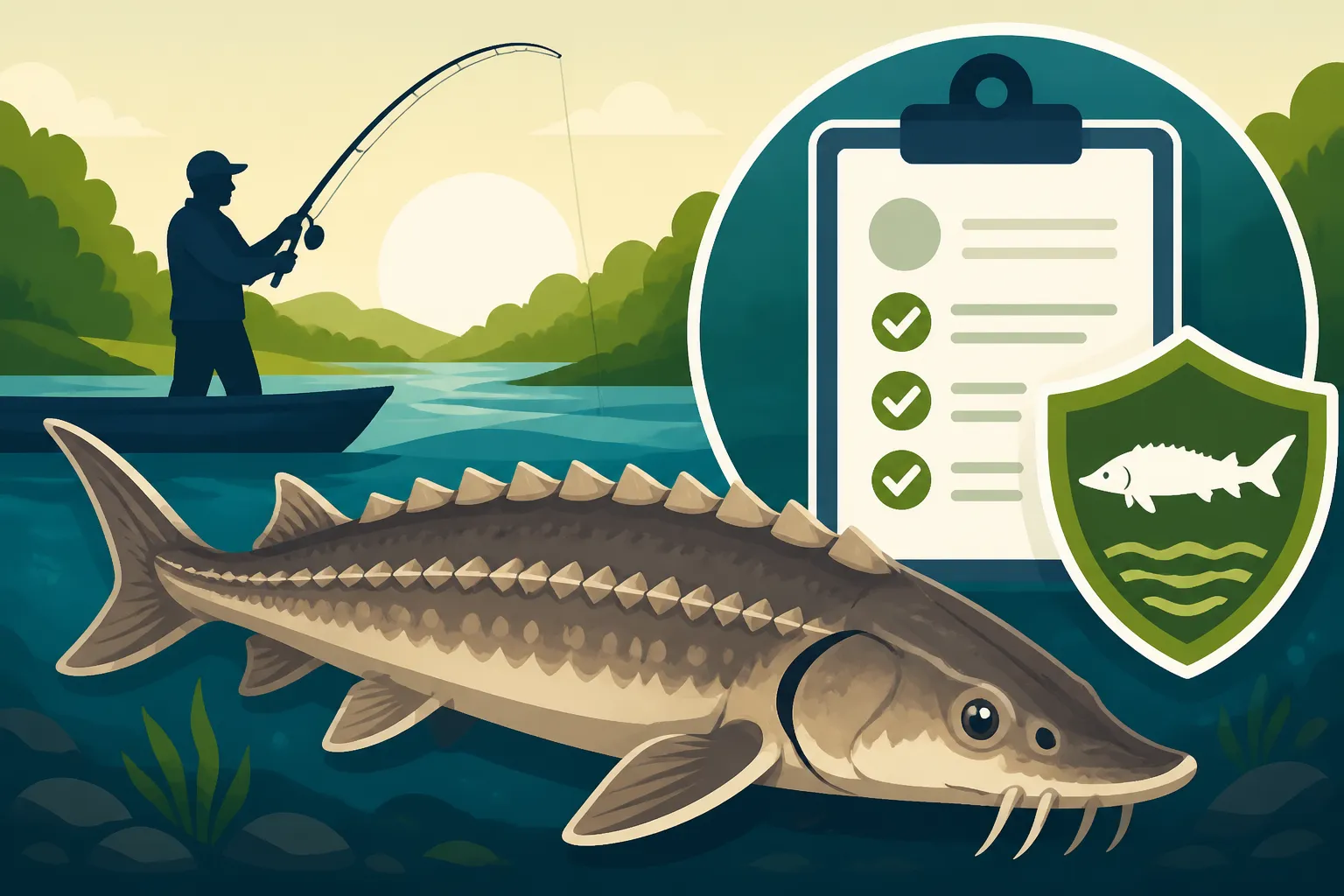
Sturgeon have a very unique appearance, making them quite distinct from most other freshwater fish in Mississippi. The most obvious features are their five rows of bony plates, called scutes, which run along their body instead of scales. These scutes give them an armored, prehistoric look. They also have a long, flattened snout with four barbels (whisker-like sensory organs) located in front of their mouth. Their mouth is ventral (on the underside of the head), protrusible, and toothless, designed for sucking up food from the riverbed.
Contrast this with common fish you might mistake them for, like a large catfish or even an alligator gar. Catfish have smooth skin and prominent barbels around a forward-facing mouth. Alligator gar have diamond-shaped scales, a long, toothed snout, and a more predatory appearance. Once you’ve seen a sturgeon, their unique features really stand out. Having a good, waterproof fish identification guide, perhaps one you can easily order from Amazon, is an invaluable tool to keep in your tackle box. This visual knowledge is your first line of defense against an accidental violation.
Differentiating Pallid and Gulf Sturgeon
While the overarching rule is to release any sturgeon immediately, being able to differentiate between the two protected species in Mississippi adds an extra layer of responsible angling. This isn't just academic; it shows a deeper understanding and commitment to conservation.
- Pallid Sturgeon: Generally lighter in color, often a pale gray or white, which is where they get their name. They typically have a more flattened, shovel-shaped snout and smaller eyes. Their barbels are usually closer to the tip of the snout than to the mouth. They tend to inhabit the turbid, main channels of large rivers like the Mississippi.
- Gulf Sturgeon: Tend to be darker, often olive-brown to black on their back with a pale belly. They have a more conical snout and larger eyes. Their barbels are typically closer to the mouth than the tip of the snout. You'll find them in Gulf Coast rivers and estuaries, sometimes migrating into the Gulf.
The differences can be subtle, especially in murky water or during a hurried release. The most important takeaway, regardless of the precise species, is that if it looks like a sturgeon, it is a sturgeon, and the legal protocol is the same: immediate and careful release. Familiarizing yourself with images of both species from reputable sources, like the MDWFP website or a detailed guide on Mississippi Freshwater Fish Species Guide, is highly recommended.
The Strict Rules: What Mississippi Sturgeon Fishing Regulations Mean for You
Let's cut right to the chase: Mississippi's sturgeon regulations are designed for maximum protection. There's no open season, no bag limit, and no exceptions for keeping these fish. The rules are clear, unambiguous, and enforced with significant diligence.
Zero Tolerance for Targeting and Possession
Here's the absolute core of the regulation: it is illegal to target, catch, or possess any species of sturgeon in Mississippi waters. This isn't just about keeping the fish; it's also about intentionally trying to catch them. "Targeting" means using methods, baits, or fishing in locations known to attract sturgeon. For instance, using large bottom rigs with baits like cut bait or worms in deep river channels where sturgeon are known to reside could be interpreted as targeting, especially if sturgeon are frequently caught in that manner.
This means you cannot go out specifically trying to catch a sturgeon, even if your intent is to immediately release it. The legal framework aims to prevent any unnecessary interaction that could stress, injure, or kill these highly vulnerable fish. The MDWFP and federal agencies take this seriously because even catch-and-release fishing can inadvertently harm a delicate species. Therefore, when fishing in areas known to have sturgeon, anglers must be extra vigilant about their methods and gear.
Accidental Catch and Immediate Release
Despite best intentions, it's possible to accidentally hook a sturgeon, especially when fishing for other bottom-dwelling species like catfish in the Mississippi River. If you find yourself in this situation, the procedure is very specific and critical:
- Do Not Remove the Fish from the Water: Minimize the time the sturgeon spends out of its aquatic environment. Keeping it submerged as much as possible reduces stress and increases its chances of survival.
- Cut the Line: If the hook is deeply set or difficult to remove, it is far better to cut your line as close to the hook as possible than to cause additional trauma by trying to wrench it out. Hooks made of carbon steel will eventually rust away. Having a good quality de-hooker, which you can find on Amazon, can sometimes help with an easy, quick release without removing the fish from the water, but if it's too difficult, cutting the line is the safest option.
- Handle With Extreme Care: If you must touch the fish to cut the line, do so gently, supporting its body. Avoid squeezing it, especially around the gills or belly. Use wet hands to protect its slime coat, which is vital for disease prevention. Wearing appropriate fishing gloves, also available on Amazon, can help protect both you and the fish during this delicate process.
- No Photography: Resist the urge to take a "trophy" photo. The brief moment a sturgeon is out of the water for a picture can significantly compromise its health, especially if it's already stressed from the fight. Immediate release is paramount.
This immediate release protocol is a cornerstone of Mississippi Fishing Regulations Explained when dealing with protected species. Your quick, careful actions in such a moment can literally make the difference between life and death for an individual sturgeon.
Where These Regulations Apply
These strict regulations apply uniformly across all Mississippi waters where sturgeon are found or could potentially be found. This includes:
- The Mississippi River and its Tributaries: This is prime habitat for the Pallid Sturgeon. Any fishing activity in these large river systems and connected oxbow lakes should be done with constant awareness of potential sturgeon encounters.
- Gulf Coast Rivers and Estuaries: Rivers flowing into the Gulf of Mexico, such as the Pascagoula River, are critical habitats for Gulf Sturgeon during their freshwater spawning migrations and as nursery areas. Anglers fishing in these coastal freshwater and brackish environments must be equally vigilant.
- Border Waters: If you're fishing in waters that border other states, such as Louisiana or Arkansas on the Mississippi River, remember that federal protections for sturgeon apply regardless of state lines, and state regulations may also be in effect. It's always best to be familiar with specific Mississippi Border Water Fishing Rules and regulations of neighboring states.
Essentially, any body of water within Mississippi that has historical or current sturgeon presence falls under these regulations. There are no exemptions based on location within these zones.
Serious Consequences of Violating Sturgeon Regulations
Let's be absolutely clear: violating sturgeon fishing regulations in Mississippi carries some of the most severe penalties in the realm of fishing infractions. This isn't like forgetting your Mississippi Fishing License Guide at home; this is dealing with federally protected endangered species. The repercussions can be life-altering, far beyond a simple fine.
Legal Ramifications
Because both Pallid and Gulf Sturgeon are listed under the Endangered Species Act, any violation can trigger both state and federal charges. The legal ramifications are substantial:
- Federal Fines: Under the ESA, civil penalties can range up to $25,000 for each violation. Criminal penalties for knowing violations can include fines up to $50,000 and/or imprisonment for up to one year. These aren't hypothetical numbers; federal agencies actively pursue and prosecute individuals who violate these laws.
- State Fines and Penalties: Mississippi state law also imposes significant fines for taking or possessing protected species. These can run into the thousands of dollars, coupled with court costs and administrative fees.
- Loss of Fishing Privileges: Beyond monetary fines, a conviction will almost certainly result in the suspension or permanent revocation of your fishing license, not just in Mississippi but potentially nationwide through interstate compacts.
- Confiscation: Your fishing gear, boat, and vehicle used in the commission of the offense can be confiscated. Imagine losing your prized fishing boat or truck over a single, avoidable mistake.
Compared to, say, the typical Mississippi Fishing License Penalties and Fines for basic infractions, sturgeon violations are in a league of their own. It's a stark reminder that these laws exist to protect species on the brink of extinction, and they are enforced with commensurate gravity.
Environmental Impact and Ethical Angling
Beyond the very real legal threats, there's a deeper, ethical consideration at play. As anglers, we are stewards of our natural resources. Catching and, especially, harming a sturgeon goes against the core principles of conservation and responsible sport fishing. These fish represent millions of years of evolution, a living connection to an ancient past. Their disappearance would be an irreplaceable loss, not just to Mississippi but to the entire planet.
Every responsible angler understands the privilege of being on the water and interacting with wildlife. When you're fishing in Mississippi, you're part of a community that cares deeply about the health of our rivers and lakes. Adhering to sturgeon regulations isn't just about avoiding trouble; it's about honoring that privilege, supporting the recovery of endangered species, and setting a positive example for future generations of anglers. It’s about ensuring that we leave our waters better than we found them, and that future anglers might one day have the rare opportunity to glimpse these magnificent creatures thriving. Maintaining a clear understanding of current regulations, which can always be found through the MDWFP's official channels, ensures you remain a part of the solution rather than inadvertently contributing to the problem.
Quick Reference: Mississippi Sturgeon Regulations
Here's a concise overview of the key points regarding sturgeon fishing in Mississippi:
| Aspect | Pallid Sturgeon | Gulf Sturgeon | General Rule for All Sturgeon Species |
|---|---|---|---|
| Conservation Status | Federally Endangered | Federally Threatened | High priority protection under ESA. |
| Targeting | Illegal to target | Illegal to target | Do not intentionally fish for sturgeon. |
| Catch & Possession | Illegal to catch or possess | Illegal to catch or possess | All sturgeon are strictly catch-and-release ONLY. |
| Accidental Catch | Immediate release, minimize time out of water | Immediate release, minimize time out of water | Cut line if hook removal causes stress; no photos. |
| Habitat | Mississippi River & large tributaries | Gulf Coast rivers & estuaries (migratory) | Applies to all waters where sturgeon may be found. |
| Penalties | Severe federal & state fines, imprisonment, loss of privileges | Severe federal & state fines, imprisonment, loss of privileges | Legal consequences are among the most serious. |
Remember, this table is a summary. Always refer to the official MDWFP regulations for the most up-to-date and complete information.
Disclaimer
The information provided in this guide is for informational purposes only and is subject to change. While we strive to provide accurate and up-to-date content, fishing regulations, laws, and species classifications can be updated by governing authorities without prior notice. Always consult the official Mississippi Department of Wildlife, Fisheries, and Parks (MDWFP) website or their official publications for the most current and legally binding regulations before engaging in any fishing activities. Compliance with all applicable federal, state, and local laws is the sole responsibility of the angler.