How Mississippi Fishing License Money Is Spent
It's a question many of us have pondered while digging out our wallets for that annual fishing license: "Where does this money actually go?" It can feel like just another fee, another hurdle to enjoying the great outdoors, leaving you wondering if it truly makes a difference. This comprehensive guide will pull back the curtain on exactly how your Mississippi fishing license dollars are allocated, showing you the vital role they play in preserving and enhancing the very fishing experiences we cherish.
Understanding the MDWFP's Core Mission
When you purchase a fishing license in Mississippi, you're not just buying a piece of paper that allows you to cast a line legally. You're contributing directly to the Mississippi Department of Wildlife, Fisheries, and Parks (MDWFP). This agency is the backbone of conservation efforts across our state, tasked with a massive and crucial mission: to conserve and enhance Mississippi's natural resources and to provide outstanding outdoor recreational opportunities for residents and visitors alike.
Who Manages the Funds?
The MDWFP is the primary recipient and manager of all funds generated through the sale of hunting and fishing licenses, as well as boat registrations and other related permits. These funds are not simply absorbed into the state's general budget; they are specifically earmarked for wildlife and fisheries management. Imagine a dedicated trust fund, where every dollar you spend on a license is channeled directly back into the resources you love. This ensures that the money collected from anglers is reinvested directly into fishing-related programs and initiatives, creating a self-sustaining cycle of conservation and opportunity. This dedicated funding stream is critical because it insulates wildlife and fisheries programs from the fluctuating priorities of general state budgeting, offering a more stable and predictable source of income for long-term projects. Without this structure, the future of Mississippi's incredible fishing might look very different, and not for the better.
Why Dedicated Funding Matters for Anglers
The concept of dedicated funding for wildlife and fisheries management is paramount. It ensures that the dollars generated by outdoor enthusiasts are directly reinvested into the very resources they use and enjoy. This isn't just bureaucratic red tape; it's a fundamental principle of modern conservation. When you buy a license, you're directly fueling the research, management, and enforcement efforts that protect fish populations, improve habitats, and ensure future generations can enjoy the same or even better fishing opportunities. It creates accountability, allowing anglers to see a direct correlation between their contribution and the health of Mississippi's aquatic ecosystems. This dedicated approach means that when you're out on the water, you can feel confident that your contribution is actively working to make that experience possible and sustainable.
Key Areas Funded by Your License Dollars
Your fishing license fees are distributed across a wide array of programs and initiatives, all designed to support the MDWFP's mission. These aren't abstract concepts; they are tangible projects that directly impact your ability to catch fish and enjoy the outdoors.
Fish Stocking and Population Management
One of the most visible and impactful ways your license money is spent is on fish stocking programs. The MDWFP operates several fish hatcheries across the state, such as the North Mississippi Fish Hatchery near Enid Lake, where millions of fish are raised annually. These include popular game species like largemouth bass, crappie, catfish, and various sunfish species. These stocked fish help supplement natural populations, especially in waters that see heavy fishing pressure or after environmental disturbances. For instance, if you've ever reeled in a healthy crappie from a state fishing lake or a robust bass from one of our major reservoirs, chances are your license dollars helped put that fish there. This proactive management ensures that fishing opportunities remain abundant, even with increasing angler participation.
Beyond simply stocking, these funds also support crucial population management efforts. Biologists regularly conduct surveys to assess fish health, growth rates, and reproductive success in various water bodies. This scientific data helps the MDWFP determine appropriate Mississippi Fishing Season Dates and Limits and Mississippi Fishing Creel and Size Limits to maintain sustainable populations, preventing overfishing and promoting a balanced ecosystem. Without this scientific rigor, populations could decline, leading to tougher regulations or even closures, making your fishing trips far less productive.
Habitat Restoration and Access Improvement
Healthy fish need healthy homes, and a significant portion of license funds goes towards improving aquatic habitats. This includes projects like establishing artificial fish attractors (brush piles, rock reefs) in lakes and reservoirs to provide cover and foraging areas for fish, as well as improving spawning grounds. Imagine a favorite fishing spot that suddenly becomes unproductive; often, it's due to habitat degradation. Your money helps reverse that. For example, submerged structures are often deployed in popular areas of Ross Barnett Reservoir to enhance crappie and bass habitat, creating new hotspots for anglers. These efforts are continuous and require significant resources to maintain.
Furthermore, license fees contribute to enhancing public access to fishing spots. This means funding for maintaining and upgrading boat ramps, building fishing piers, and acquiring public lands that provide bank access. Think about those convenient boat launches on Sardis Lake or Grenada Lake, or the handicapped-accessible fishing piers at various state parks – these are often direct results of your contributions. Ensuring easy and equitable access for all anglers, whether they have a boat or prefer to fish from shore, is a key component of the MDWFP's mission. The purchase of Mississippi State Park Lake Fishing Permits also directly funds these localized efforts.
Law Enforcement and Education
Protecting Mississippi's fishing resources also requires vigilant law enforcement. Your license fees directly support the dedicated conservation officers who patrol our lakes, rivers, and coastal waters. These officers ensure that everyone adheres to Mississippi Fishing Regulations Explained and limits, preventing poaching and illegal activities that could devastate fish populations. Their presence safeguards the fair chase and ethical angling that are cornerstones of our outdoor heritage. Imagine a world where regulations weren't enforced; the resources would quickly diminish. These officers also educate anglers on proper practices and serve as crucial first responders in many remote areas.
Beyond enforcement, a portion of the funds is dedicated to public education and outreach programs. This includes initiatives like youth fishing rodeos, angler education workshops, and informational campaigns that teach proper catch-and-release techniques, fish identification, and ethical angling practices. These programs are vital for fostering the next generation of responsible anglers and ensuring that conservation values are passed down. The MDWFP also uses these funds to publish guides, update their website, and provide crucial information about everything from Mississippi Freshwater Fishing Rules to Mississippi Saltwater Fishing License Guide. This proactive educational approach helps prevent unintentional violations and promotes a deeper appreciation for our natural world.
Research, Monitoring, and Administration
Behind the scenes, a significant amount of work goes into scientific research and ongoing monitoring of Mississippi's aquatic ecosystems. Fisheries biologists use license funds to conduct studies on fish diseases, water quality, invasive species threats, and the impact of environmental changes. This data-driven approach allows the MDWFP to make informed decisions about management strategies, ensuring that resources are allocated effectively to address current and future challenges. For example, research into the movement patterns of catfish in the Mississippi River might inform new regulations to protect spawning aggregations.
Of course, like any large organization, there are administrative costs involved in running the MDWFP. A portion of your license fee covers salaries for staff who manage programs, process licenses, handle communications, and maintain facilities. These administrative functions are essential for the smooth operation of all the conservation and recreational programs that anglers benefit from. While not as "glamorous" as stocking fish, efficient administration ensures that the other vital programs can function effectively. Without proper management and oversight, even the best intentions can fall short.
Leveraging Federal Funds for Greater Impact
The impact of your Mississippi fishing license dollars extends far beyond what you might initially imagine, thanks to a unique partnership with the federal government. This is where your investment truly gets multiplied, making every dollar you spend work even harder for conservation.
The Dingell-Johnson Act and Matching Funds
One of the most powerful mechanisms for maximizing your license dollars is the Federal Aid in Sport Fish Restoration Act, commonly known as the Dingell-Johnson Act (or Wallop-Breaux Amendment, which expanded it). This federal law, enacted in 1950, levies an excise tax on specific fishing tackle, equipment, and motorboat fuel. What's truly remarkable is that these funds are then distributed to states for sport fish restoration projects. But here's the catch (pun intended): states must contribute a portion of their own funds to receive these federal dollars.
This is where your state fishing license money becomes absolutely critical. For every dollar Mississippi contributes from state-generated fishing license revenue, it can leverage additional federal funds, often at a 3:1 or 4:1 federal-to-state matching ratio. For instance, if Mississippi spends $1 million on an approved fisheries project using state license funds, it could receive an additional $3 million or $4 million in federal aid. This effectively quadruples the buying power of your license fees, allowing the MDWFP to undertake much larger and more impactful projects than it could with state funds alone. It's a prime example of how local investment sparks national support.
How this Partnership Benefits Anglers
This federal-state partnership is a game-changer for Mississippi anglers. Without your contributions to the state's dedicated fishing fund, the MDWFP wouldn't be able to access these significant federal matching funds. This means fewer fish stocked, less habitat restored, fewer access points developed, and less research conducted. It’s not an exaggeration to say that this funding model is fundamental to the robust fishing opportunities we enjoy today.
Consider a major project like renovating a fish hatchery or undertaking a large-scale habitat improvement initiative on a reservoir like Pickwick Lake. These projects often cost millions of dollars. Through the Dingell-Johnson Act, a state's relatively smaller investment from license sales can unlock the much larger federal resources needed to complete such ambitious undertakings. So, when you purchase your Mississippi Fishing License Guide, you're not just supporting Mississippi; you're tapping into a national conservation network that amplifies your impact. It ensures that the collective effort of anglers across the country contributes to a healthier and more productive aquatic environment everywhere, including right here in our beloved Mississippi waters.
The Tangible Benefits for Mississippi Anglers
Ultimately, understanding how your fishing license money is spent isn't just about financial transparency; it's about recognizing the direct, tangible benefits that flow back to you, the angler. Your contribution isn't just a fee; it's an investment in your passion.
Better Fishing Opportunities Today and Tomorrow
The most direct benefit of your license dollars is quite simply better fishing. When you buy a license, you're directly contributing to the stocking of millions of fish, ensuring healthy populations in our lakes and rivers. You're funding habitat improvements that create prime fishing spots, and you're supporting law enforcement that keeps those resources protected from illegal activities. All of these efforts combine to create more frequent and more successful fishing trips for you. Whether you're chasing trophy bass on the Ross Barnett Reservoir or pulling in crappie from Grenada Lake, the quality of that experience is a direct result of these programs. Without these sustained investments, the abundance and diversity of fish populations would inevitably decline, making it harder to fill your livewell or even just enjoy a relaxing day on the water.
This investment isn't just for today; it’s for tomorrow. The MDWFP's long-term management plans, research, and conservation efforts are all geared towards ensuring that future generations of Mississippi anglers have access to the same, if not better, fishing experiences. This foresight means that your kids and grandkids will inherit healthy fisheries, vibrant ecosystems, and well-maintained access points. For example, understanding How to Get a Mississippi Fishing License and buying one is a step towards ensuring this legacy.
Greater Access and Essential Information
Another key benefit is the enhanced access to fishing waters. Your license fees maintain and develop public boat ramps, fishing piers, and shoreline access points, making it easier for everyone to get out and enjoy our state's diverse aquatic environments. Have you ever tried to find a good spot to launch a boat or fish from the bank only to discover no public access? Your money helps prevent that scenario by funding projects that open up more areas for public use.
Furthermore, the educational and informational resources provided by the MDWFP are invaluable. From detailed maps of fishing spots to up-to-date Mississippi Fishing Regulations Explained, these resources empower you to be a more informed and successful angler. Knowing How Many Fishing Poles Can You Use in Mississippi? or understanding the specific limits for a certain species can make all the difference in a safe and legal outing. These efforts reduce confusion and help ensure everyone is on the same page, contributing to a more enjoyable and sustainable fishing culture.
A Summary of Where Your Money Goes
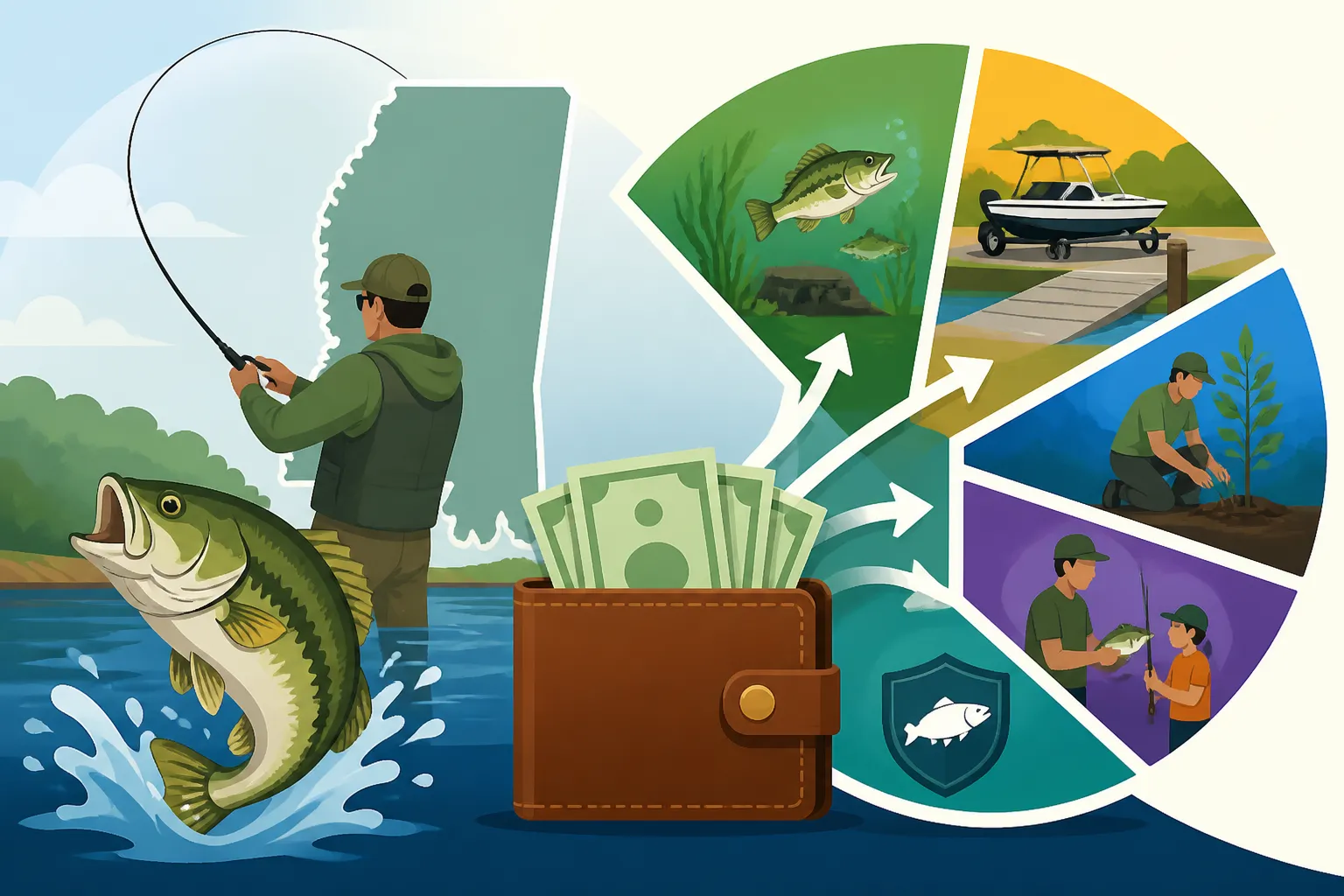
To give you a clearer picture, here's a simplified breakdown of the major categories where your Mississippi fishing license money is typically allocated:
| Expenditure Category | Description |
|---|---|
| Fish Stocking & Management | Raising and releasing game fish (bass, crappie, catfish), population surveys, scientific research, disease control. |
| Habitat Enhancement | Building artificial reefs and brush piles, restoring aquatic vegetation, improving spawning habitats, water quality monitoring. |
| Public Access & Infrastructure | Maintaining and building boat ramps, fishing piers, shoreline access points, parking areas, public lands acquisition. |
| Law Enforcement | Salaries and equipment for conservation officers, patrolling waters, enforcing Mississippi Fishing Regulations Explained, investigating violations, public safety. |
| Education & Outreach | Youth fishing programs, angler workshops, informational guides, public awareness campaigns, promoting ethical angling. |
| Federal Aid Matching Funds | State's required contribution to leverage significantly larger federal grants (Dingell-Johnson Act) for major conservation projects. |
| Administration & Support Services | Staff salaries, facility maintenance, IT, communications, essential operational costs for running the MDWFP and its programs. |
So, the next time you're considering if Do You Need a License to Fish in Mississippi?, or debating the Mississippi Fishing License Costs, remember that your purchase is a direct investment in the health of our fisheries and the future of your favorite pastime. It's a critical component in the ongoing effort to ensure Mississippi remains a premier destination for anglers of all stripes.
Disclaimer
Please note that while this guide provides a comprehensive overview of how Mississippi fishing license money is spent, specific allocations and percentages can vary from year to year based on legislative mandates, federal funding availability, and the most pressing conservation needs identified by the MDWFP. Always refer to the official Mississippi Department of Wildlife, Fisheries, and Parks website for the most current and detailed financial reports.