Mississippi Fish Cleaning Station Locations
There’s nothing quite like the thrill of a successful fishing trip in Mississippi. You’ve battled the fish, reeled in a beautiful haul, and the cooler is heavy with your hard-earned catch. But then comes the inevitable question, often spoken with a weary sigh: "Now what are we going to do with all these fish?" The thought of lugging them home, making a mess in your kitchen or garage, and dealing with the scales and guts can quickly dampen the post-fishing euphoria. This guide is here to relieve that stress, helping you discover the convenient and often overlooked public fish cleaning station locations across Mississippi, making the cleanup process a breeze so you can enjoy your catch without the fuss.
The Challenge of Cleaning Your Catch on the Go
Let's be honest, cleaning fish isn't everyone's favorite part of the fishing experience. It’s messy, it can be smelly, and if you’re not prepared, it can turn your garage into a temporary biohazard zone. For many anglers, especially those who travel a bit to reach their favorite fishing hole, bringing a cooler full of whole fish back home can be a logistical nightmare. You're constantly worrying about ice, keeping things sanitary, and the sheer effort involved in scaling and filleting a big batch.
Why Dedicated Cleaning Stations Matter
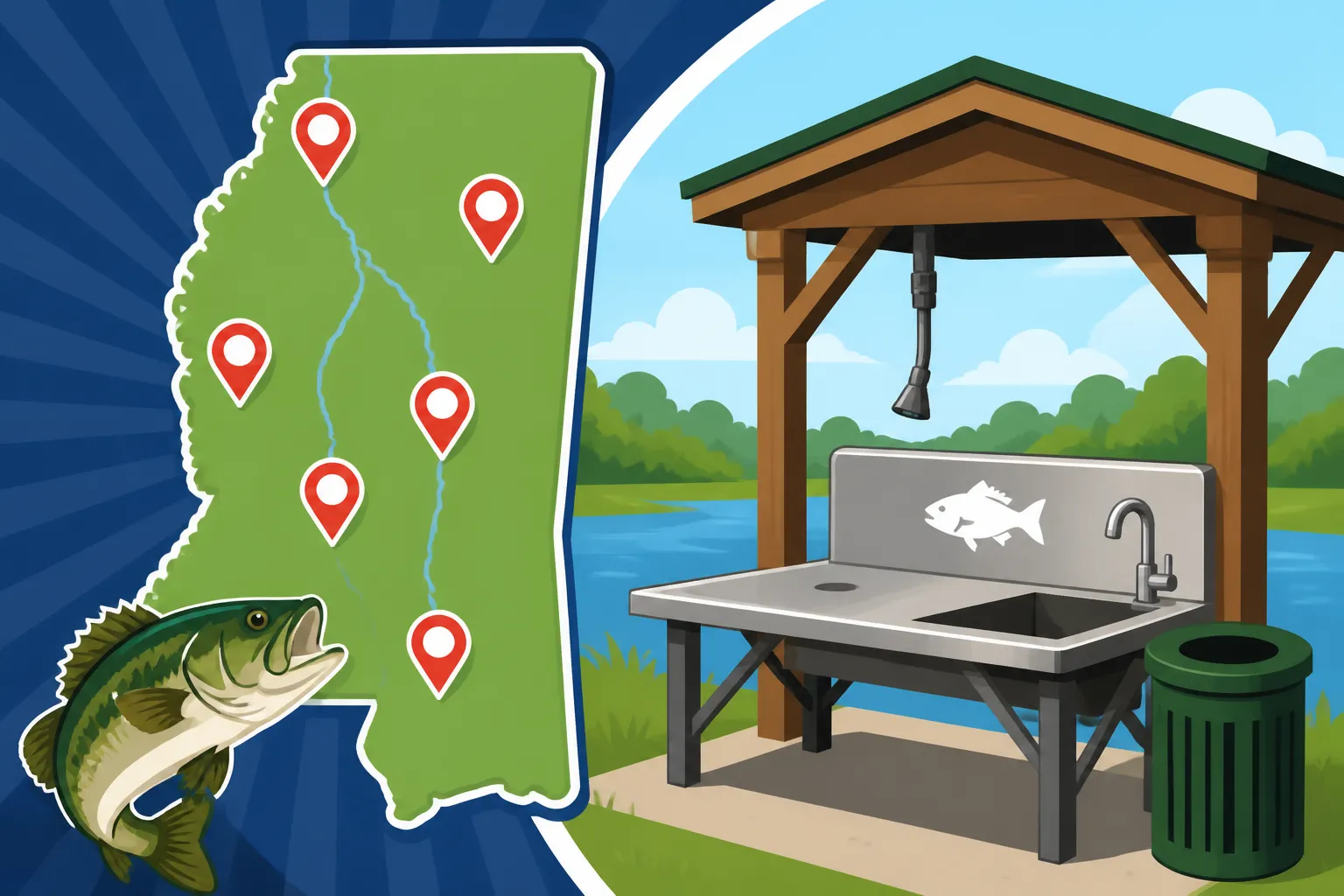
Dedicated fish cleaning stations are a godsend for precisely these reasons. They're designed with practicality in mind, offering a designated space where the mess is contained and easily managed. Think about it: a sturdy table with a built-in sink, running water (sometimes even hot water!), and most importantly, a proper way to dispose of the waste. No more trying to balance a slimy fish on a rickety cooler lid, struggling with a dull knife, or wondering where to put the scraps without attracting every critter in a five-mile radius. These stations mean you can process your catch quickly and efficiently right at the source, ensuring the fish stay fresh for the ride home, and your own space remains clean and odor-free. It's about respecting both your catch and your personal environment.
Understanding the Rules Around Fish Cleaning
While public fish cleaning stations offer immense convenience, it's crucial to understand that they also come with certain responsibilities and rules. You can't just dump anything anywhere. Most facilities will have clear guidelines on waste disposal. Usually, you're expected to place fish carcasses and offal into designated grinders or waste bins provided. This helps prevent the spread of disease, keeps the area clean for the next user, and adheres to local sanitation ordinances. It's a matter of courtesy and conservation, ensuring these valuable public resources remain available and functional for everyone. Before you even start filleting, it's always a good idea to refresh your memory on the general Mississippi Fishing Regulations Explained, particularly any rules specific to fish cleaning or waste disposal in a given area. Certain species might have unique regulations, or some locations might have stricter guidelines due to ecological concerns.
Key Features of a Good Fish Cleaning Station
Not all fish cleaning stations are created equal, though even a basic one is a huge improvement over a backyard hose. When you're looking for a good spot to process your catch, there are a few features that really stand out and make the whole experience much smoother.
Essential Amenities You Should Look For
A top-notch fish cleaning station will typically boast several key amenities. First and foremost, you need a large, sturdy, and easy-to-clean working surface. Stainless steel or marine-grade plastic tables are ideal. Running water is non-negotiable; you'll need it for rinsing fish, cleaning your knives, and washing down the station afterward. A dedicated sink or multiple rinse basins are a huge plus. Proper waste disposal is also critical. This often means a high-volume grinder that flushes the waste into a septic system or directly into larger bodies of water where it can become part of the natural food chain (check local rules for this, as direct disposal into open water might be prohibited in some areas). Adequate lighting is essential, especially if you plan to fish into the evening. Lastly, accessibility – enough space for multiple anglers to work simultaneously without bumping elbows is a bonus. Some of the newer stations even feature hose reels or built-in sprayers, making cleanup a breeze.
Public vs. Private Cleaning Facilities
It's important to differentiate between public and private fish cleaning facilities. Public stations are typically found at state parks, major reservoirs, and public boat ramps maintained by the Mississippi Department of Wildlife, Fisheries, and Parks (MDWFP) or local municipalities. These are usually free to use and are open to anyone. They vary in quality and amenities, but often provide the basic necessities. On the other hand, many private marinas, fishing camps, and charter operations also offer cleaning stations. These might be part of the service if you're mooring your boat there, staying at their lodge, or booking a Mississippi Gulf Coast Fishing Charters trip. Sometimes, private facilities might be more upscale, offering better lighting, more powerful grinders, and perhaps even staff who can assist with cleaning for a fee. If you're using a private marina, always check if there's a fee or if access is restricted to patrons only. Understanding the distinction helps manage expectations and ensures you're not caught off guard.
Popular Mississippi Fish Cleaning Station Locations
Mississippi is blessed with an abundance of fantastic fishing opportunities, from its sprawling freshwater reservoirs to its vibrant Gulf Coast. Naturally, many of these prime fishing destinations also offer convenient facilities to clean your catch. Let's dive into some of the most popular areas where you're likely to find a fish cleaning station.
Major Freshwater Reservoir Options
Mississippi's large reservoirs are renowned for their incredible bass and crappie fishing, and the MDWFP has done a great job of providing infrastructure to support anglers.
- Ross Barnett Reservoir: Often called "The Rez" by locals, Ross Barnett is a massive body of water just northeast of Jackson. You'll find several public boat ramps and recreation areas around the reservoir, and many of these are equipped with fish cleaning stations. A prime example is the Fannin Landing area, which boasts a well-maintained station with running water and grinders. Similarly, facilities at Pelican Point and Tommy's Trading Post (a popular marina, though check their specific rules) often provide cleaning amenities. After a successful day of following your Ross Barnett Reservoir Fishing Guide tips, these spots are invaluable for processing your catch before heading home.
- Grenada Lake: Known as a crappie fishing mecca, Grenada Lake in north-central Mississippi attracts anglers from all over. The U.S. Army Corps of Engineers manages many of the recreation areas here, and several boat ramps offer fish cleaning stations. Grenada Lake State Park is a reliable spot, often having accessible cleaning tables. Other popular ramps like Graysport, North Abutment, and South Abutment usually provide facilities with running water and waste disposal, perfect for handling a limit of Grenada's famous slabs.
- Sardis Lake: Another jewel in North Mississippi's crappie crown, Sardis Lake is another location where anglers can expect good cleaning facilities. The Sardis Lake State Park is a primary location with accessible stations. Ramps such as Clear Creek and Teckville often have public cleaning tables available, allowing you to quickly prepare your fish after a successful day on the water.
- Enid Lake: Completing the trio of North Mississippi's crappie hotspots, Enid Lake also features several facilities. The Enid Lake Field Office and various boat ramps maintained by the Corps of Engineers, such as Wallace Creek and Longtown, are typically equipped with public fish cleaning stations that feature water access and waste grinders.
Gulf Coast and Coastal Waterways
The Mississippi Gulf Coast offers incredible saltwater fishing, from redfish and speckled trout in the bays to offshore species. Cleaning facilities are crucial here due to the sheer volume of fish and the need for immediate processing to maintain freshness in the warmer climate.
- Biloxi Small Craft Harbor: This bustling harbor is a central hub for charter boats and recreational anglers alike. It features excellent, well-maintained public fish cleaning stations with plenty of space, running water, and proper waste disposal. It’s an ideal spot after a day fishing Biloxi Bay or venturing offshore.
- Gulfport Small Craft Harbor: Similar to Biloxi, Gulfport's harbor provides robust facilities for anglers. You'll find modern cleaning stations here that are frequently used by charter captains and private boat owners to clean their catches, ensuring the fish are ready for the grill or freezer.
- Ocean Springs Harbor/Fort Bayou: The areas around Ocean Springs, particularly where Fort Bayou meets the coast, offer facilities. The Ocean Springs Harbor has public access cleaning stations, providing convenience for those exploring the marshes and bayous for redfish and speckled trout.
- Pascagoula River and Bay: While perhaps less centralized than Biloxi or Gulfport, various public boat ramps along the Pascagoula River system and around Pascagoula Bay often have cleaning stations. These are vital for anglers targeting anything from saltwater species to freshwater catfish found further upriver. Many anglers using these facilities will also be mindful of Mississippi Fishing Creel and Size Limits to ensure they're cleaning legal catches.
State Park and Smaller Lake Facilities
Beyond the major reservoirs and coastal hubs, many of Mississippi's smaller state parks and county-managed lakes also offer valuable fish cleaning stations, catering to local anglers and families.
- Percy Quin State Park (McComb): This beautiful park not only offers great fishing on Lake Tangipahoa but also provides fish cleaning facilities for visitors. It's a convenient option for those fishing the lake or even just passing through.
- Trace State Park (Belden): Near Tupelo, Trace State Park features a lake known for bass and crappie. Anglers here can utilize the available fish cleaning stations, often located near the main boat launch areas.
- Clarkco State Park (Quitman): Located in East Mississippi, Clarkco State Park is another great spot that caters to anglers with designated cleaning areas. These parks are fantastic for a family fishing day, and having a cleaning station on site makes the experience even better. Remember that for Mississippi State Park Lake Fishing Permits, you often need to purchase a permit in addition to your state fishing license.
- County Lakes: Many individual counties in Mississippi also manage public fishing lakes. While facilities vary, a good number of these smaller lakes will have at least a basic cleaning table with water access. It's always a good idea to check the specific county park or lake website before you go to confirm amenities.
Tips for Using Public Fish Cleaning Stations Responsibly
Finding a great fish cleaning station is only half the battle; using it properly and responsibly ensures it remains a clean, functional resource for everyone.
Etiquette and Cleanliness Best Practices
Think of public fish cleaning stations as shared community spaces. The golden rule is simple: leave it cleaner than you found it. After you've finished cleaning your fish, take a moment to rinse down the entire workstation, removing all scales, blood, and fish slime. Use the provided hose or water spigot to wash everything into the designated drain or grinder. If there's a waste bin, ensure all offal goes directly into it and the lid is secured to deter pests. Never leave any trash, discarded line, or bait containers at the station. Be mindful of others waiting; work efficiently, and if it's crowded, consider cleaning only what you plan to eat immediately to shorten your time at the table. A little consideration goes a long way in keeping these valuable resources in top shape for everyone to enjoy. It's like applying the principles of "pack it in, pack it out" to a stationary facility.
Alternative Cleaning Solutions for Remote Spots
While public cleaning stations are wonderful, they're not everywhere. Sometimes you find that perfect remote fishing spot, or you’re fishing a small pond with no facilities nearby. In these situations, having an alternative plan is crucial. Portable fish cleaning tables are a fantastic investment. You can find excellent foldable models on Amazon that come with a built-in sink and faucet, designed to connect to a garden hose or even a portable water pump. These are lightweight, easy to set up, and can be used with a bucket for waste disposal until you can properly dispose of it.
For truly remote situations, a sharp, sturdy knife (I always recommend a good fillet knife from brands like Rapala or Bubba Blade) and a cutting board are essential. You might have to bag your waste and carry it out with you, which is why a strong, sealable garbage bag is a must-have item in your fishing gear. You can also get vacuum sealers, readily available on Amazon, to portion and store your fillets, ensuring freshness and avoiding freezer burn on the journey home. Learning How to Fillet a Crappie or other common species efficiently can also speed up the process immensely, reducing the time your fish spend uncleaned. Keeping your catch on ice in a high-quality cooler (like a YETI or RTIC, also often found on Amazon) is critical, especially when you're away from a cleaning station. This helps keep the fish firm and fresh until you can properly process them, aligning with the goal of the Best Way to Keep Fish Fresh on a Hot Day.
Here's a quick look at some common fish cleaning station features and locations:
| Location Type | Typical Amenities | Waste Disposal Method | General Availability | Notes |
|---|---|---|---|---|
| Major Reservoirs (e.g., Ross Barnett, Grenada) | Sturdy tables, running water, lighting, sometimes multiple stations | Grinders, designated waste bins (check local rules if grinding into water) | High | Often found at main boat ramps and state park entrances. Popular after using a Grenada Lake Fishing Guide. |
| Gulf Coast Harbors (e.g., Biloxi, Gulfport) | Stainless steel tables, powerful grinders, multiple stations, often covered | High-volume grinders flushing into water (regulated), large waste bins | High | Modern facilities, crucial for saltwater species. Often near where Mississippi Boat Fishing Regulations are enforced. |
| State Parks (e.g., Percy Quin, Trace) | Basic tables, running water, sometimes smaller grinders or bins | Designated bins, composting areas, or septic systems | Moderate | Convenient for families and overnight campers. Remember the Mississippi State Park Lake Fishing Permits. |
| Smaller County Lakes | Basic table, sometimes spigot access, no grinder | Carry-out waste often required | Low-Moderate | Varies greatly by county; always confirm ahead of time. |
| Private Marinas/Camps | Varies from basic to premium, often for patrons only | Private waste systems, dedicated bins, sometimes cleaning services for a fee | Dependent on service | May be included with What to Bring on a Mississippi Fishing Charter or boat slip rental. |
Disclaimer
The information provided in this guide is for general informational purposes only and is subject to change. While we strive to provide accurate and up-to-date information, fishing regulations, facility availability, and amenities can change without notice. Always verify current rules, regulations, and facility status with the Mississippi Department of Wildlife, Fisheries, and Parks (MDWFP) or the local managing authority before planning your trip. We are not responsible for any incidents, fines, or inconveniences that may arise from outdated or incorrect information.