What Sheepshead Eat Near Jetties
There's nothing quite like the feeling of a strong tug on your line, especially when you're battling a stubborn sheepshead near the barnacle-encrusted jetties of the Mississippi Gulf Coast. But let's be honest, these "convict fish" are notorious for being tricky eaters. You've probably spent countless hours trying different baits, only to have them expertly clean your hook without so much as a nibble on your offering. It's incredibly frustrating, and it makes you wonder: what exactly are these finicky fish looking for when they're hanging out around those rocky structures? This guide is here to unravel the mystery of the sheepshead's diet near jetties, helping you understand their preferred menu and giving you the upper hand in your next fishing adventure.
Understanding the Sheepshead's Diet and Habitat Near Jetties
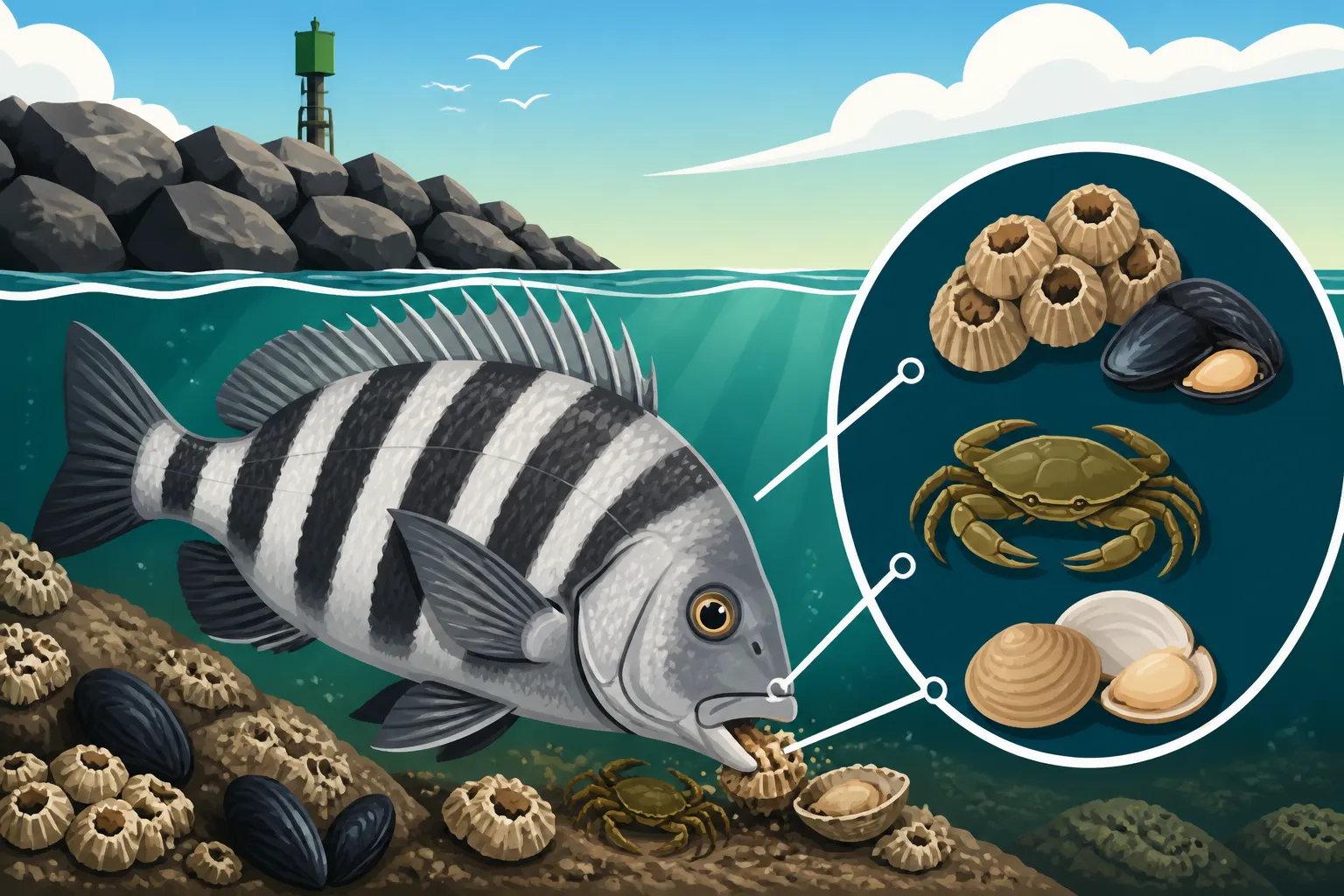
Sheepshead, with their distinctive vertical stripes and human-like teeth, are true masters of foraging in specific environments. They're not just any fish; they're specialists when it comes to munching on hard-to-reach meals. When we talk about jetties along the Mississippi Sound, we're talking about a prime real estate for these fish, offering both protection and an all-you-can-eat buffet.
Jetties, whether they're made of rock, concrete, or pilings, are essentially underwater apartment complexes teeming with marine life. The rough surfaces and crevices provide perfect anchors for a variety of organisms that form the cornerstone of the sheepshead's diet. This isn't a random occurrence; it's an ecological hotspot that sheepshead have evolved to exploit perfectly. Think about it: strong currents bring in nutrients, and the structures themselves slow the water, allowing tiny organisms to thrive.
Why Jetties are Sheepshead Supermarkets
The very nature of a jetty creates an ideal feeding ground. The rough, submerged surfaces of these structures are constantly being colonized by barnacles, mussels, oysters, and other small crustaceans and mollusks. These aren't just snacks; they're the sheepshead's main course, their bread and butter, their absolute favorites. The sheepshead's incredibly strong, almost human-like molars and incisors are perfectly designed to scrape these shellfish right off the rocks. It’s a specialized tool for a specialized job, and they use it with precision.
Beyond the sessile organisms, jetties also attract smaller baitfish and crabs seeking shelter. These creatures become opportunistic meals for sheepshead as well. So, when you're fishing a jetty, you're not just casting into open water; you're casting into a vibrant, living ecosystem that caters directly to the sheepshead's culinary preferences. This is why knowing Why Sheepshead Is Called the Convict Fish is about more than just their looks; it's about their tough-guy eating habits too! They're like little underwater demolition experts, constantly working on those barnacles.
The Impact of Tides and Water Clarity on Feeding
Sheepshead feeding habits around jetties are also heavily influenced by external factors like tides and water clarity. A rising or falling tide can be your best friend when targeting these fish. Moving water dislodges food, washes out bait from crevices, and generally makes it easier for sheepshead to find a meal without having to work quite as hard. Think of it like a conveyor belt delivering fresh groceries.
When the tide is moving, sheepshead tend to become more active, moving along the jetty lines, picking off dislodged morsels. A slack tide, on the other hand, can often slow down the bite, as the food isn't as readily available. Water clarity also plays a significant role. Sheepshead are primarily sight feeders, relying on their keen vision to spot their prey. In murky or extremely turbid waters, their ability to locate food is hindered, making them less likely to bite. Clearer water, especially on a moving tide, often leads to a more productive sheepshead bite. So, checking the tide charts and paying attention to water conditions are just as important as your bait choice. When you're planning a trip to a spot like a Biloxi Fishing Pier Guide or exploring other Gulf Coast spots, understanding these environmental cues will make a huge difference.
The Sheepshead's Favorite Natural Baits Near Jetties
Knowing what sheepshead naturally feed on is the secret weapon for any angler trying to catch them. Forget the fancy lures for a moment; these fish are usually after the real deal. Their diet primarily consists of crustaceans and mollusks that cling to the very structures you're fishing. Mimicking these natural food sources with your bait is key to enticing a bite.
It's common to see anglers using a variety of baits, but some stand out as clear favorites for sheepshead. The trick isn't just picking the right bait, but also presenting it in a way that looks as natural as possible, almost like it just fell off the jetty itself.
Crabs: The Ultimate Sheepshead Delicacy
If there's one bait that consistently reigns supreme for sheepshead, it's various types of small crabs. Fiddler crabs are probably the most famous sheepshead bait, and for good reason. They are plentiful in coastal marshes and around oyster beds, making them a very natural food source for sheepshead. Their hard shells are no match for those powerful sheepshead teeth. They're like candy to a sheepshead.
But it's not just fiddler crabs; small blue crabs, hermit crabs, and even fragments of larger crab species can be incredibly effective. The key is size. Sheepshead have relatively small mouths for their body size, so a quarter-sized piece of crab or a small whole crab is usually ideal. You're trying to give them a bite-sized piece that they can easily latch onto and crush. When you're rigging a crab, try to hook it through a leg socket or the corner of its shell to keep it alive and wiggling, making it even more appealing. Many anglers swear by fiddler crabs as the Best Bait for Sheepshead Near Jetties.
Shrimp and Other Crustaceans
Shrimp, both live and dead, are another top contender for sheepshead bait. While sheepshead might be a bit more selective about shrimp compared to crabs, a lively, small live shrimp can be irresistible. They'll readily munch on a shrimp, especially if it's struggling near the bottom or drifting naturally with the current. Freshly peeled shrimp can also work wonders, as the exposed meat releases a strong scent that can attract sheepshead from a distance. Again, presentation is crucial – a small piece of peeled shrimp on a small hook, free-lined or with minimal weight, often gets the best results.
Beyond shrimp, other small crustaceans, such as sand fleas (mole crabs) found along the surf, can also be highly effective. These are natural inhabitants of coastal waters and are often dislodged by waves and currents, making them easy targets for sheepshead. Collecting sand fleas can be a fun side activity before your fishing trip, and they offer a tough bait that stays on the hook well.
Mussels, Oysters, and Barnacles: Direct From the Jetty
This might sound like a lot of work, but sometimes the most effective bait is what the sheepshead are literally eating right off the rocks. Mussels, oysters, and barnacles are staples of their diet. Cracking open a fresh oyster or mussel and using the meat as bait can be incredibly potent. The natural scent and texture are exactly what sheepshead are accustomed to.
Even barnacles, scraped directly from the jetty itself, can be used. This takes patience and a sharp tool, but it's the ultimate in natural bait presentation. Hooking a small cluster of barnacles or a piece of barnacle meat onto a small, sharp hook can trick even the wariest sheepshead. The challenge here is keeping the soft meat on the hook, so a small, fine-wire hook is often best. This is a tactic that experienced local anglers often employ, especially when the bite is tough.
Here’s a quick overview of top natural baits:
| Bait Type | Effectiveness Near Jetties | Best Presentation | Pros | Cons |
|---|---|---|---|---|
| Fiddler Crabs | High | Whole, hooked through leg/shell | Natural, tough, highly attractive | Can be hard to find/keep alive |
| Live Shrimp | Medium to High | Whole, free-lined or light weight | Very natural, good scent | Fragile, easily stolen, less selective |
| Peeled Shrimp | Medium | Small piece, tight to hook | Strong scent, easy to rig | Softer, comes off hook easier |
| Small Blue Crabs | High | Quartered or small whole | Extremely natural, very tough | Can be harder to acquire |
| Sand Fleas | Medium to High | Whole, hooked through bottom | Natural, stays on hook well, durable | Can be seasonal, collecting takes effort |
| Oyster/Mussel Meat | High | Small pieces, threaded onto hook | Highly natural, strong scent | Soft, comes off hook easily, messy |
| Barnacle Clusters | Medium | Small cluster, delicate hooking | Ultimate natural bait | Hard to acquire, very delicate to rig |
Remember, the fresher the bait, the better. And when fishing around structures like those found in a Mississippi Gulf Coast Fishing Guide, a Mississippi Saltwater Fishing License Guide is absolutely essential to ensure you're fishing legally.
Artificial Lures and Techniques for Jetty Sheepshead
While natural bait is often king for sheepshead, don't count out artificial lures entirely. They can certainly be effective, especially when you're looking for a more active fishing experience or if you've run out of live bait. The key with artificials is to choose lures that mimic the sheepshead's natural prey and to fish them with a technique that replicates how those creatures move around the jetties.
It takes a bit more finesse and a good understanding of the sheepshead's feeding patterns to consistently catch them on artificials. They are, after all, accustomed to crunching stationary or slow-moving organisms, not chasing down fast-moving prey. So, your presentation needs to reflect that.
Jigging for Sheepshead: Mimicking Crabs and Shrimp
Small jigs are perhaps the most effective artificial lure for sheepshead. The trick is to use jigs that are relatively light, typically 1/8 to 1/4 ounce, often paired with a small, soft plastic bait. The soft plastic should ideally imitate a small crab, a shrimp, or a mollusk. Colors like natural shrimp, root beer, or even white can be very effective. The action you want to impart with your jig is a slow, methodical retrieve, keeping it close to the bottom and tight against the jetty structure.
When jigging, cast your lure close to the pilings or rocks and let it sink. Then, use very small, subtle lifts of your rod tip, just enough to hop the jig a few inches off the bottom before letting it settle again. The idea is to make it look like a crab scuttling or a shrimp trying to hide. Often, a sheepshead bite on a jig feels like a slight tap or just added weight, so you need to be constantly attentive and ready to set the hook. This method works well when you're exploring different structures, as a jig can be retrieved effectively even in complex underwater environments. If you’re really looking to hone your skills, a quick read on Pier Fishing Tips for Beginners can offer additional insights into structure fishing that applies to jetty jigging.
Soft Plastics and Scented Baits
Beyond jigs, small soft plastic baits, sometimes rigged on a weedless hook or a light lead head, can also be productive. Brands like Berkeley Gulp! offer scented artificials that release a fish-attracting odor, which can be a huge advantage when targeting sheepshead. Their Gulp! Peeler Crab or Gulp! Shrimp are popular choices, as they not only look like natural prey but also smell like them. The scent can often compensate for a slightly less natural presentation, drawing in sheepshead that might otherwise ignore a scentless lure.
When using these, again, think about how real prey would behave. Dead-sticking a scented soft plastic near a barnacle-covered piling, letting it slowly drift with the current, can be surprisingly effective. Sheepshead are not typically aggressive chasers, so a passive approach often yields better results with artificials. Experiment with different retrieves, but always err on the side of slow and deliberate.
The Role of Patience and Persistence
Fishing for sheepshead with artificials demands a heightened level of patience and persistence. You might not get a bite on every cast, and it often takes dozens of subtle presentations to entice one of these crafty fish. It's a game of feel and focus. The advantage of artificials is that you don't have to constantly re-bait, allowing you to cover more ground and try different areas along the jetty more quickly.
The best approach is to start by targeting areas where you know sheepshead typically congregate: along the barnacle line, near submerged rocks, or where there's a slight eddy created by the current. Make precise casts, feel for the bottom, and work your lure slowly. It's a challenging but rewarding way to fish for sheepshead, especially when you finally hook into one on a lure you've carefully worked.
Maximizing Your Chances: Tips for Catching Sheepshead Near Jetties
Catching sheepshead near jetties isn't just about bait and lures; it's about a holistic approach that combines understanding their behavior, selecting the right gear, and employing smart fishing techniques. These fish can be incredibly frustrating due to their notorious bait-stealing abilities, so every little edge you can get matters.
Beyond knowing what they eat, knowing how they eat and where they prefer to hide is crucial. You're dealing with a fish that lives in abrasive environments and has a very particular way of feeding.
Gear Up for Success: Rods, Reels, and Terminal Tackle
Your equipment plays a massive role in whether you successfully land a sheepshead or just feed them. Sheepshead have tough mouths and powerful jaws, and they live in areas with sharp barnacles and rocks that can shred your line.
- Rods and Reels: A medium-light to medium action rod, typically 6.5 to 7.5 feet long, with a sensitive tip is ideal. The sensitive tip allows you to detect those incredibly subtle sheepshead bites, which often feel like nothing more than a faint tick or simply added weight. Pair this with a reliable spinning reel spooled with 10-20 lb braided line. Braid offers superior sensitivity and strength, which is vital around abrasive structures.
- Leader Material: This is where many anglers go wrong. You need a tough leader, typically 20-30 lb fluorocarbon. Fluorocarbon is more abrasion-resistant than monofilament and nearly invisible underwater, a definite advantage for wary sheepshead. You might lose some tackle to the rocks, but a strong leader increases your chances of landing a fish that's hooked.
- Hooks: Small, sharp, strong hooks are non-negotiable. Sheepshead have tiny mouths and often just "gum" the bait, so a small hook (size 1 to 1/0) is necessary to get a good hookset. Circle hooks are excellent as they often hook the fish in the corner of the mouth, reducing gut hooks and making for easier release. J-hooks can work, but you need to be very quick on the trigger.
- Weights: Use just enough weight to get your bait down to where the fish are, and to hold it against the current. Egg sinkers or small split shot weights, fished Carolina-rig style, are common. Keep the weight as light as possible to maintain sensitivity and a natural bait presentation.
Many anglers looking for Sheepshead Fishing on the Mississippi Coast will tell you that the difference between a good day and a bad day often comes down to the right tackle.
The Art of Bait Presentation and Hook Setting
This is perhaps the most challenging aspect of sheepshead fishing. They are master bait thieves. They'll mouth the bait, nibble it, and often strip it clean without you ever feeling a definitive strike. This is why a sensitive rod and braided line are so important.
When you feel anything out of the ordinary—a slight tap, a bit of pressure, or even just the line stopping unnaturally—set the hook immediately. Don't wait for a hard pull. Think of it as a preemptive strike. They will often "inhale" the bait, and that slight pause is your cue. Practice is key here, and you'll miss a lot of fish before you get the hang of it.
For natural baits, try to thread them onto the hook as compactly as possible, covering the barb entirely. This makes it harder for the sheepshead to pick off pieces without getting hooked. For crabs, hooking them through a leg socket exposes the point of the hook while keeping the bait secure.
Locating Sheepshead on Jetties
Sheepshead don't just hang out randomly along a jetty. They prefer specific areas that offer food and shelter. Look for:
- Barnacle Lines: These are obvious feeding zones. Fish directly against or just below the visible line of barnacles on pilings and rocks.
- Eddies and Current Breaks: Areas where the current slows down, creating an eddy, are natural congregating points. Food tends to accumulate here, and sheepshead don't have to fight the current as much.
- Submerged Structure: Don't just focus on what you can see. Sonar or a good understanding of the area can reveal submerged rocks, old tires, or debris that also hold fish.
- Shaded Areas: On sunny days, sheepshead might seek the shade provided by the jetty structure, especially at high noon.
- Tidal Flow: As mentioned before, moving tides are often the best. Position yourself so your bait drifts naturally into feeding zones with the current. This could mean casting up-current and letting your bait wash down, or fishing on the lee side of the jetty where fish are waiting for food to come to them.
Remember, sheepshead are bottom feeders, so keep your bait close to the structure and near the bottom. By combining the right gear, careful presentation, and strategic location scouting, you'll significantly increase your chances of reeling in one of these tough and tasty fish. And if you’re wondering about the culinary aspect, a quick read on Is Sheepshead Good to Eat? will give you all the details you need for cooking your catch.
Disclaimer
This article is for general informational purposes only and does not constitute professional advice. Laws, prices and regulations vary by location and change over time. Consult a qualified professional for guidance on your specific situation.