Where Largemouth Bass Spawn
It's a question every passionate angler in Mississippi has asked: "Where in the world are those largemouth bass spawning?" You scout lakes, you check your favorite coves, and sometimes it feels like they've just vanished. Understanding where and when these elusive fish engage in their annual reproductive ritual is absolutely critical to finding them and improving your chances of a successful day on the water. This comprehensive guide will pull back the curtain on the largemouth bass spawning process in Mississippi, helping you unlock the secrets to locating those coveted spawning beds.
The Annual Bass Spawning Ritual in Mississippi
The spawning season for largemouth bass is one of the most anticipated times of the year for anglers across Mississippi. It's when these powerful fish become highly focused on reproduction, often making them more aggressive and, consequently, more susceptible to being caught. But it's not a uniform event; it’s a delicate dance with nature, heavily influenced by local conditions.
When Does the Magic Happen?
In Mississippi, the largemouth bass spawning season typically kicks off in late winter and transitions into early spring, generally from late February through May. However, pinning down an exact date is like trying to nail jelly to a wall. The precise timing is an intricate ballet dictated by several environmental cues, with water temperature being the prima ballerina. As water temperatures consistently rise into the mid-50s to low 60s Fahrenheit, bass begin to stage and prepare for the spawn. Southern Mississippi usually sees the spawn begin earlier, sometimes in late February or early March, while the northern parts of the state, which experience cooler average temperatures, might not see significant spawning activity until late March or April.
Think about those beautiful, sunny spring days after a cold snap. The water warms up rapidly in the shallow areas, creating perfect conditions. Anglers often get incredibly frustrated when they hit a lake just a week too early or too late, missing the peak of the action. It's truly a narrow window of opportunity. Keeping a close eye on forecasts and checking actual water temperatures with a reliable thermometer is far more effective than relying on a calendar date. For a broader look at what to expect, check out our guide on Mississippi Fishing Season Dates and Limits or Best Time of Year to Fish in Mississippi.
The Ideal Spawning Conditions
When largemouth bass are ready to spawn, they aren't just looking for any old spot; they're incredibly particular about their nursery. They're seeking out prime real estate that offers specific advantages for the survival of their eggs and fry. The ideal conditions include hard bottom surfaces like sand, gravel, or shell beds. These firmer bottoms prevent eggs from sinking into soft muck where they could suffocate or be smothered. You'll rarely find a bass bed on deep, soft mud, for example.
Beyond the bottom composition, water clarity plays a significant role. Bass prefer moderately clear to slightly stained water for spawning, as it allows sunlight to penetrate and warm the beds while still offering some concealment from aerial predators. Excessive muddiness can inhibit egg development and make it harder for the male to guard the nest effectively. Protection from strong currents and heavy wave action is also paramount. They want a calm, sheltered environment where their efforts won't be constantly disrupted. Any good spawning bed will likely have some form of structure or cover nearby, offering ambush points for the guarding male and refuge for the vulnerable fry once they hatch.
Where to Find Those Spawning Beds: Prime Real Estate
Once you understand when bass spawn, the next big piece of the puzzle is where they set up shop. Largemouth bass are quite predictable in their choice of spawning locations, focusing on areas that maximize warmth, protection, and accessibility. Knowing these preferred spots can dramatically increase your chances of spotting a bed or enticing a guarding bass.
Shallow Water Sanctuaries
Largemouth bass are notorious for moving into surprisingly shallow water to spawn. We're talking anywhere from a few inches to five or six feet deep, depending on water clarity and available cover. They seek out calm, protected pockets, coves, and wide, shallow flats that warm up quickly under the spring sun. These areas often have darker bottoms that absorb heat, further aiding in the warming process. Think about the north-facing banks of a lake that get maximum sun exposure throughout the day.
These shallow water sanctuaries provide crucial advantages. The warmer water helps incubate the eggs, accelerating development. The reduced current minimizes stress on the eggs and delicate fry. Look for areas with a gradual slope, as bass will often move up and down this incline to adjust for minor temperature fluctuations or perceived threats. Points that extend into coves, secondary points within larger bays, and the backs of shallow creeks are all prime suspects. It’s a bit like searching for tiny, circular clearings on the bottom, often surrounded by darker debris. Sometimes, having a pair of good polarized sunglasses, which you can easily find on Amazon, makes all the difference in spotting these subtle nests from a distance.
Structure and Cover are Key
While shallow water is the general rule, it's the specific structure and cover within those shallow areas that truly pinpoint the bass beds. Bass, especially the males, are highly territorial during the spawn and will pick a spot near something they can relate to and defend. This could be anything from a solitary stump, a cluster of lily pads, a fallen tree (laydown), or even an old tire or discarded brush pile. The cover provides a visual boundary for the nest and offers protection for the male from predators and other intruding bass.
Imagine a beautiful cypress tree line in a quiet backwater slough. The base of those trees, with their intricate root systems and the shade they provide, are absolute magnets for spawning bass. Submerged vegetation, like hydrilla or milfoil, can also host numerous beds along their edges or in small pockets within the grass. These structures give the bass a sense of security and a place to rest during their tireless vigil over the eggs. When you’re looking for a spawning bed, always ask yourself: "If I were a bass, where would I feel safest laying my eggs and guarding them?" The answer almost always involves some kind of protective cover. For more insights on how to target bass effectively, consider reading our Best Lures for Largemouth Bass and Bass Fishing Techniques for Mississippi Anglers articles.
The Act of Spawning Itself: What Anglers Should Know
Understanding the actual mechanics of the largemouth bass spawn is key to anticipating their behavior and figuring out where they might be. It's a fascinating process driven by instinct, where the male bass takes on the primary role of protector.
Nest Building and Protection
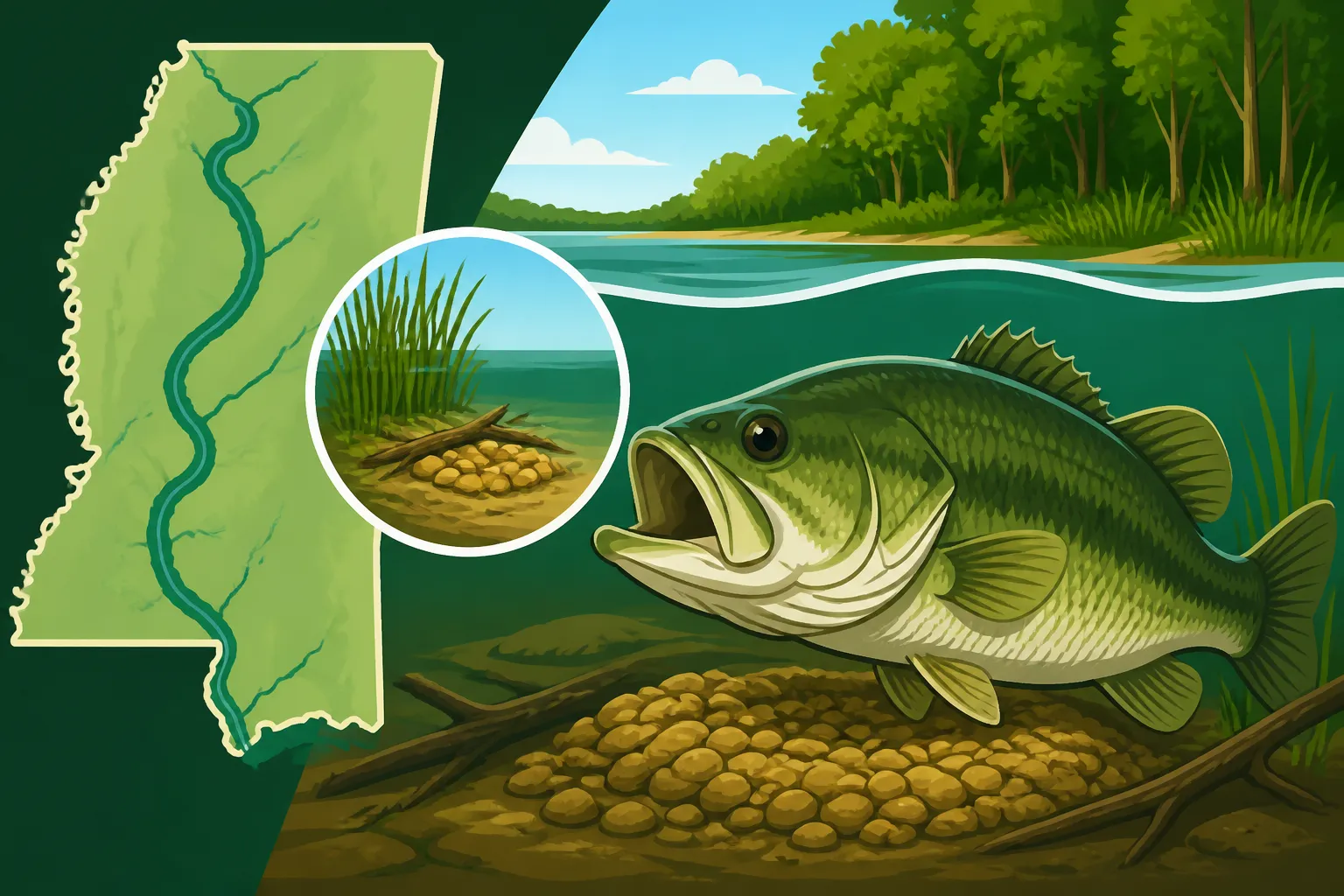
The spawning process typically begins with the male bass. Once he finds that ideal shallow, sheltered spot with a hard bottom, he begins to "sweep" out a circular depression, usually 1-3 feet in diameter, by fanning his tail and body. This clears away silt and debris, exposing the clean sand or gravel beneath, which is perfect for egg adhesion. These cleared circles are what we refer to as "beds" or "nests," and they are the primary targets for observant anglers.
Once the nest is prepared, the male attracts a female to lay her eggs. She deposits thousands of sticky eggs onto the clean substrate, and the male then fertilizes them. After laying her eggs, the female usually departs, leaving the male to fiercely guard the nest. He will aggressively defend the eggs and newly hatched fry from any perceived threat, whether it's another fish, a turtle, or even a curious angler's lure. This aggressive, protective instinct is precisely what makes them so vulnerable during this period. It's an intense period of vigilance for the male, lasting days or even a couple of weeks, until the fry are strong enough to disperse.
Post-Spawn Behavior and Recovery
After the female has deposited her eggs, she enters a "post-spawn" phase. Her body is depleted from the strenuous egg-laying process, and she typically retreats to slightly deeper water nearby, often to the first available cover on a drop-off or ledge, to recover and feed heavily. This is a critical time for her to regain energy.
The male, on the other hand, continues his diligent guard duty over the nest, protecting the eggs and then the tiny fry once they hatch. He'll remain on the bed for a period, sometimes still aggressively striking anything that comes near. Eventually, as the fry grow and disperse, the male will also move off the bed to begin his own recovery, feeding actively. Anglers who miss the peak spawning window might find these post-spawn bass, which are often hungry and willing to strike larger baits as they try to regain their strength. It's a natural cycle that dictates much of their movement and feeding habits throughout the spring and into summer.
Tips for Finding Spawning Bass in Mississippi
Now that you're well-versed in the "how" and "when" of bass spawning, let's talk practical application. Finding these spawning fish requires a keen eye, patience, and a bit of strategic thinking.
Observe Water Temperature and Clarity
As we've stressed, water temperature is the absolute king when it comes to predicting bass spawning activity. Always carry a reliable water thermometer and check temperatures in different areas of the lake. Look for those shallow, protected coves where the water is a consistent 58-68 degrees Fahrenheit. Bass typically initiate spawning when temperatures hit the high 50s and really get after it in the low to mid-60s. A sudden cold front can temporarily push them off the beds, causing them to suspend nearby until conditions stabilize again.
Water clarity is another crucial factor. In clear lakes like some of the state fishing lakes or clearer sections of larger reservoirs, bass will often spawn deeper to avoid predators. In stained or murkier waters, they might spawn much shallower, sometimes in just a foot or two of water. If you're on a lake and the water is muddy from recent rains, bass might delay spawning or seek out clearer feeder creeks or protected coves. A quick check of water clarity visually, or even using a portable clarity tool, can help you adjust your search depth. You can often find a variety of reliable waterproof thermometers and water clarity tools on Amazon to add to your tackle box.
Focus on Specific Mississippi Waters
While bass spawn everywhere in Mississippi, some lakes are renowned for their incredible largemouth bass fisheries and abundant spawning grounds. Large reservoirs like Ross Barnett Reservoir Fishing Guide, Sardis Lake Fishing Guide, and Grenada Lake Fishing Guide all offer vast expanses of ideal spawning habitat. Look for large, protected coves, shallow, brushy flats, and areas with old roadbeds or submerged timber.
For example, on Ross Barnett, areas like Pelahatchie Bay or some of the larger creeks are classic spawning grounds, often featuring cypress trees and emergent vegetation. On Sardis and Grenada, the backs of major creeks and smaller, wind-sheltered bays with sandy or gravel bottoms are prime. Even smaller community lakes and state park lakes can hold incredible numbers of spawning bass in their shallow, protected pockets. Don't overlook oxbow lakes off the Mississippi River, which are often filled with perfect backwater spawning habitat. Each body of water has its unique characteristics, but the underlying principles of warmth, cover, and hard bottom remain consistent.
Ethical Angling During the Spawn
While the spawning season can offer incredible fishing opportunities, it's also a time when bass are at their most vulnerable. Many anglers choose to practice catch and release, especially when targeting bedding bass, to ensure the long-term health of the fishery. When you catch a male bass off a bed, you remove him from his crucial role of guarding the eggs. This leaves the eggs, and later the fragile fry, exposed to predators like bream, turtles, or even other bass, dramatically reducing their survival rate.
If you do choose to target bedding bass, consider these ethical practices:
- Minimize Stress: Land the fish quickly, handle it gently, and release it as close to the bed as possible, as fast as possible.
- Limit Your Catch: If you're going to keep a fish for the table, consider targeting non-spawning bass or limiting your take to preserve those guarding the nests.
- Respect the Resource: Recognize the importance of the spawning cycle for the future of the fishery. Catching a few fish for a photograph is one thing; decimating a population during its most vulnerable time is another.
For more information on regulations that protect bass, refer to our guides on Largemouth Bass Fishing in Mississippi and Mississippi Black Bass Regulations. By being mindful and practicing good stewardship, we can all help ensure that Mississippi's bass fishing remains spectacular for generations to come.
| Spawning Condition | Ideal Range/Characteristic | Why It's Important | Angler's Observation Tip |
|---|---|---|---|
| Water Temperature | 58-68°F (Consistent) | Triggers spawn, incubates eggs | Use a reliable thermometer, check multiple spots. |
| Depth | 1-6 feet (variable by clarity) | Warmer water, light penetration | Look for shallow flats, coves, creek backs. |
| Bottom Type | Sand, Gravel, Shell | Eggs adhere, prevents suffocation | Clearer water allows visual identification of clean spots. |
| Water Clarity | Moderately Clear to Stained | Balances warmth & concealment | Note visibility, adjust depth search accordingly. |
| Cover/Structure | Stumps, Laydowns, Lily Pads, Brush | Protection for male & fry, territorial markers | Scan edges of vegetation, isolated objects, boat docks. |
| Current/Wind | Minimal or None | Prevents egg displacement, calms area | Focus on sheltered pockets, leeward banks. |
Disclaimer
This article is for general informational purposes only and does not constitute professional advice. Laws, prices and regulations vary by location and change over time. Consult a qualified professional for guidance on your specific situation.