Best Depth for Summer Bass in Mississippi Reservoirs
When the Mississippi summer sun beats down, many anglers find themselves scratching their heads, wondering where all the bass have gone. That frustration is real; what was an easy bite in spring often turns into a real challenge as water temperatures soar. This guide is all about helping you crack the code on summer bass, specifically focusing on understanding and finding the best depths for them in our beloved Mississippi reservoirs.
Why Bass Go Deep in Mississippi Summers
Summer in Mississippi means scorching heat, and that heat directly impacts our freshwater fisheries. Just like us, bass seek comfort, and that usually means getting away from the surface where the sun's rays are strongest. They're not just looking for cooler water, though; it's a combination of factors that drives them to deeper haunts.
The Thermocline Effect
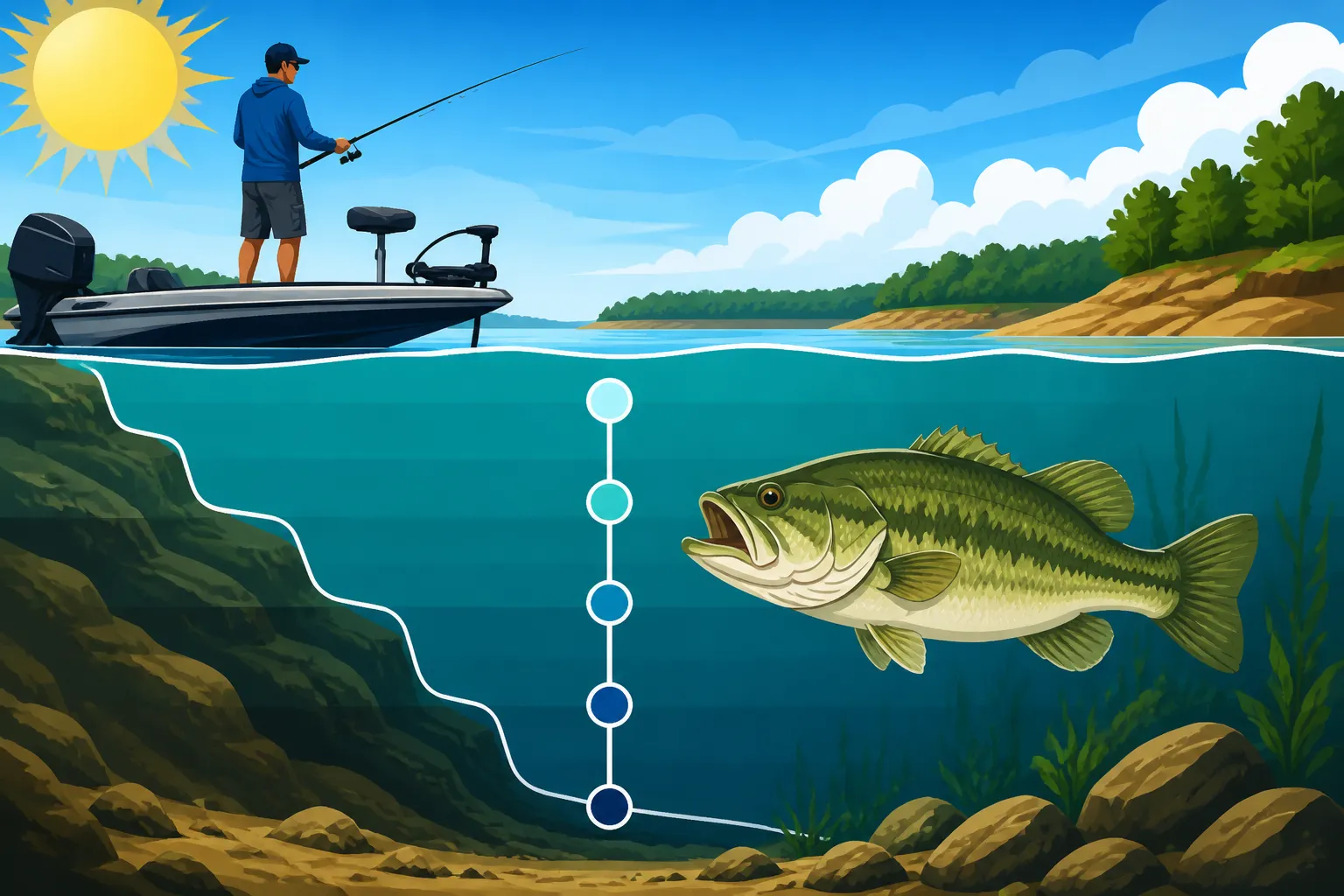
One of the biggest factors influencing summer bass depth is something called the thermocline. Imagine a lake or reservoir as a layered cake. In spring and fall, the water mixes fairly well, but in summer, intense heat creates distinct layers. The top layer, called the epilimnion, is warm and has plenty of oxygen. Below it is the hypolimnion, which is much colder but often has very little oxygen because sunlight doesn't penetrate, and decomposition uses up the available oxygen.
The magic zone for bass is the thermocline, the middle layer where the water temperature changes rapidly, and there's a good balance of cooler water and sufficient oxygen. Bass will typically hold right on top of, or within, this thermocline layer because it offers them the best of both worlds. The depth of this thermocline can vary significantly from one reservoir to another, and even within different parts of the same reservoir, depending on its depth, clarity, and prevailing winds. Understanding this "sweet spot" is crucial for locating active fish.
Seeking Comfort and Forage
Beyond temperature and oxygen, bass are also creatures of habit when it comes to finding food and shelter. In summer, their primary forage, often shad or other baitfish, will also gravitate towards comfortable depths. If the baitfish are holding at 20 feet, you can bet the bass won't be far behind. They're opportunistic predators, and they'll follow their food source.
Furthermore, deeper water offers more cover and structure away from boat traffic and harsh sunlight. Think about it: if you're a bass, would you rather bake in the sun near the surface or hang out in the cool shade of a submerged tree or a deep ledge? The answer is clear. For more insights on how bass behave during the warmer months, check out our Mississippi Summer Fishing Guide.
Typical Depths for Summer Bass in Mississippi Reservoirs
So, what are we talking about in terms of actual feet? There's no single magic number, unfortunately, as every body of water is unique. However, we can establish some general guidelines for our larger Mississippi reservoirs.
Depth Ranges by Reservoir Type
In general, deeper, clearer reservoirs tend to have bass holding at greater depths during summer, while shallower, murkier lakes might see them a bit shallower. For instance, a deep reservoir like Pickwick Lake might have bass consistently holding in 20-30 feet, especially on offshore ledges. Whereas a shallower, more turbid lake like the lower end of Ross Barnett Reservoir might see bass in 12-18 feet of water, still deeper than spring, but not as profound as clearer bodies.
It's really about finding that specific intersection of structure, bait, and the thermocline. On any given day, bass could be anywhere from 10 feet to 30 feet, or even deeper, depending on the specific conditions. That's why having good electronics, like a reliable fish finder (many excellent options are available on Amazon), is absolutely invaluable. These units can help you pinpoint the thermocline and identify bait balls or individual fish arcs.
When Time of Day Matters
Even in the dog days of summer, there are nuances to bass depth based on the time of day. Early mornings and late evenings, when the sun is lower and temperatures are a bit cooler, can draw bass shallower for feeding. During these periods, you might find them in 5-15 feet of water, especially if there's good cover or shade available. This is often the "golden hour" for topwater action or shallow crankbait fishing.
However, once the sun climbs high and starts to bake the surface, bass will quickly retreat to their deeper comfort zones. From mid-morning to late afternoon, you'll almost certainly need to target them in that 15-30 foot range, focusing on those offshore structures. This shift is why knowing the Best Time of Day to Catch Bass can dramatically improve your summer success.
Here's a general idea of common summer bass depths in some popular Mississippi reservoirs:
| Reservoir Name | Average Summer Bass Depth Range | Key Structures to Target |
|---|---|---|
| Ross Barnett Reservoir | 12-20 feet | Main lake ledges, creek channels, standing timber |
| Grenada Lake | 15-25 feet | Deep timber, river channels, humps |
| Sardis Lake | 15-25 feet | Roadbeds, points, deep brush piles, bluff ends |
| Pickwick Lake | 20-30+ feet | Offshore ledges, humps, deep points, current breaks |
| Enid Lake | 15-22 feet | Submerged timber, old creek beds, roadbeds |
| Lake Washington | 8-15 feet | Cypress trees, deeper pockets within shallow areas |
Note: These are general ranges and can vary greatly based on specific conditions, water clarity, and forage location.
Key Structures for Deep Summer Bass
Finding the right depth is only half the battle; you also need to find the right spot at that depth. Summer bass relate very heavily to structure, especially when they're holding deep. These aren't random fish; they're strategically positioned.
Ledges and Drop-offs
Ledges are absolute goldmines for summer bass in Mississippi reservoirs. These are underwater contours where the bottom abruptly drops from one depth to another. Think of a cliff face underwater. Bass will often position themselves on the edge, or sometimes slightly up on the shallower side, waiting to ambush baitfish that move along the drop-off. These ledges can be subtle, only a few feet in change, or dramatic, plunging dozens of feet. Learning to identify and fish these effectively is a cornerstone of Bass Fishing Techniques for Mississippi Anglers.
When fishing a ledge, pay attention to any irregularities. A slight bend in the ledge, a rock pile on the edge, or a lone stump can act as a magnet for bass. Make repeated passes and try different angles to thoroughly work these areas. Oftentimes, one fish holding on a spot means several others are nearby.
Deep Brush Piles and Standing Timber
Many Mississippi reservoirs, like Grenada Lake and Sardis Lake, were created by impounding rivers and flooding vast tracts of land. This often left behind an incredible amount of standing timber and submerged brush. As bass move deeper in summer, these underwater forests become prime real estate. They provide shade, ambush points, and often hold baitfish.
Locating these deep brush piles or timber stands can be tricky without good electronics, but they are worth the effort. Once you find them, you can present your lures vertically or make precise casts to the edges. Jigs, Carolina rigs, and deep-diving crankbaits are excellent choices for probing these submerged covers. Just be prepared to lose some tackle, as these spots can be notoriously snaggy.
Humps, Points, and Roadbeds
Any contour change on the bottom that offers a rise or fall can hold summer bass. Humps are essentially underwater hills that rise from the bottom, often attracting baitfish, and consequently, bass. Points that extend far out into the main lake, especially those with deep water nearby, are also excellent targets. Bass will use these as highways and ambush points.
Old roadbeds, found in many of our reservoirs, are another phenomenal structure. These offer a consistent hard bottom, often with ditches or culverts nearby that serve as excellent holding areas for bass. You can often see these distinct lines on your fish finder, resembling an underwater highway. Fishing these areas often requires a patient approach, thoroughly working your lure across different depths of the structure. For more on finding these key structures, check out Best Structure to Fish for Bass in a Reservoir.
Tactics for Targeting Deep Summer Bass
Once you've identified potential deep bass haunts, you need the right tools and techniques to present your lure effectively. This isn't shallow water power fishing; it requires a more finessed, methodical approach.
Lure Choices for the Depths
When bass are holding deep, you need lures that can get down to them efficiently and stay in the strike zone.
- Deep-Diving Crankbaits: These are workhorses for covering water quickly and probing depths. Look for crankbaits with large bills that can reach 15-25 feet or even deeper. Color patterns mimicking shad or bream are often productive. Brands like Strike King and Rapala offer a wide range of effective deep divers, which you can easily find on Amazon.
- Football Jigs: A football jig is perfect for slowly dragging along ledges, humps, and through timber. Its head shape helps it crawl over cover without snagging as easily as some other jigs. Pair it with a bulky trailer for added appeal.
- Carolina Rigs: This rig is excellent for presenting a soft plastic bait away from your weight, allowing it to flutter enticingly in the current. It's incredibly effective for fishing points, humps, and clean stretches of ledges. It excels at maintaining bottom contact while offering a natural presentation.
- Drop Shots: For a truly vertical presentation, especially when bass are tightly grouped on a specific piece of cover or structure, the drop shot is hard to beat. It allows you to keep your bait suspended at the exact depth the fish are holding, even when your boat is moving slowly or drifting. This is a very popular technique for targeting bass when they are less aggressive.
- Heavy Spinnerbaits and Swimbaits: While often associated with shallower water, heavy spinnerbaits or larger swimbaits can be effectively slow-rolled through deeper timber or along ledges, especially if there's a good current or active baitfish.
Proper Boat Positioning and Electronics Use
Your boat positioning is critical for successful deep-water bass fishing. You want to keep your boat above or parallel to the structure you're targeting to get the best angle for your casts or vertical presentations. This is where a good GPS-enabled fish finder really shines. It allows you to mark waypoints, track your drifts, and stay on top of that key structure.
Many anglers use their electronics to "graph" an area first, meaning they drive over it slowly, observing the contours, finding baitfish, and looking for tell-tale arcs that indicate bass. Once a productive area is found, they'll either use their trolling motor to hold position or deploy their shallow water anchors if the depth allows. Mastering your electronics is a game-changer for How to Find Bass Around Submerged Timber and other deep structures.
Remember, patience is key. Deep-water bass fishing isn't always about fast action. It's often about making precise casts, working your lures slowly and deliberately, and paying close attention to every bump and tap. Don't be afraid to experiment with retrieve speeds, jigging motions, and different lure colors until you find what triggers a bite.
Environmental Factors and Adjustments
Mississippi's summer weather isn't just hot; it can be volatile. Thunderstorms, sudden cold fronts, and prolonged droughts can all influence bass behavior and their preferred depths.
Weather Changes and Water Levels
A sudden summer cold front, while a welcome break from the heat for us, can actually shut down the bite for bass. They might become lethargic and suspend in deeper water, making them even harder to catch. In these situations, slowing down your presentation and opting for finesse techniques like drop shots or shaky heads can be more effective.
Water levels can also play a significant role. During periods of drought, when water levels drop significantly, bass in shallower reservoirs might be forced to consolidate into deeper channels or remaining deep pockets. Conversely, heavy rains can muddy up the water, push bass closer to shore temporarily, or cause them to scatter in areas with new inflows of cooler, oxygenated water. Keeping an eye on conditions and being adaptable is part of the fun of Mississippi Fishing Season Dates and Limits.
Water Clarity and Forage Movements
Water clarity directly affects how deep bass will hold. In extremely clear water, bass might go even deeper to avoid bright sunlight and boat traffic, sometimes holding on structures well beyond 30 feet. In stained or slightly turbid water, they might be a bit shallower, as the reduced light penetration makes the shallower depths more comfortable.
The movement of forage fish, particularly shad, is another critical factor. Shad are often temperature and oxygen sensitive, and they'll move to find their ideal conditions. If the baitfish are schooled up in a deep creek channel, the bass will be right there with them. Observing your fish finder for bait balls is often the fastest way to locate active bass. Consider What a Gizzard Shad Is Used For as bait, and you'll understand why bass follow them so closely.
Ultimately, finding the best depth for summer bass in Mississippi reservoirs is a dynamic puzzle. It requires a combination of understanding fish behavior, knowing your chosen body of water, using your electronics effectively, and being willing to adapt your tactics. It's a challenging but incredibly rewarding aspect of fishing our beautiful state.
Disclaimer
This article is for general informational purposes only and does not constitute professional advice. Laws, prices and regulations vary by location and change over time. Consult a qualified professional for guidance on your specific situation.