How to Tie a Palomar Knot
The sheer frustration of reeling in what feels like a trophy fish, only to feel that sudden, heartbreaking slack in your line—we've all been there. Often, the culprit isn't a faulty reel or a broken rod, but a knot that simply couldn't hold up to the fight. This guide is here to walk you through mastering the Palomar knot, a robust, easy-to-tie knot that will give you the confidence to tackle any fish Mississippi waters throw your way, ensuring your connection to that prized catch is as strong as it can be.
Why the Palomar Knot is a Go-To for Mississippi Anglers
When you're out on the water, whether it's the sprawling Ross Barnett Reservoir chasing largemouth or a quiet oxbow lake in the Delta targeting crappie, the last thing you want to worry about is your knot failing. The Palomar knot has earned its reputation as a reliable workhorse for a reason, becoming a favorite among many Mississippi anglers. It’s a knot that gives you peace of mind, allowing you to focus on the thrill of the catch, not the integrity of your rigging.
The Frustration of Losing a Big Fish to a Bad Knot
Imagine this: you've spent hours patiently working a submerged brush pile on Grenada Lake, and suddenly, your rod bends over violently. Line screams off your reel, and you can feel the heavy thumping of a true slab crappie, or perhaps a monster catfish from the deep channels of the Mississippi River. You're fighting it perfectly, keeping your rod tip up, making all the right moves. Then, without warning, the tension disappears. Your line is still there, but your jig or hook is gone, snatched away by a fish that simply exposed the weakness of a poorly tied knot. The sting of losing a potential personal best, or even just a good supper-sized fish, because of something as preventable as a knot failure, is a feeling no angler enjoys. It's not just the lost fish; it's the lost lure, the lost time, and the dent in your fishing confidence. Many of us have experienced this, and it’s a tough lesson to learn when a simple, strong knot could have saved the day.
Unpacking the Strengths: Security and Simplicity
The beauty of the Palomar knot lies in its elegant combination of strength and simplicity. It's incredibly secure because it passes the line through the eye of the hook or lure twice, effectively doubling the line at the critical stress point before the knot is even formed. This double-line strength significantly reduces the chance of slippage or breakage right at the connection. You might think such strength would come with complexity, but that's where the Palomar surprises. It involves only a few straightforward steps that are easy to remember, even when your hands are cold or you're trying to re-tie in a rocking boat. Once you tie it a few times, it becomes second nature, allowing you to quickly and confidently re-rig without missing precious fishing time. For anglers tackling everything from feisty bass in Lake Washington to bottom-dwelling catfish in the Pearl River, having a knot that you can trust implicitly is absolutely invaluable.
Step-by-Step Guide: Tying the Perfect Palomar Knot
Mastering any knot takes practice, but the Palomar knot is one of the most forgiving. Follow these steps carefully, and you'll be tying it like a pro in no time, ensuring your line is ready for any challenge in Mississippi's diverse fishing environments. Remember, a well-tied knot is your direct link to the fish, so precision matters!
Getting Started: The Initial Loop and Double Line
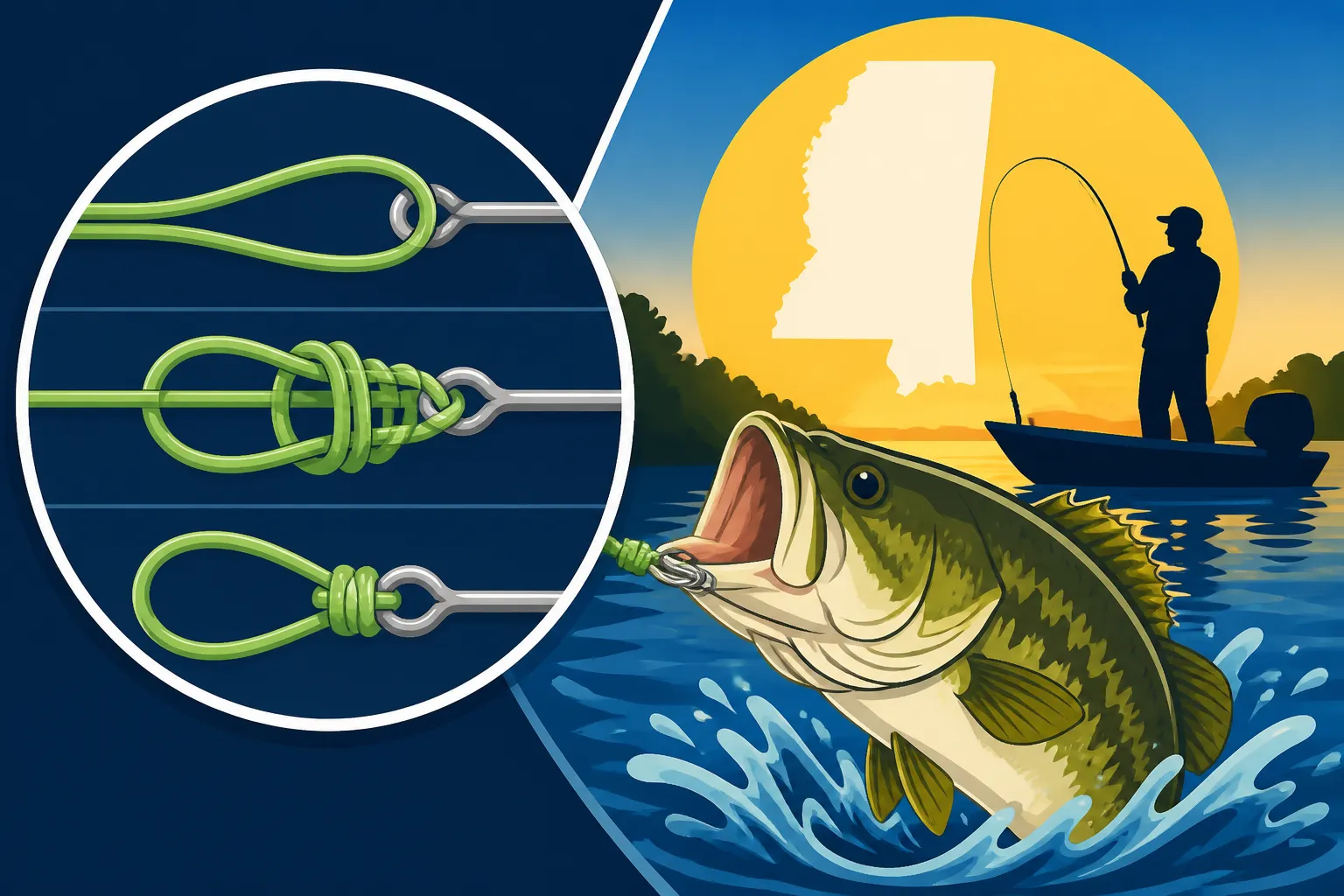
The first step is arguably the most crucial for the Palomar's renowned strength: creating that initial double line. Take about 6-8 inches of your fishing line and double it over, creating a loop. Now, push this doubled-over end through the eye of your hook, swivel, or lure. It doesn't matter which direction you pass it through, as long as it goes all the way. This might feel a little awkward the first few times, especially with smaller hook eyes or if you're using a thicker monofilament line. The key is to make sure you have enough of that doubled-over loop protruding from the eye to work with – aiming for a few inches beyond the eye is generally a good practice. This initial doubled line is what gives the Palomar its superior breaking strength compared to many other knots, distributing the stress evenly once the knot is cinched down. You can pick up a wide variety of quality hooks and swivels for different types of fishing, easily found on Amazon.
Once the doubled line is through the eye, you should have a loop on one side and two strands of line on the other, one leading back to your rod and reel (the standing line) and one short tag end. Ensure both strands pass cleanly through the eye without crossing or twisting. This double pass through the eye is a fundamental element of the Palomar's robust design. It creates a reinforced connection point that is significantly less prone to cutting itself under extreme pressure, which is particularly important when you're battling a hard-fighting fish that might make sudden runs or head shakes. Take your time to get this step right, as it sets the foundation for the entire knot.
The Overhand Knot and Through the Loop
With your doubled line now threaded through the eye, you'll proceed to tie a simple overhand knot. This isn't the final knot, but a crucial precursor. With the hook or lure hanging freely from the doubled line, simply form an overhand knot with the doubled line and the tag end/standing line, as if you were beginning to tie your shoelaces. Make sure the hook or lure hangs freely within the loop you're forming for the overhand knot. This means the entire hook or lure should pass through the big loop created by the doubled line as you tie the overhand knot. It’s common for beginners to accidentally tie the overhand knot around just the lines, leaving the lure outside the loop. If you do this, the knot won't cinch down properly, and you'll have to start over.
After forming the overhand knot, you should have a large loop. Now, take the entire hook, lure, or swivel and pass it through this large loop you just created with the overhand knot. This sounds a little complicated in words, but in practice, it’s quite simple: just bring the lure or hook back through the main loop. The key here is not to pull any lines tight yet. You want everything loose and open so that the lure or hook can pass through smoothly. This step is where the knot starts to take its distinct shape, bringing all the components into alignment for the final cinch. Take a moment to ensure all strands are neat and not twisted, as a clean knot is always a strong knot.
Moistening, Cinching, and Trimming for Maximum Strength
Once the lure or hook is passed through the large loop, you're ready for the final stages. Before you pull anything tight, it's absolutely critical to moisten the line. This might seem like a small detail, but it's incredibly important, especially with monofilament and fluorocarbon lines. When synthetic fishing lines are pulled tight, friction generates heat, which can weaken the line significantly, sometimes by as much as 50%. By moistening the knot with saliva or water, you reduce this friction and heat, allowing the knot to seat properly and maintain its full breaking strength. Don't skip this step – it's a small effort that yields huge benefits in knot integrity.
Now for the cinch. Gently pull on both the standing line (the one going back to your rod) and the tag end simultaneously. As you pull, the loops will begin to close around the eye of the hook or lure, forming a compact, secure knot. You'll see the knot slide down and tighten against the eye. Make sure it seats snugly and evenly. Once it’s fully cinched down, give it a firm, strong tug to ensure everything is locked into place. Finally, take a sharp pair of line clippers or scissors and trim the tag end as close to the knot as possible without cutting the main knot itself. Leaving a very short tag end (about 1/8th of an inch) is good practice. A clean, minimal tag end prevents snags and ensures a streamlined presentation in the water. Quality line clippers, often available through Amazon, can make this task much easier and safer.
When and Where to Use Your Palomar Knot in Mississippi
The Palomar knot's versatility makes it a fantastic choice for a wide array of fishing scenarios across Mississippi, from the smallest streams to the vast Gulf Coast. Knowing when and where it shines can significantly improve your fishing success and reduce frustrating break-offs.
Ideal Scenarios: Freshwater and Light Tackle Applications
The Palomar knot truly excels in freshwater fishing, making it a staple for anyone targeting the popular species found in Mississippi's lakes, rivers, and ponds. If you're heading out for Crappie Fishing Techniques for Mississippi Lakes, whether you're spider rigging jigs on Sardis Lake or vertical jigging brush piles on Grenada, the Palomar is an excellent choice for tying your jig to your line. Its strength means those papermouths won't be tearing off your offering. Similarly, for bass anglers exploring the flooded timber of the Tenn-Tom Waterway or fishing lily pads on Ross Barnett, tying on your favorite soft plastic or crankbait with a Palomar knot provides the confidence you need when a lunker largemouth strikes. This knot performs exceptionally well with monofilament, fluorocarbon, and braided lines, making it adaptable to nearly any freshwater setup.
Consider those days when you're casting light tackle for bream and bluegill in a quiet farm pond. Even though these fish might not be tackle-busters, a strong knot ensures your tiny hooks and small bobbers stay connected. The Palomar knot is particularly favored for attaching leaders to main lines, or for tying small, finesse lures directly to lighter lines. Its robust structure means it won't slip under the repetitive casting and retrieval, or when a scrappy bluegill gives a surprising fight. For anglers learning Bass Fishing Techniques for Mississippi Anglers with spinning gear, the Palomar knot is often one of the first and most reliable knots recommended for its ease of tying and consistent performance. This knot is also a strong candidate when you're looking for Best Fishing Line for Crappie or Best Fishing Line for Catfish, regardless of whether you choose fluorocarbon, monofilament, or braid.
Considerations and Limitations: Heavy Line and Swivels
While the Palomar knot is undeniably strong and versatile, like any knot, it does have a few considerations and situations where other knots might be a better fit. One common challenge arises when trying to tie the Palomar with very heavy monofilament line, particularly those above 50 or 60 pounds. The stiffness and diameter of such lines can make it incredibly difficult to pass the doubled line through the eye of a hook or lure, let alone pass the entire hook or lure back through the large loop required for the overhand knot. In these situations, especially for heavy saltwater applications or when targeting monster species that require exceptionally thick mono, you might find a San Diego Jam or Uni knot easier to manage and equally effective.
Another minor limitation can occur when trying to tie the Palomar to certain large, bulky swivels or specialty rigging components that have very small or unusually shaped eyes. Because the Palomar requires doubling the line and passing the entire lure/hook through a loop, an oversized component with a tight eye can make the process cumbersome or even impossible. For attaching larger swivels or very heavy-duty snap swivels, especially when constructing complex rigs for species like catfish or certain offshore fish, anglers might opt for knots designed specifically for those heavier connections. However, for the vast majority of freshwater fishing in Mississippi and even much of the inshore saltwater angling, the Palomar remains an excellent and highly recommended choice. Always check the Mississippi Freshwater Fishing Rules and appropriate regulations for your target species and fishing area to ensure you are compliant.
Here's a quick comparison of the Palomar knot to a couple of other popular fishing knots:
| Knot Name | Strength (Retained) | Ease of Tying | Ideal Use | Common Lines | Notes |
|---|---|---|---|---|---|
| Palomar Knot | Excellent (95-100%) | Easy | Attaching hooks, swivels, lures; light to medium tackle | Mono, Fluoro, Braid | Very strong, few steps, great for quick re-ties, requires passing lure through loop. |
| Improved Clinch | Good (85-90%) | Moderate | Attaching hooks, swivels, lures; general purpose | Mono, Fluoro | Widely used, can weaken with braid or if not properly cinched, simpler for very small eyelets. |
| Uni Knot | Excellent (90-95%) | Moderate | Attaching terminal tackle, joining lines, tying leaders to main lines | Mono, Fluoro, Braid | Very versatile, strong for various applications, can be tied to spools for backing, a bit more complex than Palomar. |
Understanding different knots and their strengths is part of becoming a well-rounded angler. The Palomar is fantastic, but having a few others in your arsenal, like learning How to Tie a Fisherman's Knot for Leaders, can prepare you for any situation. For instance, if you're looking into Choosing the Right Rod and Reel for Mississippi Fishing, a good rod and reel combo paired with a reliable knot like the Palomar will greatly enhance your fishing experience. Knowing your knot will hold is crucial, especially when you're fishing during the Best Time of Year to Fish in Mississippi when the bite is hot, and you're potentially landing more fish. Before you even head out, remember to check Do You Need a License to Fish in Mississippi? to ensure you're compliant with all local regulations. Mastering this fundamental skill means you're not just fishing, you're fishing smart, and you're ready for that next big tug on your line.
Disclaimer
This article is for general informational purposes only and does not constitute professional advice. Laws, prices and regulations vary by location and change over time. Consult a qualified professional for guidance on your specific situation.