How to Sight Fish for Redfish on the Flats
There's a special kind of thrill that comes with chasing redfish in the shallow flats, but let's be honest, it can also be incredibly frustrating. One minute you're scanning the horizon, full of hope, and the next, a tell-tale wake zips away, leaving nothing but ripples and a deflated ego. Successfully sight fishing for redfish on the flats requires a blend of keen observation, stealth, and precise execution. This comprehensive guide is designed to equip you with the knowledge and techniques you need to turn those fleeting glimpses into memorable catches in the beautiful shallow waters of Mississippi.
Understanding Redfish Behavior on the Flats
Redfish, often called "reds" or "spot-tails," are magnificent creatures that patrol the inshore waters of the Mississippi Gulf Coast. Their presence in the shallow flats isn't random; it's a calculated move based on their feeding habits, protection needs, and even temperature regulation. To truly master sight fishing, you first need to understand why and how they utilize these skinny water environments.
Why Redfish Go Shallow for Foraging
Redfish are opportunistic predators, and the shallow flats, with their abundant grass beds, oyster reefs, and muddy bottoms, are veritable buffets for them. As the tide begins to push in, these areas become flooded, bringing with them a smorgasbord of crabs, shrimp, and small baitfish that redfish absolutely adore. It's like the doors to their favorite restaurant swinging open! They'll move in with the rising water, often with their backs barely submerged, cruising slowly as they root around for a meal.
In these shallow environments, redfish also find a degree of protection. While they are formidable predators themselves, deeper waters can harbor larger sharks or dolphins. The skinny water acts as a natural deterrent to some of these bigger threats, allowing the redfish to feed with a bit more peace of mind. During cooler months, you might even see them "sunning" themselves in the extreme shallows, soaking up the warmth from the sun-heated water and dark bottom, almost like they're recharging their batteries before a feeding frenzy. Understanding this ebb and flow of their daily routine is your first step toward intercepting them effectively.
Reading the Water for Redfish Signs
One of the most exciting, and sometimes challenging, aspects of sight fishing is interpreting the subtle clues the water provides. Redfish rarely announce their presence with a bullhorn; instead, they communicate through ripples, shadows, and disturbances. You need to become a detective, constantly scanning for anything out of the ordinary.
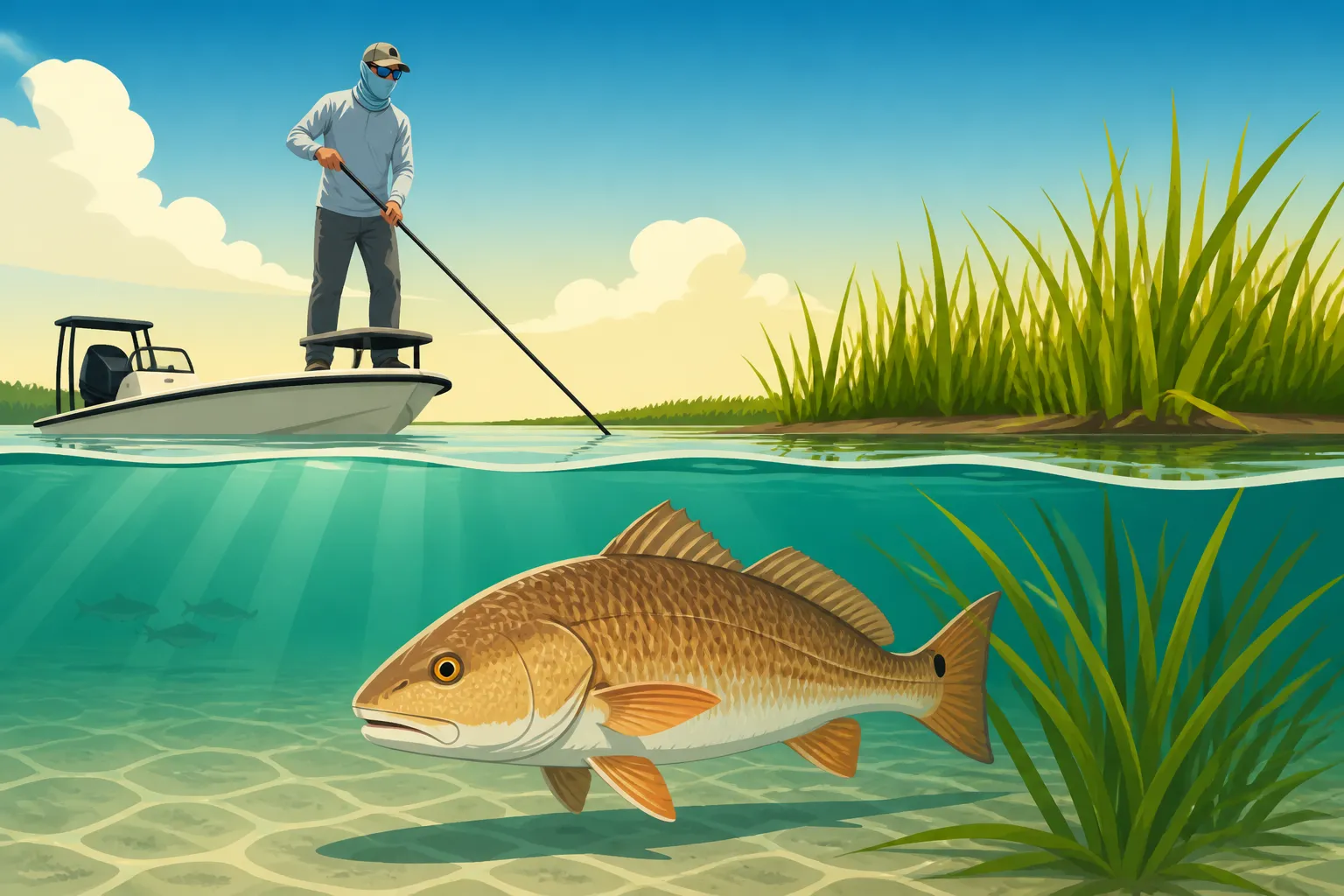
Start by looking for "wakes" or "nervous water." A pushed wake, often a V-shaped ripple moving across an otherwise calm flat, almost always indicates a cruising fish. If that wake seems a bit too symmetrical or moves too purposefully, it's likely a redfish. Even more exciting is seeing a "tailing" redfish. This happens when a fish is head-down, rooting in the mud or grass for food, and its tail breaks the surface of the water, waving like a flag. This is prime time, as the fish is actively feeding and often less spooky. Don't forget to look for muddy spots or plumes of disturbed sediment in otherwise clear water. These are recent feeding signs, telling you a redfish was just there, or might still be nearby. The color of the water itself can even be a clue; a slight discoloration might indicate a school of baitfish or a foraging redfish stirring up the bottom. The more time you spend on the water, the better you'll become at discerning these nuanced indicators. For more insights on where these beautiful fish congregate, check out our guide on the Best Spots to Catch Redfish on the Mississippi Coast.
Mississippi's Prime Redfish Flats
The Mississippi Gulf Coast boasts an incredible array of shallow water habitats perfect for sight fishing redfish. From expansive grass flats to intricate marsh systems, there are numerous places where you can put these techniques to the test. Key areas to focus on include the vast stretches of the Mississippi Sound, especially around barrier islands like Horn Island and Ship Island. These islands create calmer, protected waters on their leeward sides, forming ideal flats for reds.
Closer to the mainland, you'll find excellent opportunities in the back bays and estuaries such as Biloxi Bay, Bay St. Louis, and Pascagoula Bay. Within these bays, look for areas with healthy seagrass beds, which are crucial nurseries for the crabs and shrimp that redfish feed on. Oyster beds, even submerged ones, are also redfish magnets, providing both food and structure. Mud bottoms, especially those adjacent to deeper channels, are fantastic as they retain heat and hold a lot of subsurface forage. Spend some time scouting these areas during low tide to identify potential hot spots and understand the bottom composition. Knowing the lay of the land, or rather, the lay of the water, will give you a significant advantage when the tides start to roll in. For a broader overview of the fishing opportunities in our coastal waters, our Mississippi Gulf Coast Fishing Guide can provide excellent context.
Essential Gear for Sight Fishing Redfish
When you're sight fishing for redfish, your gear isn't just about catching fish; it's about being stealthy, making accurate casts, and seeing clearly into the water. Having the right tools for the job can make all the difference between a successful outing and a day spent chasing ghosts.
Rods, Reels, and Line Choices
The foundation of your sight fishing setup starts with your rod, reel, and line. For spinning tackle, most experienced flats anglers opt for a medium-heavy to heavy power rod, typically 7 to 7.5 feet in length. This length provides excellent casting distance while maintaining accuracy and offering the backbone needed to fight a strong redfish away from structure. A rod with a sensitive tip is also invaluable, allowing you to feel subtle bumps and detect the lightest takes.
Pair your rod with a reliable 3000 or 4000 series spinning reel. Look for a reel with a smooth, consistent drag system, as redfish are powerful fighters and you'll need to give line when they make strong runs. For your main line, 15 to 20-pound braided line is the standard. Braid offers incredible sensitivity, zero stretch for solid hooksets, and casts like a dream, which is crucial for reaching those distant cruising reds. Always attach a fluorocarbon leader of 20 to 30 pounds. Fluorocarbon is nearly invisible in the water and provides excellent abrasion resistance, protecting your main line from sharp oyster shells or the redfish's rough mouth. The leader length can vary, but typically 2 to 3 feet is a good starting point. For more in-depth advice on selecting your fishing tackle, our guide on Choosing the Right Rod and Reel for Mississippi Fishing offers fantastic insights.
Recommended Baits and Lures
Lure selection for sight fishing redfish on the flats tends to lean towards weedless and natural presentations. You're trying to fool a fish that's actively looking for food in a clear, shallow environment, so subtlety often wins the day. One of the most classic and effective choices is a gold weedless spoon, such as a Johnson Silver Minnow. These spoons cast far, sink slowly, and their wobble perfectly imitates a fleeing baitfish, all while deflecting off grass and oyster shells.
Soft plastic jerkbaits, like the D.O.A. C.A.L. Series or Z-Man PaddlerZ, are also incredibly versatile. Rigged weedless on a weighted hook, they can be worked with an erratic twitch-pause retrieve to mimic an injured baitfish. Scented soft plastics, like Berkley Gulp! Shrimp, are practically redfish candy. They come in various sizes and colors and can be fished on a jig head or under a popping cork (though for pure sight fishing, you'll want to skip the cork). For fly anglers, crab and shrimp patterns are paramount. Flies like the Merkin Crab, Kwan, or a classic Veverka's Mantis are excellent choices. Many of these effective lures and baits can be found readily available on Amazon, making it easy to stock up before your next trip. To learn more about specific offerings, dive into our Best Bait for Redfish article.
| Lure Type | Best Conditions | Retrieve Style | Notes |
|---|---|---|---|
| Weedless Spoon | Grassy/Muddy Flats | Steady, slow reel | Excellent for covering ground, minimal snags |
| Soft Plastic Jerkbait | Clear/Stained Water | Twitch-pause, erratic | Mimics injured baitfish, versatile |
| Gulp! Shrimp | All conditions | Slow hop, drag | Scent attracts fish, highly effective |
| Crab Imitations | Oyster beds, rocky areas | Slow crawl, lift-drop | Targets feeding fish, very natural action |
Polarized Sunglasses and Visibility
If there's one piece of gear that is absolutely non-negotiable for sight fishing, it's a high-quality pair of polarized sunglasses. Without them, you're essentially fishing blind. Polarized lenses cut through the glare on the water's surface, allowing you to see into the water column and spot those camouflaged redfish. The difference they make is truly astounding; what looks like an empty flat to the naked eye can suddenly reveal a cruising redfish with the right pair of shades.
When choosing polarized sunglasses, consider amber or copper lens tints. These colors are excellent for enhancing contrast and work well in a variety of light conditions, from bright sunshine to overcast skies. Having a comfortable fit is also key, as you'll be wearing them for hours. It’s a good idea to invest in a quality pair, and perhaps even carry a spare, as they can easily get lost or damaged on the water. Many reputable eyewear brands that offer excellent polarized options are conveniently available for purchase on Amazon.
Shallow Water Craft
The type of craft you use plays a massive role in your ability to access and effectively fish the shallow flats. For serious flats anglers, a dedicated shallow-draft skiff or flats boat is often the ideal choice. These boats are designed to float in mere inches of water, allowing you to reach areas that larger boats simply can't. They're also typically equipped with a poling platform, giving the angler a raised vantage point to spot fish.
However, you don't need a fancy skiff to be successful. Kayaks and stand-up paddleboards have become incredibly popular for flats fishing, and for good reason. They are incredibly stealthy, allowing you to approach fish without making excessive noise. They can also navigate extremely shallow water, getting you into untouched pockets where redfish feel safe. A push pole is another essential tool for any shallow water craft. It allows you to silently propel your boat across the flats without the noise of an outboard motor or the splash of a paddle, preventing you from spooking wary fish. For those interested in this quiet approach, our Kayak Fishing Techniques guide offers valuable tips.
Techniques for Spotting and Approaching Redfish
Sight fishing isn't just about having the right gear; it's a mental game, a dance between angler and fish where stealth, patience, and keen observation are your greatest assets. Knowing how to spot a redfish and then approaching it without alarming it is the core of this rewarding discipline.
The Art of Spotting
This is where your polarized sunglasses truly earn their keep. Spotting redfish on the flats is an art that takes practice, but there are techniques to sharpen your vision. Instead of haphazardly looking around, adopt a slow, methodical scanning pattern. Start by scanning from left to right, focusing on the water closest to your boat, then gradually extending your gaze further out. Don't just look for the whole fish; often, you'll only see a shadow, a subtle glint, or a flash of color that indicates its presence.
Look for anything that breaks the pattern of the bottom. A dark smudge on a light sand bottom, a reddish hue against green grass, or even just the slightest movement in the water. Remember that redfish are masters of camouflage, and they can blend remarkably well with their surroundings. The angle of the sun is also critical; having the sun at your back often provides the best visibility by illuminating the water ahead of you and minimizing glare. Patience is your best friend here. Don't rush; take your time, keep your eyes peeled, and minimize any sudden movements that could send ripples across the water.
Stealthy Approach and Positioning
Once you spot a redfish, the next crucial step is your approach. Spooking a redfish before you even get a cast off is a common, and disheartening, experience. The key is to be as quiet and unobtrusive as possible. If you're poling a boat, maintain a smooth, consistent rhythm. If you're in a kayak or paddleboard, paddle gently and deliberately. Avoid dragging your feet if wading, and never drop anything loudly in the boat.
Try to approach the fish from downwind if possible. This helps to minimize any noise you might be making and also prevents your scent from drifting towards the fish. If there's natural cover available, like marsh grass or mangroves, use it to your advantage to break up your silhouette and make yourself less visible to the fish. Position your boat or yourself so that you're within comfortable casting range but not so close that you might spook the fish with your presence. It's often better to make a slightly longer, accurate cast to an unsuspecting fish than a short cast to a fish that's already on high alert. Knowing these subtle nuances is vital for Redfish Fishing Techniques on the Gulf Coast.
Understanding Tidal Influence
Tides are the lifeblood of flats fishing, dictating when and where redfish will be. Misjudge the tide, and you might find yourself staring at an empty, dry flat or a water level too high for effective sight fishing. Generally, redfish will push onto the shallow flats with the incoming tide, following the rising water to access new feeding grounds. As the tide recedes, they'll often fall back into slightly deeper guts or channels.
The most productive times for sight fishing redfish on the flats are often the last hour of an incoming tide and the first hour or two of the outgoing tide. During these periods, the water movement is typically at its peak, and fish are actively feeding as their forage becomes accessible or is flushed out. However, some anglers find success on a completely high tide, especially if there are expansive grass beds where fish might linger. Always check local tide charts for the specific area you'll be fishing. Understanding the daily tidal swing will help you plan your day, identify optimal fishing windows, and predict fish movement patterns. For a detailed guide on how to interpret these critical natural rhythms, our How to Read Tide Charts for Gulf Coast Fishing article is an invaluable resource. Timing can be just as crucial for other species; much like knowing the Best Time of Day to Catch Speckled Trout, understanding redfish feeding patterns relative to tides will greatly enhance your success.
Mastering the Cast and Presentation
You've spotted the fish, you've approached stealthily, and now it's time for the moment of truth: the cast and presentation. This is where your angling skills truly shine, as a perfect cast can lead to an instant hookup, while a poor one can send your target streaking away.
Accuracy Over Distance
When sight fishing for redfish on the flats, accuracy trumps distance almost every time. A 30-foot cast placed precisely where it needs to be is far more effective than a sloppy 60-foot heave that lands too far, too close, or spooks the fish entirely. The goal is to present your lure or fly to the redfish in a natural, non-threatening manner.
The golden rule is to "lead the fish." This means casting a few feet in front of and beyond the redfish's direction of travel. This allows your lure to sink or settle slightly before the fish reaches it, giving you time to initiate your retrieve. If you cast directly on top of a redfish, you'll likely spook it, sending it fleeing with a powerful burst. A cast too far behind will often go unnoticed. Practice your casting in your yard to develop the muscle memory for quick, accurate presentations under pressure. You need to be able to hit a dinner plate-sized target at varying distances, even with a crosswind.
Lure Selection and Retrieve
The right lure presented with the correct retrieve can be irresistible to a hungry redfish. Your choice of lure should largely depend on the water depth, clarity, and what the redfish are likely feeding on. For instance, in very clear, shallow water, a small, subtle shrimp or crab imitation might be more effective. In stained or slightly deeper water, a flashy gold spoon or a larger soft plastic paddle tail might grab more attention.
Once your lure is in the water, the retrieve is critical. Generally, a slow, methodical retrieve works best. Remember, redfish are often rooting around for crabs and shrimp on the bottom, so mimicking these slow-moving creatures is key. A slow crawl, a series of short hops, or a twitch-and-pause motion can all be effective. If you're using a soft plastic jerkbait, an erratic series of twitches followed by a pause can mimic an injured baitfish, triggering a predatory strike. Pay attention to how the fish reacts; if it ignores your lure, try varying your retrieve speed or motion. Sometimes, a subtle change is all it takes to elicit a strike.
Fighting and Landing Redfish in Shallow Water
Hooking a redfish on the flats is an exhilarating experience, but the fight that follows requires a delicate touch, especially in shallow water. Redfish are incredibly strong and will make powerful, head-shaking runs. Your primary goal is to guide the fish away from any structure like oyster bars, grass clumps, or fallen trees that could cut your line.
Don't try to horse the fish in too quickly. Your tackle is designed to handle the fight, so let the rod and reel's drag do their job. Apply steady pressure, but be prepared to give line when the fish surges. If the fish runs towards shallow water where it might try to "mud up" or tangle in grass, gently steer it back towards slightly deeper water if possible. When it's time to land the fish, use a net if available, or carefully lip the fish with a firm grip on its lower jaw. Always handle redfish with care, especially if you plan to release them. Their bodies are dense, and their scales are tough, but proper handling ensures they swim away healthy. Be mindful of the Redfish Slot Limit on the Mississippi Gulf Coast if you plan to keep your catch, as regulations are in place to protect these magnificent fish.
Disclaimer
Please remember that fishing regulations, including license requirements, bag limits, and seasons, can change. Always consult the latest rules and guidelines from the Mississippi Department of Wildlife, Fisheries, and Parks (MDWFP) before heading out on your fishing trip. Stay safe on the water, be aware of weather conditions, and practice ethical angling by handling fish responsibly, especially those you plan to release.