How to Fish a Texas Rig for Bass
There's nothing quite like the thrill of a big largemouth bass absolutely crushing your lure, but let's be honest, getting that perfect strike isn't always easy, especially when those fish are tucked deep into heavy cover. Frustration can quickly set in when your traditional lures constantly snag on hydrilla, lily pads, or submerged brush. If you've ever felt that exasperation, you know the struggle is real. This guide is here to unravel the mystery and show you exactly how to fish a Texas Rig for bass, making those impossible spots suddenly accessible and productive for anglers across Mississippi.
What Exactly is a Texas Rig and Why It's a Game Changer
The Texas Rig is arguably one of the most fundamental and effective fishing setups in all of bass angling, especially here in Mississippi where we have an abundance of dense aquatic vegetation and woody cover. It's a remarkably simple, yet ingeniously designed, weedless presentation that allows you to confidently cast your bait into places other lures fear to tread. When you understand its mechanics, you'll quickly see why it's a staple in every serious bass fisherman's tackle box.
Components of a Texas Rig
At its core, a Texas Rig consists of just a few key components that work in harmony to create its legendary weedless nature and enticing presentation. Each piece plays a crucial role, and choosing the right ones can make all the difference in your success.
First, you have the worm hook. This isn't just any hook; it's specifically designed for soft plastics, featuring a wide gap (often referred to as an EWG or Extra Wide Gap) and sometimes a Z-bend keeper near the eye. The wide gap ensures that when a bass bites, the hook has ample room to penetrate the plastic bait and firmly secure itself in the fish's mouth. The Z-bend helps hold the plastic bait in place, preventing it from sliding down the shank. You'll find a variety of these hooks from brands like Gamakatsu and Owner, readily available on platforms like Amazon.
Next is the bullet weight. This lead or tungsten weight is shaped like a bullet, with a tapered end that helps it slide through cover effortlessly. It has a hole running through its center, allowing your fishing line to pass through freely. The weight's primary job is to get your bait down to the desired depth quickly and efficiently, and also to provide the necessary casting distance. These weights come in various sizes, from tiny 1/16 oz for finesse presentations to heavy 1 oz or more for punching through thick mats of vegetation.
Then, there's the soft plastic bait itself. This is where you have endless options! Think plastic worms (straight tail, curly tail), creature baits (imitating crawfish or small critters), senkos, flukes, and even soft jerkbaits. The choice of soft plastic depends heavily on what forage the bass are keying in on, and the specific conditions you're facing. Some days a classic 7-inch worm is irresistible, other days a compact creature bait is the ticket.
Finally, while often optional, a bobber stopper or peg is a highly recommended addition. This tiny piece of rubber or plastic slides onto your line above the bullet weight, "pegging" it in place directly against the hook eye. This stops the weight from sliding up the line during the cast or when working through cover, keeping your bait and weight together for a more compact, weedless presentation. If you're fishing extremely heavy cover, pegging that weight is practically mandatory.
The Undeniable Benefits of This Rig for Mississippi Bass
The Texas Rig isn't just popular by chance; it offers a suite of benefits that make it incredibly effective, particularly for targeting largemouth bass in Mississippi's diverse waterways. Its advantages truly set it apart from many other bass fishing rigs.
The most significant benefit, hands down, is its weedless nature. Because the hook point is buried flush within the soft plastic bait, it's virtually snag-proof. You can drag, hop, or swim a Texas Rig through thick hydrilla beds, dense lily pads, submerged timber, brush piles, and even heavy grass mats without constantly getting hung up. This allows you to present your bait exactly where those elusive trophy bass are hiding, often in places inaccessible to traditional treble-hooked lures. Imagine effortlessly pulling your bait through the nastiest cover on Ross Barnett Reservoir or one of our big oxbow lakes without a single snag – that's the power of the Texas Rig.
Beyond its weedless design, the Texas Rig offers incredible versatility. You can fish it fast or slow, shallow or deep, in clear water or murky conditions. Want to pitch a creature bait into a dock piling? Texas Rig. Need to drag a worm along a deep contour? Texas Rig. Thinking about flipping a senko into dense emergent grass? You guessed it, Texas Rig. This adaptability means you don't have to constantly re-tie different rigs as the conditions or cover change, making your fishing more efficient and effective.
It also provides a natural presentation. When fished correctly, the soft plastic bait often falls with a subtle, enticing action as the bullet weight pulls it down. This mimics injured prey or a crawfish scurrying along the bottom. The unweighted portion of the plastic can quiver and move independently, creating lifelike action that's hard for bass to resist. This often translates to more bites, even from wary fish. For bass anglers looking to maximize their opportunities, especially when pursuing Largemouth Bass Fishing in Mississippi, the Texas Rig is an indispensable tool that will elevate your game.
Step-by-Step Guide to Tying a Perfect Texas Rig
Learning to tie a Texas Rig is a foundational skill for any serious bass angler. It’s not overly complicated, but mastering the details will ensure your rig performs flawlessly and stands up to powerful hooksets and hefty bass. Don't rush this part; a well-tied rig is a successful rig.
Gathering Your Materials and Essential Knots
Before you start, make sure you have all your components laid out. You'll need your fishing line, a selection of worm hooks, bullet weights, soft plastic baits, and those handy bobber stoppers if you plan to peg your weight.
For hooks, I generally recommend Extra Wide Gap (EWG) hooks in sizes ranging from 3/0 to 5/0, depending on the size of your soft plastic bait. For lighter finesse worms, a 2/0 might suffice, but for larger creature baits or thick-bodied worms, a 4/0 or 5/0 is often ideal to ensure good hook penetration. Brands like Owner or Gamakatsu are popular choices for their sharpness and strength.
When it comes to bullet weights, tungsten weights are superior to lead, though often more expensive. Tungsten is denser, meaning a smaller weight can achieve the same heft, resulting in a more compact and sensitive presentation. They also transmit more feedback through your line, helping you "feel" the bottom composition and subtle bites better. Common sizes for all-around Mississippi bass fishing include 1/4 oz, 3/8 oz, and 1/2 oz. You can easily find a good selection of these on Amazon.
Now, for your line. A good, strong knot is absolutely essential. The Palomar Knot is a favorite among bass anglers due to its high strength and reliability. It's relatively easy to tie, even with cold hands, and consistently tests at nearly 100% of the line's breaking strength. If you're not familiar, I highly recommend learning How to Tie a Palomar Knot before you hit the water. Alternatively, an Improved Clinch Knot or a Uni Knot can also work effectively, but always ensure your knots are tied correctly and cinched down tight.
Rigging Your Soft Plastic Correctly
This is the critical step to achieving that coveted weedless presentation. Take your time and get it right – a poorly rigged plastic will spin, tear, and snag.
- Thread the Weight and Stopper: First, slide your bullet weight onto your main line, narrow end first. If you're using a bobber stopper, slide that on next, above the weight. This stopper will hold the weight snug against your hook.
- Insert the Hook Tip: Take your soft plastic bait and insert the tip of your worm hook directly into the very center of the nose of the bait. Push the hook point straight in for about 1/4 to 1/2 inch, depending on the size of the bait.
- Exit and Rotate: Once the hook point is embedded, bring it out through the bottom side of the bait. Now, slide the plastic up the hook shank until the eye of the hook is nestled into the nose of the bait. If your hook has a Z-bend keeper, ensure the plastic is pulled up and over that keeper to lock it in place. This ensures your bait sits straight on the hook, preventing it from spinning in the water.
- Measure and Bury: Lay the hook alongside the body of your soft plastic bait to determine where the hook bend should re-enter the plastic. You want the hook to lie straight and flat against the bait's body without bunching it up or stretching it. Once you've found that spot, turn the hook point 180 degrees so it's facing the belly of the bait.
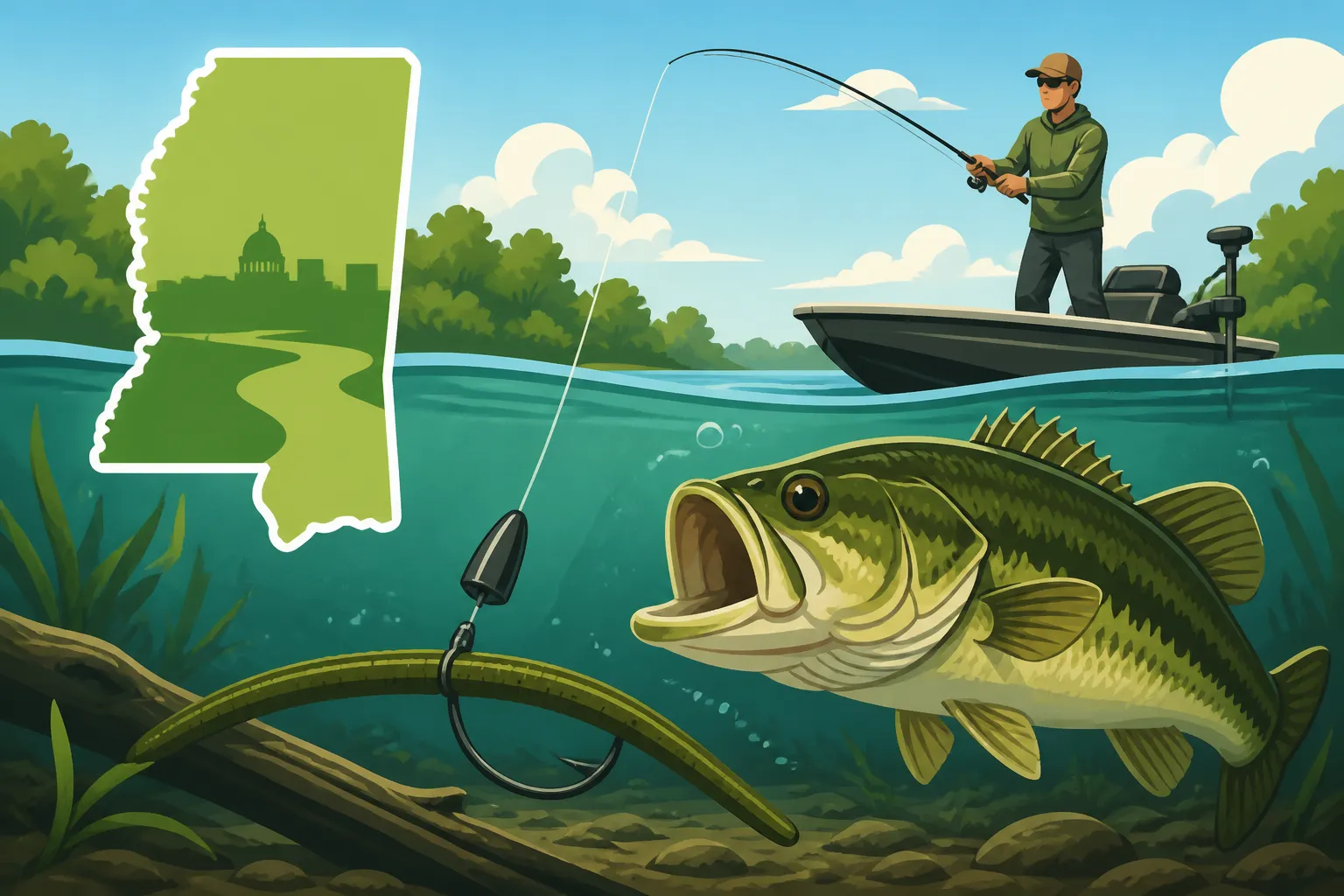
- Re-enter and Hide: Carefully push the hook point into the body of the plastic at your measured spot. Push it through just enough so the point and barb are completely concealed within the plastic, but also allow the hook to pop out easily when a fish bites. This "skin hook" or "Texas rig" method is what makes it truly weedless. Make sure the bait hangs straight and natural – no kinks!
Practice this a few times, and it will become second nature. You'll be able to rig a Texas Rig quickly and confidently, ready to tackle any cover Mississippi throws your way.
Mastering the Art of Fishing a Texas Rig for Mississippi Bass
Tying the Texas Rig is one thing; fishing it effectively is another art form entirely. The beauty of this rig lies not just in its weedless design, but in the myriad ways you can present it to entice even the most finicky bass. Your technique will often depend on the specific type of cover you're fishing and what the fish are doing.
Key Techniques for Different Depths and Cover
The Texas Rig excels in a variety of situations, and mastering a few core techniques will vastly expand your bass fishing capabilities.
When you're faced with dense mats of vegetation, think pitching and flipping. This is a short-range, accurate casting technique used to get your bait silently into small pockets within the cover or up against hard structure. You'll usually want a heavier bullet weight (1/2 oz to 1 oz or more) and pegged to penetrate the thick stuff. Once your bait "punches" through, let it sink to the bottom on a semi-slack line. Watch your line carefully for any twitch or jump—that's often a bite. After it hits bottom, give it a few gentle hops or shakes, then reel in and repeat. This is incredibly effective when bass are seeking shade and ambush points deep within How to Fish Grass Beds for Bass or thick lily pads.
For less dense cover or open water where bass might be holding near submerged timber or brush piles, dragging and hopping is often the ticket. Cast your Texas Rig out, let it sink, and then slowly drag it along the bottom with your rod tip. Every few feet, pause, or give your rod a slight hop to make the bait jump off the bottom, mimicking a crawfish or baitfish. Pay close attention to any subtle changes in resistance or a tap on the line. This technique is fantastic for exploring structure on the bottom of many Mississippi lakes. If you're working around fallen trees or stumps, you might even try a slow, steady retrieve with a few twitches, often called "swimming" the worm. This can be deadly when bass are suspended slightly above the cover.
Another highly effective approach, especially around shallow docks, laydowns, or sparse lily pad fields, is skipping. This involves throwing your bait with an underhand cast so it "skips" across the water surface like a stone. It allows you to get your Texas Rig deep under docks or into tight spots where an overhead cast would be impossible. Combine this with the weedless nature of the rig, and you can present your bait exactly where those ambush predators are lurking. Knowing How to Fish Lily Pads for Bass becomes much easier when you can effectively skip a Texas Rig into the small openings.
Reading the Bite and Setting the Hook
One of the biggest challenges for beginners with a Texas Rig is detecting the bite. Because the weight is free-sliding (unless pegged), and the hook is buried, bass bites can be incredibly subtle. Sometimes it's a distinct "thump," but more often, it's a slight pressure, a spongy feeling, or your line just moving sideways.
When you feel something out of the ordinary, don't immediately set the hook with a violent jerk. Instead, drop your rod tip slightly, quickly reel down any slack in your line until you feel tension, and then deliver a powerful, sweeping hookset by pulling your rod tip up and to the side, maintaining constant pressure. The slight delay allows the bass to fully mouth the bait and get the hook into its mouth. If you set too early, you might pull the bait right out. With that hook point buried in plastic, you really need to drive it home.
Matching Your Gear to the Conditions
Having the right equipment is crucial for effectively fishing a Texas Rig. You need gear that can handle the heavy cover and the powerful fish you're targeting.
For rods, a baitcasting setup is almost universally preferred. A heavy or medium-heavy action rod, typically 6'10" to 7'6" in length, will give you the backbone needed to get a good hookset and pull bass out of dense cover. The longer rod also aids in casting accuracy for pitching and flipping. Brands like Ugly Stik or St. Croix offer reliable options for various budgets.
When it comes to reels, a baitcasting reel with a gear ratio between 7.1:1 and 8.1:1 is excellent. The faster gear ratio helps you quickly pick up slack line, which is vital for detecting bites and getting a solid hookset. For those new to baitcasting, finding the Best Baitcasting Reel for Bass Fishing can feel overwhelming, but many modern reels are very user-friendly.
Line choice is also critical. For most Texas Rig applications, 15-20 lb fluorocarbon line is a top choice. It's nearly invisible underwater, extremely sensitive, and has low stretch, which helps with hooksets. If you're fishing extremely heavy cover or punching thick mats, 30-65 lb braided line is a better option. Braid has no stretch, allowing for incredible sensitivity and cutting power through vegetation. You can also tie a short fluorocarbon leader to your braid if invisibility is a concern. Ultimately, Choosing the Right Rod and Reel for Mississippi Fishing for this technique will significantly impact your success.
| Component | Recommendation | Primary Use Case | Notes |
|---|---|---|---|
| Hook | 3/0 – 5/0 EWG (Extra Wide Gap) worm hooks | Most soft plastics, ensuring good hook-up ratio | Gamakatsu, Owner are popular choices; match to bait size |
| Weight | 1/4 oz – 1 oz Tungsten Bullet Weight | Versatile, heavier for punching thick cover, lighter for finesse | Tungsten is more sensitive; pegging weight is crucial for cover |
| Soft Plastic | 6-10" Worms, Creature Baits, Senkos, Flukes | Mimic baitfish, crawfish, or worms; adapt to local forage | Experiment with colors and profiles based on water clarity & mood |
| Line | 15-20 lb Fluorocarbon or 30-65 lb Braided (with leader) | Fluorocarbon for sensitivity/invisibility; Braid for heavy cover | High strength, low stretch is key for sensing bites and hooksets |
| Rod | 6'10" – 7'6" Medium-Heavy to Heavy Action Baitcasting | Power for hooksets, pulling fish from cover, casting accuracy | Fast tip helps with sensitivity and quick hook-up |
| Reel | 7.1:1 – 8.1:1 High-Speed Baitcasting | Quickly take up slack, efficient retrieves | Smooth drag system is important for fighting larger fish |
| Stopper | Bobber Stopper or Peg | Keeps weight snug against hook for weedless presentation | Essential when fishing dense vegetation or punching |
When and Where the Texas Rig Shines Brightest in Mississippi
The Texas Rig isn't just a versatile tool; it truly excels in specific situations and locations throughout Mississippi, making it a go-to choice for many local anglers. Understanding these optimal conditions will help you deploy this rig with maximum effectiveness.
Ideal Conditions and Habitats
Here in Mississippi, the Texas Rig truly comes into its own during the warmer months, particularly through late spring, summer, and into the early fall. During these seasons, aquatic vegetation like hydrilla, coontail, and lily pads flourish, creating dense cover where bass love to hide from the sun and ambush prey. As the water temperatures rise, bass often retreat into these shady, oxygen-rich havens. The weedless design of the Texas Rig allows you to probe these areas without constant snags, making it an indispensable tool for Mississippi Summer Fishing Guide.
It's also incredibly effective when targeting bass in murky or stained water. The compact profile and often slower presentation allow bass to locate the bait more easily by scent and vibration. This is where creature baits or larger worms in darker colors can be particularly effective. Conversely, in clearer water, you might opt for more natural colors and a slightly smaller profile to avoid spooking wary fish.
From the flooded timber in the backwaters of the Mississippi River to the expansive grass beds of Ross Barnett Reservoir and the numerous brush piles found in our smaller state lakes, the Texas Rig is universally applicable wherever there's heavy cover. It's a fundamental part of any angler's strategy in some of the Best Bass Fishing Lakes in Mississippi. Whether you're targeting submerged logs, cypress trees, or the edges of dense grass, the Texas Rig can get your bait into the strike zone.
Texas Rig vs. Other Popular Bass Rigs
While the Texas Rig is incredibly versatile, it's not the only show in town. Understanding when to choose it over other popular bass rigs is key to maximizing your success.
Consider the Carolina Rig. This rig features a weight (often a heavier, elongated sinker) that slides far up the line, separated from a short leader and hook by a swivel and bead. The unweighted bait on the leader then drifts naturally behind the weight. The Carolina Rig is excellent for covering open, deep water or subtle changes in bottom contour, where you want to drag your bait across hard bottom or shell beds. It's great for covering water and often excels at finding actively feeding fish. The Texas Rig, on the other hand, is specifically designed for penetrating and working through thick cover where a Carolina Rig would constantly snag due to its exposed weight and leader. While the Carolina rig isn't typically for bass, you might explore techniques like How to Fish a Carolina Rig for Catfish to understand the principle of a sliding weight.
Then there's the jig. Jigs, often dressed with a skirt and tipped with a soft plastic trailer, are fantastic for flipping and pitching into cover. They offer a more compact profile and a bulkier presentation that can mimic crawfish or baitfish. While jigs are also weedless, the Texas Rig often offers a more subtle, elongated profile that can be more appealing to finicky bass, especially with longer worms. A jig offers a faster fall and more aggressive action, while a Texas Rig often provides a more natural, subtle descent. Both have their place, and many anglers will rotate between them depending on the bass's mood. For a broader look at artificial options, check out Best Lures for Largemouth Bass.
Ultimately, the Texas Rig stands out for its unparalleled ability to be fished cleanly through the nastiest cover while still offering an appealing, natural presentation. It's a fantastic rig to employ, especially when you're trying to figure out What Is the Best Time to Fish for Bass in Mississippi? and where they're holding tight to structure. Once you've learned How to Pattern Bass on a New Lake, you'll quickly discover the scenarios where a Texas Rig will out-produce almost anything else.
Disclaimer
Fishing conditions and regulations can change. Always consult the latest Mississippi Department of Wildlife, Fisheries, and Parks (MDWFP) regulations before heading out on the water. This guide is for informational purposes only and does not constitute legal advice.