Redfish Fishing Techniques on the Gulf Coast
The thrill of chasing redfish along the Mississippi Gulf Coast is an experience every angler should have, but sometimes it feels like a puzzle trying to figure out where they are, what they’re biting, and when to even be out there. Don't worry, you're not alone in that frustration. This comprehensive guide is designed to cut through all the guesswork, equipping you with proven techniques, essential gear knowledge, and insider tips to consistently catch these powerful, bronze-backed beauties.
Unraveling the Habits of Mississippi Redfish
To consistently hook into Mississippi redfish, you first need to understand them. These resilient, hard-fighting fish are true icons of our coastal waters, and knowing their preferences and patterns is your first step to a successful day on the water.
Understanding Redfish Behavior and Habitat Preferences
Redfish, also known as red drum, are opportunistic feeders that primarily patrol shallow, inshore waters. Their diet largely consists of crabs, shrimp, and small baitfish like mullet or pinfish. This diverse menu means they're always on the hunt, using their keen sense of smell and their highly developed lateral line to detect prey, even in murky water. They're often found with their heads down, "tailing" as they root around in the mud and grass for crustaceans.
When it comes to habitat, redfish are true connoisseurs of coastal structure and cover. You'll find them lurking around shallow grass flats, particularly those with a mix of turtle grass and spartina. Oyster reefs are absolute magnets for them, providing both food and ambush points. They also frequent the edges of marsh islands, tidal creeks, and deeper bayou channels, especially where there's good current flow. The presence of submerged structure like fallen trees, docks, or even small rock piles will almost always hold redfish.
Their location is also heavily influenced by environmental factors such as water depth, clarity, and temperature. In cooler months, redfish often push into deeper, more stable waters within bayous and canals to escape the cold. Conversely, during the scorching summer heat, they might seek refuge in deeper holes or shaded areas, but they’ll still venture into the shallows during cooler parts of the day. Extremely clear water can make them skittish, requiring a more subtle approach, while stained water might call for baits with more scent or lures with greater vibration.
Seasonal Movements and Patterns
Understanding the seasonal migration and behavior of redfish is crucial for planning your trips and maximizing your chances of a bite. Their patterns shift significantly throughout the year.
In the spring, as water temperatures begin to rise, redfish shake off their winter lethargy and become incredibly active. They'll move out of their deeper wintering holes and into the shallower bays and marshes. This is a fantastic time for sight fishing, as the fish are often more visible as they feed aggressively in preparation for the upcoming spawn. Look for them along grass lines, over oyster beds, and in the mouths of tidal creeks where baitfish are starting to reappear.
Summer fishing for redfish on the Mississippi Gulf Coast can be a game of timing. During the peak heat of the day, redfish tend to move to deeper, cooler water, or seek shade under docks and mangrove overhangs. However, the early mornings and late evenings can be incredibly productive, with redfish venturing back into the shallows to feed. This is also the primary spawning season for larger "bull reds" which often congregate in deeper passes and near offshore structures. They're still catchable inshore, but you might need to adjust your approach to target them during cooler periods or in deeper holes.
The fall season is, for many, the absolute pinnacle of redfish fishing. This is when the famous "bull red" run occurs, with massive schools of large redfish moving into coastal waters from the Gulf. They're often seen crashing bait on the surface, making for incredibly exciting fishing. Inshore, redfish are feeding aggressively to build up reserves for winter, so they're generally less picky and more willing to chase down a lure. This is the time to really capitalize on topwater action and sight fishing opportunities.
Even in winter, when many assume fishing slows down, redfish can still provide excellent action. They tend to congregate in predictable patterns, often seeking refuge in deeper bayou holes, protected canals, and sun-warmed shallow mud flats. Their metabolism slows down, so presentations need to be much slower and more methodical. Live or cut bait often outperforms fast-moving artificials during the colder months, as the fish are less inclined to expend a lot of energy chasing prey.
Mississippi Regulations for Redfish Anglers
Before you even think about casting a line, it is absolutely essential to familiarize yourself with the current Mississippi fishing regulations. These rules are put in place by the Mississippi Department of Wildlife, Fisheries, and Parks (MDWFP) to ensure the health and sustainability of our precious redfish populations. Failing to adhere to them can result in hefty fines and the loss of your fishing privileges, which nobody wants. You can find detailed information on the Redfish Slot Limit on the Mississippi Gulf Coast.
The most critical regulation for redfish is typically the slot limit. This means you can only keep fish that fall within a specific size range, for example, between 18 and 30 inches. Fish smaller than the minimum or larger than the maximum must be immediately released. The purpose of the slot limit is to protect juvenile fish, allowing them to grow and contribute to future spawns, and to protect the large, mature breeding fish that are vital for the population's reproduction. Always carry a reliable measuring device with you and know the current limits before you hit the water.
In addition to the slot limit, there's usually a daily creel limit, which dictates How Many Redfish Can You Keep in Mississippi? per angler per day. This limit helps prevent overfishing and ensures that the resource is shared fairly among all anglers. These limits can change, so it’s always a good idea to check the MDWFP website or pick up a current fishing regulation booklet at a local bait shop before each season, or even before each trip, just to be sure. And, of course, you'll need a valid Mississippi Saltwater Fishing License Guide before you ever wet a line in our coastal waters. Make sure you have it on you at all times, as wardens do patrol these areas to ensure compliance.
Gearing Up for Mississippi Redfish Success
Having the right tackle can make all the difference when targeting redfish. While you don't need the most expensive gear, choosing equipment that's well-suited to the conditions and the fighting power of a redfish will greatly enhance your experience and your catch rates.
Rods, Reels, and Line: Your Core Setup
For redfish fishing, a medium-heavy to heavy action spinning rod or baitcasting rod, typically between 7 and 7.5 feet in length, is an excellent choice. The medium-heavy action provides enough backbone to cast heavier lures and baits, and, more importantly, to effectively fight and land a strong redfish. A fast tip on the rod is also beneficial, offering increased sensitivity to detect subtle bites and improving casting accuracy, which is paramount when targeting fish around structure or on shallow flats. Brands like Ugly Stik or St. Croix offer durable and effective options suitable for saltwater environments.
When it comes to reels, spinning reels in the 3000 to 5000 series are incredibly popular for their versatility and ease of use, making them a great choice for many anglers. If you prefer baitcasting, a robust, corrosion-resistant model will provide more power and accuracy for pitching into tight spots. Regardless of your preference, ensure your reel is designed for saltwater use, featuring sealed bearings and corrosion-resistant components to withstand the harsh coastal environment. Brands like Shimano and Penn are well-regarded for their saltwater spinning and baitcasting reels. A smooth drag system is also critical for handling the powerful runs of a hooked redfish.
Your line choice is equally important. Braided line, typically in the 20 to 40-pound test range, is highly recommended. It offers incredible sensitivity, allowing you to feel even the lightest tap, and its thin diameter for its strength means longer casting distances. The lack of stretch in braided line also translates to more powerful hooksets. Always pair your braided main line with a fluorocarbon leader, usually 20 to 30-pound test. Fluorocarbon is nearly invisible underwater, providing stealth, and its abrasion resistance is vital for preventing break-offs when fishing around oyster shells, barnacle-encrusted pilings, or sharp marsh grass.
The Best Baits and Lures to Entice Redfish
Redfish aren't overly picky, which is good news for anglers, but certain baits and lures definitely outperform others. Whether you prefer natural presentations or artificials, having a selection will serve you well.
Live bait is often irresistible to redfish, mimicking their natural food sources. Live shrimp are perhaps the most popular choice along the Gulf Coast; their natural scent and movement are almost guaranteed to draw a strike. Other excellent live bait options include finger mullet, pinfish, and croaker. When rigging live bait, you can free-line them, suspend them under a popping cork, or use a Carolina rig, depending on the depth and current you're fishing. Keeping live bait fresh and lively is key, so a good bait bucket or livewell is essential.
For those targeting larger redfish or fishing in murkier waters, cut bait can be incredibly effective. Freshly cut pieces of mullet, menhaden (pogies), or ladyfish release a strong scent trail that redfish find hard to resist. This is a particularly good strategy when fishing on the bottom in deeper channels or areas with strong currents, as the scent disperses widely. Ensure your cut bait is fresh; freezer-burned bait won't have the same drawing power. Rig cut bait on a Carolina rig for optimal bottom presentation.
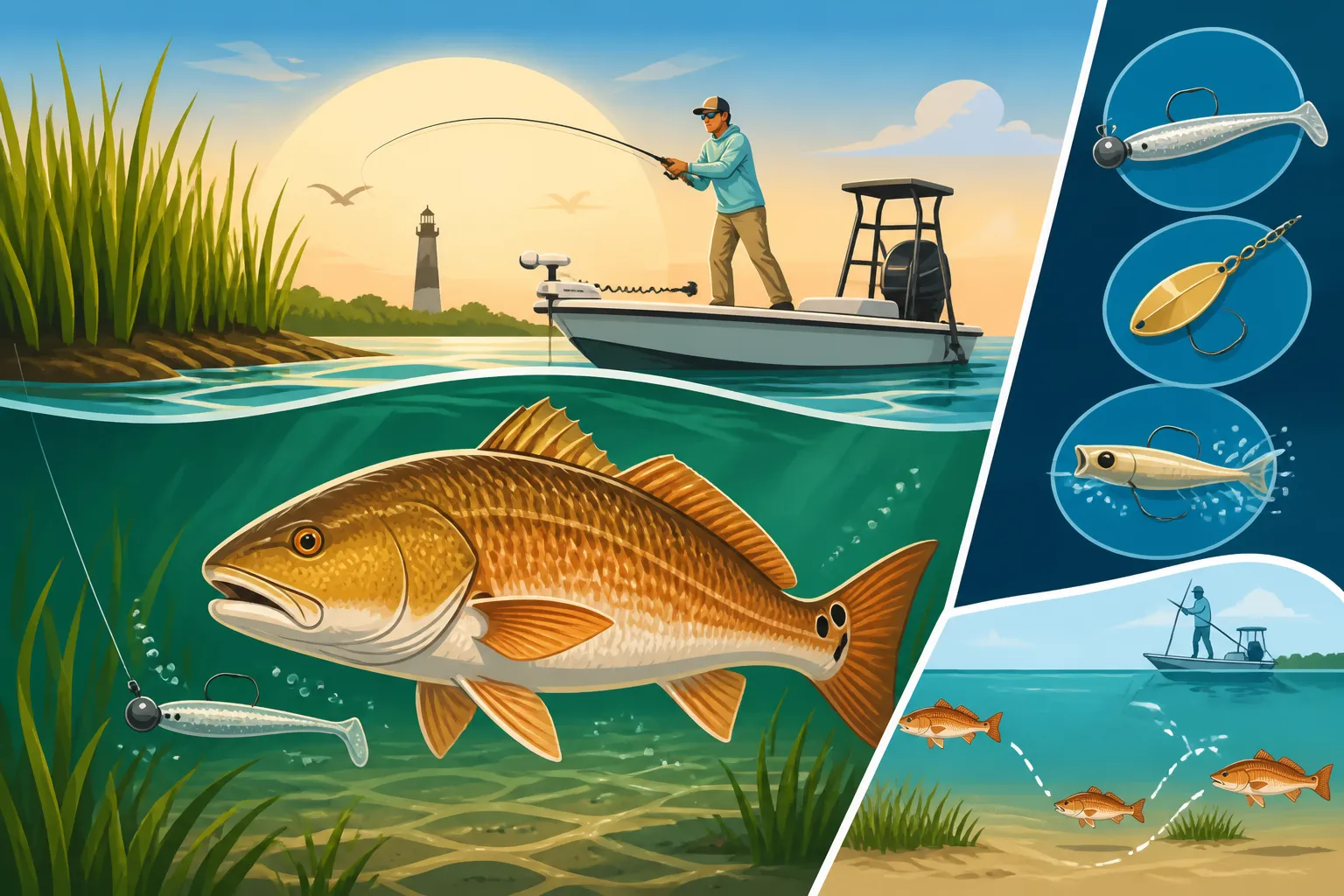
When it comes to artificial lures, the options are vast, but a few stand out as consistent redfish producers. Soft plastics, such as paddle tails, jerk shads, or shrimp imitations rigged on a jig head, are incredibly versatile. Popular colors include chartreuse, white, pearl, and various natural shrimp or baitfish patterns. Brands like Berkley Gulp! are particularly effective due to their scent impregnation, which can be a game-changer in stained water. Spoons, especially weedless gold or silver models, are excellent for covering water and fishing over grassy flats without snagging. Topwater plugs, like the classic Heddon Super Spook, offer some of the most exciting strikes, especially during low-light conditions. These mimic fleeing baitfish and can call redfish up from surprising depths.
Terminal Tackle and Essential Accessories
Beyond your rod, reel, and line, having the right terminal tackle and essential accessories can significantly impact your success and comfort during a redfish outing. These smaller items often make a big difference.
For live and cut bait, circle hooks are highly recommended, typically in sizes ranging from 1/0 to 4/0, depending on the size of your bait. Circle hooks are designed to hook fish in the corner of the mouth, minimizing gut hooks and making for easier, safer releases, which is especially important for fish that fall outside the slot limit. For artificial lures, a strong, sharp J-hook on your jig head is all you need. Always opt for quality hooks that can withstand the corrosive effects of saltwater.
Weights are necessary for getting your bait to the strike zone. Egg sinkers or pyramid sinkers are common for Carolina rigs, allowing your bait to be presented on the bottom in various currents. Split shot weights can be used for lighter presentations or to add just a bit of extra casting distance to a free-lined bait. Popping corks, such as those made by Cajun Thunder or Paul Brown, are indispensable when fishing live shrimp or soft plastics in shallow water. They create an enticing "pop" and splash that mimics a shrimp or baitfish struggling on the surface, drawing redfish in.
Finally, don't forget the essential accessories that make your trip more enjoyable and efficient. A good pair of long-nosed pliers is crucial for removing hooks safely. Fish grips help handle toothy or feisty fish without injury to you or the fish. A measuring device is non-negotiable for adhering to slot limits. A cooler for any legal keepers, sunscreen, a wide-brimmed hat, and polarized sunglasses are also vital for comfort and safety. You can find a wide selection of polarized fishing sunglasses and other gear like sunscreen and hats conveniently on Amazon, ensuring you’re well-prepared for a day under the Mississippi sun.
Proven Techniques for Catching Redfish
Redfish are accessible to a variety of fishing styles, but some techniques are undeniably more effective in specific situations. Mastering these methods will elevate your redfish game.
Sight Fishing the Shallow Flats
Sight fishing for redfish on the shallow flats of the Mississippi Gulf Coast is, for many, the ultimate challenge and reward. There’s nothing quite like quietly poling or using a trolling motor across pristine clear water, spotting a redfish "tailing" in the grass, or seeing the distinct "push" of water as a fish moves. This technique requires patience, stealth, and a keen eye. Crucially, you'll need polarized fishing sunglasses to cut through the glare and spot fish.
The approach is everything here. You want to move slowly and deliberately, either with a shallow-draft boat using a trolling motor or, ideally, with a push pole to maintain silence. Keep the sun at your back if possible, as it helps illuminate the fish and reduces glare on the water. When you spot a fish, or even just a subtle sign like a nervous twitch of grass, cast well ahead of the fish's direction of travel, allowing the bait or lure to settle without spooking it. The goal is for the fish to "find" the offering naturally.
Your presentation needs to be subtle and accurate. For very shallow water, a weedless soft plastic rigged on a light jig head, a weedless spoon, or even a subtle topwater lure can be highly effective. Often, a slow, deliberate retrieve is best, mimicking an easy meal. Avoid heavy splashes or jerky movements that might send the fish darting away. The key is to be as quiet and unobtrusive as possible, letting the fish come to you. This method truly epitomizes the art of the stalk, and it’s an incredible way to target individual, often larger, redfish. More detailed instruction can be found in a guide on How to Sight Fish for Redfish on the Flats.
Targeting Redfish in Marsh Grass and Structure
Redfish are masters of ambush, and the dense marsh grass, extensive oyster beds, and various submerged structures along the Mississippi Coast are their preferred hunting grounds. These areas provide both cover and an abundant food supply, making them prime spots to find hungry reds.
When fishing marsh edges, try fan casting parallel to the grass lines. Redfish will often patrol these boundaries, waiting for baitfish or crustaceans to venture out. Work your lures or baits slowly, making sure to hit any small cuts, potholes, or points in the grass. Oyster beds, whether visible at low tide or submerged, are nutrient-rich ecosystems that attract countless bait species, and consequently, redfish. Cast beyond the beds and slowly retrieve your lure or bait over them, being prepared for a strike as your offering bounces off the rough shells.
Weedless rigs are absolutely crucial when targeting these areas. A weedless jig head with a soft plastic, or a weedless spoon, will allow you to present your lure directly into the thick cover where redfish hide, without constantly snagging. Understanding the tides is also paramount here. Redfish will often push deep into the grass on an incoming tide, searching for food. As the tide begins to fall, they'll pull out, often congregating at the mouths of bayous or along deeper edges where bait is flushed out. This dynamic relationship between How to Catch Redfish in the Marsh and tidal flow is vital for success.
Effective Live and Cut Bait Strategies
While artificials can be exciting, sometimes nothing beats a well-presented live or cut bait for attracting a redfish strike, especially when fish are lethargic or in stained water. These methods tap into the redfish's strong sense of smell and natural feeding instincts.
Live shrimp under a popping cork is an iconic Gulf Coast technique, and for good reason—it’s incredibly effective. The popping cork serves multiple purposes: it keeps your shrimp suspended at a desired depth, allows for long casts, and, most importantly, creates an enticing "pop" and splash on the surface when you twitch your rod tip. This commotion mimics a struggling shrimp or baitfish, drawing redfish in from a distance. Rig your live shrimp on a circle hook just beneath the cork, letting the natural currents do most of the work, occasionally twitching to get the fish's attention.
For targeting redfish on the bottom, especially in deeper channels, passes, or areas with stronger currents, a Carolina rig is your go-to. This rig consists of an egg sinker (or pyramid sinker for heavier current) above a swivel, followed by a fluorocarbon leader (18-30 inches) and a circle hook. This allows your live or cut bait to move naturally on the bottom while the weight holds it in place. It's particularly effective for presenting live finger mullet or large pieces of cut bait to bull reds. The scent trail from cut bait is especially potent with this setup. For more specific advice on choosing the right cut bait, consider reading Best Bait for Big Bull Redfish.
Sometimes, a free-lined live bait can be the most effective presentation, especially for wary fish in clear, calm water or areas with a gentle current. By using little to no weight, your live bait (like a finger mullet or a lively shrimp) swims freely and naturally, presenting an easy meal without the visual distraction of a cork or heavy sinker. This requires careful observation and often works best when you can cast near visible signs of redfish or structure, letting the bait do all the work.
Mastering Artificial Lure Presentations
For anglers who love the active process of casting and retrieving, artificial lures offer an incredibly rewarding way to target redfish. The key to success lies in matching the lure to the conditions and mastering the retrieve.
Soft plastics rigged on jig heads are arguably the most versatile artificial lure for redfish. Paddle tails and jerk shads in natural baitfish colors (white, pearl, silver) or high-visibility options (chartreuse, gold flake) are perennial favorites. The retrieve is crucial: a "twitch, twitch, pause" retrieve, allowing the lure to sink slightly on the pause, often mimics a wounded baitfish or a darting shrimp. Experiment with retrieve speed and cadence; sometimes a slow, deliberate drag works best, while other times a faster, more erratic retrieve triggers a strike. Look for brands like Z-Man or H&H Lures, known for their action and durability.
Spoons, like the classic Johnson Silver Minnow, are excellent choices for covering water, especially across grassy flats or in situations where redfish are scattered. Their flash and wobble perfectly imitate a fleeing baitfish. Weedless spoon designs are particularly useful in snaggy areas. A steady, moderate retrieve often works wonders, but adding an occasional twitch or pause can provoke a strike from a hesitant fish. The bright metallic flash is often visible from a distance, drawing curious redfish in for a closer look.
For sheer excitement, nothing quite compares to a topwater strike from a redfish. Lures such as Heddon Super Spooks or MirrOlure Top Dogs are designed to be "walked the dog," creating a side-to-side sashaying action across the surface. This commotion and splash can be irresistible to aggressive redfish, especially during low-light periods like dawn and dusk, or on calm, overcast days. Mastering the "walk-the-dog" retrieve takes a bit of practice, but once you get it down, the explosive strikes will have you hooked. Always use a strong leader, as redfish can be surprisingly powerful on topwater.
Prime Redfish Havens Along the Mississippi Coast
The Mississippi Gulf Coast offers an incredible variety of environments that redfish call home. From expansive bays to intricate marsh systems and accessible piers, there's a spot for every angler.
Fishing the Vast Inshore Bays and Estuaries
The Mississippi Gulf Coast is blessed with an extensive network of inshore bays and estuaries that are absolutely teeming with redfish. These areas provide rich feeding grounds and vital nurseries, making them prime targets for anglers seeking bronze-backed trophies.
Biloxi Bay is a fantastic starting point for any redfish enthusiast. It’s characterized by abundant marsh grass, sprawling oyster reefs, and numerous winding bayous that feed into the main bay. This diversity of habitat means you can find redfish in various scenarios, from tailing in the shallows to schooling in deeper channels. It's equally popular with anglers exploring by boat, kayak, or even paddleboard, offering countless opportunities to discover your own secret spots. For a deeper dive into this area, check out the Biloxi Bay Fishing Guide.
Just to the west, Bay St. Louis offers similar incredible fishing opportunities. Its expansive flats, healthy marsh systems, and deeper channels hold a healthy population of redfish throughout the year. The bay features numerous public access points and boat launches, making it easy for both locals and visitors to get out on the water. Anglers often find success targeting the bay's many bridges and culverts, as well as the edges of the marsh islands during tidal movements. Learn more about fishing this area with the Bay St. Louis Fishing Guide.
Further east, the Pascagoula Bay and its extensive river system present a massive labyrinth of marshes, bayous, and tidal creeks. This intricate network is a true paradise for redfish, offering endless cover and a seemingly infinite food supply. This area can be particularly productive for finding large schools of redfish, especially during the fall run. Exploring these waters requires a bit more navigation, but the rewards can be phenomenal. The Pascagoula Bay Fishing Guide can provide more insights into this incredible fishery.
Exploring the Barrier Islands and Mississippi Sound
Beyond the immediate shorelines and bays, the broader Mississippi Sound and its protective barrier islands offer another incredible dimension to redfish fishing, often appealing to anglers seeking a more adventurous experience.
The Mississippi Sound itself is a vast, relatively shallow body of water that acts as a highway for baitfish and, consequently, hungry redfish. While it might seem like open water, the Sound contains numerous subtle structures, submerged grass beds, and artificial reefs that can hold redfish. Fishing along the edges of the main channels or near any changes in bottom contour can be highly productive. It's a fantastic area to explore, and a good Mississippi Sound Fishing Guide can reveal many productive spots.
The barrier islands—Horn Island and Ship Island being two of the most popular—are true gems for redfish anglers. These pristine islands boast clear water flats, intricate grass beds, and deep passes that act as natural funnels for baitfish, creating ideal feeding grounds for redfish. The backside of these islands often offers calmer waters, perfect for sight fishing. Accessing these islands typically requires a boat or a Horn Island Fishing Guide or Ship Island Fishing Guide charter, but the untouched beauty and exceptional fishing make the trip worthwhile.
The passes between these barrier islands, and between the islands and the mainland, are particularly critical choke points. As tides ebb and flow, massive amounts of baitfish are pushed through these passes, attracting large redfish looking for an easy meal. These areas can be especially productive during the major fall "bull red" runs, when large schools of mature redfish congregate to feed before heading back offshore. Current lines, eddies, and deeper holes within these passes are always worth targeting.
Accessible Pier and Bank Fishing Opportunities
Not everyone has access to a boat, and thankfully, the Mississippi Gulf Coast understands this. There are numerous public piers, seawalls, and bank access points that offer fantastic opportunities to catch redfish from shore.
Cities like Biloxi, Gulfport, and Ocean Springs feature a variety of public piers and seawalls that extend into the bays and sound. The Biloxi Pier, for example, is a popular spot where anglers can cast into deeper water or target redfish patrolling the pilings. These structures often attract baitfish, which in turn draws in predators like redfish. Fishing is often best during periods of moving water (incoming or outgoing tides) when redfish are most actively feeding around the pier structure. For specific locations, you can consult a Best Gulf Coast Piers for Fishing in Mississippi guide.
When fishing from a pier or the bank, focus your efforts on areas with current, structure, or submerged features. Cast out your bait or lure and allow it to drift with the current, or work it slowly along the bottom near any visible structure. Live shrimp or cut bait are often excellent choices for bank fishing, as their scent can attract redfish from a distance. Artificial lures like soft plastics or spoons can also be highly effective, especially if you can cover some ground along the shoreline to find active fish.
Beyond the major piers, many smaller public access points along bayous, canals, and creeks provide excellent bank fishing opportunities. Look for areas where feeder creeks merge with larger bodies of water, or where there are visible oyster reefs, fallen trees, or other forms of structure. These spots can be great for anglers without a boat to experience the thrill of catching redfish. A little exploration can often uncover a local hotspot for Best Spots to Catch Redfish on the Mississippi Coast.
Optimizing Your Trip with Timing and Conditions
Catching redfish isn't just about where you go or what gear you use; it's also about when you go. Understanding the influences of tides, weather, and time of day can dramatically increase your success rate.
Harnessing the Power of Tides and Currents
For redfish anglers on the Mississippi Gulf Coast, tides are arguably the single most critical factor influencing fishing success. Redfish are highly attuned to moving water, as it dictates the availability and movement of their primary food sources: crabs, shrimp, and baitfish. Ignoring the tides is like trying to guess the winning lottery numbers – you might get lucky, but the odds are stacked against you.
An incoming tide is often a prime feeding window. As the water pushes into the shallow marshes, grass lines, and over oyster bars, redfish will follow it, moving into these areas to forage for newly available prey. This is an excellent time for sight fishing, as the fish are often more exposed and actively tailing in the shallows. Anglers should focus their efforts on targeting the leading edge of the incoming tide, or the highest points of the tide when the fish are deep within the marsh grass.
Conversely, an outgoing tide can be equally productive, just in different locations. As the water recedes from the shallowest areas, redfish will pull out, often congregating at choke points, the mouths of bayous, or along deeper edges where bait is flushed out. These areas become natural ambush points, as the current concentrates the redfish's prey. Fishing these "drainage" areas with live bait or a well-placed artificial can yield fantastic results.
To truly How to Read Tide Charts for Gulf Coast Fishing and capitalize on these movements, understanding a tide chart is paramount. These charts predict the times of high and low tide, as well as the strength of the current. You can often pick up free tide charts at local bait and tackle shops, or find reliable apps and websites. Amazon also offers a selection of laminated tide charts for convenience on the water. Planning your trip around the periods of moving water – typically an hour or two before and after a high or low tide – will significantly increase your chances of finding active redfish.
Impact of Weather and Water Conditions
Beyond the tides, various weather and water conditions play a significant role in redfish behavior and, consequently, your fishing strategy. Being able to adapt to these variables will make you a more versatile and successful angler.
Wind is a double-edged sword for fishing. Light to moderate wind can actually be beneficial, as it breaks up the water's surface, creating chop that provides cover for redfish and makes them less wary of predators (including you!). It also helps to concentrate baitfish and can create current. However, strong winds can make casting difficult, churn up the water, and make boat control a nightmare, often sending fish to seek refuge in calmer, deeper areas. On very windy days, focus on protected shorelines, canals, or leeward sides of islands.
Water clarity is another crucial factor. Clearer water is fantastic for sight fishing, allowing you to spot redfish visually. However, it can also make fish more skittish, requiring a stealthier approach. In stained or murky water, sight fishing is out of the question, and you'll need to rely more on the redfish's other senses. This is where baits with strong scent, like live or cut bait, or artificial lures with rattles or significant vibration, truly shine. Colors like chartreuse and bright orange can also be more visible in lower clarity.
Water temperature also dictates redfish activity. Redfish are fairly tolerant of a wide range of temperatures, but extremes can make them lethargic. In the scorching Mississippi summer, very hot water can push redfish into deeper, cooler holes or shaded areas. During colder winter snaps, they'll seek out sun-warmed shallow mud flats or deep, stable canals. Adjust your retrieve speed and bait choice accordingly; slower presentations are often key in extreme temperatures, mimicking sluggish prey.
Best Times of Day to Target Redfish
While tides and seasons are critical, the time of day can also make a huge difference in your redfish success, especially when considering light levels and temperature fluctuations.
Dawn and dusk are almost universally recognized as the "magic hours" for redfish. During these periods of lower light, cooler temperatures, and typically calmer winds, redfish become incredibly active, often venturing into shallower water to feed aggressively. Baitfish are also more active, leading to widespread feeding frenzies. This is prime time for exciting topwater action, as redfish will readily strike lures creating commotion on the surface. The reduced light also makes fish less wary, increasing your chances of getting a bite.
Mid-day fishing, especially during the peak heat of a Mississippi summer, can be more challenging. Redfish tend to seek deeper, cooler water or shaded areas to escape the sun's intensity. If you're fishing mid-day, focus on these deeper holes, shadowed structures like docks or bridges, or areas with strong current that provide oxygen and bring bait. Slower, more deliberate presentations with live or cut bait, or soft plastics worked on the bottom, are often more effective than fast-moving lures. Don't be afraid to experiment with different depths during these tougher hours.
While less common, night fishing for redfish can also be productive, particularly around lighted piers or docks that attract baitfish. The cover of darkness can make redfish less wary, and they will feed aggressively on any available prey attracted to the lights. Scented baits, like cut bait or Berkley Gulp! artificials, can be very effective at night, as the redfish's sense of smell is highly acute. Fishing during a full moon can also sometimes trigger increased nocturnal feeding activity.
| Lure/Bait Type | Ideal Conditions | Pros | Cons |
|---|---|---|---|
| Live Shrimp | All conditions, especially clear to slightly stained water | Highly effective, natural scent and movement, versatile rigging | Fragile, can be hard to keep alive, often expensive |
| Cut Mullet | Murky water, strong current, targeting larger fish | Strong, long-lasting scent trail, durable, attracts big fish | Can attract unwanted species (catfish, crabs), not active |
| Soft Plastic Paddle | Versatile, clear to moderately stained water | Mimics baitfish/shrimp, easy to cast, wide range of colors/sizes | No natural scent, requires angler action to impart movement |
| Spoons | Grassy flats, windy conditions, covering water | Weedless options, good flash, casts far, effective in chop | Less natural presentation, can be ignored by finicky fish |
| Topwater Plugs | Calm water, low light (dawn/dusk), aggressive fish | Exciting strikes, covers water, calls fish from distance, visual | Limited to calm conditions, often ignored in deeper/murky water |
| Live Finger Mullet | Targeting larger redfish, strong current | Natural movement, durable, excellent for bull reds, good visual appeal | Harder to keep alive than shrimp, can be expensive, specific size needs |
Disclaimer
Fishing regulations and conditions can change rapidly. Always consult the latest Mississippi Department of Wildlife, Fisheries, and Parks (MDWFP) regulations before heading out. This guide is for informational purposes only and does not constitute professional fishing advice. Personal safety is paramount; always wear appropriate safety gear and be aware of your surroundings.