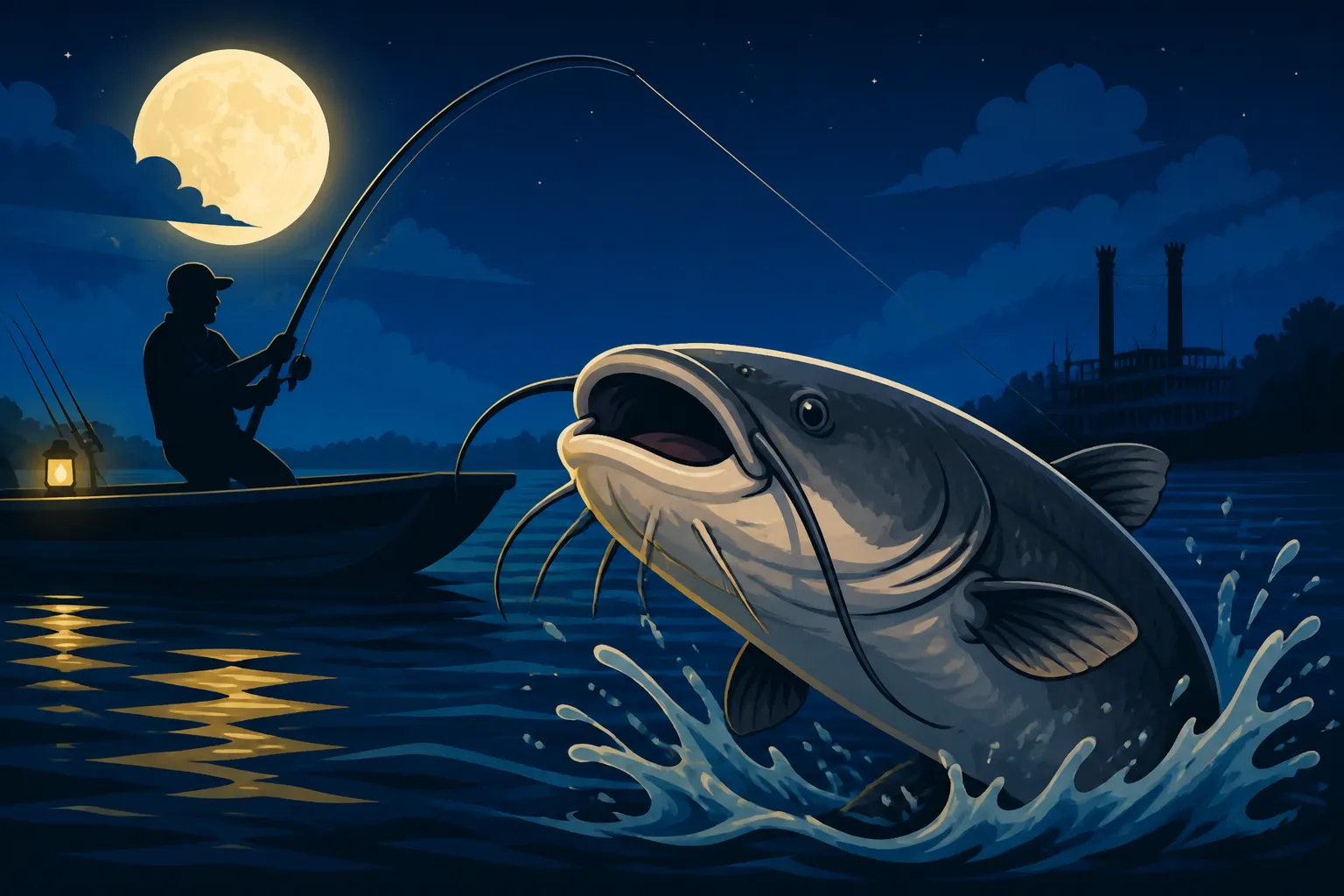
Night Fishing for Catfish
The Mississippi summer sun can be brutal, turning what should be a relaxing day of fishing into a sweltering endurance test. Many anglers find themselves battling not just the fish, but also the heat, the glare, and the bustling crowds that pack popular spots during daylight hours. If you've ever felt that frustration, struggling to get a bite when the sun is high and the water is warm, then this comprehensive guide is for you. We're diving deep into the world of night fishing for catfish in Mississippi, a strategy that not only escapes the daytime discomfort but often leads to some of the most productive and thrilling angling experiences the state has to offer.
Why Embrace Night Fishing for Catfish in Mississippi?
There's a magic that descends upon Mississippi's waters once the sun dips below the horizon, and for catfish anglers, that magic often translates into more consistent bites and larger catches. It’s not just about avoiding sunburn; it's about tapping into the natural instincts and rhythms of these powerful bottom-dwellers.
Beating the Heat and Crowds
Let's be real, summer in Mississippi is hot. The kind of hot that makes you sweat just thinking about being outdoors. Fishing under a blazing sun for hours on end is hardly anyone's idea of a good time, especially when targeting fish that prefer cooler conditions. Catfish, particularly the larger blues and flatheads, are deeply affected by water temperature. As the sun heats the shallow waters throughout the day, these fish often retreat to deeper, cooler sanctuaries, becoming less active and harder to entice.
By shifting your efforts to the evening and nighttime hours, you bypass this significant challenge entirely. The water begins to cool, especially in the shallower feeding flats and along the banks. This drop in temperature signals to catfish that it's time to move and feed. What's more, you escape the daytime throng of boats, jet skis, and bank anglers. Night fishing offers a solitude that's hard to find during the day, providing a peaceful and focused environment where you can truly connect with the fishing experience. You'll find boat ramps less crowded, your favorite bank spots open, and a general tranquility that enhances every aspect of your outing.
Catfish are Nocturnal Hunters
The primary reason night fishing is so effective for catfish isn't just about angler comfort; it's rooted in the catfish's very nature. Channel, blue, and flathead catfish are inherently nocturnal predators. Their biology is perfectly adapted for hunting in low-light conditions. They possess incredibly sensitive barbels, or "whiskers," which are packed with chemoreceptors that allow them to "taste" and "smell" their environment with remarkable precision. Their eyes are also well-suited for dim light, giving them an advantage over many prey species once darkness falls.
When the sun sets, a switch flips for catfish. They emerge from their deeper, daytime holding patterns and move into shallower waters, along creek channels, and onto flats where baitfish, crustaceans, and other food sources become more active and vulnerable. This makes them significantly more accessible and aggressive to anglers. Imagine a blue cat, using its superior senses, cruising the bottom of the Mississippi River, detecting the scent of your cut bait long before it sees it. Or a flathead, ambushing an unsuspecting baitfish near a submerged log in a darkened lake. This natural feeding rhythm makes the night hours prime time for consistent action and the chance to hook into some truly impressive fish that might be too wary or sluggish during the day.
Optimal Conditions for a Successful Night Catfishing Trip
Just because it's dark doesn't mean every night is created equal for catfish. Understanding the subtle interplay of lunar cycles, weather, current, and water levels can dramatically improve your chances of success. It's about being in the right place at the right time, with a little help from Mother Nature.
The Best Lunar and Weather Factors
Many anglers have strong opinions about how the moon affects fishing, and catfish are no exception. While a bright full moon might make you think visibility is better, it can sometimes make the fish a bit more cautious, as they might feel more exposed. Often, the darkest nights, especially during a new moon phase, are considered ideal. With minimal ambient light, catfish rely even more on their superior sense of smell and lateral line, making them bold hunters. However, don't write off a night under a crescent or even a full moon entirely. If other conditions are favorable, you can still have fantastic fishing. The key is how the fish respond to the overall light level in the water, not just how bright the sky is.
Beyond the moon, stable, warm nights are generally preferable. Sudden cold fronts can shut down a bite quickly, even at night. Overcast conditions, where clouds blanket the sky, are often fantastic because they mimic the low light of a new moon, even if the moon is out. This consistent low light encourages catfish to stay active. Light drizzle can also be beneficial, as it washes insects and small organisms into the water, creating a buffet for baitfish, which in turn attracts catfish. Avoid severe thunderstorms or nights with drastic temperature drops, as these can make the fish lethargic. You'll find more detailed insights on how these factors align with Best Weather Conditions for Catfish Fishing.
Understanding Current and Water Levels
Current is a catfish angler's best friend, especially when fishing river systems like the mighty Mississippi River or its tributaries like the Pearl or Tombigbee. Catfish are energy-efficient predators, and they use current to their advantage. They'll often position themselves just out of the main flow, in current seams, eddies, or behind submerged structures like log jams or wing dams. Here, they can wait for food to be swept past them with minimal effort. At night, as the ambient light disappears, their confidence in these ambush points increases dramatically. Look for areas where slower water meets faster water – these are prime feeding zones. A moderate current is usually ideal; too strong, and fish might be forced to expend too much energy fighting it; too weak, and it might not be effectively carrying scent to the fish.
In lakes and reservoirs, while natural current might be less pronounced, understanding water levels and thermoclines is crucial. During the day, hot surface temperatures can push catfish deeper, below the thermocline where the water is cooler and holds more oxygen. At night, as the surface cools, these fish will often move shallower, particularly along channel edges, humps, and points, to feed. Pay attention to recent rainfall; rising water levels can push fish into newly flooded cover, while prolonged drought and dropping levels might concentrate them in deeper main channels. Knowing How Low Water Levels Affect Reservoir Fishing can give you a significant edge in these situations, helping you adjust your strategy accordingly.
Essential Gear and Bait for Night Catfishing
Success after dark isn't just about showing up; it's about being prepared. The right gear makes the difference between a frustrating tangle in the dark and a smooth, productive night of battling big catfish. And, of course, the right bait is absolutely paramount.
Lighting, Rods, Reels, and Lines
First and foremost, you need light. Forget your tiny smartphone flashlight; you need hands-free illumination. A good quality headlamp is non-negotiable, preferably one with adjustable brightness and a red or green light option. Red light preserves your night vision, while green light is often less attractive to biting insects – a huge plus in Mississippi. For general camp or boat illumination, a portable lantern can be invaluable. Brands like Coleman offer reliable battery-powered lanterns perfect for setting up your fishing station. Just be mindful not to shine bright lights directly on the water where you're fishing, as this can spook wary catfish.
When it comes to your fishing setup, think robust. Catfish are powerful, and night fishing often means less visibility, increasing the chances of tangles or snags. You'll want sturdy rods with plenty of backbone, ideally 7-8 feet in length, capable of handling 20-50 lb test line. Medium-heavy to heavy action rods are a must. Paired with these, a reliable baitcasting or spinning reel with a smooth, strong drag system is crucial. Capacity is important too, as big blues and flatheads can make impressive runs. You can find excellent options for both rods and reels on Amazon, often with detailed reviews to help you choose. For line, many anglers prefer monofilament for its stretch and abrasion resistance, especially around submerged cover. However, braided line offers superior sensitivity and strength for its diameter, which can be an advantage when feeling subtle bites in the dark. Aim for at least 20 lb test mono or 30 lb test braid for most situations, going heavier if you're targeting true trophy cats. For a deep dive into options, check out our guide on Best Fishing Line for Catfish.
Top Baits and Rigs for Night Owls
This is where the real magic happens for catfish. At night, their sense of smell goes into overdrive, making pungent, oily, and fresh baits incredibly effective.
- Cut Bait: Hands down, one of the most consistent baits for blue and channel catfish. Fresh cut shad, skipjack herring, or even small pieces of carp or bream (check Mississippi Fishing Regulations Explained for rules on using game fish as bait) are irresistible. The oil and blood seep into the water, creating a scent trail that catfish follow like a homing beacon. Cut the bait into chunks roughly 1-2 inches in size, ensuring some skin and scales are present for added texture and durability.
- Chicken Livers: A classic for channel catfish, chicken livers are cheap, readily available, and incredibly smelly. The downside is they're soft and prone to falling off the hook with strong casts or nibbling fish. Many anglers reinforce them by wrapping them with a small piece of nylon stocking or using a specialized bait holder hook.
- Prepared Stink Baits: If you prefer convenience, a vast array of commercial "stink baits" or "dip baits" are available. These sticky, pungent concoctions are designed to be applied to special "worm" or "sponge" hooks that hold the bait. Brands like Catfish Charlie or Sonny's Super Sticky are popular choices and can be easily found. While often more effective for channel cats, some larger blue cats will also hit them.
- Live Bait: For trophy flathead catfish, live bait is often the king. Small sunfish (bluegill, bream), shad, or small carp are excellent choices. Flatheads are ambush predators that prefer to strike live, struggling prey. Hook them through the back or lips to keep them lively. Just remember to verify local regulations regarding the use and size of live baitfish to stay compliant with Mississippi Fishing Regulations Explained.
Choosing the right rig is equally important.
- Carolina Rig: This is a versatile and popular choice. It consists of a sliding egg sinker (1/2 oz to 2 oz, depending on current and depth), followed by a bead to protect the knot, a swivel, and a leader (12-24 inches) tied to your hook. This rig allows the bait to move naturally with the current, while the weight keeps it anchored near the bottom.
- Santee Cooper Rig: An adaptation of the Carolina rig, this setup incorporates a small float or popping cork on the leader, just above the hook. This lifts the bait slightly off the bottom, preventing it from getting buried in muck or weeds, and makes it more visible to cruising catfish. It's particularly effective when fishing over soft bottoms or submerged vegetation.
- Three-Way Swivel Rig: Ideal for strong currents, this rig involves a three-way swivel. One eye goes to your main line, another to a short dropper line with a sinker, and the third to a leader with your hook and bait. This keeps your bait precisely where you want it in the current.
To better compare bait options, here's a handy table:
| Bait Type | Target Species | Pros | Cons | Rigging Tips |
|---|---|---|---|---|
| Cut Bait | Blue Catfish, Channel Catfish | Strong scent, very effective for larger fish | Can spoil quickly, messy to handle | Use circle hooks, allow natural movement with current, size to hook ratio |
| Chicken Livers | Channel Catfish | Very smelly, inexpensive, readily available | Falls off hook easily, small fish can steal quickly | Reinforce with thread or mesh, use bait holder hooks |
| Prepared Stink Bait | Channel Catfish | Easy to use, long-lasting scent, less messy | Primarily for channel cats, less effective for trophy blues/flatheads | Use special "dip worm" or sponge hooks, reapply frequently |
| Live Bait | Flathead Catfish (primarily) | Irresistible to flatheads, can catch large fish | Requires bait acquisition/keeping, regulations vary | Hook through back (behind dorsal fin) or lips for lively presentation, use sturdy circle or J-hooks |
For a comprehensive guide on various bait options, be sure to read our detailed post on Best Bait for Catfish in Mississippi. If you're specifically targeting the big blue cats, delving into Best Cut Bait for Blue Catfish will give you even more specialized information.
Proven Techniques for Catching Catfish After Dark
Catching catfish at night isn't just about setting a line and waiting; it's about understanding their nocturnal movements and preferences. The tactics you employ will depend heavily on whether you're fishing a sprawling reservoir or a winding river, and whether you're on the bank or in a boat.
Targeting Structure and Channels
Catfish are structure-oriented fish, and this holds true even in the dark. In river systems, the night reveals a whole new dimension of opportunity around traditional hotspots. Look for log jams, which offer ideal ambush points and cover from current. Deep holes and channel bends are also magnets for catfish, especially blue cats that will school up in these areas. Pay close attention to current seams – the invisible lines where faster and slower water meet. Catfish will often sit in the slower water, darting out into the faster current to snatch passing prey. Using a sturdy anchor system is crucial when boat fishing in current. Our guide on How to Anchor Properly for River Catfishing provides excellent tips for staying put in challenging conditions.
In the vastness of Mississippi's lakes and reservoirs, "structure" takes on different forms. Submerged timber, whether standing trees or fallen logs, provides crucial cover and feeding grounds. Humps and ledges that rise from the bottom offer depth changes where catfish will patrol. Don't overlook creek channels that wind through shallower flats; these are like highways for catfish moving between deep water and feeding areas. If you have a fish finder, even using it sparingly with minimal light can help you identify these features. During the day, mark these spots on your GPS so you can return with confidence at night. Many anglers also use weighted markers to pinpoint exact spots in the dark.
Bank Fishing vs. Boat Fishing Strategies
Both bank fishing and boat fishing have their unique advantages and disadvantages when targeting catfish at night.
Bank Fishing Strategies:
Bank fishing is often the most accessible way to enjoy night catfishing. It's simpler, requires less gear, and you don't need a boat license. However, your reach is limited to casting distance.
- Advantages: Ease of access, less equipment to manage, peaceful solitude.
- Disadvantages: Limited to shore-side spots, less mobility to follow fish, difficult to present baits in strong currents.
- Tactics:
- Scout during the day: Identify accessible banks, points, and any visible structure (like fallen trees or rip-rap) that extends into the water.
- Fan Casting: If you have multiple rods, spread them out, casting to different depths and angles to cover more water.
- Glow Sticks: Attach small glow sticks to the tips of your rod, or use LED rod holders, to easily detect bites in the dark.
- Focus on nearby structure: Target the edges of vegetation, drop-offs near the bank, or any brush piles you can reach.
- Safety first: Always bring extra light, a first-aid kit, and let someone know where you're going.
For more detailed advice on this approach, our article on Where to Catch Catfish From the Bank in Mississippi is an excellent resource.
Boat Fishing Strategies:
If you have access to a boat, your options expand dramatically. Mobility allows you to cover more ground, access deeper water, and follow active fish.
- Advantages: Superior mobility, access to offshore structure, ability to use advanced electronics.
- Disadvantages: Requires more gear, heightened safety concerns in the dark, potential for navigational hazards.
- Tactics:
- Anchoring: In rivers, anchor upcurrent of your target spot (e.g., a log jam or deep hole) and let your baits drift naturally into the zone. Use two anchors if necessary for stability.
- Drifting: In large lakes or calmer river sections, controlled drifting can be highly effective. Use a drift sock or sea anchor to slow your boat down, allowing your baits to cover a wide swath of water. This is particularly good for locating active schools of blue cats.
- Spot-Lock Trolling Motors: Modern GPS-enabled trolling motors with "spot-lock" features are a game-changer for night fishing. They allow you to hold your position precisely over a piece of structure without constantly deploying and retrieving anchors.
- Sonar/GPS: Even in the dark, your electronics are invaluable. Use your GPS to navigate to pre-marked waypoints and your sonar to locate schools of baitfish or actual catfish holding on structure. Keep screen brightness low to preserve night vision.
- Multiple Rods: Running multiple rods (within legal limits) with different baits and at varying depths can help you dial in on what the fish prefer.
No matter your chosen method, patience is a virtue, but don't be afraid to experiment with bait, depth, and location until you find what's working best on a given night.
Prime Mississippi Hotspots for Night Catfishing
Mississippi is blessed with an abundance of waters perfect for chasing catfish, and many of these locations really shine after dark. Knowing where to focus your efforts can save you time and greatly increase your catch rate.
River Systems and Their Nocturnal Opportunities
Mississippi's extensive river systems are absolute goldmines for night catfishing, particularly for the hard-fighting blue catfish and elusive flatheads.
- Mississippi River: The granddaddy of them all, the Mississippi River, offers immense opportunities. From the bluffs near Vicksburg down to the delta, the river's deep channels, intricate backwater areas, and countless log jams are prime real estate for nocturnal hunters. Look for significant bends in the river where current carves out deep scour holes, and areas where smaller creeks or bayous feed into the main river, creating current breaks and depositing food. Nighttime on the big river can be an adventure, so make sure your boat is well-equipped with navigation lights and safety gear. For specific zones, consult our guide on Mississippi River Catfish Hotspots.
- Pearl River: Flowing from central Mississippi southward, the Pearl River offers excellent catfishing, especially in its lower reaches. The river's snags, deeper bends, and oxbow lakes are great spots. The relatively slower current in some sections makes it a fantastic place for both bank and boat anglers.
- Pascagoula River: Down on the Gulf Coast, the Pascagoula River and its tributaries, often called "America's last free-flowing river," are fantastic for channel cats and good-sized blues. The extensive marsh systems and numerous bayous connected to the main river provide endless nooks and crannies for catfish to patrol at night.
- Tombigbee River (Tennessee-Tombigbee Waterway): This navigation system offers deep channels, locks and dams (below the dams can be excellent, but be cautious of restricted areas and turbulent water), and plenty of submerged structure. The diverse habitats here support a healthy population of all three major catfish species, and night fishing around the deeper holes and structural elements is often highly productive.
Lake and Reservoir Night Fishing Havens
Mississippi's major reservoirs are equally productive for night catfishing, offering different challenges and rewards than the rivers.
- Ross Barnett Reservoir: Often called "The Rez," this sprawling body of water just north of Jackson is a fantastic night catfishing destination. Known for its healthy populations of channel and blue catfish, the spillway area below the dam can be a hotspot, especially during periods of discharge. Beyond that, focus on the deeper channels that snake through the reservoir, particularly the old Pearl River channel. Submerged humps, roadbeds, and the edges of vast grass flats become active feeding grounds for blue cats at night. For a complete overview, see our Ross Barnett Reservoir Fishing Guide.
- Grenada Lake: World-renowned for crappie, Grenada is also a trophy catfish lake. Huge blue cats roam its depths. At night, target the main lake channel, particularly where it makes sharp turns or has significant depth changes. The extensive submerged timber and brush piles provide excellent cover. The lake’s tailwater area below the dam can also produce big cats, especially when water is being released. Our Grenada Lake Fishing Guide has more specific details.
- Sardis Lake: Another north Mississippi flood control reservoir known for its crappie, Sardis also holds a strong population of blue and channel catfish. Similar to Grenada, concentrate on the main lake channels, especially around submerged brush and old roadbeds that offer distinct structure. The shallower flats adjacent to these channels become prime feeding zones after dark.
- Pickwick Lake: Up in the northeast corner of the state, Pickwick Lake (part of the Tennessee River system) is famous for its smallmouth bass and crappie, but it also offers excellent catfishing, particularly for large blue cats. The deep, rocky main river channel and the mouths of feeder creeks are great places to target at night.
- Mississippi State Fishing Lakes: Many smaller, state-managed lakes across Mississippi are regularly stocked and can offer excellent, more controlled environments for night catfishing, especially for channel cats. These lakes often have good bank access and defined structure. While they may not hold the same trophy potential as the larger reservoirs, they are perfect for a relaxing night of consistent action. Check specific lake regulations, as some may have unique night fishing rules or hours.
When exploring any of these spots, always use caution at night. Even familiar waters can look entirely different after dark. Always have your navigation lights on, go slow, and stay aware of your surroundings.
Prioritizing Safety During Night Fishing Adventures
While night fishing for catfish offers incredible rewards, it also comes with increased risks. Low visibility, potential navigational hazards, and the unpredictable nature of the outdoors demand a heightened focus on safety. Don't let a peaceful night turn into a perilous one.
Essential Safety Gear and Precautions
Before you even think about casting a line after dark, a thorough safety check is paramount. Think about what you would need if things go wrong, not just if they go right.
- Lighting, and then more lighting: Beyond your headlamp, always pack spare headlamps or flashlights with fresh batteries. A powerful spotlight can be invaluable for scanning the water for obstacles or for signaling in an emergency. If you're bank fishing, a lantern provides ambient light around your setup, reducing tripping hazards.
- First-Aid Kit: A well-stocked first-aid kit is non-negotiable. Hooks, sharp fins, cuts, and scrapes are common in fishing, and addressing them quickly in the dark is critical. Include essentials like antiseptic wipes, bandages, pain relievers, and any personal medications.
- Communication: Ensure your cell phone is fully charged and stored in a waterproof bag. Consider carrying a portable charger. If fishing in remote areas, a satellite messenger or a VHF radio (especially for boaters) provides an added layer of communication.
- Personal Flotation Devices (PFDs): If you're fishing from a boat, PFDs are not just a recommendation; they're often a legal requirement. At night, always wear your PFD, especially if you're moving around the boat, or if water conditions are choppy. Even strong swimmers can be disoriented in dark, cold water.
- Buddy System: Never fish alone at night. Having a partner ensures there's someone to help in case of an emergency, share the workload, and simply enjoy the experience with.
- Awareness of Surroundings: Even on land, uneven terrain, slippery banks, and unseen obstacles are dangers. Scan your fishing area with your headlamp periodically. Be aware of wildlife; nocturnal animals are more active, and encounters are more likely.
- Insect Repellent: Mississippi is notorious for its mosquitoes and other biting insects, especially at night near water. A good insect repellent, perhaps one with a high DEET concentration, is essential for comfort and to prevent potential insect-borne illnesses.
Navigational Challenges and Emergency Preparedness
Boating at night presents a unique set of challenges that require extra vigilance and preparation.
- Slow Down: The most critical rule for night boating is to drastically reduce your speed. What might be a harmless ripple during the day can conceal a dangerous log or sandbar in the dark.
- Navigation Lights: Ensure all your boat's navigation lights (bow and stern) are fully functional and illuminated. This is not just for your visibility to others but also for theirs to you.
- GPS and Charts: Rely heavily on your GPS for navigation. Pre-mark your launch points, desired fishing spots, and any known hazards during daylight hours. Have up-to-date electronic charts for the body of water you're on. Paper charts are also a good backup.
- Know Your Water: Ideally, only fish waters at night that you are intimately familiar with during the day. This familiarity will help you anticipate turns, channels, and potential obstacles even with limited visibility.
- File a Float Plan: Always tell a trusted person on shore your exact fishing location, who is with you, your expected return time, and what to do if you don't check in. This simple step can be a lifesaver.
- Anchor Light: If you're anchored, ensure your anchor light is on and visible 360 degrees.
- Cold Weather Gear: Even on warm summer days, night temperatures can drop significantly. Pack extra layers of clothing, especially waterproof outer layers, to stay warm and dry. Hypothermia can be a risk even in relatively mild conditions if you get wet.
Taking these precautions seriously ensures that your night fishing adventures are not only productive but also safe and enjoyable. For those hitting the waters with a boat, remember to always be up-to-date with your Mississippi Boat Registration Requirements for Fishermen and other relevant marine laws.
Disclaimer
The information provided in this guide is for general informational purposes only and does not constitute legal advice or guarantee fishing success. Fishing regulations, conditions, and safety recommendations can change. Always consult the official Mississippi Department of Wildlife, Fisheries, and Parks (MDWFP) website or printed regulations for the most current rules and requirements before engaging in any fishing activities. Ensure you have all necessary licenses, follow ethical angling practices, and prioritize safety at all times.