Best Spots to Fish for Striped Bass Below Barnett Dam
For anglers in Mississippi, the quest for a powerful, hard-fighting fish often leads them to the dynamic waters below the Barnett Dam spillway. This area presents a unique challenge and incredible opportunity, yet many find themselves wondering exactly where to cast their line to intercept these formidable striped bass. This comprehensive guide will strip away the guesswork, pinpointing the best spots and strategies to successfully target striped bass in the turbulent, bait-rich waters just downstream of the Barnett Dam.
The Allure of Striped Bass Below Barnett Dam
Fishing below a dam can be an entirely different experience than fishing a reservoir or a calm river section. The constant flow, the oxygenated water, and the concentrated baitfish create an ideal, if sometimes intense, environment for predatory fish, none more so than the striped bass. This area truly becomes a focal point for anglers seeking that exhilarating fight.
Why the Spillway is a Striped Bass Magnet
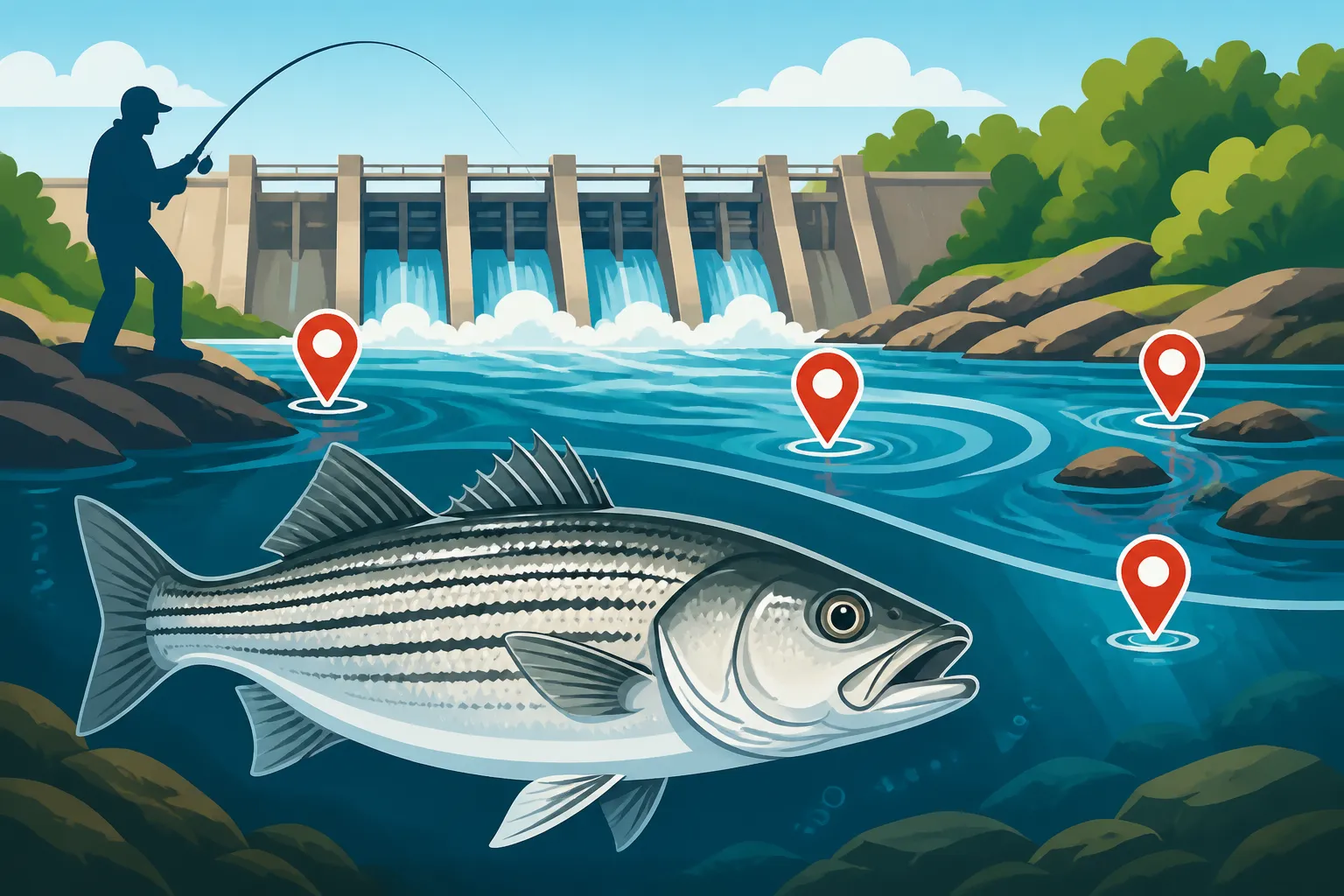
Think of the Barnett Dam spillway as a giant funnel for both water and food. When water is released from the Ross Barnett Reservoir, it brings with it a surge of oxygen and, crucially, a buffet of baitfish like shad and various minnows that have been living in the reservoir. Striped bass, being opportunistic and powerful predators, instinctively gravitate to these areas. They know that where there's current, there's often disoriented bait, making for an easy meal. The turbulent water also provides cover, allowing them to ambush prey without being easily seen. This constant influx of fresh water and nutrients keeps the ecosystem below the dam vibrant and the striped bass active. The structure of the dam itself, with its concrete walls, riprap, and current breaks, provides countless ambush points and resting areas for these powerful fish.
Understanding Striped Bass Behavior in Riverine Environments
Striped bass, whether they are purebred stripers or the popular hybrid striped bass often stocked in Mississippi waters, are schooling fish, especially when they are actively feeding. In the riverine environment below the dam, their behavior is heavily influenced by current, oxygen levels, and bait availability. They prefer moving water where they can expend less energy to hold their position while waiting for food to come to them. Look for them in areas where the current breaks, such as behind submerged rocks, along eddy lines, or near any structure that provides a slight reprieve from the main flow. Their feeding patterns often peak during low-light conditions – dawn, dusk, and overcast days – when they become incredibly aggressive, often chasing bait to the surface in explosive displays. It's a real spectacle to witness a "striper boil" where a whole school erupts, gorging on panicked baitfish. Understanding these nuances can significantly improve your chances of a successful outing when you're targeting Striped Bass Fishing in Mississippi.
Prime Locations and Access Points Near the Barnett Dam Spillway
The area immediately below the Barnett Dam is relatively compact, but knowing precisely where to position yourself, whether from the bank or a boat, can make all the difference. The Pearl River begins its journey south from here, and the initial stretches are the most productive for striped bass.
Bank Fishing Hotspots
For many, bank fishing offers the most accessible way to target striped bass below the dam. The main spillway park area offers decent access, particularly to the riprap and concrete structures directly downstream of the dam.
One prime area for bank anglers is right along the riprap walls on either side of the immediate outflow. Here, the rocks create current breaks and deeper pockets where stripers will hold, waiting for baitfish to wash past. Casting parallel to these walls or slightly upstream and letting your lure drift with the current can be highly effective. Another key spot is where the turbulent water from the spillway begins to mellow out and form more defined channels or eddies. Just downstream from the main concrete structures, you'll often find sandy banks or gravel bars that drop off into deeper water. These transition zones are goldmines for bank anglers, allowing for easier casting and retrieval. Remember, safety is paramount here. The currents can be incredibly strong and unpredictable, especially during dam releases. Always keep a safe distance from the water's edge and be aware of your surroundings. For more on navigating this specific area, check out our guide on Ross Barnett Reservoir Spillway Fishing Access.
Boating Opportunities and Strategic Positioning
If you have access to a boat, it opens up a world of strategic advantages for fishing below the dam. While there isn't a direct boat ramp immediately at the spillway, nearby ramps such as Coal Bluff or the numerous facilities within the Ross Barnett Reservoir Fishing Guide area allow for easy access to the Pearl River downstream. Once on the water, you can target areas that bank anglers simply can't reach.
One of the most effective boating strategies is to position your boat just outside the main, fastest current, in the slightly calmer water where stripers will ambush passing prey. Using your electronics, look for submerged humps, channel edges, or brush piles that offer current breaks. Striped bass often hold tight to these structures. Anchoring correctly in strong currents is crucial; you'll need a heavy anchor and plenty of rope to ensure stability. Alternatively, many successful anglers prefer to drift the river, using their trolling motor to maintain speed and direction, covering more water and searching for active schools. Keep an eye on your fish finder for bait balls and larger arcs – these are usually the stripers themselves. Always be mindful of navigational hazards, especially close to the dam structures, and adhere to all boating regulations.
Essential Techniques and Baits for Barnett Dam Stripers
Striped bass are aggressive eaters, but they can also be finicky. Matching the hatch and presenting your bait or lure effectively in strong current are key to consistent success.
Top Artificial Lures and Presentations
When it comes to artificials, you need lures that can handle the current and mimic the primary baitfish in the area, usually shad.
- Slab Spoons: Heavy slab spoons (1-3 ounces) are absolute killers here. Their weight allows them to sink quickly through the current, and when jigged vertically, they imitate a wounded baitfish. Cast them upstream, let them sink, and then work them with short, sharp lifts and drops as they drift downstream. Popular brands like Charlie Brewer's Slider Slabs or War Eagle spoons are excellent choices.
- Lipless Crankbaits: Lures like the Bill Lewis Rat-L-Trap or the Rapala Rippin' Rap are fantastic for covering water. Cast them out, let them sink, and retrieve them with a steady burn or a stop-and-go retrieve. The vibration and flash are irresistible to stripers.
- Swimbaits: Paddle tail swimbaits, rigged on a heavy jig head (3/4 oz to 1.5 oz), are versatile. Colors like white, chartreuse, or natural shad patterns are usually best. You can cast and retrieve them, or even vertical jig them near structure. Brands like Keitech or Zoom make excellent paddle tails.
- Bucktail Jigs: A classic for a reason. Heavy bucktail jigs, often with a plastic trailer for added bulk and scent, can be bounced along the bottom or retrieved in a steady sweep.
- Topwater Plugs: While not always effective in the heavy current directly below the dam, during calmer periods or in eddies, large topwater plugs (walking baits or poppers) can draw explosive strikes, especially at dawn or dusk.
The key is often to cast upstream and allow your lure to drift naturally with the current while maintaining a tight line and working the retrieve. This makes your lure appear like a struggling baitfish caught in the flow.
Live Bait Strategies for Consistent Catches
Sometimes, nothing beats the real thing. Live bait is incredibly effective for striped bass, and if you can get your hands on fresh, local baitfish, your chances go way up.
- Shad: Gizzard shad and threadfin shad are the primary forage for stripers. They can be caught with a cast net in the reservoir or in calmer pockets of the river. Rig them on a Carolina rig with a heavy weight (1-2 oz) to keep them near the bottom, or free-line them with minimal weight in slower currents.
- Minnows: Larger shiners or even smaller crappie minnows can be effective, especially for hybrid stripers.
- Bream/Bluegill: If legal (check regulations for using game fish as bait), smaller bream or bluegill can be excellent for targeting larger stripers.
- Rigging: A simple Carolina rig with a 1-2 ounce egg sinker above a swivel, and a 2-3 foot fluorocarbon leader (20-30 lb test) tied to a 3/0 to 5/0 circle hook, is a go-to setup. Alternatively, suspending live bait under a large float in an eddy can allow the bait to swim naturally without getting swept away. Ensuring your bait is lively is crucial, so good aeration in your livewell is a must.
Recommended Gear and Tackle
Having the right equipment is essential for tackling the powerful striped bass in strong currents.
- Rods: You'll want medium-heavy to heavy action spinning or baitcasting rods, typically 7 to 8 feet long. The extra length aids in casting distance and leverage when fighting strong fish.
- Reels: Choose robust reels with a smooth, reliable drag system. For spinning, a 4000-6000 series reel is appropriate. For baitcasting, a reel capable of handling heavy line and offering substantial cranking power is ideal. Companies like Daiwa and Shimano offer many suitable options.
- Line: Braided line (30-50 lb test) is highly recommended as a main line due to its strength, sensitivity, and lack of stretch, which helps with hooksets. Always tie a fluorocarbon leader (20-30 lb test) of about 2-4 feet to your braid. Fluorocarbon is nearly invisible underwater and has excellent abrasion resistance against rocks and the abrasive mouths of stripers.
- Weights: Carry a variety of heavy weights (1-3 ounces) to ensure your bait or lure reaches the desired depth in varying current conditions.
- Terminal Tackle: A good selection of stout swivels, heavy-duty snaps, and sharp hooks (circle hooks for live bait, treble hooks for lures) is necessary. Don't skimp on quality here; these fish can bend cheap tackle. If you're looking to upgrade your setup, our guide on Choosing the Right Rod and Reel for Mississippi Fishing offers more in-depth advice.
Navigating Regulations and Practicing Responsible Angling
Fishing below the Barnett Dam is a privilege, and it comes with the responsibility of understanding and adhering to all state regulations and practicing ethical angling.
Key Striped Bass Regulations in Mississippi
Before you even wet a line, it's crucial to be familiar with the current fishing regulations, especially concerning striped bass. The Mississippi Department of Wildlife, Fisheries, and Parks (MDWFP) sets specific rules for different water bodies, and sometimes even within a single river system. Always consult the latest MDWFP regulations handbook, available online or at license vendors.
While specific limits can change, typical regulations for striped bass (and hybrid striped bass) might include a daily creel limit (e.g., 4 to 6 fish per day) and a minimum size limit (e.g., 15 inches). It's important to be able to distinguish between purebred striped bass and hybrid striped bass, as sometimes different regulations apply, especially in areas like the Ross Barnett. For a complete overview, make sure to read up on Mississippi Striped Bass Regulations and a broader look at Mississippi Fishing Regulations Explained. You will, of course, also need a valid Mississippi Fishing License Guide before you cast your first line. Remember that using multiple rods might also have specific guidelines, so check How Many Fishing Poles Can You Use in Mississippi? before you go.
| Fishing Type | Access Points | Best Techniques | Pros | Cons |
|---|---|---|---|---|
| Bank Fishing | Spillway park, downstream riprap, sandy edges | Casting parallel to walls, letting lures drift, Carolina rigs | Highly accessible, no boat needed, can be very productive | Limited range, strong currents a challenge, safety concerns |
| Boat Fishing | Launch from nearby Pearl River ramps (e.g., Coal Bluff) | Drifting with current, anchoring in current breaks, vertical jigging, trolling | Covers more water, accesses remote spots, uses electronics effectively | Requires boat and safety gear, challenging in strong currents, anchoring skills needed |
Safety and Conservation Below the Dam
The powerful currents below a dam are no joke. Always prioritize safety:
- Life Jackets: If you're in a boat, everyone should wear a life jacket. If you're bank fishing, consider wearing one, especially if you're near swift water or in unstable areas.
- Dam Release Schedules: While the Barnett Dam might not have unpredictable major releases like some larger hydroelectric dams, any changes in outflow can significantly alter current speed and water levels. Be aware of these potential changes.
- Current Awareness: Never underestimate the power of the water. Avoid wading in strong currents unless you are an experienced and well-equipped professional.
- Responsible Catch and Release: Striped bass are powerful fish, and a proper fight can exhaust them. If you plan to release a fish, handle it carefully. Use a lip gripper or wet hands to minimize damage to its protective slime coat. Keep the fish in the water as much as possible, especially during warmer months. If you're practicing catch and release for larger or non-target fish, minimize their time out of the water and revive them properly before release.
- Leave No Trace: Pack out everything you pack in. Dispose of all trash, including discarded fishing line, responsibly. Keeping this beautiful fishing spot clean ensures it remains enjoyable for everyone for years to come.
Fishing the waters below the Barnett Dam for striped bass is an experience unlike any other in Mississippi. It's a place where the raw power of nature meets the thrill of the chase. By understanding the fish's behavior, knowing the best spots, mastering effective techniques, and always adhering to regulations and safety protocols, you're set for an unforgettable adventure. Whether you're a seasoned angler or looking for a new challenge, the Barnett Dam offers a truly special opportunity to tangle with one of Mississippi's hardest-fighting freshwater fish. For those new to the area or even Mississippi fishing in general, consulting with local bait shops or considering a guided trip found on platforms like FishingBooker can provide invaluable real-time insights into current conditions and hot spots. Make sure to check the Mississippi Fishing Season Dates and Limits to plan your trip perfectly, ensuring you're hitting the waters during peak times and within legal parameters.
Disclaimer
The information provided in this guide is for general informational purposes only and should not be considered a substitute for official regulations. Fishing rules and conditions can change rapidly. Always consult the latest Mississippi Department of Wildlife, Fisheries, and Parks (MDWFP) regulations before engaging in any fishing activities. Safety should always be your top priority when fishing, especially in areas with strong currents like those below a dam.