Enid Lake Crappie Daily Limit
Figuring out the exact fishing regulations for a specific lake can feel like navigating a maze, especially when you’re just eager to get your line in the water. We've all been there, scratching our heads, wondering if the statewide rules apply or if there are special limits we need to know. This guide is here to untangle the specifics of the crappie daily limit on Enid Lake, ensuring you understand the rules before your next fishing trip.
Understanding Crappie Regulations on Enid Lake
When you're out on the water, the last thing you want is to accidentally break a rule. Enid Lake is renowned for its fantastic crappie fishing, and like all popular fishing destinations, it comes with specific regulations designed to keep the fishery healthy and productive for generations to come. It’s crucial to know these rules inside and out, not just to avoid penalties, but to contribute to the conservation efforts that make Enid such a great spot.
Statewide Crappie Regulations in Mississippi
Before we dive into the nitty-gritty of Enid Lake, it's helpful to understand the baseline. Mississippi has a general framework for crappie fishing that applies across many of its public waters. Typically, the Mississippi Department of Wildlife, Fisheries, and Parks (MDWFP) sets a statewide daily creel limit for crappie, which means the maximum number of fish you can keep in a 24-hour period. This standard limit is often 30 crappie per person. Additionally, there’s usually a minimum length limit, requiring any kept crappie to be at least 9 inches long. These general rules are the foundation, but as any seasoned angler knows, specific lakes can have their own nuances. If you want a full rundown, our guide on Mississippi Fishing Regulations Explained covers everything.
This statewide approach ensures a consistent management strategy across many bodies of water, which helps simplify things for anglers traveling between different lakes and rivers. However, relying solely on statewide regulations without checking for lake-specific rules can lead to issues. Reservoir systems, especially those heavily fished like Enid, often have tailored rules that reflect their unique biological characteristics and fishing pressure. It’s always best to assume there might be a difference and check beforehand, rather than getting caught off guard.
Specific Daily Limit and Size Restrictions for Enid Lake
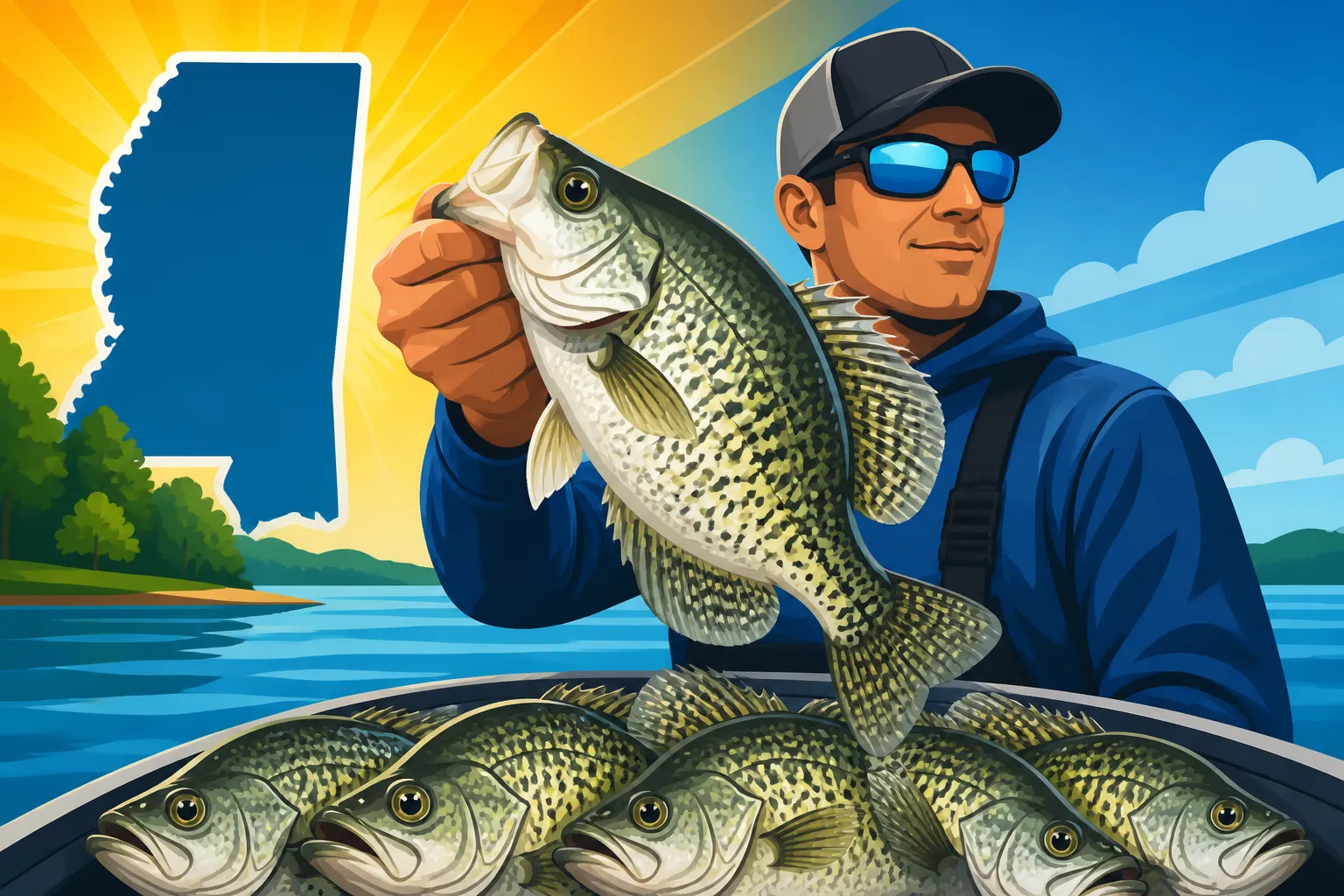
Now, let's talk about Enid Lake. For crappie anglers heading to Enid, the specific regulations are aligned with the major U.S. Army Corps of Engineers flood control reservoirs in Mississippi. This means the daily creel limit for crappie on Enid Lake is 30 crappie per angler, per day. Alongside this daily limit, there's a minimum length limit of 9 inches. Any crappie you catch that measures less than 9 inches from the tip of the nose to the tip of the tail (with the mouth closed and tail pinched) must be immediately released back into the water.
These limits are in place to allow crappie to reach a mature size, ensuring they have a chance to spawn at least once before being harvested. This helps maintain a robust crappie population year after year. It's not uncommon to catch several smaller crappie before you hit your legal keepers, especially during certain times of the year. Always carry a reliable measuring device with you, like a rigid bump board or a flexible tape measure, to avoid any guesswork. You can find excellent, easy-to-read options on platforms like Amazon that are perfect for on-the-water measurements. These lake-specific rules, including those for Enid Lake, are crucial to the long-term health of these fisheries and are strictly enforced by wildlife officers.
Why These Crappie Limits are Essential
It might seem like a hassle to measure every fish, or to stop fishing once you hit your daily quota, but these regulations are truly the backbone of sustainable fishing. They aren't arbitrary rules designed to make your life difficult; they are carefully crafted by fisheries biologists to protect and enhance the crappie populations in lakes like Enid. Understanding the science and the reasoning behind these limits can help us all appreciate their importance and comply more readily.
Conservation Efforts and Sustainable Fishing
The primary reason for daily limits and size restrictions is conservation. Crappie are a prolific species, but even they can be overfished if not managed properly. Imagine if every angler kept every crappie they caught, regardless of size or number. The population would quickly dwindle, leading to smaller fish, fewer fish, and ultimately, a decline in the overall quality of fishing. The 9-inch minimum size limit, for example, is critical because it allows crappie to grow large enough to reproduce at least once, contributing to the next generation of fish. This ensures that the population can replenish itself, providing consistent angling opportunities in the future.
The MDWFP regularly conducts surveys and studies on lakes like Enid to assess fish health, growth rates, and population densities. Based on this scientific data, they adjust regulations as needed. These studies consider factors like available food sources, habitat quality, and angling pressure to determine the optimal limits. By adhering to the Enid Lake crappie daily limit, you're directly participating in these vital conservation efforts. It's a collective responsibility that benefits everyone who enjoys the sport. For a broader perspective on how Mississippi manages its fisheries, our guide on How Mississippi Fishing License Fees Are Used details the funding behind these efforts.
Impact on the Angler Experience
While conservation is the big picture, these limits also directly impact your personal fishing experience. When regulations are followed, the fish population remains healthy, meaning better quality fishing for everyone. Without limits, a lake can quickly become "fished out" or dominated by stunted, undersized fish. Imagine spending a whole day on Enid Lake only to catch tiny crappie that aren't worth keeping. That's a frustrating scenario that proper management aims to prevent.
By allowing fish to reach a larger size and ensuring enough breeding stock, the limits increase the likelihood of catching bigger, healthier crappie. It's a cycle of abundance: healthy fish populations lead to more enjoyable and rewarding fishing trips. Plus, it encourages more ethical angling practices. It teaches patience and respect for the resource, transforming fishing from merely catching fish into a more mindful and sustainable pastime. When you consistently find good fishing, it’s often a testament to successful management and angler compliance.
Practical Tips for Staying Within Your Limits
Staying within the daily limit and size restrictions for crappie on Enid Lake isn't just about avoiding a fine; it's about being a responsible angler. It’s surprisingly easy to lose track when the bite is hot, or to misjudge a fish’s length. A little preparation and a few good habits can make all the difference, ensuring you have a successful and compliant day on the water.
Measuring Your Catch Accurately
The 9-inch minimum length limit on Enid Lake is firm, and guessing can get you into trouble. Fisheries officers use precise methods, and you should too. A good, rigid measuring board is your best friend here. These boards often have a "bump" at one end to place the fish's nose against, giving you an accurate measurement. Ensure the fish's mouth is closed and its tail is pinched together for the longest possible reading. Even a quarter-inch difference can matter.
If you don't have a dedicated measuring board, a flexible tape measure works, but be extra careful to keep the fish still and straight. Many anglers mark their tackle box, cooler, or even the side of their boat with a permanent marker at the 9-inch mark for quick checks. This quick reference can save you time and ensure accuracy, especially when you’re dealing with a flurry of bites. Remember, if there’s any doubt, release the fish. It’s always better to err on the side of caution. Carrying one of these on your boat, easily accessible, is key. Many anglers find great utility in waterproof, foldable measuring devices available on Amazon.
Responsible Catch-and-Release Practices
For any crappie that don't meet the 9-inch minimum or those you decide to release after reaching your 30-fish limit, proper catch-and-release is vital for their survival. Minimizing stress and injury to the fish increases their chances of thriving once returned to the water. Here are a few pointers:
- Handle with Care: Wet your hands before touching the fish. Dry hands can remove the protective slime coat, making the fish susceptible to disease.
- Minimize Air Exposure: Keep the fish in the water as much as possible. If you must lift it, do so quickly for a photo or measurement, then return it to the water promptly. Crappie are delicate, and prolonged air exposure can cause internal damage.
- Use Appropriate Gear: Barbless hooks can make hook removal much easier, reducing damage. If using barbed hooks, consider flattening the barb with pliers.
- Gentle Hook Removal: Use needle-nose pliers or a de-hooking tool to gently remove the hook. If the fish is deeply hooked, especially in the gills or stomach, it's often best to cut the line as close to the hook as possible rather than tearing the fish apart trying to retrieve it. The hook will eventually rust out.
- Revive If Necessary: If a fish seems sluggish after release, hold it gently in the water, facing into the current, and allow water to flow over its gills until it swims away under its own power.
Practicing responsible catch-and-release is a cornerstone of ethical angling and ensures that those undersized fish have a chance to grow and contribute to the fishery.
Gear and Tools to Help Manage Your Catch
Having the right equipment on hand can make managing your catch according to regulations much simpler and more efficient.
- Measuring Device: As mentioned, a dedicated fish measuring board or a reliable tape measure is a must. Don't skimp on this; it's as important as your fishing rod.
- Fish Counter: A simple clicker counter, often used by golfers, can be a lifesaver. Keep it attached to your vest or tackle box and click once for every legal crappie you place in your livewell or cooler. This prevents you from accidentally exceeding the 30-fish daily limit, especially when the fishing is fast and furious.
- Livewell or Cooler: A good livewell keeps your legal catch alive and healthy until you're ready to clean them, while a sturdy cooler with ice preserves them for the ride home. Keeping track of your legal fish is easier when they are contained and not mixed with released fish. You can find excellent, insulated coolers of all sizes on Amazon that keep your catch fresh for extended periods.
- De-hooking Tools: Long-nose pliers, forceps, or specific de-hooking tools are invaluable for quickly and safely removing hooks, particularly from smaller fish you intend to release.
- Fishing Scales: While not directly related to limits, knowing the weight of your catch can be fun and also indicates the health of the fish you're keeping. Digital scales are widely available and can add another dimension to your fishing experience.
By equipping yourself with these tools, you streamline the process of catching, measuring, and retaining or releasing fish, allowing you to focus more on the joy of fishing and less on the worry of compliance. Our guide on Choosing the Right Rod and Reel for Mississippi Fishing can help you select other essential gear for a productive day.
Consequences of Exceeding Crappie Limits
Fishing without paying attention to the rules can quickly turn a fun day into a frustrating and costly experience. The Mississippi Department of Wildlife, Fisheries, and Parks takes its regulations seriously, and ignorance of the law is generally not considered an excuse. Understanding the potential repercussions of exceeding the crappie limits on Enid Lake can serve as a powerful motivator for strict compliance.
Penalties and Fines
If you are caught with more crappie than the daily limit allows (30 fish) or with undersized crappie (under 9 inches) on Enid Lake, you will face legal consequences. These consequences typically include fines, and in some cases, can even lead to the confiscation of your catch, fishing equipment, and potentially your boat. The exact fine amount can vary depending on the severity of the violation, the number of fish over the limit, and whether it’s a first offense or a repeat violation. Expect fines to be significant enough to act as a serious deterrent, often hundreds of dollars, plus court costs.
Wildlife officers regularly patrol popular fishing spots like Enid Lake, checking licenses and catches. They are trained to identify violations and are committed to protecting the state’s natural resources. It’s simply not worth the risk. A single moment of carelessness or intentional disregard for the rules can result in a hefty financial penalty and a blot on your fishing record. For more details on what happens if you break the rules, you can refer to our article on Mississippi Fishing License Penalties and Fines. It's always better to count your fish carefully and measure them accurately than to explain yourself to a game warden.
The Broader Ethical Responsibility
Beyond the legal and financial ramifications, there's an important ethical dimension to adhering to fishing limits. As anglers, we are stewards of the natural environment. The fish populations in our lakes and rivers are a shared resource, and we all have a responsibility to manage them sustainably. Exceeding limits isn’t just breaking a rule; it’s taking more than your fair share, potentially at the expense of other anglers and the long-term health of the fishery.
Think about the impact on the ecosystem: removing too many fish, especially those crucial for spawning, can disrupt the natural balance and lead to a decline in future generations. It undermines the very conservation efforts that make Enid Lake such a popular crappie fishing destination. Embracing the limits fosters a culture of respect for wildlife and fellow anglers. It means understanding that the thrill of the catch is balanced by the responsibility of conservation, ensuring that the next generation of fishermen and women can enjoy the same bountiful waters that we do today.
Here’s a quick summary of the crappie regulations for Enid Lake:
| Regulation Type | Statewide General Rule | Enid Lake Specific Rule | Notes |
|---|---|---|---|
| Daily Creel Limit | 30 Crappie per angler, per day | 30 Crappie per angler, per day | Applies to both White and Black Crappie combined. |
| Minimum Length Limit | 9 inches | 9 inches | Fish must be 9 inches or longer, measured with mouth closed, tail pinched. |
| Enforcement | MDWFP Enforcement | MDWFP Enforcement | Strict penalties for violations. |
Frequently Asked Questions About Enid Lake Crappie Limits
You've got questions, and that's a good thing! Being well-informed is the first step toward responsible angling. Let's tackle some common queries about crappie fishing on Enid Lake and ensure you're completely clear on what's expected before you head out.
Do I Need a Separate Permit to Fish Enid Lake?
No, you generally do not need a separate permit specifically for fishing Enid Lake beyond your standard Mississippi fishing license. Enid Lake is a public body of water managed by the U.S. Army Corps of Engineers in cooperation with the MDWFP. As long as you possess a valid Mississippi fishing license, you are authorized to fish its waters. This applies to both residents and non-residents. However, it's always smart to double-check if you plan on using any specific facilities or launching from certain areas that might have their own fees (like state park access or marina launch fees), but these are not fishing permits themselves. Our comprehensive guide on the Mississippi Fishing License Guide can help you get yours squared away.
It's a common misconception, especially for those new to a particular lake, that every major reservoir might have its own licensing system. Thankfully, Mississippi simplifies this by largely relying on the statewide license for most public fishing opportunities. Just ensure your license is current and appropriate for your residency status and the type of fishing you plan to do, whether it's freshwater, saltwater, or a combination.
Are There Different Limits for White Crappie vs. Black Crappie?
On Enid Lake, and generally throughout Mississippi's major reservoirs, the daily creel limit of 30 crappie and the 9-inch minimum length limit apply to both white crappie and black crappie combined. The regulations do not differentiate between the two species when it comes to creel or size limits. So, you can keep a mix of both species, as long as your total count doesn't exceed 30 fish and each individual fish meets the 9-inch minimum.
This combined limit simplifies things for anglers, as differentiating between white and black crappie, especially smaller ones, can sometimes be a challenge. Both species contribute significantly to the crappie fishery on Enid, and managing them under the same regulations helps maintain a balanced population for all. The focus is on the overall crappie population's health, rather than specific species within that family. Learning Crappie Identification Guide for Mississippi Anglers can still be very helpful for appreciating your catch.
What Happens If I Accidentally Catch Too Many Crappie?
Accidents happen, especially when the crappie are biting fast. However, ignorance or accidental overage is generally not a valid excuse in the eyes of the law. If you realize you've accidentally kept more than the 30-crappie daily limit, or if you have undersized fish, the safest and most responsible course of action is to stop fishing immediately. If you're still on the water, consider releasing the excess fish, prioritizing the freshest ones that have the best chance of survival, and making sure they are not undersized.
The best defense against this "accidental" scenario is prevention. Use a clicker or other counting method to meticulously track your catch. Measure every fish before it goes into the livewell or cooler. If you're unsure if a fish is 9 inches, let it go. It's much better to release a potential keeper than to risk a fine. Game wardens will enforce the limit regardless of intent, so proactive management of your catch is crucial. Don't wait until you're back at the boat ramp to count or measure your catch; do it as you go.
Is There a Best Time of Year to Catch Crappie on Enid Lake Within Limits?
While you can catch crappie on Enid Lake year-round, certain seasons offer more consistent action and often better-sized fish, making it easier to fill your limit with quality catches. Spring, particularly during the spawn (typically March to May, depending on water temperature), is often considered prime time. During this period, crappie move into shallower waters to spawn, making them more accessible and aggressive. This can lead to catching larger numbers of fish quickly, including many that meet the 9-inch minimum.
However, anglers also have great success in the fall when crappie become more active again as water temperatures cool, feeding heavily before winter. Even winter can be productive, with crappie often schooling in deeper channels and brush piles, though finding them can be more challenging. The key is adapting your Crappie Fishing Techniques for Mississippi Lakes to the season and fish behavior. No matter the season, always be mindful of your daily and size limits. Our guide on the Best Time of Year to Fish in Mississippi can provide more seasonal insights.
Final Thoughts for Enid Lake Crappie Anglers
Fishing on Enid Lake for crappie is an absolute treat, offering some of the best opportunities in the state. But with great fishing comes great responsibility. The 30-crappie daily limit and the 9-inch minimum length restriction aren't just rules; they're vital tools for managing this precious natural resource. By understanding and consistently adhering to these regulations, you're not only avoiding potential fines but actively contributing to the health and longevity of Enid Lake's crappie population.
Remember to always carry a reliable measuring device, actively count your keepers, and practice proper catch-and-release for any fish that don't meet the criteria. These simple habits ensure that your fishing trips are both enjoyable and sustainable. So, gear up, hit the water, and enjoy the fantastic crappie fishing Enid Lake has to offer, knowing you're doing your part to keep it great for years to come.
Disclaimer
The information provided in this guide is for general informational purposes only and is based on current available regulations. Fishing regulations are subject to change, and it is the angler's sole responsibility to consult the most up-to-date rules and proclamations issued by the Mississippi Department of Wildlife, Fisheries, and Parks (MDWFP) before engaging in any fishing activity. Always check the official MDWFP website or their latest regulation guide.