Blue Catfish vs Channel Catfish Differences
It happens to the best of us: you're out on a beautiful Mississippi lake or river, your line gets tight, and after a good fight, you pull in a hefty catfish. Your heart races with excitement, but then a question pops into your head: Is this a channel cat or a blue cat? They look so similar at first glance, and sometimes the differences can be subtle, leading to confusion among even seasoned anglers. This guide is here to clear up that common predicament, helping you confidently identify the key distinctions between Blue Catfish and Channel Catfish in Mississippi waters, ensuring you're always in the know about your catch.
Identifying Physical Characteristics
When you've got a catfish in hand, the quickest way to tell if it's a blue or a channel cat is to look closely at its physical features. These fish might share a general silhouette, but the details in their heads, fins, and overall body can give them away almost every time. Understanding these distinctions is crucial not just for identification, but also for appreciating the unique characteristics of each species.
Head and Mouth Differences
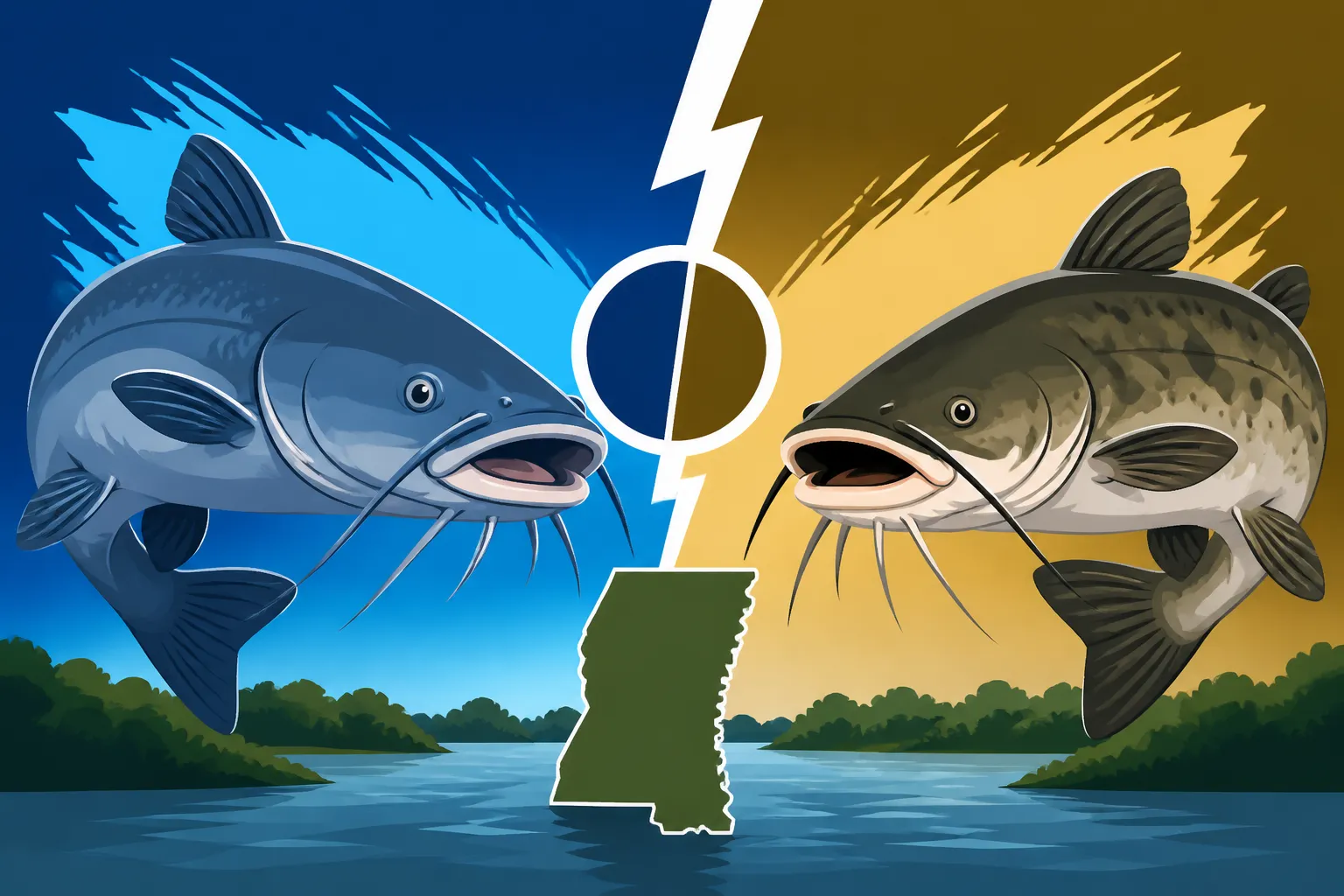
One of the most reliable tell-tale signs lies in the fish's head and mouth structure. Channel catfish tend to have a more elongated, somewhat pointed head with an upper jaw that extends slightly beyond the lower jaw. Think of it as a slightly overbite look. Their mouths are generally smaller and positioned more centrally, making them well-suited for foraging along the bottom and picking up smaller food items. The barbels, those whisker-like sensory organs around their mouth, are typically shorter and less prominent than those found on a blue catfish.
On the flip side, blue catfish boast a much more distinctively sloped head, often appearing somewhat conical or wedge-shaped. Their upper jaw rarely extends beyond the lower, giving them more of an "underbite" or even jaws that meet fairly evenly. The mouth itself is usually larger and more cavernous, a clear indicator of their predatory nature. Their barbels are also noticeably longer and more robust, acting like sophisticated antennae to locate prey in murky waters, especially in larger river systems like the Mississippi River. This larger mouth and more prominent barbels are adaptations for devouring bigger prey items.
Body Shape and Fin Characteristics
Beyond the head, the body and fin structures offer further clues. Channel catfish typically have a more slender, almost "streamlined" body shape, especially when compared to the broader, heavier build of a mature blue cat. Their bodies might appear more compressed side-to-side. A critical identifier for the channel cat is its tail fin, which is deeply forked, almost like a swallow's tail. This deeply indented tail is often the first thing an experienced angler looks for when trying to identify a smaller catfish.
Blue catfish, particularly the larger specimens you might pull from the big rivers, are renowned for their robust, almost barrel-shaped bodies. They can be incredibly thick and muscular, a testament to their powerful swimming ability and growth potential. When you examine their tail fin, you'll notice it's still forked, but the fork is much less pronounced, often appearing straighter or shallower than that of a channel cat. Another key difference is found in the anal fin, which is the fin on the underside of the fish, behind the anus. Channel cats have a rounded anal fin with anywhere from 24 to 29 rays, making it appear somewhat uniform. Blue catfish, however, have a much straighter, longer anal fin with a count of 30 to 35 rays, giving it a distinctively straight edge along the bottom. This difference in fin ray count is perhaps the most definitive way to tell them apart, if you're willing to count them!
Coloration and Spotting
While coloration can sometimes be variable depending on water clarity and diet, it still offers helpful hints, especially regarding the presence of spots. Channel catfish are famous for their dark spots scattered along their sides, particularly when they are younger. These spots can fade as the fish matures, becoming less prominent or even disappearing entirely in very old, large individuals. Their overall color can range from olive-green to grayish-brown on their backs, fading to silvery-white on their bellies. In some stained waters, they can appear quite dark.
Blue catfish, on the other hand, almost universally lack any distinct spots on their body. Their name truly gives away their typical coloration: a steely blue or slate gray on their backs and sides, gradually lightening to a pure white on their undersides. This consistent blue-gray hue, without the scattered spots, is a strong indicator of a blue catfish. Remember, though, that fish colors can be influenced by their environment; a blue cat from muddy river water might look a bit darker and less vibrant than one from a clearer lake, but the absence of spots remains a reliable characteristic.
Habitat and Behavior Differences
Knowing the physical traits is half the battle, but understanding where these catfish prefer to live and how they behave can also give you a significant edge in identifying your catch and even in targeting them more effectively. Blue and channel cats, despite their similarities, have distinct preferences when it comes to their underwater homes and dinner menus.
Preferred Waterways and Bottom Types
Channel catfish are incredibly adaptable, making them arguably the most widespread and commonly caught catfish in Mississippi. You'll find them thriving in a diverse range of environments, from the slow-moving rivers and oxbow lakes to farm ponds, creeks, and even larger reservoirs like Ross Barnett Reservoir. They show a particular fondness for areas with moderate current, often congregating around submerged timber, brush piles, or undercut banks where they can find cover and ambush prey. They don't mind a muddier bottom, as long as there's plenty of food to be found. What Catfish Eat in Mississippi Rivers provides more insight into their diverse diet.
Blue catfish, while also found in various waters, truly dominate the large river systems and major reservoirs. They are the giants of the Mississippi River, the Tennessee-Tombigbee Waterway, and other significant waterways in the state. They prefer deeper, faster-moving water with a stronger current, often holding in main river channels, deep holes, or around major structural elements like wing dikes, bridge pilings, and dam tailraces. They're often associated with hard bottoms, like rock or gravel, but will move into softer bottom areas if baitfish are present. If you're fishing in a big, fast-flowing river, especially for a trophy-sized cat, chances are you're after a blue.
Feeding Habits and Diet
The feeding habits of these two species offer another clear distinction. Channel catfish are often considered opportunistic omnivores, meaning they'll eat just about anything they can get their mouths on. Their diet is incredibly varied, consisting of insects, crustaceans (like crawfish), smaller fish, mussels, and even plant matter or decaying organic material. This diverse palate is why they respond well to a wide array of baits, from stink baits and chicken livers to worms and prepared dough balls. They are scavengers as much as they are predators, constantly rooting around for a meal.
Blue catfish, particularly as they grow larger, shift much more towards a piscivorous (fish-eating) diet. While juvenile blue cats might munch on insects and smaller invertebrates, adult blue cats are voracious predators of other fish. They actively hunt shad, carp, drum, and other baitfish species. This preference for live or freshly cut bait is a key reason why serious blue cat anglers swear by fresh-cut shad, skipjack herring, or even smaller live bluegill. Their larger, more powerful jaws are perfectly designed for crushing and consuming larger prey. This difference in diet directly impacts the most effective baits and strategies an angler might use.
Size and Growth Potential
This is perhaps the most exciting and talked-about difference for many anglers: the sheer size potential. Channel catfish are respectable fish, and catching a 10-pound channel cat in Mississippi is certainly a prize. Most adult channel cats you'll encounter will be in the 1-5 pound range, with larger ones reaching 15-20 pounds in exceptional cases. The Mississippi State Record Catfish Weight for a channel cat, while impressive, pales in comparison to the blue. They grow at a steady pace but generally max out at a more modest size.
Blue catfish are, quite simply, the largest catfish species in North America, and Mississippi waters hold some truly colossal specimens. These fish can grow to incredible sizes, easily surpassing 50, 75, or even over 100 pounds! Catching a "trophy blue" means grappling with a fish that can weigh as much as a person. The state record for a blue catfish is a testament to their immense growth potential, and anglers often target specific spots on the Mississippi River or larger reservoirs with the dream of hooking one of these giants. If you're looking for a true monster, the blue cat is your target. This pursuit requires specialized heavy tackle, as discussed in Trophy Catfish in Mississippi Waters.
Fishing Strategies and Tackle Considerations
Once you can tell the difference between these two magnificent catfish species, it naturally follows that your fishing approach might need to adapt. Knowing their preferences in habitat, diet, and size will inform your bait choices, rigging, and even the type of gear you bring to the water.
Best Baits and Rigs for Each Species
Given their omnivorous nature, channel catfish are receptive to a wide variety of offerings. Classic baits like chicken livers, nightcrawlers, small chunks of hot dogs, and commercial stink baits are incredibly effective. You can rig these on a simple slip-sinker rig, a three-way swivel rig, or even a basic bottom rig with a weight and a hook. They are often less picky, making them a fantastic target for family fishing trips or beginners. For these general-purpose baits and rigs, you can find a great selection of hooks, weights, and pre-tied rigs on Amazon to get you started.
For blue catfish, especially the bigger ones, you'll want to focus on fresh, natural baits that mimic their preferred prey. Cut bait from oily fish like shad, skipjack herring, or even smaller carp and drum are king. The fresher, the better – even better if it's caught that day. Some anglers also have great success with live bait, using smaller bluegill or shad. For rigging, a sturdy circle hook (to prevent gut hooking) on a Carolina rig or a three-way swivel rig is common, often paired with a heavy lead weight to hold bottom in strong currents. The key is to present a substantial, smelly offering that a large, predatory blue cat can't resist.
Rod, Reel, and Line Selection
The size difference between these two species dictates a significant change in your tackle setup. For channel catfish, especially those under 10 pounds, a medium to medium-heavy action spinning or baitcasting rod, about 6.5 to 7.5 feet long, is usually sufficient. Pair this with a reliable spinning reel (size 3000-5000) or a baitcasting reel spooled with 10-20 pound test monofilament or braided line. This setup offers enough backbone for a good fight but remains light enough to feel subtle bites.
When targeting blue catfish, particularly if you're chasing those Mississippi giants, you need to step up your game considerably. Heavy action rods, often 7.5 to 9 feet in length, are standard. Look for rods specifically designed for catfishing, which have extra backbone and durability. Matching these with large, robust baitcasting reels (like a conventional reel or a heavy-duty baitcaster) capable of holding a substantial amount of heavy line is crucial. You'll want to spool up with 30-80 pound test braided line, often with a monofilament or fluorocarbon leader, to handle the immense pulling power of a trophy blue. Getting a good braided line for your reel is easy through online retailers like Amazon. Having the right gear not only helps you land the fish but also reduces the chances of breaking off a potential record-breaker.
Mississippi Fishing Regulations for Catfish
No matter what type of catfish you're targeting, it's absolutely essential to be aware of and comply with Mississippi's fishing regulations. While this guide provides general information, specific rules can change, and it's always your responsibility to consult the most current regulations published by the Mississippi Department of Wildlife, Fisheries, and Parks (MDWFP).
Generally, Mississippi has statewide creel and size limits for catfish, but these can vary by specific lake or river system. For instance, there might be different rules for certain state fishing lakes compared to the major reservoirs or the Mississippi River. Pay close attention to daily bag limits (how many fish you can keep) and any minimum or maximum size limits that might apply to channel or blue catfish. Sometimes, there are special regulations for trotlines and jug fishing, which are popular methods for catching catfish. Don't let a fantastic day of fishing turn sour due to an unintentional violation! Always check the MDWFP website or pick up a current copy of the regulations booklet before you head out. You can find comprehensive details in our Mississippi Fishing Regulations Explained guide, and specifics like Mississippi Catfish Regulations are vital to understand.
| Feature | Channel Catfish | Blue Catfish |
|---|---|---|
| Head Shape | More pointed, upper jaw slightly overlaps | Sloped, somewhat conical, jaws meet evenly |
| Mouth Size | Smaller, centrally located | Larger, more cavernous |
| Barbels | Shorter, less prominent | Longer, more robust |
| Body Shape | Slender, streamlined | Robust, often barrel-shaped, very muscular |
| Tail Fin | Deeply forked | Less deeply forked, shallower |
| Anal Fin Rays | Rounded edge, 24-29 rays | Straight edge, 30-35 rays |
| Coloration/Spots | Olive-green/gray, often with dark spots (especially juveniles) | Steely blue/slate gray, generally no spots |
| Typical Size | 1-5 lbs, up to 20 lbs (rarely larger) | 5-50 lbs, can exceed 100 lbs |
| Preferred Habitat | Diverse: rivers, lakes, ponds, moderate current, cover | Large rivers, major reservoirs, strong current, deep holes |
| Primary Diet | Omnivore: insects, crustaceans, small fish, scavenged food | Piscivore (predator): shad, herring, other fish |
Understanding the differences between blue and channel catfish not only makes you a more knowledgeable angler but also helps you target each species more effectively. Whether you're chasing the widespread and feisty channel cats or dreaming of wrestling a massive blue cat from the depths of the Mississippi River, knowing your fish is the first step to a successful day on the water. Make sure to consult the official MDWFP regulations before your trip. For specialized tackle, don't hesitate to browse reputable online platforms like Amazon for specific rods, reels, or unique bait options that can make all the difference.
Disclaimer
This article is for general informational purposes only and does not constitute professional advice. Laws, prices and regulations vary by location and change over time. Consult a qualified professional for guidance on your specific situation.