Best Fly Patterns for Bluegill
There's nothing quite like the thrill of a bluegill hitting a fly, especially when you've painstakingly chosen the perfect pattern for the conditions. But let's be honest, walking into a fly shop or browsing online can feel overwhelming with all the tiny, feathery creations staring back at you. If you've ever felt lost trying to pick the best fly patterns for bluegill in Mississippi, you're in the right place. This guide is dedicated to demystifying the world of bluegill flies, helping you understand what works and why, so you can spend less time guessing and more time enjoying those energetic tugs on your line.
Understanding Bluegill Feeding Habits for Fly Selection
Before we even get to specific fly patterns, it's incredibly helpful to understand what bluegill eat and how they go about it. Knowing their natural diet and hunting style gives you a massive advantage in selecting flies that truly imitate what they're looking for. It’s not just about matching the hatch; it's about matching their instincts.
The Bluegill Diet: What They Naturally Eat
Bluegill are true omnivores, but their primary diet revolves around small invertebrates. Think about the tiny critters you see buzzing around the water or clinging to submerged vegetation. Their menu includes a vast array of aquatic insects, such as mayfly nymphs, caddisfly larvae, and dragonfly nymphs. These are often the most abundant food sources in freshwater systems, making them staples in a bluegill's diet. If you’ve ever watched them forage around a weed bed, you’ll see them constantly pecking and nibbling at these submerged morsels.
Beyond the underwater world, bluegill are also opportunistic feeders on terrestrial insects that accidentally fall into the water. Ants, beetles, grasshoppers, and even small caterpillars can become easy meals, especially during warmer months when insect activity is high. They’re not picky eaters when it comes to a free meal floating by. Additionally, smaller bluegill might be prey for larger fish, but bigger bluegill themselves will readily consume tiny crustaceans, zooplankton, and even the fry of other fish species, showcasing their flexible palate. This wide-ranging diet means that a variety of fly patterns can be effective, provided they mimic something appetizing.
How Bluegill Hunt and React to Prey
Bluegill possess excellent eyesight, which they use to pinpoint small prey, and they are notoriously visual feeders. They often cruise in schools, especially smaller fish, constantly scanning for anything edible. When they spot something, they don't typically chase it down aggressively like a bass might. Instead, they'll often approach slowly, sip or gulp their prey, and then move on. This "sipping" behavior is particularly evident when they're feeding on small insects on the surface.
However, don't let their delicate approach fool you; they can be incredibly aggressive when competing for food or when a particularly enticing meal presents itself. A bluegill hitting a topwater popper is a testament to this, as they'll often hit it with a surprising amount of force. They also tend to orient themselves head-down, tail-up, as they pick off insects from vegetation or the bottom, which is why a well-presented subsurface fly can be so effective. Understanding these hunting behaviors helps you select not just the right fly, but also the best presentation technique to trigger a strike.
Top Fly Patterns for Bluegill in Mississippi Waters
Now that we know what bluegill are looking for and how they hunt, let's dive into the most effective fly patterns you can use in Mississippi's lakes, ponds, and rivers. Whether they're sipping daintily or aggressively crashing the surface, there's a fly pattern designed to entice them.
Classic Dry Flies for Surface Action
There’s a special kind of excitement that comes from watching a bluegill rise to the surface and inhale your fly. Dry flies are designed to float on the water, imitating insects that have fallen in or are hatching. For bluegill, "dry fly" often encompasses a broader category that includes poppers and foam bugs, which are absolutely deadly.
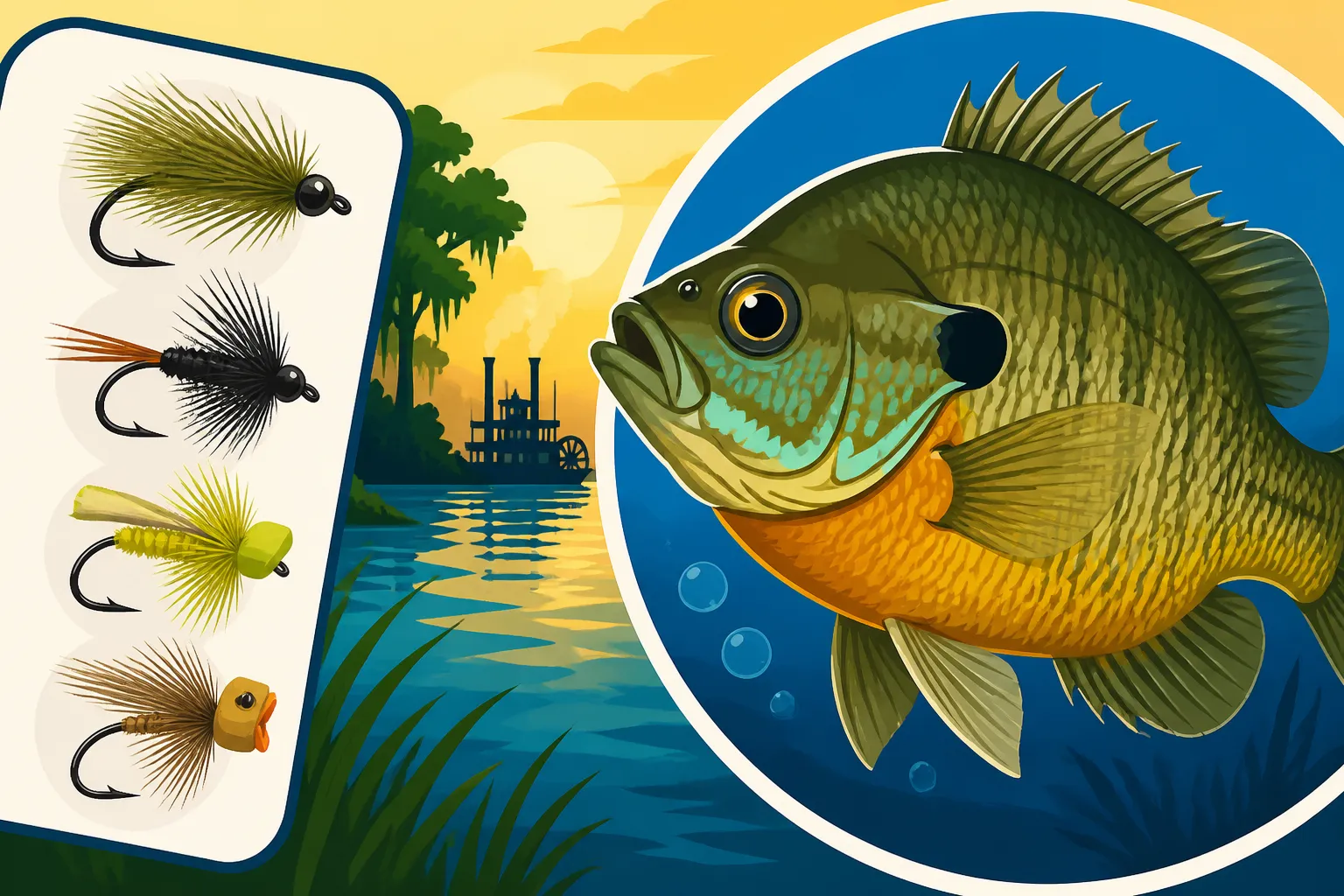
Poppers are probably the most thrilling surface flies for bluegill. Patterns like the Boogle Bug or simple Chartreuse Poppers are fantastic. They create a "pop" and disturbance on the water when stripped, mimicking a struggling insect or a small frog. Bluegill, especially the larger ones, can’t resist this commotion. You'll want to use these during calm mornings or evenings, or around thick cover like lily pads or submerged timber where bluegill often lurk. Sizes from #8 to #12 are usually perfect. The key is to cast them near structure and let them sit for a moment before giving a gentle twitch.
Other great dry fly options include foam patterns with rubber legs, often called Bully Spiders or simply foam spiders. These imitate various terrestrial insects and sit temptingly on the surface. Their rubber legs add lifelike action with even the slightest twitch or current. Small Ant and Beetle patterns (sizes #12-16) are also incredibly effective, especially when bluegill are focused on tiny insects that have dropped from overhanging trees. You can often find a wide variety of these patterns on Amazon or at specialty fly shops, making it easy to stock your fly box with proven performers.
Subsurface Nymphs and Wet Flies
When bluegill aren't actively feeding on the surface, they're almost certainly feasting on insects and larvae underwater. This is where nymphs and wet flies shine. These patterns are designed to sink and imitate the larval or pupal stages of aquatic insects, which make up a huge portion of a bluegill's diet. They might not offer the explosive visual strike of a popper, but they consistently catch fish.
The Prince Nymph is a classic for a reason. Its peacock herl body, biots for a tail and wings, and often a bead head, create a buggy profile that bluegill find irresistible. The flash from the biots and the subtle movement are key triggers. Similarly, the Pheasant Tail Nymph and the Hare's Ear Nymph are incredibly versatile and effective. These patterns are simplistic yet highly imitative of many aquatic insect larvae. When fishing nymphs, a slow, steady retrieve or a dead drift under a small indicator often works best. You want the fly to drift naturally with the current or mimic a struggling insect. Sizes #12-16 are generally excellent for bluegill.
Wet flies, which are typically unweighted and designed to swing or drift just under the surface, can also be highly productive. Patterns like a small Soft Hackle in olive or brown, or even a classic Zug Bug, can entice bluegill that are feeding on emergers or cruising just below the surface. The subtle movement of their soft hackles in the water is incredibly lifelike. Remember, when bluegill are not looking up, they are almost always looking around under the surface for a meal.
Streamers and Buggers for Aggressive Bluegill
While bluegill are known for their preference for small insects, larger bluegill can be surprisingly aggressive and will readily hit patterns designed to imitate larger prey. This is where streamers and woolly buggers come into play. These flies mimic baitfish, leeches, or larger aquatic invertebrates, and can often tempt bigger, more territorial bluegill.
The Woolly Bugger is perhaps the most versatile fly pattern ever created, and it’s devastatingly effective for bluegill. Tied in black, olive, or brown, and often with some flash incorporated, it imitates a wide range of food sources. Its chenille body and marabou tail pulsate in the water with every strip of the line, creating an irresistible action. To fish a Woolly Bugger, cast it out and retrieve it with short, erratic strips, pausing occasionally. This action mimics a fleeing baitfish or a crawling leech, triggering an aggressive predatory response. You'll often find that Woolly Buggers fished in sizes #10-14 can hook into some truly impressive bluegill.
While less common for bluegill, very small Clouser Minnows or similar baitfish imitations (sizes #12-16) can also be effective, especially in clear water where bluegill might be targeting small fry. The key with streamers is to impart action. Don't just let them sit; strip them, jig them, and make them look alive. These patterns are especially useful if you're targeting those "bronzeback" bluegill that are often more solitary and aggressive. Exploring patterns available on Amazon can give you a good starting point for building your streamer collection.
Essential Gear and Techniques for Fly Fishing Bluegill
Having the right flies is only part of the equation. To truly succeed at fly fishing for bluegill in Mississippi, you need to match your flies with appropriate gear and master some fundamental presentation techniques. This isn't just about catching fish; it's about maximizing the enjoyment of the process.
Rod, Reel, and Line Considerations
For bluegill, lighter is almost always better. A 2-weight to 4-weight fly rod is ideal. A 2-weight rod makes even a modest bluegill feel like a trophy, offering an incredibly sensitive and fun fight. A 3-weight or 4-weight provides a bit more versatility, allowing you to cast slightly larger flies, like small poppers, with ease and handle a wider range of conditions, including breezy days. These lighter rods are perfect for delicate presentations that won't spook wary bluegill.
Pair your rod with a lightweight fly reel that balances the setup. For bluegill, the reel's primary function is line storage, as you'll rarely be "fighting the reel." A weight-forward floating fly line is crucial. This type of line will help you cast those lighter flies accurately and delicately, and it's essential for fishing dry flies and nymphs near the surface or suspended in the water column. For leaders, a 7.5 to 9-foot tapered leader ending in a 4x or 5x tippet (4-6 lb test) is generally perfect. This lighter tippet ensures a natural presentation and is thin enough not to be easily detected by bluegill's keen eyesight. You can get excellent beginner-friendly combos for "Choosing the Right Rod and Reel for Mississippi Fishing" that come with everything you need.
Presentation and Retrieval Strategies
The way you present your fly is just as important, if not more important, than the fly itself. For dry flies and poppers, delicacy is key. You want the fly to land softly on the water, like a natural insect, rather than crashing down and sending bluegill scattering. Cast upstream or across to allow the fly to drift naturally over potential holding areas. When fishing poppers, let them sit for a few seconds after landing before giving a gentle twitch. The longer the pause, the more often you'll trigger a strike from an inquisitive bluegill.
When fishing nymphs or wet flies, the goal is often a dead drift, mimicking a free-floating insect larva. Use a small strike indicator if needed, and cast upstream of your target zone, allowing the fly to drift naturally downstream. Pay close attention to your line and indicator for any unnatural movement, which often signals a subtle bluegill bite. For streamers, a varied retrieve is best. Short strips, long strips, pauses, and even a jigging motion can all trigger strikes. Don't be afraid to experiment until you find what the bluegill are keying in on that day. Understanding these nuances will dramatically increase your catch rate, no matter where you're fishing in Mississippi.
Finding Bluegill Hotspots in Mississippi
Knowing the best fly patterns and techniques is fantastic, but you also need to know where to find these eager fish. Bluegill are abundant throughout Mississippi and thrive in a variety of freshwater habitats. They love structure and cover, so focus your efforts on areas that provide both food and protection.
In larger reservoirs and lakes, such as Ross Barnett Reservoir Fishing Guide or Sardis Lake Fishing Guide, look for lily pads, extensive weed lines, submerged timber, and brush piles. These areas offer shade, ambush points, and a rich environment for the insects that bluegill feed on. Docks and piers can also be fantastic bluegill magnets, as they provide shade and structure, especially on sunny days. Cast your flies parallel to these structures or into any open pockets within the vegetation.
Rivers and smaller ponds are also prime bluegill territory. In rivers, target slower moving eddies, backwater areas, and around fallen trees or log jams. Small farm ponds, often overlooked, can hold surprisingly large bluegill and are excellent places to practice your fly casting. When planning your fishing trip, also consider the time of year. Our Mississippi Spring Fishing Guide highlights how bluegill move into shallower waters for spawning, making them easier to target. Generally, the Best Time of Year to Fish in Mississippi for bluegill is during the warmer months, but they can be caught year-round in deeper waters. Don't forget that "Fly Fishing for Bream in Mississippi" will yield similar results, as bream and bluegill share many habits and habitats.
| Fly Pattern Name | Type | Key Imitation | Ideal Conditions | Recommended Sizes |
|---|---|---|---|---|
| Boogle Bug/Popper | Dry (Surface) | Terrestrial insect, small frog | Calm surface, low light, near heavy cover | #8 – #12 |
| Bully Spider | Dry (Surface) | Terrestrial insect, spider | Calm surface, shaded banks, overhanging trees | #10 – #14 |
| Prince Nymph | Nymph (Subsurface) | Mayfly, caddisfly larvae | Any depth, slow currents, when fish are not rising | #12 – #16 |
| Pheasant Tail Nymph | Nymph (Subsurface) | Mayfly nymphs | Any depth, especially in clear water | #14 – #18 |
| Woolly Bugger | Streamer (Subsurface) | Leech, baitfish, crayfish | Deeper water, when targeting larger, aggressive bluegill | #10 – #14 |
| Soft Hackle | Wet Fly (Subsurface) | Emerging insects, drowned insects | Just below surface, during hatches, light current | #14 – #18 |
Disclaimer
Fishing regulations, conditions, and fish behavior can change. Always consult the latest Mississippi Department of Wildlife, Fisheries, and Parks (MDWFP) regulations before heading out. This guide is for informational purposes only and does not guarantee fishing success. Always practice safe boating and fishing habits.