Best Fishing Spots on the Mississippi River Near Vicksburg
Navigating the mighty Mississippi River for a successful fishing trip near Vicksburg can feel like trying to find a needle in a haystack – it's an enormous, powerful body of water with constantly shifting conditions that can intimidate even seasoned anglers. Many folks get frustrated by the strong currents, debris, and the sheer scale of the river, making it hard to pinpoint those productive spots where fish actually hang out. But don't despair! This comprehensive guide is here to cut through the confusion, helping you understand the unique challenges of fishing around Vicksburg and revealing the best places to drop a line, whether you're chasing monster catfish or elusive bass in the calmer backwaters.
Understanding the Unique Challenges of Mississippi River Fishing Near Vicksburg
Fishing the Mississippi River is an entirely different beast compared to tranquil lakes or slow-moving streams. The sheer power and unpredictable nature of this colossal waterway present a distinct set of hurdles that, once understood, can be overcome with the right approach and a bit of local knowledge. It’s not just about casting a line; it’s about reading the water, anticipating its movements, and adapting your strategy to a truly wild environment.
Navigating the River's Dynamic Environment
One of the first things you'll notice when fishing the Mississippi River near Vicksburg is the current. It's often incredibly strong, constantly pulling and tugging, making boat positioning and presentation a continuous challenge. This isn't your daddy's pond fishing where you just drop an anchor and relax. You're dealing with vast amounts of moving water, which can make holding your boat in a specific spot feel like an Olympic sport. Heavy anchors and precise boat control are absolutely essential here, especially if you plan on targeting specific structures or current breaks.
Beyond the current, the river's depth changes dramatically, sometimes within a matter of feet. The main channel can plummet to incredible depths, while nearby sandbars or submerged humps might be surprisingly shallow. This dynamic topography is constantly reshaped by floods and droughts, meaning a hotspot you found last year might be entirely different this season. You also have to contend with debris – logs, branches, and all sorts of floating or submerged hazards that can snag your line, damage your boat, or even pose a danger to navigation. Staying vigilant and using heavy-duty tackle that can withstand these conditions is paramount to a successful and safe outing.
Identifying Productive Habitats Beyond the Main Channel
Given the main channel's powerful currents and often featureless bottom, the most productive fishing often happens in areas where the water slows down or offers some form of structure. These are the sweet spots where fish can escape the relentless flow, ambush prey, and find shelter. Thinking outside the main thoroughfare is key to unlocking the river's potential. It's like finding a quiet diner off the bustling highway – that's where the good stuff is.
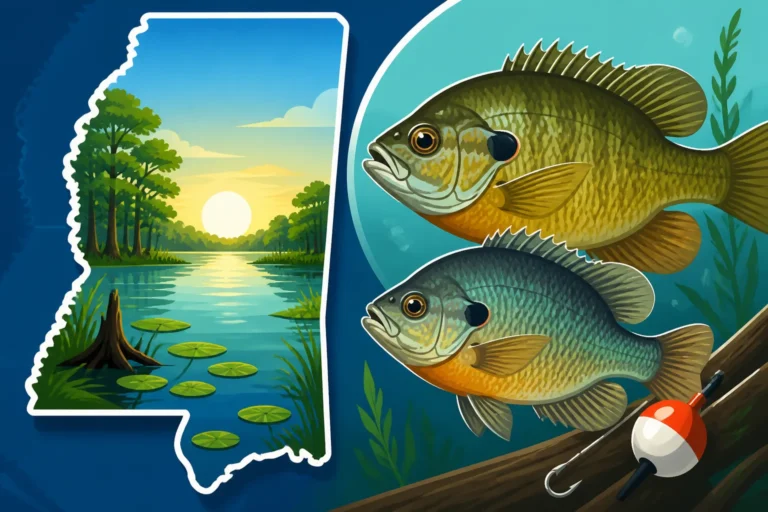
Backwaters, oxbow lakes, and old river runs are prime examples of these calmer habitats. These are remnants of old river channels that have been cut off from the main flow, creating slower-moving or even stagnant water bodies. Here, you'll find an abundance of submerged timber, lily pads, and aquatic vegetation – perfect cover for largemouth bass, crappie, and various panfish. These areas offer a stark contrast to the main river, providing a haven for different species and requiring entirely different fishing techniques. Learning to identify these distinct habitats is the first step toward a more rewarding fishing experience on the Mississippi.
Wing dams, revetments, and bridge pilings are also incredibly productive. Wing dams are man-made structures designed to direct the river's flow, but they also create current breaks and eddies where fish congregate. Revetments, often rock or concrete structures along the bank, prevent erosion but also provide excellent cover and foraging grounds. Bridge pilings act like artificial reefs, attracting baitfish and, consequently, the predatory game fish that feed on them. Each of these structures creates a unique micro-habitat that, with the right approach, can yield fantastic results.
Prime Fishing Locations Around Vicksburg
Vicksburg's stretch of the Mississippi River offers a diverse array of fishing opportunities, from the bustling city waterfront to secluded backwater havens. Knowing where to go for specific species and conditions is crucial for maximizing your time on the water. It’s not about finding one magical spot, but understanding the different types of areas and what they offer.
Targeting the Vicksburg Water Front and Adjacent Areas
The Vicksburg waterfront, while often busy with barge traffic and commercial activity, can be surprisingly productive, especially for bank anglers or those in smaller boats venturing just off the main channel. The area features a mix of historical structures, old docks, and riprap that provide excellent cover and current breaks for various fish species. It's a convenient spot for many locals and visitors looking to wet a line without having to travel too far from town.
For bank anglers, the public access areas along the riverfront offer a chance to cast for catfish, freshwater drum, and carp. These species are often less finicky and readily available closer to shore, especially where there's some deeper water or a slow current near a protective structure. Look for eddies behind pilings or current seams along the riprap, as these are natural holding spots. Anglers often use heavy bottom rigs here, baited with anything from chicken liver to nightcrawlers or prepared stink baits, letting them soak on the bottom. It’s a great place to experience the river's power from a safe vantage point and often yields a good fight.
Boat anglers can explore just beyond the immediate bank, targeting the deeper holes and submerged structures that dot the river close to the city. Pay attention to any old barge tie-offs, sunken debris, or slight changes in bottom contour that show up on your sonar. These subtle features can hold significant numbers of blue catfish and channel catfish, particularly in deeper channels or scour holes carved out by the current. Remember the safety advice regarding current and debris, and always give commercial traffic ample room.
Exploring Backwater Lakes and Oxbows for Diverse Species
While the main river is a force of nature, the true gems for many anglers around Vicksburg are the numerous backwater lakes and oxbows. These are former sections of the Mississippi River that, over time, have been cut off from the main channel, creating calmer, more stable environments. These serene waters are a stark contrast to the turbulent river and offer phenomenal fishing for a wider variety of species, making them ideal for those seeking a break from the main river's intensity.
Lakes like Eagle Lake, while a bit north of Vicksburg proper, or other smaller, unnamed oxbows and sloughs closer to the city, exemplify these productive habitats. They feature extensive cypress trees, submerged timber, lily pads, and dense aquatic vegetation that provide ideal cover and foraging grounds. Here, you'll find thriving populations of largemouth bass, black and white crappie, bluegill, and redear sunfish. Fishing these areas often involves lighter tackle and different techniques than the main river, focusing on pitching jigs into cover for crappie or working crankbaits and soft plastics around structure for bass.
When fishing these backwaters, understanding the seasonal movements of fish is paramount. In spring, bass and crappie will move into the shallower areas to spawn, making them highly accessible to anglers. During the heat of summer, they'll often retreat to deeper pockets or dense shade provided by cypress trees and thick vegetation. Fall sees them aggressively feeding, preparing for winter, while winter fishing often means targeting deeper channels or brush piles. Always check local access rules and any specific regulations for these individual water bodies, as they can sometimes differ from the main Mississippi River guidelines. This is where you might find some of the biggest numbers of fish, provided you're willing to explore off the beaten path.
Finding Productive Wing Dams and Revetments
Wing dams and revetments are unsung heroes of Mississippi River fishing, particularly around Vicksburg. These man-made structures, often built from rock or concrete, play a crucial role in river navigation and erosion control, but they also create fantastic fish habitat. For an angler, they are like underwater magnets, drawing in baitfish and the larger game fish that feed on them.
Wing dams are typically submerged structures that extend out from the bank into the river, designed to constrict the current and scour the navigation channel. The magic happens both upstream and downstream of these dams. On the upstream side, where the current hits the structure, baitfish often stack up in the eddy pockets, and larger predators lie in wait. Downstream, calmer water and scour holes created by the deflected current provide ideal holding areas for catfish, bass, and even some sauger in the cooler months. Drifting jigs or heavy bottom rigs along the face of these dams, or casting into the eddies, can be incredibly effective.
Revetments are bank stabilization structures, usually riprap or concrete mats, that line the riverbanks. These provide a rough, irregular surface that current-dwelling fish adore. The rocks offer shelter from the strong current, a place to ambush prey, and a substrate for algae and insects that form the base of the food chain. Fishing along revetments can be excellent, especially for smallmouth bass (though less common here, spotted bass fill a similar niche), catfish, and freshwater drum. Vertical jigging or casting crankbaits parallel to the bank, letting them deflect off the rocks, can trigger aggressive strikes. Always remember that the areas immediately surrounding these structures can have strong currents, so careful boat positioning and heavy tackle are key.
Essential Techniques and Baits for Vicksburg River Fishing
Fishing the Mississippi River near Vicksburg demands specific techniques and bait choices that stand up to the river's unique conditions and target the most common species. What works in a calm lake won't necessarily cut it here; you need to adapt to the currents, depths, and feeding habits of river fish.
Mastering Catfish Tactics in Strong Currents
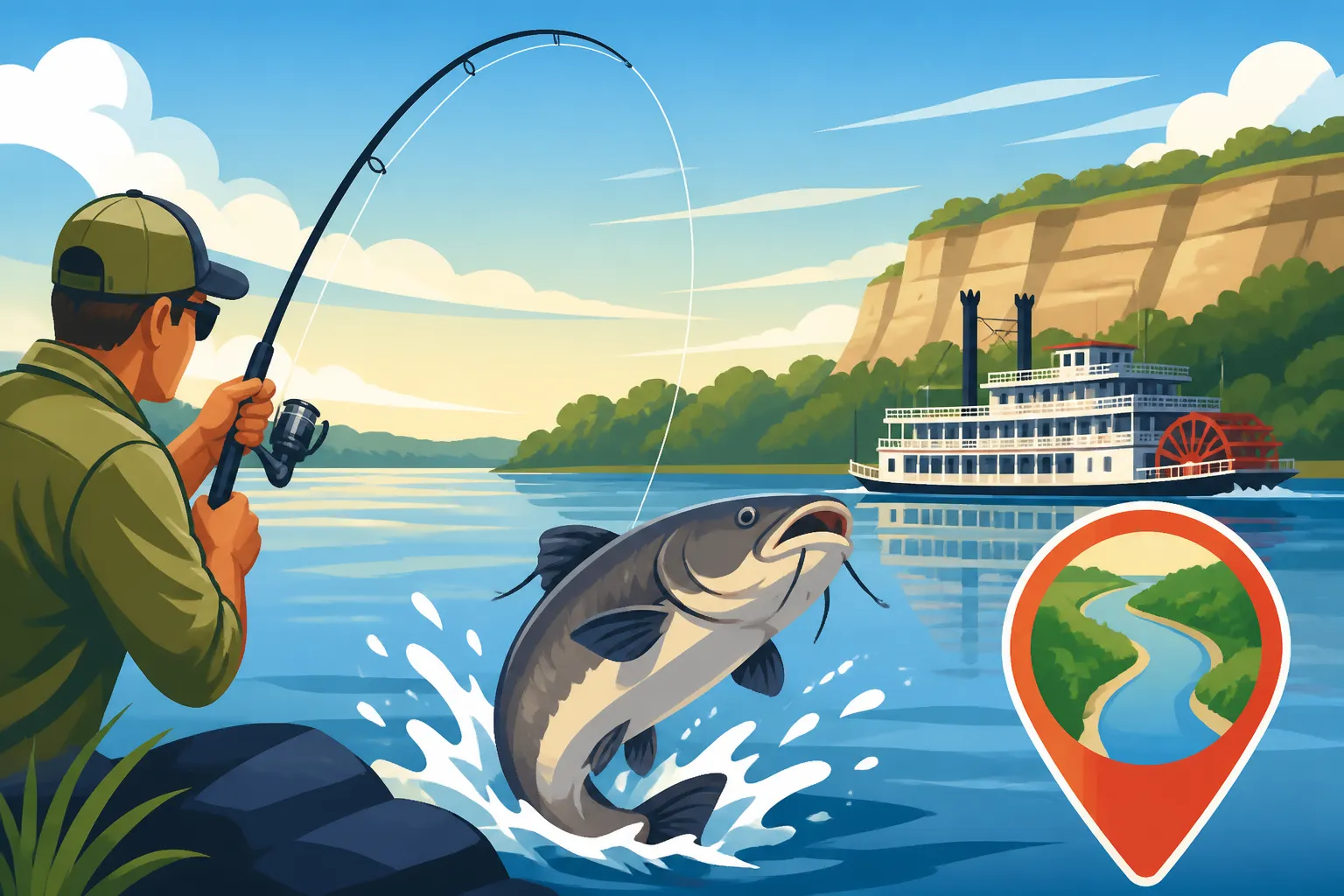
Catfish are undoubtedly the kings of the Mississippi River around Vicksburg. Blue catfish, channel catfish, and flathead catfish all thrive in these waters, and they grow to impressive sizes. Successfully targeting them in the river's powerful currents requires robust tackle and a methodical approach. This isn't finesse fishing; it's about brute strength and getting your bait to stay put where the fish are.
Heavy-action rods (often 7-9 feet long), paired with large baitcasting or spinning reels spooled with 30-80 pound test monofilament or braided line, are standard. The key is using enough weight to hold your bait on the bottom without it being swept away. This often means 3-8 ounce pyramid or no-roll sinkers, sometimes even heavier depending on the current. The Carolina rig or a three-way rig are popular choices; the Carolina rig keeps your bait close to the bottom, while the three-way rig allows you to suspend your bait slightly above it, which can be useful over snaggy bottoms. For detailed rules, check the current Mississippi Catfish Regulations.
As for bait, cut bait is supreme for blue and channel catfish. Fresh shad, skipjack herring, or even commercially prepared punch baits and stink baits are highly effective. For flatheads, live bait is usually preferred – a lively bluegill or sunfish hooked through the back or lips is often irresistible. Position your boat strategically, often upstream of a deep hole, current seam, or submerged structure, and let your bait drift or soak right in the strike zone. Patience is a virtue here, but when a big river cat takes the bait, you'll know it! If you want to dive deeper into bait choices, our guide on the Best Bait for Catfish in the Mississippi River has you covered.
Adapting for Bass and Crappie in Slacker Waters
While catfish dominate the main river, bass and crappie are the stars of the backwater lakes, oxbows, and calmer sloughs connected to the Mississippi near Vicksburg. The techniques for these species are much closer to traditional lake fishing, but with a river influence. You're typically dealing with clearer, slower-moving water and abundant cover.
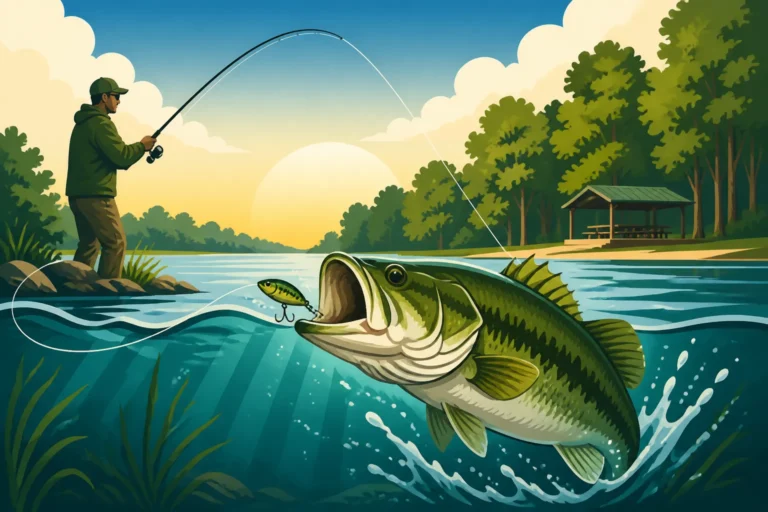
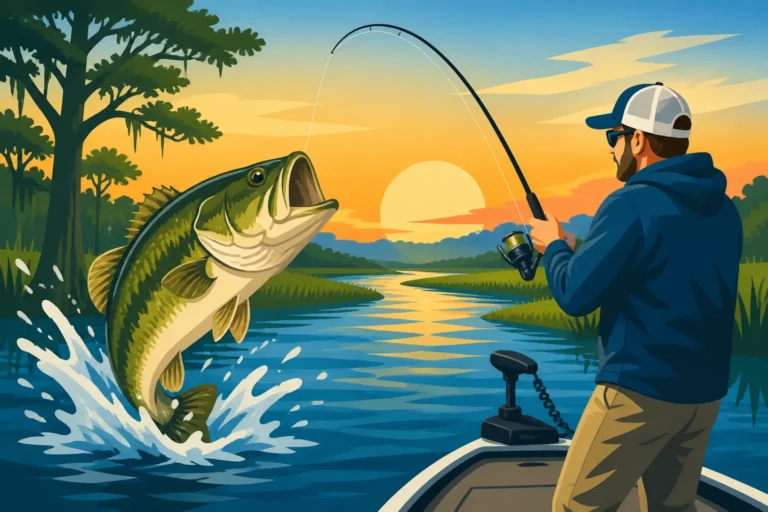
For largemouth bass, look for areas with dense vegetation, lily pads, cypress trees, and submerged timber. Topwater lures like frogs or poppers can be explosive in the early mornings or late evenings when bass are active near the surface. During the day, pitching and flipping jigs or soft plastic creature baits into thick cover are highly effective. Spinnerbaits and chatterbaits excel when bass are cruising the edges of cover or in slightly stained water. Crankbaits are great for covering water along channel swings or deeper points. The Mississippi Black Bass Regulations will give you all the specifics on size and creel limits.
Crappie fishing in these backwaters is often about finding brush piles, submerged logs, or standing timber. Small jigs (1/16 to 1/8 ounce) tipped with soft plastic bodies in chartreuse, black and chartreuse, or white are perennial favorites. Live minnows fished under a bobber or on a spider rig setup are also incredibly effective, especially when crappie are suspended. Trolling with multiple rods can also cover a lot of water and help locate schools. For a comprehensive look at tactics, check out our guide on Crappie Fishing Techniques for Mississippi Lakes. Remember that fishing rules can vary, so consult the Mississippi Crappie Regulations by Lake for up-to-date information.
Seasonal Considerations for Optimal Success
The Mississippi River's behavior and the fish's activity levels are heavily influenced by the seasons, water levels, and temperature changes. What works in spring won't necessarily yield results in the dog days of summer. Understanding these shifts is paramount to consistent success. Our general guide to the Best Time of Year to Fish in Mississippi provides an excellent overview.
Spring (March – May): This is a prime time for many species. As water temperatures rise, fish become more active. Bass and crappie move into shallower backwater areas for their spawn, making them more accessible. Catfish in the main river also become very aggressive, feeding heavily as the water warms. River levels can be high and current strong, so focus on protected coves and current breaks.
Summer (June – August): The heat of summer pushes fish into deeper, cooler water or dense shade. Catfish remain active, often found in deep holes or along ledges in the main river, especially during low light conditions or at night. Bass and crappie in the backwaters will move to deeper brush piles, submerged timber, or the shade of cypress trees. Early mornings and late evenings are often the most productive times.
Fall (September – November): As temperatures begin to drop, fish become very active again, feeding aggressively in preparation for winter. This is a fantastic time for all species. Bass and crappie will often move to shallower areas in the backwaters, following baitfish. Catfish in the main river can be found along current breaks and deep ledges, gorging themselves.
Winter (December – February): Fishing can be slower, but don't count it out. Many species will move to deep holes, main river channels, or the deepest parts of backwater lakes where water temperatures are more stable. Catfish can still be caught by slowing down your presentation and fishing deep. Crappie will often school tightly in deep brush piles. Patience and electronic fish finders are your best friends in winter.
| Species | Primary Location Type | Best Baits / Lures | Optimal Season |
|---|---|---|---|
| Blue Catfish | Main River, Deep Holes, Ledges, Wing Dams | Cut Bait (Shad, Skipjack), Live Perch | Year-Round, esp. Spring/Fall |
| Channel Catfish | Main River, Backwaters, Current Breaks | Cut Bait, Stink Bait, Worms | Year-Round, esp. Spring/Summer |
| Flathead Catfish | Main River, Deep Snags, Logjams | Live Bait (Bluegill, Sunfish) | Summer, Fall |
| Largemouth Bass | Backwater Lakes, Oxbows, Vegetation | Jigs, Soft Plastics, Crankbaits, Topwater | Spring, Fall |
| Crappie | Backwater Lakes, Brush Piles, Timber | Live Minnows, Small Jigs | Spring, Fall, Winter |
| Freshwater Drum | Main River, Revetments, Sandbars | Worms, Crawfish, Cut Bait | Year-Round |
Planning Your Vicksburg Fishing Adventure
A successful trip to the Mississippi River near Vicksburg involves more than just knowing where to fish and what bait to use. It's also about having the right gear, understanding access points, and utilizing local resources to ensure a safe and enjoyable experience.
Access Points and Boating Considerations
Accessing the Mississippi River can be tricky due to its powerful currents and often steep banks. For boaters, public boat ramps are your gateway to the river. In the Vicksburg area, you'll find ramps that provide access to both the main river and some of the larger oxbows. It's always a good idea to scout ramps beforehand, especially if you have a larger boat, to ensure they are in good condition and suitable for your vessel. Remember that river levels can fluctuate significantly, impacting ramp accessibility.
Boating on the Mississippi River demands respect and a keen understanding of safety. Commercial barge traffic is a constant presence, and recreational boaters must always yield the right-of-way and maintain a safe distance. Waves from passing barges can be substantial, so be prepared for rough water, even on an otherwise calm day. Always ensure your boat is in top condition, has all required safety equipment (like life jackets, as outlined in Mississippi Life Jacket Rules for Anglers), and that you're familiar with the Mississippi Boat Fishing Regulations. A reliable motor and an auxiliary motor are highly recommended. Navigation can be challenging due to shifting sandbars and submerged hazards, so a good GPS and a watchful eye are crucial. If you're wondering how many rods you can use, check out How Many Fishing Poles Can You Use in Mississippi?.
Local Resources and Guided Trips
One of the best ways to get up-to-date information on river conditions, hotspots, and what's biting is to visit local bait and tackle shops. The folks who run these establishments are often avid anglers themselves and have their finger on the pulse of the river. They can provide invaluable tips on current water levels, recent catches, and which baits are performing best. Their insights can save you a lot of trial and error, especially if you're new to the area or the river is behaving unusually.
For those who want to maximize their chances of success, especially on a waterway as complex as the Mississippi, considering a guided fishing trip is a fantastic option. A professional guide possesses years of experience navigating the river, understanding its nuances, and knowing exactly where the fish are hiding. They come equipped with all the necessary gear, expertise, and often, even provide your fishing license if you don't have one (though it's always good to verify this beforehand – see the Mississippi Fishing License Guide for details).
Platforms like FishingBooker make it incredibly easy to find and book reputable guides for the Vicksburg area. You can browse various charters specializing in catfish, bass, or even multi-species trips, read reviews from other anglers, and compare prices. Booking a trip through FishingBooker ensures you're getting a licensed and experienced professional who can teach you the ropes, put you on fish, and make your trip safe and memorable. Whether you're a seasoned angler looking to learn river-specific techniques or a beginner hoping for a stress-free day on the water, a guide found on FishingBooker can be an invaluable asset. They take the guesswork out of the equation, allowing you to focus on the joy of fishing. Many guides listed on FishingBooker also cater to specific needs, such as family-friendly outings or targeting trophy fish, giving you flexibility in planning your perfect day on the water.
Disclaimer
The information provided in this guide is for general informational purposes only and is subject to change. Fishing regulations, conditions, and access points can vary. Always consult the latest Mississippi Department of Wildlife, Fisheries, and Parks (MDWFP) regulations, check local conditions, and prioritize safety before embarking on any fishing trip.