How Many Redfish Can You Keep in Mississippi?
Anglers heading to the beautiful Mississippi Gulf Coast often find themselves scratching their heads when it comes to understanding the complex fishing regulations, especially for popular species like Redfish. It's frustrating to plan a perfect day on the water only to realize you're unsure about what you can legally keep. This comprehensive guide is here to clarify exactly how many Redfish you can keep in Mississippi, along with critical size restrictions and other essential rules you need to know to fish responsibly and legally.
Understanding Mississippi's Redfish Regulations
Navigating the world of fishing regulations can sometimes feel like trying to untangle a particularly stubborn bird's nest of fishing line. But when it comes to Redfish, knowing the rules isn't just about avoiding a fine; it's about protecting a cherished resource for all of us. Mississippi has specific guidelines in place for these popular saltwater game fish, and getting familiar with them is the first step to a successful and legal trip.
The Importance of Daily Creel Limits
Daily creel limits aren't just arbitrary rules designed to make your life harder; they are scientifically determined measures to ensure the sustainability of fish populations. Without them, overfishing could quickly decimate species like Redfish, impacting the entire ecosystem and severely limiting future fishing opportunities. Think of it as managing a shared resource – if everyone takes too much, there won't be enough for anyone, including the fish themselves to reproduce effectively and thrive. These limits are especially crucial for popular game fish that face significant recreational and commercial fishing pressure along the coast.
For Redfish, also known as Red Drum or Spot-tail Bass, these limits are meticulously designed to protect both the younger, fast-growing fish and the larger, more mature spawning adults. The goal is to allow enough fish to reach reproductive age and contribute significantly to the next generation, while still providing anglers with a rewarding fishing experience. This delicate balance is constantly evaluated by expert wildlife agencies like the Mississippi Department of Marine Resources (MDMR), which diligently collects data on fish stocks, angler catches, and environmental factors impacting their health.
Ultimately, adhering to these rules isn't just about avoiding penalties; it's about actively participating in the conservation efforts that keep Mississippi's coastal waters teeming with vibrant marine life. Understanding the 'why' behind the rules often makes it much easier to remember and follow them, fostering a greater sense of stewardship among the entire fishing community. It’s a system designed to benefit everyone in the long run.
Slot Limits for Redfish in Mississippi
Mississippi employs a very specific type of regulation for Redfish known as a "slot limit," which is absolutely crucial to grasp before you even cast a line. Unlike a simple minimum or maximum size restriction, a slot limit means you can only keep fish that fall within a specific size range. This is a highly effective conservation strategy because it protects the smaller, juvenile fish, allowing them to grow and mature, and also safeguards the very large, older "bull reds" that are often the most prolific spawners, ensuring they can continue to reproduce and replenish the population. For Redfish in Mississippi, the legal slot limit is typically between 18 and 30 inches total length.
What does this mean in practical terms for your fishing trip? If you happen to catch a Redfish shorter than 18 inches, you must release it immediately and with the utmost care. Similarly, if you land a magnificent Redfish longer than 30 inches, that impressive trophy also needs to be returned to the water to continue its vital role in the ecosystem. The only Redfish you are legally permitted to keep are those measuring precisely 18 inches up to, but not including, 30 inches. This specific size range is meticulously determined to maximize the reproductive potential of the species in Mississippi's unique coastal environment.
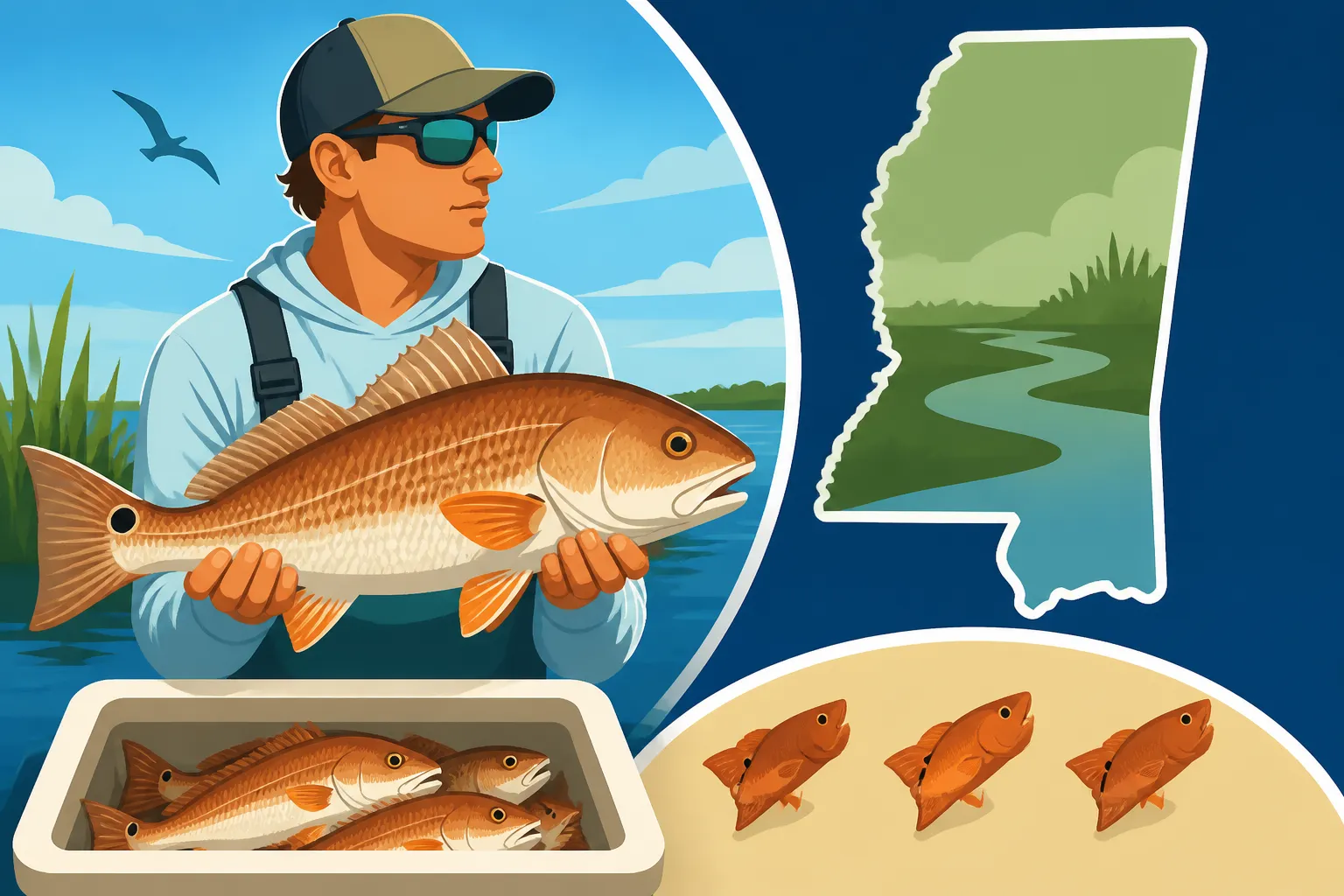
So, to directly answer the core question: anglers in Mississippi are allowed to keep three (3) Redfish per person per day. However, it's paramount that each of those three Redfish must fall squarely within the 18 to 30-inch slot limit. This means accurate measurement of your catch is not just recommended, it's non-negotiable for compliance. Always carry a reliable and easy-to-read measuring device, such as a bump board, with you when you're fishing the coast. You can find excellent options on Amazon or at any reputable local tackle shop, which makes verifying your catch against the regulations much simpler. For even more specific details on these rules, be sure to consult the official Redfish Slot Limit on the Mississippi Gulf Coast guidelines.
Possession Limits vs. Daily Limits
There's often a bit of confusion that crops up between "daily creel limits" and "possession limits," and understanding the distinction is absolutely essential to avoid accidental violations that can quickly ruin a fishing trip. The daily creel limit, as we've just covered, refers to the maximum number of fish of a particular species an individual angler can catch and keep within a single 24-hour period (from midnight to midnight). For Mississippi Redfish, as established, that's three fish within the 18-30 inch slot. This limit conveniently resets at the beginning of each new day.
A possession limit, on the other hand, refers to the maximum number of fish of a particular species an individual can have in their possession at any given time. This includes all fish whether they are still on your boat, in your cooler, stored in your vehicle, or even back at your home, regardless of when they were actually caught. In Mississippi, for Redfish, the possession limit generally mirrors the daily creel limit when you are on the water or actively engaged in fishing. This means you should not have more than three Redfish (within the slot) while you are out on the boat or actively fishing from the shore.
However, the regulations can get a bit more nuanced if you're traveling home from a multi-day fishing trip or if you have already cleaned and packaged fish from previous days' legal catches. The key takeaway for most recreational anglers is that you should never have more than the daily creel limit of unprocessed Redfish on your person, in your cooler, or on your vessel while fishing or immediately after fishing. If you've been on a multi-day trip and have frozen or processed fish from previous legal catches, those should be clearly marked with dates and species to prove compliance if you happen to be checked by a conservation officer. Always refer to the most current Mississippi Fishing Regulations Explained for the fine print on possession, especially if you plan extended trips or keep fish over several days.
Navigating Redfish Fishing in Mississippi
Catching Redfish is an exhilarating experience, whether you're battling a hard-fighting slot fish or respectfully releasing a trophy-sized bull red. To maximize your chances of success and ensure you're doing your part for conservation, it's wise to be familiar with some best practices, popular spots, and effective techniques.
Best Practices for Catch-and-Release
Given Mississippi's Redfish slot limit, successful fishing often involves catching and releasing a fair number of fish that are either too small to keep or, excitingly, too large. Mastering proper catch-and-release techniques isn't just a courtesy to the fish; it's a vital skill for conservation. The overarching goal is to minimize stress and injury to the fish, thereby giving it the absolute best chance of survival after being returned to the water. This critical process begins with using appropriate tackle that can land the fish efficiently, which in turn reduces the overall fight time and exhaustion for the fish.
When you successfully land a Redfish, handle it with extreme gentleness. Avoid dragging it across rough surfaces like sandy banks or boat decks, and never put your fingers into its delicate gills, as this can cause significant damage. If at all possible, try to keep the fish in the water while you're removing the hook. Utilize needle-nose pliers or a specialized dehooking tool to quickly and cleanly extract the hook. Many seasoned anglers, including myself, swear by quality dehooking tools, readily available from trusted retailers like Amazon, or specialized brands from your local tackle shop. If you find the fish is "gut-hooked" (meaning it has swallowed the hook), it's generally far better to cut the line as close to the hook as possible rather than attempting to rip it out, which can cause severe internal damage that drastically reduces survival rates.
Once the hook is safely removed, support the fish horizontally, especially if it's a larger specimen. Avoid the common mistake of holding it vertically by the jaw or tail alone, as this can inflict serious damage to its internal organs and spinal column. Gently revive the fish by holding it in the water, facing it into the current, until it fully regains its strength and is able to swim away under its own power. Witnessing a strong, healthy Redfish swim off purposefully is an incredibly satisfying experience and ensures that future generations of anglers will also have the opportunity to enjoy this fantastic species.
Where to Find Redfish on the Mississippi Coast
Redfish are truly one of the jewels of the Mississippi Gulf Coast, and they boast the advantage of being found in a wide variety of habitats, making them highly accessible to many types of anglers. They are primarily estuarine-dependent, meaning they thrive in the brackish waters of the bays, bayous, and intricate marsh systems that characterize much of Mississippi's scenic coastal landscape. When you're searching for them, focus your efforts around shallow grass flats, extensive oyster reefs, submerged shell beds, and along the unique edges of black mangrove shorelines that dot the area.
Some of the most popular and productive spots include the expansive Biloxi Bay, the picturesque Bay St. Louis, and the rich Pascagoula River estuary, where the nutrient-dense waters provide an abundant food source for Redfish and their prey. The numerous barrier islands, such as Horn Island and Ship Island, also offer fantastic fishing opportunities, particularly in the protected waters on their leeward (sheltered) sides. Tidal creeks and drains are exceptional ambush points for Redfish as the tide moves in and out, bringing with it a steady flow of baitfish. Exploring these areas from a boat, kayak, or even by wading the flats can yield truly great results. For more detailed information on specific locations and hot spots, our comprehensive Redfish Fishing on the Mississippi Coast guide is an invaluable resource.
Don't overlook man-made structures either, as these can be absolute magnets for Redfish. Docks, piers, bridge pilings, and even submerged debris can hold impressive numbers of these fish, especially during the cooler months when they seek refuge and structure. The key to finding them is to look for areas with good current flow, which oxygenates the water and brings food, and abundant potential food sources. Remember, early mornings and late evenings, or during the peak incoming and outgoing tides, are generally the most productive times to target these powerful fish.
Gear and Techniques for Redfish
Catching Redfish can be accomplished with a variety of gear setups, but generally, a medium to medium-heavy action spinning rod or baitcasting setup is considered ideal for most inshore situations. A versatile 7-foot rod paired with a reliable 3000-4000 series spinning reel spooled with 15-20 lb braided line is an excellent choice for most Redfish scenarios you'll encounter. The braided line offers exceptional sensitivity, allowing you to feel even the most subtle bites, and provides impressive casting distance. A fluorocarbon leader, typically 20-30 lb test, is highly recommended for its excellent abrasion resistance against abrasive oyster shells and its low visibility underwater, which can be crucial in clear water conditions.
When it comes to bait, Redfish aren't known for being particularly finicky, which is good news for anglers. Live bait options such as live shrimp, mud minnows, finger mullet, and small pinfish are incredibly effective and often irresistible to hungry Reds. You can rig these under a popping cork – a classic and highly effective technique for creating enticing sounds that mimic feeding fish – or on a simple Carolina rig or knocker rig fished directly on the bottom. For artificial lures, soft plastics rigged on appropriately weighted jig heads are perennial favorites and account for countless Redfish catches. Brands like Z-Man, Gulp!, and Vudu Shrimp offer a wide array of colors and profiles that accurately mimic natural bait. Hard baits, such as topwater plugs or shallow-diving crankbaits, can also provide thrilling strikes, particularly during low-light conditions at dawn or dusk. Many savvy anglers will stock up on their favorite lures, hooks, and even specialized tackle boxes from retailers like Amazon before a trip to ensure they have a full and varied arsenal ready for any situation.
Specific techniques will, of course, vary depending on the particular structure you're fishing and the prevailing conditions. Sight fishing on shallow flats involves patiently spotting cruising Redfish and then making a precise, accurate cast to them. Around extensive oyster reefs, fan casting soft plastics or live bait can effectively cover a lot of ground and locate active fish. In deeper channels, a well-placed Carolina rig adorned with a juicy chunk of cut bait can often entice larger, more hesitant Redfish to bite. Always be prepared to adapt your approach based on what the fish are telling you through their behavior, and what the tide and current are doing in real-time.
Common Misconceptions and FAQs About Redfish Limits
Even experienced anglers can sometimes misunderstand certain aspects of fishing regulations. Clarifying these common questions can help prevent unintentional violations and ensure a smoother, more enjoyable fishing experience.
What if I Catch an Oversized Redfish?
It's an absolutely fantastic feeling to hook into and battle a massive Redfish, often affectionately called a "bull red." These fish are incredibly powerful fighters and can provide an angling experience that you won't soon forget. However, as we've already established, if that Redfish measures over 30 inches, it falls squarely outside the legal slot limit in Mississippi, and you must release it immediately. While this might feel disappointing for some, remember that these large, mature fish are the undisputed backbone of the breeding population, capable of producing millions of eggs during their extensive spawning cycles. Their survival and continued reproduction are absolutely paramount for the health and longevity of the entire Redfish fishery.
When you are fortunate enough to encounter an oversized Redfish, treat it with the utmost care and respect. Get a quick photograph if you absolutely must, but always prioritize its health and rapid, safe release. Utilize a fish-friendly grip, supporting its weight properly, and absolutely avoid suspending the fish vertically by its jaw or gills, especially for these larger, heavier specimens, as this can cause internal damage. If at all possible, try to measure the fish while it remains in the water. Minimize its time out of the water to just a few crucial seconds. Before releasing, ensure it swims away strongly, as detailed in our earlier section on catch-and-release best practices. Consider it a true privilege to have caught such a magnificent creature, and always do your part to ensure it continues its incredibly important role in the ecosystem.
It's a common misconception among some newer anglers that if a fish is "too big," it's somehow a special catch and therefore exempt from release rules. In the case of Redfish in Mississippi, the exact opposite is true for retention. "Too big" explicitly means too important to take home, so back into the water it must go to breed another day. This specific regulation powerfully highlights Mississippi's unwavering commitment to sustainable fishing practices and actively ensures the longevity of the species for future generations of anglers. If you're ever in even the slightest doubt about the size limits for any species, always double-check the current Mississippi Fishing Regulations Explained or consult the official MDMR website for the most accurate information.
The Role of the Mississippi Department of Marine Resources MDMR
The Mississippi Department of Marine Resources (MDMR) stands as the primary agency singularly responsible for managing, conserving, and protecting the precious marine and coastal resources of Mississippi. They are the dedicated professionals who conduct essential scientific research, meticulously monitor fish populations, and, critically, establish and rigorously enforce the fishing regulations, including all those pertaining to Redfish. Their vital work is absolutely essential for striking a crucial balance between the interests of both recreational and commercial fishing industries and the long-term ecological health and vitality of the entire marine environment.
The regulations specifically tailored for Redfish, which encompass the daily creel and slot limits we've discussed, are certainly not arbitrary or decided on a whim. Instead, they are meticulously developed based on extensive data collection, rigorous scientific assessments of fish stocks, and invaluable input gathered from a diverse range of stakeholders. This includes passionate recreational anglers, diligent commercial fishermen, and dedicated environmental groups. The MDMR consistently and continually evaluates these regulations, making necessary adjustments as new data emerges, or as needed to respond effectively to changes in fish populations, fluctuating environmental conditions, or shifts in overall fishing pressure. This proactive and adaptive management approach is truly key to achieving effective and sustainable conservation outcomes for Mississippi’s coastal fisheries.
It is absolutely imperative for every angler who fishes Mississippi's coastal waters to familiarize themselves with the MDMR and to actively stay updated on their announcements and publications. Their official website is an invaluable treasure trove of critical information, including the very latest regulations, important advisories, and current fishing reports. They also diligently manage vital programs like the Mississippi Saltwater Fishing License Guide and oversee many of the public access points along the beautiful coast. Understanding their comprehensive role helps us to deeply appreciate the scientific rigor and thoughtful process behind every single rule and regulation we are asked to follow as responsible stewards of the aquatic environment.
Checking for Regulation Changes
Fishing regulations are far from being set in stone; they can and do change, sometimes with little warning if critical stock assessments deem it necessary. This fluidity is particularly true for highly popular species like Redfish, where scientific data might indicate an urgent need for adjustments to ensure their continued sustainability and health. Factors such as spawning success rates, significant environmental impacts (like major storms or changes in water quality), and the overall health and size of the fish population can all prompt state agencies like the MDMR to modify existing limits, adjust seasons, or alter size restrictions. Relying on outdated information is a sure-fire way to accidentally violate regulations, which can lead to unnecessary fines and frustration.
The absolute best and most reliable way to stay current is to regularly check the official sources. The Mississippi Department of Marine Resources (MDMR) website is always your ultimate go-to for the most up-to-date and accurate information. They typically publish comprehensive annual regulation guides and will promptly issue public announcements and alerts for any significant or critical changes. Therefore, before heading out on any fishing trip, especially at the start of a new calendar year, a new fishing season, or even after a major weather event, take a few crucial minutes to review the very latest rules. Many reputable tackle shops along the coast also often have physical copies of the latest regulations available, or their knowledgeable staff can offer guidance, though always double-check any critical information with official online sources to be absolutely certain.
Additionally, a smart move is to consider signing up for email newsletters directly from the MDMR or to follow reputable local fishing forums or trusted guides who frequently share timely updates. While these informal channels can be very helpful for initial awareness, always, and I mean always, verify critical regulatory information with the official government source. Getting caught with an illegal catch because you weren't aware of a recent rule change is not considered an acceptable excuse by law enforcement and can still lead to significant fines and penalties. Being proactive and diligently checking for regulation changes is a hallmark of a truly responsible, informed, and ethical angler. You can find detailed information on obtaining the necessary permits, including How to Buy a Mississippi Fishing License Online and What ID Do You Need to Buy a Mississippi Fishing License? through official channels.
Penalties for Violating Redfish Regulations
No one ever sets out to intentionally break fishing laws, but sadly, ignorance of the regulations is never a valid defense in the eyes of the law. Understanding the potential consequences of violating Redfish limits is crucial for every angler to ensure they fish responsibly and legally.
Consequences of Exceeding Limits
While no one intends to break fishing laws, ignorance of the regulations is, unfortunately, never a valid defense when you're caught. Getting caught with too many Redfish, or with fish that fall outside the legally defined slot limit, can lead to serious and costly consequences. The Mississippi Department of Marine Resources (MDMR) actively patrols coastal waters to ensure compliance with these vital regulations, and their conservation officers are highly trained to identify and address violations. A common penalty for a first offense typically involves a significant fine, which can easily run into hundreds of dollars, immediately turning a fun day into a very expensive lesson.
Beyond immediate monetary fines, other repercussions can include the swift forfeiture of your catch, meaning any illegally harvested fish will be confiscated by the authorities. In more severe or repeated cases, you could potentially face the suspension or even complete revocation of your fishing license, which would prohibit you from participating in any fishing activities for a specified period. Imagine having your Mississippi Fishing License Guide revoked just because you didn't measure your Redfish correctly or made the mistake of keeping one too many! These penalties are deliberately designed to be a strong deterrent, powerfully emphasizing the critical importance of adhering to conservation efforts for marine life.
It's also well worth noting that more serious violations can sometimes necessitate court appearances, which inevitably brings with it additional legal fees, the stress of preparing for court, and the general hassle of navigating the judicial process. This can easily transform what was meant to be a relaxing day of fishing into a significantly costly, time-consuming, and utterly stressful experience. The absolute best way to avoid all of these undesirable outcomes is simply to diligently know the rules, meticulously measure every single fish you intend to keep, and always err on the side of caution. If you're ever in the slightest bit unsure about a fish's size or legality, the safest and most responsible course of action is always to release it. Our comprehensive guide on Mississippi Fishing License Penalties and Fines offers even more detail on the potential legal ramifications you might face.
Reporting Violations
For those of us who genuinely care about the long-term health and sustainability of Mississippi's precious fisheries, being an extra set of vigilant eyes and ears on the water is an incredibly crucial way to actively contribute to ongoing conservation efforts. Unfortunately, not everyone adheres to the established rules, and illegal fishing activities, whether intentional or accidental, can severely and detrimentally impact fish populations, undermining the efforts of responsible anglers. If you happen to witness someone intentionally violating Redfish limits – whether it's keeping fish that are undersized or oversized, or blatantly exceeding the daily creel limit – you have a civic and ethical responsibility to report it to the proper authorities.
The MDMR has robust systems and procedures in place specifically for reporting violations, making it relatively straightforward for concerned citizens to do their part. You can typically find a dedicated hotline number or an easy-to-use online reporting form clearly displayed on their official website. When you are reporting an incident, try your best to gather as much precise detail as possible, all while ensuring you do not put yourself in any kind of harm's way. Important information to include comprises the exact date, the approximate time, a specific location of the incident, a clear description of the vessel or individuals involved, and a concise summary of the nature of the violation. Photographic or video evidence, if it can be safely and discreetly obtained, can also be extraordinarily helpful to enforcement officers.
Reporting violations isn't about being a "snitch" or causing trouble; it's profoundly about protecting a shared, invaluable natural resource for everyone's benefit, now and in the future. Conservation officers simply cannot be everywhere at once, and timely tips and reports from vigilant citizens are absolutely invaluable in enforcing regulations and effectively deterring illegal activities. By taking the initiative to report observed violations, you directly help ensure that the Redfish population remains healthy, abundant, and accessible for future generations to enjoy the thrill of fishing. It's an active, impactful way to participate in the responsible stewardship of Mississippi's marine environment. While regulations vary by species, understanding the nuances of rules, such as the Speckled Trout Size Limit in Mississippi, helps emphasize the importance of accurate reporting for all regulated species.
Mississippi Redfish Regulations Summary Table
To make it easy to remember the key points about keeping Redfish in Mississippi, here's a quick summary of the main regulations you need to know.
| Regulation Type | Detail | Specifics for Mississippi Redfish |
|---|---|---|
| Daily Creel Limit | Maximum number of fish allowed per angler per day (midnight to midnight). | 3 Redfish per person per day. |
| Slot Limit | Specific size range for legal retention of fish. | Fish must be 18 to 30 inches total length. |
| Minimum Size | Fish smaller than this measurement must be released immediately. | Under 18 inches total length must be released. |
| Maximum Size | Fish larger than this measurement must be released immediately. | Over 30 inches total length must be released. |
| Possession Limit | Maximum number of fish allowed in an individual's possession at any time. | Generally 3 Redfish (this usually mirrors the daily limit when actively fishing or immediately thereafter). |
| License Requirement | A valid license is needed to legally fish in Mississippi waters. | A valid Mississippi Saltwater Fishing License Guide is required. Anglers on a charter trip should check Mississippi Charter Boat Fishing License Rules to see if the charter provides licenses. |
Important Disclaimer
The information provided in this guide is intended for general informational purposes only and is subject to change. Fishing regulations, including creel limits, slot limits, and other rules, are established by the Mississippi Department of Marine Resources (MDMR) and can be updated at any time based on scientific data and conservation needs.
It is the responsibility of every angler to consult the most current and official regulations directly from the MDMR or other authoritative government sources before engaging in any fishing activity. This guide should not be considered a substitute for official legal documents or direct communication with regulatory authorities. Always verify the latest rules to ensure compliance and help protect Mississippi's valuable marine resources.