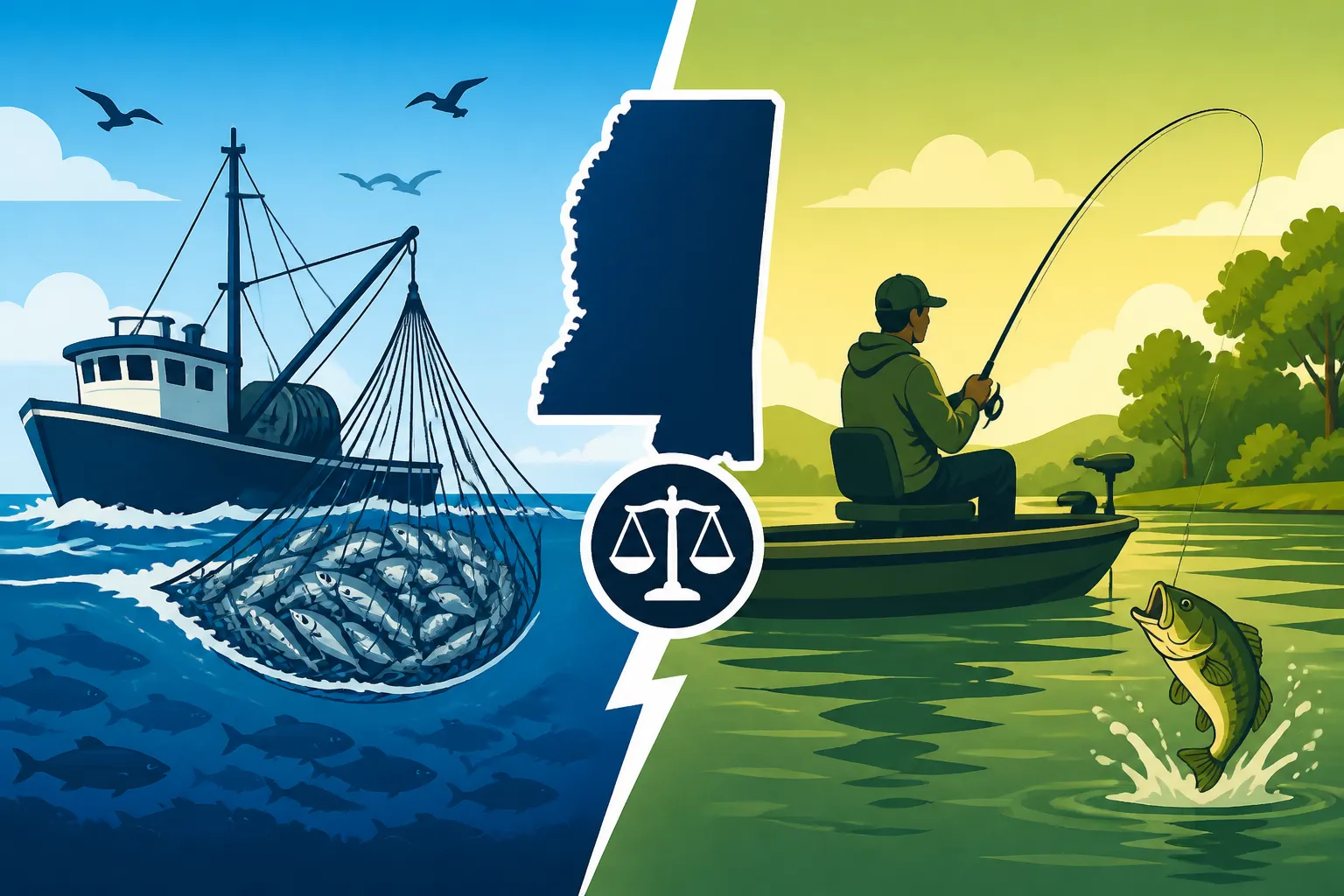
Mississippi Commercial vs Recreational Fishing Rules
Navigating the world of fishing regulations in Mississippi can feel like trying to untangle a particularly stubborn fishing knot, especially when you're trying to figure out if what you're doing is considered "recreational" or "commercial." It's a common source of confusion, and frankly, the rules aren't always laid out in the clearest, most straightforward way. This comprehensive guide is here to cut through that complexity, clearly breaking down the distinct differences between Mississippi's commercial and recreational fishing rules so you can cast your line with confidence and stay on the right side of the law.
Understanding the Fundamental Difference
At its heart, the distinction between commercial and recreational fishing in Mississippi boils down to intent and how the catch is used. Are you fishing for fun and to put dinner on your own table, or are you intending to sell your catch for profit? This core difference dictates everything from the type of license you need to the gear you can use and the limits on what you can harvest.
What Defines Recreational Fishing?
For the vast majority of anglers out there, what you're doing is considered recreational fishing. This type of fishing is all about personal enjoyment, sport, and sustenance for yourself, your family, or your friends. If you're heading out to Ross Barnett Reservoir for a day of bass fishing, spending a quiet morning on Grenada Lake chasing crappie, or even dropping a line off a Gulf Coast pier, you're a recreational angler.
The key characteristic here is that any fish you catch are intended for personal consumption or gifting, never for sale. You might share your bounty with neighbors or bring some fillets to a family gathering, but you cannot legally sell them to a restaurant, a seafood market, or directly to other consumers. This focus on personal use means the regulations are designed to provide access for individual enjoyment while still managing fish populations sustainably for everyone. You'll find a complete overview in our Mississippi Fishing License Guide, which is a must-read for anyone new to fishing in the Magnolia State.
What Defines Commercial Fishing?
Commercial fishing, on the other hand, is a business venture. It involves harvesting fish, shellfish, or other aquatic resources with the explicit intent of selling them for profit. This isn't your weekend hobby; it's often a full-time profession requiring significant investment in specialized vessels, gear, and an intimate knowledge of the market and regulations.
Commercial operations range from large shrimping trawlers working the Gulf of Mexico to individual crabbers setting traps in Mississippi's bays or commercial catfish farmers managing ponds. The regulations for commercial fishing are far more stringent, complex, and carry a much higher level of scrutiny due to the significant impact these activities can have on fish stocks. If you're even contemplating selling any part of your catch, you need to understand that you're crossing into the commercial realm, which brings with it a whole new set of legal obligations. For those interested in the rigorous requirements, our guide to Mississippi Commercial Fishing License Requirements delves into the specifics.
Licensing and Permitting Requirements
One of the most immediate and significant differences between recreational and commercial fishing is the labyrinth of licenses and permits required. It's not just a matter of having a license; it's about having the right license for your specific activity.
Recreational Fishing Licenses
For recreational anglers, obtaining a license is relatively straightforward, though there are variations depending on your residency and the type of water you plan to fish. Mississippi residents generally need an annual freshwater fishing license to fish in public waters. If you're planning a trip to the Mississippi Gulf Coast, you'll also need a saltwater fishing license, which can often be purchased as an add-on or a separate permit.
Non-residents have their own set of options, including annual licenses or shorter-term permits like 1-day or 3-day options, perfect for tourists visiting for a quick fishing getaway. Age exemptions also apply; for example, residents 65 and older might qualify for a Senior Exempt License, and children typically don't need a license below a certain age. You can usually purchase these licenses online through the Mississippi Department of Wildlife, Fisheries, and Parks (MDWFP) website, or in person at various local retailers across the state, including bait shops and sporting goods stores. While you can't buy the license itself on Amazon, you can certainly pick up all your essential fishing gear there, from rods and reels to tackle boxes and comfortable fishing chairs. If you need a step-by-step walkthrough, check out our guide on How to Get a Mississippi Fishing License, and for visitors, the Mississippi Nonresident Fishing License Guide is incredibly helpful.
Commercial Fishing Licenses and Permits
This is where things get considerably more complicated and expensive. Commercial fishing requires not just a general commercial fishing license but often a suite of specialized permits, endorsements, and sometimes even federal licenses, especially when operating in federal waters or targeting federally managed species in the Gulf.
For example, a commercial fisherman might need a specific license for using gill nets, another for crab traps, and yet another for oyster tonging. These licenses are tied to specific gear types and methods, and they often come with much higher fees than recreational licenses. The Mississippi Department of Marine Resources (DMR) manages most saltwater commercial fishing activities, while MDWFP handles some freshwater commercial operations. Beyond state licenses, federally managed fisheries, such as those for Gulf shrimp or certain reef fish, will require additional federal permits issued by the National Oceanic and Atmospheric Administration (NOAA) Fisheries. The cost of these commercial licenses can be substantial, reflecting the professional nature of the activity and the intensive management required for sustainable commercial harvests. For a detailed breakdown of costs, you can explore Mississippi Fishing License Costs.
Gear, Methods, and Equipment
The tools you use to catch fish are also heavily regulated, with strict divisions between what recreational anglers and commercial operators are allowed to employ. These regulations are in place to prevent overfishing and ensure fair access to the resource.
Recreational Gear Restrictions
As a recreational angler, you're generally limited to traditional rod and reel fishing. In Mississippi freshwater, you're typically allowed to use no more than two or three rods and reels at a time, depending on specific lake rules or statewide regulations. You can also use cast nets, but usually only for catching non-game baitfish like shad or minnows, and with specific size restrictions on the net itself.
Other methods like trotlines and jug lines are permitted recreationally, but they come with very specific limitations. For instance, a recreational trotline will have a maximum number of hooks allowed, and jug lines will also have a hook limit and must be attended regularly and clearly marked with the angler's license number. The goal is to ensure that recreational methods don't inadvertently become highly efficient, large-scale harvesting operations that could deplete fish populations. Understanding these limits is crucial, and you can learn more about specific regulations in our article on Mississippi Fishing Rules for Multiple Rods.
Commercial Gear Regulations
Commercial fishing gear is designed for efficiency and volume, and as such, it's subject to extensive regulation. This includes restrictions on the type of gear, its size, the times it can be used, and even the areas where it can be deployed.
For example, gill nets, purse seines, trawls (used for shrimp and finfish), and large numbers of crab traps are all commercial-grade equipment. These tools are subject to strict rules regarding mesh size (to allow smaller, immature fish to escape), length of nets, and deployment depths. Many commercial fisheries also have specific "open" and "closed" seasons or areas to protect spawning fish or juvenile populations. For instance, shrimping seasons in the Gulf are carefully managed to coincide with the growth cycles of shrimp. Even highly specialized components for these operations, like marine electronics, GPS systems, or heavy-duty rigging, can be found on online marketplaces like Amazon for sourcing or replacement parts, though the permitted commercial gear itself is under strict regulatory control. The enforcement of these rules is vital to preventing overfishing and ensuring the long-term viability of commercial fisheries.
Catch Limits, Size Restrictions, and Seasons
The number and size of fish you can keep, along with when you can fish for certain species, are also significantly different between recreational and commercial fishing. These rules are the backbone of sustainable fisheries management.
Recreational Limits and Seasons
Recreational anglers must adhere to daily creel limits (the maximum number of fish you can keep in a 24-hour period) and minimum size limits for various species. For instance, there are specific daily limits for crappie, bass, and catfish, which can even vary by individual lake or body of water. Similarly, game fish like largemouth bass often have minimum length requirements, meaning you must release any fish shorter than the specified length. In saltwater, popular species like speckled trout and redfish also have strict slot limits (a range of acceptable sizes) and daily bag limits.
Season dates are also a factor, particularly for saltwater species like Red Snapper, where the season is often very short and announced annually based on federal quotas. These limits are in place to ensure that enough fish remain in the population to reproduce and sustain future fishing opportunities for everyone. Keeping track of these can be a challenge, which is why resources like Mississippi Fishing Creel and Size Limits and Mississippi Fishing Season Dates and Limits are so important for planning your trips.
Commercial Quotas and Reporting
Commercial fishing operates under a much more rigorous system of quotas and mandatory reporting. Instead of simple daily bag limits, commercial fisheries often have a "total allowable catch" (TAC) for an entire season or year, which might then be further divided into Individual Fishing Quotas (IFQs) assigned to individual vessels or permit holders.
These quotas are scientifically determined to prevent overfishing on a large scale. Commercial fishermen are usually required to meticulously document every pound of fish caught, often through detailed logbooks or electronic reporting systems. This data is critical for fishery managers to monitor stock health, adjust quotas, and enforce regulations. For example, the Gulf Red Snapper fishery has very strict commercial quotas and reporting requirements, often involving onboard observers for verification, making a recreational trip to catch Red Snapper, which also has highly regulated seasons, a completely different experience. You can find more specific information on popular regulated species, such as the Mississippi Red Snapper Season Dates, in dedicated guides. The strictness of these regulations reflects the immense responsibility commercial fishing takes on in harvesting public resources for private profit.
Enforcement, Penalties, and Conservation
Breaking fishing rules, whether recreational or commercial, carries consequences. However, the severity of these penalties reflects the differing impacts each type of fishing has on the resource. Both types of licenses and their associated fees play a vital role in statewide conservation efforts.
Consequences for Violating Recreational Rules
For recreational anglers, violating fishing regulations typically results in fines, which can range from a few hundred dollars for minor infractions to potentially higher amounts for more serious offenses. In addition to monetary penalties, offenders may have their fishing gear confiscated (rods, reels, boats, etc.) and could face suspension or revocation of their fishing license. The Mississippi Department of Wildlife, Fisheries, and Parks (MDWFP) patrols freshwater lakes and rivers, while the Mississippi Department of Marine Resources (DMR) enforces saltwater regulations.
Ignorance of the law is generally not considered an excuse, so understanding the rules before you go fishing is paramount. Imagine heading out for a relaxing day, only to face a penalty because you didn't realize the size limit on the crappie you kept. It's a frustrating but preventable situation. To avoid such scenarios, familiarize yourself with what happens if you fish without the proper credentials, outlined in What Happens If You Fish Without a License in Mississippi?, and understand the range of Mississippi Fishing License Penalties and Fines.
Penalties for Commercial Fishing Violations
Given the potential for large-scale impact and the profit motive involved, penalties for commercial fishing violations are significantly more severe. These can include enormous fines, reaching into the thousands or even tens of thousands of dollars. Beyond monetary penalties, commercial operators face the seizure of their vessel, gear, and catch, which can represent a crippling financial loss for a business.
Repeated or egregious violations can lead to the permanent revocation of commercial fishing permits, effectively ending a person's ability to operate in the industry. In some cases, severe commercial fishing violations can even lead to criminal charges. The strictness of these penalties underscores the state's commitment to protecting its marine and freshwater resources from exploitation and ensuring the long-term sustainability of both commercial and recreational fisheries.
How License Fees Contribute to Conservation
It’s important to remember that whether you're buying a simple recreational license or a complex suite of commercial permits, those fees are not just a hurdle; they're an investment in the future of Mississippi fishing. Both recreational and commercial license fees are vital sources of funding for the MDWFP and DMR.
These funds are critical for a wide range of conservation and management programs. This includes scientific research into fish populations, habitat restoration projects, fish stocking programs in public waters, public access improvements (like boat ramps and piers), and, of course, the enforcement efforts that keep everyone playing by the rules. Essentially, every license purchased contributes directly to ensuring that Mississippi's rich fishing heritage remains vibrant for generations to come. For a deeper dive into the allocation of these funds, our article on How Mississippi Fishing License Fees Are Used provides a detailed overview.
Key Differences at a Glance
To summarize the intricate distinctions, here’s a quick reference table outlining the primary differences between recreational and commercial fishing in Mississippi.
| Feature | Recreational Fishing | Commercial Fishing |
|---|---|---|
| Intent | Personal enjoyment, sport, food for self/family | Profit, sale of catch |
| Licenses | Basic annual/short-term freshwater & saltwater licenses | Specialized commercial licenses, gear permits, federal permits |
| Gear | Rod & reel (limited number), cast nets for bait, limited trotlines/jug lines | Large-scale nets (gill, trawl), longlines, numerous traps, specialized equipment |
| Catch Use | Personal consumption, gifting (never for sale) | Sold for profit to markets, restaurants, processors |
| Limits | Daily creel limits, minimum/slot size limits, specific seasons | Quotas (e.g., IFQs, TAC), strict weigh-in requirements, complex reporting |
| Reporting | Generally no mandatory reporting of individual catches | Mandatory logbooks, electronic reporting, dealer reporting |
| Penalties | Fines, gear confiscation, license suspension | Large fines, vessel/gear seizure, permit revocation, criminal charges |
| Regulatory Bodies | MDWFP (freshwater), DMR (saltwater) | MDWFP (some freshwater), DMR (saltwater), NOAA Fisheries (federal) |
Disclaimer
The information provided in this guide is for general informational purposes only and does not constitute legal advice. Fishing regulations in Mississippi can change, and it is the angler's responsibility to consult the most current regulations published by the Mississippi Department of Wildlife, Fisheries, and Parks (MDWFP) and the Mississippi Department of Marine Resources (DMR) before engaging in any fishing activity.