Mississippi Cobia Fishing Regulations
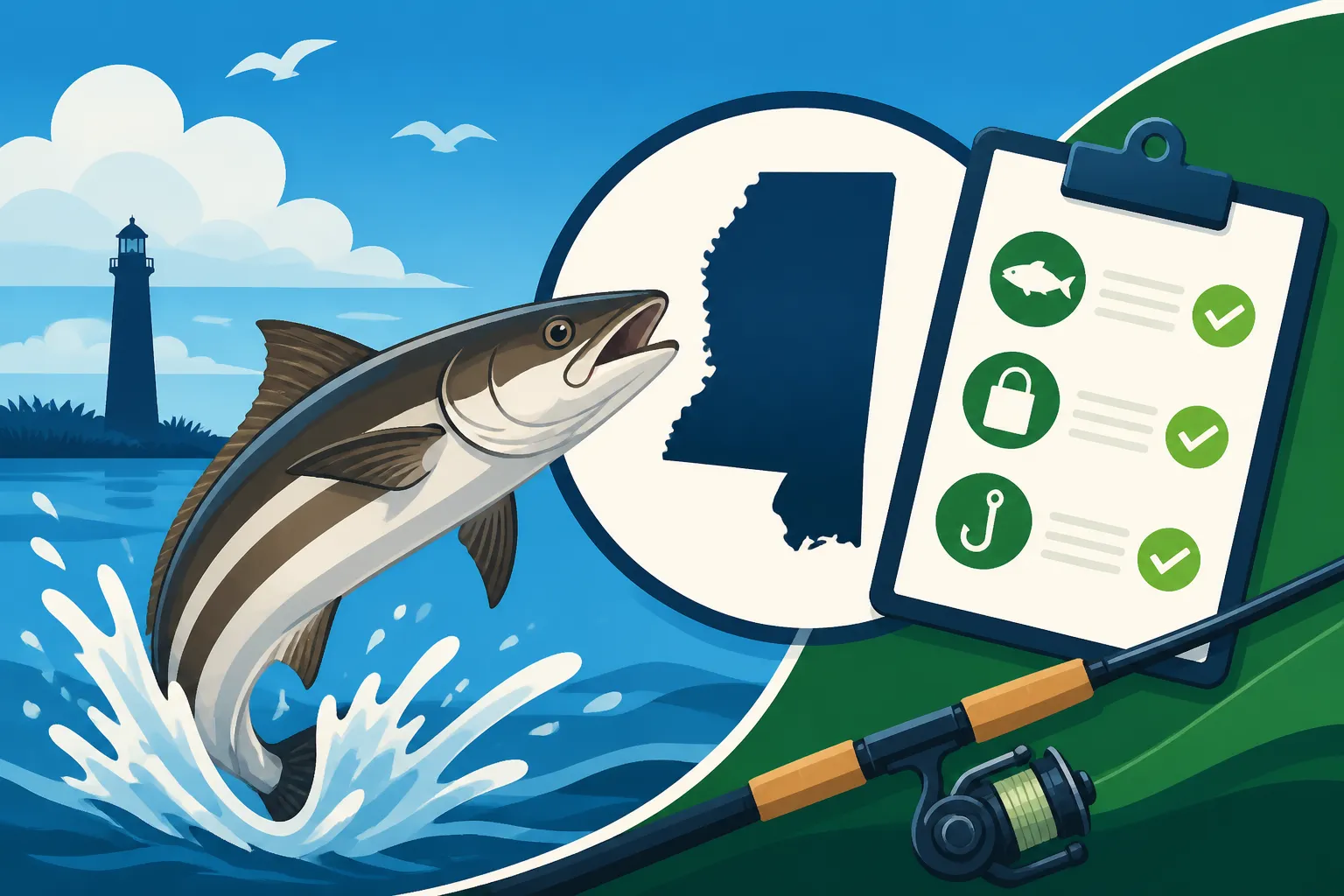
There’s nothing quite like the thrill of hooking into a powerful cobia off the Mississippi Gulf Coast. These "brown bombers" put up an incredible fight and make for a delicious meal, but navigating the ever-changing rules can feel like trying to land a fish with a broken reel. This comprehensive guide is here to untangle the complexities of Mississippi cobia fishing regulations, ensuring you're fully informed and ready for a legal and successful day on the water.
Understanding Mississippi's Cobia Fishing Regulations
For many anglers, the excitement of chasing cobia can quickly turn to confusion when trying to decipher the specific rules that govern their pursuit. It’s not just about knowing where to find them or what bait to use; it's crucially about understanding the legal framework set by the Mississippi Department of Wildlife, Fisheries, and Parks (MDWFP) and federal agencies. Ignoring these regulations isn't just a risk for your wallet, it impacts the health of the cobia population we all cherish.
Why Specific Regulations for Cobia?
You might wonder why cobia, in particular, have such specific and sometimes intricate regulations. It’s not arbitrary; these rules are carefully crafted based on scientific data regarding cobia populations, their spawning habits, migration patterns, and overall health. Cobia are migratory, traveling long distances, which means their management often involves cooperation between multiple states and even federal authorities. This helps prevent overfishing and ensures there are plenty of cobia for future generations to enjoy. Without these targeted regulations, unchecked harvesting could quickly deplete stocks, leading to stricter limits or even closures, which none of us want. It’s a delicate balance between recreational opportunity and conservation, and our compliance is a huge part of that effort.
Think about it: a single female cobia can lay millions of eggs in a spawning season. If too many of the mature, breeding-size fish are removed, it drastically impacts the next generation. These regulations aim to protect those vital reproductive stages and allow enough fish to reach maturity. This is why you'll often see specific size and bag limits designed to let fish spawn at least once before being harvested.
Essential Regulations You Must Know: Size, Creel, Season
When it comes to cobia fishing in Mississippi, there are three main pillars of regulation you absolutely need to commit to memory: minimum size, daily bag (or creel) limit, and open season dates. These are the non-negotiables that will determine whether your catch is legal to keep. The rules can, and sometimes do, change, so always make it a habit to check the latest MDWFP regulations before heading out. A quick check can save you a significant headache down the line.
- Minimum Size Limit: This specifies the smallest length a cobia must be from the tip of its nose to the end of its tail (fork length or total length, depending on the species and regulation) to be legally harvested. Catching a cobia that falls below this limit means it must be immediately and carefully released.
- Daily Bag Limit (Creel Limit): This dictates the maximum number of cobia an individual angler can keep in a single day. This limit is crucial for controlling the total harvest and preventing any single angler from taking an excessive number of fish, especially during peak seasons.
- Open Season Dates: Cobia may only be caught and kept during specific times of the year. This protects them during critical periods like spawning, allowing them to reproduce undisturbed. Fishing outside of these dates, even if you release the fish, can sometimes still be considered a violation depending on specific seasonal closures.
It's a lot to keep track of, but understanding these three core regulations is your first line of defense against accidental violations. Always double-check with the latest "Mississippi Fishing Season Dates and Limits" to ensure you're current.
The Importance of Your Mississippi Saltwater Fishing License
Before you even think about casting a line for cobia, you absolutely must possess a valid Mississippi saltwater fishing license. This isn't just a formality; it's a legal requirement that supports the very fisheries you enjoy. The funds generated from license sales go directly back into conservation efforts, habitat restoration, fish stocking programs, and enforcement, all of which benefit the marine ecosystem and, by extension, your fishing experience.
You'd be surprised how many folks think they can skip this step, especially if they're only visiting or fishing from a pier. But if you're 16 years or older, and you're fishing in Mississippi's saltwater or marine waters, that license is non-negotiable. Whether you're targeting cobia, speckled trout, or redfish, the rules are the same. You can find comprehensive details in our guide on the "Mississippi Saltwater Fishing License Guide." Having your license readily available, either a physical copy or an electronic version on your phone, is crucial. Wildlife enforcement officers conduct routine checks, and being caught without one can result in fines and a ruined fishing trip. Think of it as your passport to the fishing grounds – you wouldn't travel internationally without one, so don't hit the water without your fishing license.
Moreover, if you’re fishing from a charter boat, it’s vital to confirm if the charter company provides a blanket license for their guests, or if individual licenses are still required. Often, for a small fee, some charters will cover the basic license for their clients, but it's always best practice to verify beforehand and consider obtaining your own if there’s any doubt. This small proactive step ensures you’re fully compliant and can focus on the fishing fun.
Navigating Cobia Size and Creel Limits
The size and creel limits for cobia are often the most frequently misunderstood aspects of the regulations, and honestly, it’s where many well-meaning anglers run into trouble. It's not enough to simply guess if your fish looks "big enough." Precision is key, and understanding why these numbers exist helps reinforce their importance. These limits are designed to allow enough cobia to reach reproductive maturity and contribute to the population before they become fair game for the dinner plate.
Minimum Size Requirements for Cobia
The current minimum size limit for cobia in Mississippi is generally 33 inches fork length. This is a critical number to remember. "Fork length" means you measure from the tip of the fish's nose to the fork in its tail, not the very tip of the longest tail fin. This specific measurement method is important because it provides a consistent and accurate way to gauge the fish's size, regardless of whether its tail fins are splayed or pinched.
Imagine you're out on the water, you've just landed a beautiful cobia, and you're buzzing with excitement. It's in that moment that you need to calmly and accurately measure your fish. If it's even a fraction under 33 inches fork length, it has to go back. This isn't just a suggestion; it's the law. Releasing undersized fish immediately minimizes stress and increases their chances of survival. Using a reliable measuring device is paramount – a flimsy tape measure or a guess just won't cut it when an enforcement officer pulls alongside. You can find sturdy, reliable measuring boards and tapes on platforms like Amazon, specifically designed for marine environments.
The reason for the 33-inch fork length is primarily biological. Research has shown that cobia typically reach reproductive maturity around this size. By allowing them to grow to this length, they've had at least one, if not several, opportunities to spawn, contributing to the continuation of the species. Harvesting fish before they've had a chance to reproduce can severely impact future generations, leading to smaller fish and fewer of them overall.
Daily Bag Limits for Cobia Anglers
Beyond the size, you also need to adhere to the daily bag limit. For cobia in Mississippi, the general rule is one cobia per person per day, with a vessel limit of six cobia per vessel per day, whichever comes first. This means that if you have six anglers on a boat, you can collectively keep six cobia. If you only have one angler, you can keep one. If you have four anglers, and they each catch one, but then a fifth angler catches a second one, you've hit the vessel limit of six. This "per person" and "per vessel" combined limit is common in many fisheries and is designed to distribute the harvest more equitably and prevent a single successful boat from decimating a localized population.
It's a common scenario: you and a couple of friends head out, and it's a banner day for cobia. You've each landed a fish, all well over the minimum size. But then your buddy hooks into another lunker. Even if it's a legal size, if you've already hit your combined boat limit of six fish, that fish has to go back, regardless of how much you might want to keep it. This is where communication among anglers on a boat becomes vital. Everyone needs to be aware of the collective catch to stay within legal bounds.
These limits are in place to ensure sustainability. Cobia are highly sought after, and without these caps on daily take, it would be far too easy for recreational pressure to have a significant negative impact on their numbers. The goal is to provide a reasonable opportunity for anglers to enjoy their catch while safeguarding the long-term health of the fishery. Always remember, the "Mississippi Fishing Creel and Size Limits" document is your go-to for the most current information across all species.
How to Measure Your Cobia Accurately
Measuring your cobia correctly is not a suggestion; it's a crucial part of legal compliance. Mis-measuring can lead to fines and the confiscation of your catch. For cobia, we're talking about fork length. Here’s a detailed, step-by-step approach to ensure you get it right every time:
- Retrieve Safely: Once you've landed your cobia, handle it with care to minimize stress. If you intend to release an undersized fish, work quickly and keep the fish in the water as much as possible.
- Lay Flat and Straight: Place the fish on a flat, stable measuring device. This could be a specialized fish ruler, a bump board, or even a sturdy tape measure clearly marked with inches. Ensure the fish is lying straight, not curved, which can shorten the apparent length.
- Nose to Fork: Gently push the tip of the fish's snout or lower jaw (whichever is more forward) against the 'bump' or the zero mark of your measuring device.
- Find the Fork: Extend the fish's tail so that the two lobes of the tail fin are as straight as possible. Read the measurement at the center of the "V" or "fork" of the tail. Do not measure to the longest point of the upper or lower tail lobe.
- Read Clearly: Take a clear, unmistakable reading. If it's on the line, always round down to the nearest whole inch or fraction if the regulation specifies. For a 33-inch minimum, if it's 32 and 7/8 inches, it's not 33 inches.
- Quick Release (if undersized): If the fish is undersized, unhook it gently and release it headfirst back into the water immediately. Avoid excessive handling, especially if the fish has been out of the water for long.
Having a sturdy, clearly marked measuring device on your boat or in your tackle box is non-negotiable. Many anglers opt for a specialized fish ruler that mounts to the boat or a portable bump board, which are great for quick and accurate measurements. For example, you can easily find quality "fish measuring boards" on sites like Amazon that are waterproof and durable for saltwater use. Practicing this method even with legal fish helps build muscle memory for when you're under pressure.
Mississippi Cobia Fishing Regulations Summary
| Regulation Type | Detail | Important Notes |
|---|---|---|
| License | Valid Mississippi Saltwater Fishing License Required | Required for all anglers 16 years and older fishing saltwater. Purchase before fishing. |
| Minimum Size | 33 inches Fork Length | Measured from the tip of the jaw to the fork of the tail. Any fish under this size must be immediately and carefully released. This protects juvenile fish and allows them to mature and reproduce. |
| Daily Bag Limit | 1 cobia per person per day; 6 cobia per vessel per day (whichever comes first) | This means a single angler can keep one. A boat with multiple anglers cannot exceed six cobia total, even if individuals haven't reached their personal limit. Essential for controlling overall harvest pressure. |
| Season | Open Year-Round (unless otherwise announced) | Cobia generally have an open season in Mississippi waters. However, federal regulations for waters further offshore can sometimes differ, and emergency closures or adjustments can occur. Always check the latest MDWFP regulations before your trip. This ensures you're aware of any potential changes to the "Mississippi Fishing Season Dates and Limits". |
| Method | Hook and Line (recreational) | Typical recreational fishing methods apply. Spear fishing for cobia also has specific rules. Always adhere to ethical fishing practices to minimize harm to released fish. "Mississippi Fishing Regulations Explained" provides more general guidelines on legal fishing methods. |
Note: Regulations are subject to change. Always consult the official MDWFP guidelines prior to your trip for the most current information.
Cobia Season and Area Restrictions in Mississippi
The migratory nature of cobia means that their presence, and therefore the specific rules governing their capture, can fluctuate throughout the year and across different water bodies. Understanding the "when" and "where" is just as important as knowing the "how much" and "how big." Mississippi’s unique position on the Gulf Coast means we often deal with both state and federal rules.
Identifying the Cobia Fishing Season in Mississippi
For recreational anglers in Mississippi, cobia fishing is generally open year-round. This is fantastic news for those who love to target these hard-fighting fish, as it offers a wide window of opportunity. However, and this is a big "however," it's absolutely crucial to remember that regulations can change. While traditionally open, economic analyses, stock assessments, or federal actions could lead to emergency closures or modifications. Therefore, a quick check of the Mississippi Department of Marine Resources (MDMR) and MDWFP websites for the latest updates is always a smart move before you head out. These agencies are the authoritative source for "Mississippi Fishing Regulations Explained" in detail.
Typically, the best time to target cobia in Mississippi is during their spring and fall migrations. As the water warms in spring, around April and May, cobia move closer to shore and around structures like buoys, jetties, and wrecks. They can be found through the summer, but as the water cools again in the fall, they often make another push through the area before heading to deeper, warmer waters for the winter. So, while the season might technically be open year-round, you'll find the most consistent action during those peak migratory periods. This also ties into the wider topic of "When Cobia Migrate Past the Mississippi Coast."
Even if the season remains open, being aware of these natural peaks helps you plan your trips for the highest chances of success. Fishing during the leaner months means you'll still be legal to harvest, but you might spend a lot more time searching for a bite.
Federal vs. State Waters: What You Need to Know
This is where things can get a bit tricky for Gulf Coast anglers. Mississippi's state waters extend out to three nautical miles from shore. Beyond that, you enter federal waters, managed by the Gulf of Mexico Fishery Management Council (GMFMC) and enforced by NOAA Fisheries. The key takeaway here is that regulations, especially for highly migratory species like cobia, can differ between state and federal jurisdictions. While Mississippi often aligns its state regulations with federal guidelines for consistency, it's not always a guarantee.
If you're fishing close to shore, say around the Biloxi Bay or near the barrier islands, you're likely in state waters. However, if you're venturing further offshore to deeper wrecks, reefs, or oil rigs, you're almost certainly in federal waters. This distinction is critical because federal regulations often have different size limits, bag limits, or even season dates compared to state waters, especially for species under federal management plans. For example, some years have seen stricter federal limits or different season openings for certain species in federal waters. You absolutely need to know where you are fishing and what the prevailing regulations are for that specific area. Many GPS units and marine charts will indicate the boundary between state and federal waters, making it easier to stay compliant.
It's a huge pain when you've planned a trip, loaded the boat, and driven to the coast, only to realize the rules for your intended fishing grounds are different from what you expected. Always consult both MDWFP (for state) and NOAA Fisheries (for federal) resources before a trip that takes you beyond sight of land. This preparedness ensures you won't have to make a tough decision about keeping a fish you're unsure about. You might also want to consult a general "Mississippi Fishing Regulations Explained" guide for context.
Protecting Spawning Cobia
While Mississippi's cobia season is generally open, it's worth taking a moment to understand the biological importance of protecting spawning fish, even if there isn't a specific closed season for it. Cobia typically spawn offshore in large aggregations, often near structures, during the warmer months, roughly from April to September, with peaks in late spring/early summer. During this time, they are concentrated and potentially more vulnerable to fishing pressure.
Even without a formal spawning closure, responsible anglers often choose to adjust their practices during peak spawning times. This might involve opting for catch-and-release more frequently, especially for the largest females that are prime breeders. Protecting these large, reproductively active fish is vital for the health and abundance of the future cobia population. It's an act of stewardship that goes beyond just legal compliance.
Think about it this way: a single female cobia can carry millions of eggs. Removing that one fish, particularly during her prime spawning years, has a far greater impact than removing a smaller, non-spawning fish. While the MDWFP and federal agencies set the minimum legal requirements, true conservation often involves making personal choices that go above and beyond. This is part of being a well-informed angler and contributing to the longevity of the resource.
Responsible Cobia Fishing Practices and Gear
Catching a cobia is an experience that most anglers won't soon forget. These fish are powerful, unpredictable, and can put up a fight that tests both your tackle and your resolve. But landing the fish is only half the battle; knowing how to handle it responsibly, whether you intend to keep it or release it, is crucial. Plus, having the right gear can make all the difference in minimizing stress on the fish and maximizing your chances of success.
Best Practices for Catch-and-Release
Sometimes, you'll catch a cobia that's undersized, or perhaps you've already hit your limit, or maybe you just want to let that beautiful fish go. In any of these scenarios, proper catch-and-release techniques are paramount for the fish's survival. A poorly handled release can be just as fatal as keeping the fish.
- Minimize Fight Time: Use appropriate tackle that allows you to land the fish relatively quickly. A prolonged fight can exhaust the fish, making it less likely to survive release.
- Keep it Wet: Whenever possible, keep the fish in the water while unhooking it. If you must bring it aboard, do so briefly and lay it gently on a wet surface. Avoid dragging it over rough surfaces.
- Handle with Care: If you need to handle the fish, use wet hands or a wet towel to protect its slime coat, which is vital for disease resistance. Support its body horizontally; never hold a large fish vertically by its jaw alone, as this can damage internal organs.
- Quick Hook Removal: Use dehooking tools (pliers, jaw spreaders, or specialized dehookers) to remove the hook quickly. If the fish is deeply hooked, especially in the gills or throat, cut the line as close to the hook as possible. Attempting to dig out a deep hook often causes more harm than good. Circle hooks are excellent for cobia fishing as they significantly reduce gut hooking.
- Revive if Needed: If the fish seems sluggish, hold it upright in the water and gently move it back and forth to force water over its gills until it regains strength and can swim away on its own. Watch it swim off to ensure it doesn't just float away.
- Avoid Netting if Possible: Large landing nets can strip the fish of its protective slime coat and damage fins. A lip gripper can be a better option for control if you plan to release.
By following these steps, you greatly increase the chances that the cobia you release will survive to fight another day, or perhaps be caught again when it's a legal size. It's a fundamental part of sustainable angling.
Recommended Gear and Tackle for Cobia Fishing
Cobia are big, strong fish, so you need gear that can stand up to their power. This isn't the time to bring your ultralight crappie setup. Investing in the right rod, reel, line, and terminal tackle is crucial for both effectively landing the fish and for ensuring a smooth release if necessary.
- Rods: Look for stout spinning or conventional rods in the 7 to 8-foot range, with a medium-heavy to heavy power rating. You need backbone to turn these powerful fish away from structure.
- Reels: Matching the rod, a quality spinning reel in the 5000-8000 size range or a conventional reel capable of holding 200+ yards of heavy line is ideal. Brands like Shimano, Penn, or Daiwa offer excellent options for saltwater applications.
- Line: Braided line is a popular choice for cobia due to its strength-to-diameter ratio and lack of stretch, which provides excellent sensitivity. Opt for 50-80 lb test braid. You'll want to connect a 50-80 lb fluorocarbon leader of about 3-5 feet with a strong knot like an FG knot or an Albright.
- Hooks: Circle hooks are highly recommended, especially when fishing with live bait, as they tend to hook fish in the corner of the mouth, making for easier and safer releases. Sizes 7/0 to 9/0 are common.
- Baits: Live bait is king for cobia. Eels, pinfish, croaker, or large shrimp are all excellent choices. Artificial lures like large jigs, bucktails, or soft plastic swimbaits can also be effective, especially when sight fishing.
- Essential Accessories: Don't forget your measuring device, as discussed earlier. A good pair of long-nose pliers or a dehooker is essential for quick hook removal. A sturdy pair of fish-grips or a lip gaff can aid in control, but always use with caution, especially if releasing. A reliable cooler, possibly a Yeti or an RTIC, for keeping your legal catch fresh is also key. Many of these items, from circle hooks to durable measuring tapes, can be conveniently found and ordered through online retailers like Amazon.
Having the right gear not only makes the fight more manageable and enjoyable but also ensures you're prepared for proper handling and measurement once the fish is alongside the boat. This thorough preparation will enhance your fishing experience and help you stay within the "Mississippi Fishing Regulations Explained" guidelines.
Reporting Your Catch and MDWFP's Role
While there isn't typically a mandatory reporting system for individual recreational cobia catches in Mississippi, it's important to understand how fisheries management agencies gather data, and how you can contribute. The MDWFP, along with federal agencies like NOAA Fisheries, relies heavily on data to monitor fish populations and make informed decisions about regulations.
They gather information through various methods:
- Creel Surveys: On-site interviews with anglers at boat ramps and marinas are a primary way to collect data on catch rates, effort, and species caught.
- Fishery-Dependent Data: Commercial fishing harvests often have mandatory reporting requirements.
- Scientific Research: MDWFP biologists conduct their own research, including tagging studies and stock assessments.
While you might not have to call in every cobia you catch, participating willingly in creel surveys if approached by an MDWFP official is a huge help. Providing accurate information on your catch, even if it's "zero," contributes to a larger picture that helps maintain healthy fisheries. This collaboration between anglers and management agencies is crucial for developing sound "Mississippi Fishing Season Dates and Limits" and other regulations. Your cooperation ensures that future regulations are based on the best available science, benefiting everyone who loves to fish our beautiful Mississippi waters.
Disclaimer
Please remember that fishing regulations are subject to change. While this guide provides comprehensive information based on current knowledge, it is essential to always consult the official Mississippi Department of Wildlife, Fisheries, and Parks (MDWFP) and relevant federal agencies (like NOAA Fisheries for federal waters) websites or publications for the most up-to-date and accurate regulations before any fishing trip. Compliance with all applicable laws is the responsibility of the individual angler.