Mississippi Non-Game Fish Rules
Navigating the world of fishing regulations can feel like trying to untangle a particularly stubborn fishing line, especially when it comes to species that don't quite fit the typical "game fish" mold. Many folks head out to the water, whether it's the mighty Mississippi River or a quiet local lake, and encounter fish like gar, buffalo, or various carp species, often wondering, "Can I keep this? How can I catch it? Do the same rules apply?" This guide is here to clear up that confusion, offering a comprehensive look at Mississippi's non-game fish rules so you can enjoy these unique angling opportunities with confidence and stay on the right side of the law.
What Exactly Are Non-Game Fish in Mississippi?
When we talk about fishing, most of us immediately think of bass, crappie, or perhaps catfish – the usual suspects targeted for sport and table fare. But beneath the surface, Mississippi's waters teem with a diverse array of aquatic life, including many species categorized as "non-game fish." This classification isn't meant to diminish their value or the excitement they can offer anglers; rather, it often reflects their ecological role, traditional harvesting methods, or simply their lesser-known status in the recreational fishing world. Understanding this distinction is the first step to legally and ethically pursuing these often-overlooked catches.
The Legal Definition and Common Misconceptions
In Mississippi, the official definition of non-game fish generally encompasses all freshwater fish species that are not specifically designated as game fish by the Mississippi Department of Wildlife, Fisheries, and Parks (MDWFP). Game fish typically include popular sport species like black bass (largemouth, smallmouth, spotted), crappie (white and black), bream (bluegill, redear sunfish, etc.), white bass, striped bass, hybrid striped bass, and, to some extent, even some catfish when caught by traditional rod and reel. The non-game category is therefore quite broad, covering everything from the prehistoric-looking Alligator Gar to various carp species, buffalo, drum, and bowfin.
A common misconception is that "non-game" means "unimportant" or "unregulated." This couldn't be further from the truth. While some non-game species might not have the same stringent size and creel limits as, say, largemouth bass, they absolutely have rules governing their harvest. The methods used to catch them, the seasons in which they can be taken, and even where you can fish for them are all subject to specific regulations. For example, while you might not need to worry about a specific "non-game fish season," you definitely need to understand the rules if you plan on using specialized gear like trotlines or engaging in activities like noodling. It's crucial not to assume a lack of explicit "game fish" rules means a free-for-all; always check the specific regulations for the species and method you intend to use.
Why Separate Rules Exist
The existence of separate rules for non-game fish stems from a variety of factors, primarily concerning conservation, species management, and historical fishing practices. For many non-game species, their populations are robust and not typically threatened by recreational angling with conventional gear. However, some, like the Paddlefish, are considered species of special concern or are even protected due to their unique life cycles, habitat needs, or historical overharvesting, necessitating very strict rules.
Furthermore, many non-game species are traditionally harvested using methods that are less common for game fish, such as bowfishing, trotlining, jug fishing, or noodling. These methods are highly effective but can also be non-selective if not properly managed, potentially impacting other aquatic life or creating conflicts with other water users. Therefore, separate regulations are put in place to ensure these unique fishing experiences can continue sustainably without jeopardizing fish populations or disrupting the ecosystem. These rules also help manage interactions between different angler groups – for instance, a trotline fisherman and a bass angler might require different safety and access considerations. It's all about balancing diverse interests and ensuring healthy fisheries for everyone.
Common Non-Game Fish You'll Encounter
Mississippi's waters are rich with non-game fish, many of which offer fantastic angling opportunities and are surprisingly delicious on the table. Knowing what you're likely to catch and what makes each species unique will enhance your fishing experience. From ancient river monsters to bottom-dwelling giants, there's a lot to discover beyond the typical "sport fish."
Gar Species
The gar are truly fascinating, often described as living fossils due to their ancient appearance and armored scales. Mississippi is home to several species, each with its own quirks:
- Alligator Gar: This is the undisputed heavyweight, capable of growing to immense sizes. They are powerful predators and incredibly challenging to land. Many anglers specifically target these giants for the thrill of the fight. Due to their size and impressive strength, specialized gear is often required, and catching one is a true test of skill. While regulated, Alligator Gar populations are generally healthy, though specific rules for harvesting them exist to ensure their sustainability, especially concerning size limits and harvest tags. You can learn more about these impressive creatures in our guide to Alligator Gar Fishing in Mississippi.
- Longnose Gar: More common and widespread than their larger cousins, Longnose Gar are identifiable by their long, slender snouts. They provide an excellent fight on lighter tackle and are often encountered in slower-moving rivers and backwater areas. While not as massive as Alligator Gar, they still present a formidable challenge and are frequently targeted by bowfishermen.
- Spotted Gar: Characterized by distinctive spots on their bodies and fins, Spotted Gar are typically smaller than Longnose Gar and prefer vegetated areas. They are another common sight for anglers and offer a good fight, often biting on a variety of baits and lures.
While many gar are caught incidentally, more and more anglers are specifically targeting them, appreciating their unique fighting style and impressive presence. It's important to note that while they are non-game fish, their tough scales and sharp teeth require careful handling.
Catfish Varieties
While Channel, Blue, and Flathead Catfish are highly prized game fish when caught by traditional rod and reel, their classification shifts somewhat when discussing certain "non-game" harvest methods. This distinction is crucial for understanding Mississippi's non-game fish rules.
- Blue Catfish, Channel Catfish, and Flathead Catfish: These three are the giants of Mississippi's catfish world. They are highly sought after for their fighting ability and delicious meat. When caught by standard angling methods (rod and reel), they fall under game fish regulations, with specific creel and size limits. However, they are also the primary targets for methods like trotlining, jug fishing, and noodling – techniques often associated with non-game fishing. The beauty of Mississippi is that these methods are perfectly legal for catfish, but they come with their own set of regulations on gear, placement, and identification. Understanding Mississippi Catfish Regulations is key, especially when using these non-traditional approaches. These fish thrive in many of Mississippi's large rivers, like the Mississippi River itself, and numerous reservoirs, offering incredible opportunities for anglers.
- Context for Non-Game Methods: The reason these beloved catfish appear in both categories is the method of capture. When you're running a trotline or checking your jugs, you're engaging in a form of passive fishing that is traditionally associated with harvesting non-game species, even if the target (catfish) is also a game fish by other means. This dual classification emphasizes that it's not just what you catch, but how you catch it, that determines which rules apply. For those looking to set up their gear, a reliable fishing line designed for heavy loads is a must, and you can find excellent options on Amazon for all your trotline and jug fishing needs.
Buffalo and Carp Species
Buffalo and carp might not always get the glamour shots, but they are incredibly important ecologically and offer unique angling challenges. They are generally bottom feeders and can grow quite large, providing a powerful fight.
- Bigmouth Buffalo and Smallmouth Buffalo: These native species are often confused with carp but are distinct. They are filter feeders (Bigmouth) or bottom feeders (Smallmouth) that can reach impressive sizes, often exceeding 50 pounds. They are highly valued by many anglers, particularly those who enjoy fishing with dough baits or targeting large, powerful freshwater fish. They are very strong fighters, making them a fun catch, and their populations are generally robust. You might find them in slow-moving rivers, backwaters, and even many of the larger reservoirs. For a deeper dive, check out our guide on Buffalo Fish Identification and Where They Live.
- Common Carp: An introduced species, Common Carp are found throughout Mississippi's freshwater systems. They are known for their resilience and ability to thrive in a wide range of habitats, from murky rivers to clearer lakes. While often seen as a nuisance by some, many anglers specifically target carp for their size and strong fight. They respond well to corn, dough balls, and other natural baits.
- Asian Carp (Silver Carp, Bighead Carp, Black Carp, Grass Carp): These are the notorious invasive species that have become a major concern in the Mississippi River system. Silver Carp, in particular, are known for their habit of jumping high out of the water when startled, which can be dangerous for boaters. Bighead Carp are also prolific filter feeders that compete with native species for food. While their presence is problematic, MDWFP encourages their harvest as a means of control. There are generally no bag or size limits on Asian carp, and they are often targeted by bowfishermen as a management tool.
Other Interesting Non-Game Fish
Beyond the main categories, Mississippi's waters hide a few other intriguing non-game species:
- Bowfin (Grinnel): Another ancient-looking fish with powerful jaws and a distinctive dorsal fin, the Bowfin is a tenacious fighter. They are predatory and found in sluggish waters, often with heavy vegetation. While not typically sought after for food, they offer an incredible battle on the line. Learn more about targeting these feisty fish in our Bowfin (Grinnel) Fishing Tips guide.
- Freshwater Drum: Also known as Gaspergou, Freshwater Drum are widespread bottom feeders that produce a unique drumming sound with their swim bladder. They are strong fighters and can be caught on a variety of baits. While often overlooked, they are considered excellent table fare by many.
- Paddlefish (Spoonbill): These magnificent, filter-feeding fish are a true spectacle. With their elongated, paddle-like snouts, they are one of the most unique species in Mississippi. Due to their specialized feeding habits (filter-feeding plankton), they are typically caught by snagging rather than traditional bait fishing. However, Paddlefish are a species of special concern, and their harvest is highly regulated, often with very limited seasons, specific daily limits, and sometimes even a mandatory reporting requirement. It's crucial to consult the MDWFP regulations carefully before attempting to harvest them. Our Paddlefish (Spoonbill) in Mississippi Rivers guide offers more detailed information.
Legal Methods for Harvesting Non-Game Fish
Fishing for non-game species often involves a broader array of techniques than what you might use for bass or crappie. These methods are traditional, effective, and perfectly legal in Mississippi, provided you adhere to the specific rules and regulations. It’s about knowing your gear, understanding the local laws, and respecting the environment.
Traditional Rod and Reel vs. Specialized Gear
For many non-game fish, a standard rod and reel setup works just fine. You can catch gar, drum, carp, and even smaller buffalo on conventional tackle using appropriate baits and lures. The beauty here is the versatility; if you're out targeting catfish with a rod and reel, and a large buffalo takes your bait, it's a bonus! However, for specific non-game species or when you're looking to harvest in higher quantities or target truly massive fish, specialized gear becomes the preferred or sometimes mandatory method.
For example, a conventional fishing rod from a brand like Daiwa or Penn, loaded with heavy monofilament or braided line, might be sufficient for a 10-pound gar. But if you're pursuing a 100-pound Alligator Gar, you'll want much heavier gear – perhaps a specialized heavy-action rod and a large conventional reel, along with a stout leader. Similarly, while you can catch a carp on a rod and reel, many choose to target them with bowfishing equipment for a different kind of challenge. The key is to match your gear to the size of the fish and the method you intend to use, ensuring both safety and effectiveness.
Trotlines, Jugs, and Limblines
These methods are iconic for Southern fishing, deeply rooted in tradition, and are exceptionally effective for harvesting catfish and other large non-game species. They involve setting multiple baited hooks that are then left to soak, checked periodically, and then retrieved.
- Trotlines: A trotline consists of a main line stretched across a body of water or anchored at both ends, with numerous shorter "stagings" or drop lines attached, each with a hook. Regulations for trotlines are detailed: they must be marked clearly with the owner's name and address or MDWFP customer number, hooks must be spaced appropriately (usually a minimum distance apart), and the maximum number of hooks is often specified. They are generally restricted to certain waters and depths. Setting them up requires careful consideration of navigation, as you don't want to create a hazard for other boaters. A sturdy main line and strong hooks are essential, and many anglers purchase their components from Amazon for convenience and variety.
- Jug Fishing: This method involves individual lines, each with one or more hooks, tied to free-floating buoys or "jugs." These jugs are typically plastic bottles or foam floats, allowing the current to carry them or for anglers to paddle around checking them. Like trotlines, jugs must be clearly marked with the owner's identification. There are usually limits on the number of jugs one person can deploy and the number of hooks per jug. It’s a highly active form of passive fishing, as you're constantly monitoring and chasing your jugs across the water.
- Limblines: Similar to jug lines, but a limber, natural limb (often from an overhanging tree) is used as the anchor point, allowing the fish to fight against the flexibility of the limb rather than a rigid attachment. Limblines also require proper identification and adherence to limits on hooks and placement. They are particularly effective in river systems where fish naturally move along the banks.
For a deep dive into the specifics of these techniques and their rules, our guide on Mississippi Trotline and Jug Fishing Rules is an invaluable resource. Always remember, proper identification of your gear is non-negotiable, and regularly checking your lines is not only good practice but often a legal requirement to minimize ghost fishing and ensure humane harvesting.
Noodling and Hand-Grabbing
Perhaps the most unique and certainly the most hands-on method of non-game fishing, noodling (or hand-grabbing) involves catching large catfish by hand, typically by reaching into underwater holes, hollow logs, or crevices where the fish are hiding. It's an adrenaline-pumping, intensely physical activity that has a strong cultural following in Mississippi.
- Rules and Safety: Noodling is legal in Mississippi, but it comes with specific regulations. Usually, it's restricted to certain times of the year, often during the catfish spawning season when the fish are more likely to be in these defensive hiding spots. There are also rules regarding equipment – you generally cannot use any tools or hooks, only your bare hands. Safety is paramount; submerged logs and holes can hide more than just catfish, so caution is always advised. It’s a method best learned from experienced practitioners.
- Cultural Significance: Noodling is more than just a fishing technique; it's a tradition passed down through generations. It fosters a deep connection to the water and a raw, primal interaction with nature. While it might seem intimidating, proponents swear by the thrill and the direct engagement with the fish. For those curious about the legality and nuances, our dedicated guide, Is Noodling Legal in Mississippi?, offers detailed information.
Bowfishing Regulations and Equipment
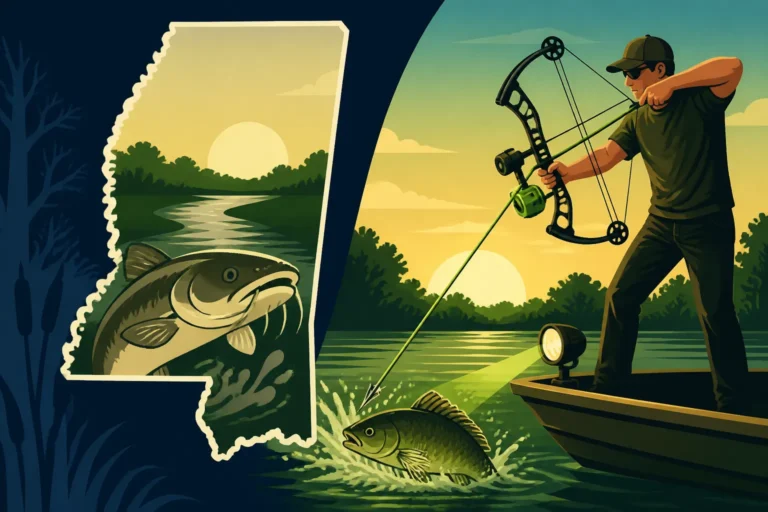
Bowfishing combines elements of archery and fishing, allowing anglers to shoot non-game fish with specialized arrows tethered to a line. It’s a popular and exciting way to target species like gar, carp, and buffalo.
- Permits and Areas: Bowfishing generally requires a valid Mississippi fishing license. While it’s legal for many non-game species, there might be specific waters where it’s prohibited or special restrictions apply. It's often conducted at night with powerful lights to illuminate the fish.
- Responsible Practices: Identifying your target species before you shoot is critical, as you don't want to mistakenly harvest a protected species. Bowfishing can be very effective, so responsible harvest practices are essential. Unlike rod-and-reel fishing where fish can be released unharmed, bowfishing typically results in harvest. Therefore, anglers must be prepared to utilize or properly dispose of their catch. A good quality bowfishing reel and strong line are essential, and you'll find a wide selection of specialized arrows and gear on Amazon. Dive deeper into the specifics with our Mississippi Bow Fishing Regulations guide.
Where to Find Non-Game Fish in Mississippi
Mississippi’s diverse aquatic landscape provides prime habitat for a wide variety of non-game fish. From meandering rivers to sprawling reservoirs, understanding where these species prefer to live will significantly increase your chances of a successful outing.
Rivers, Bayous, and Backwater Areas
These dynamic environments are arguably the best places to target many of Mississippi's non-game fish. The constant flow, diverse structure, and rich food sources create ideal conditions.
- The Mississippi River: The "Big Muddy" is a powerhouse for non-game fishing. Its vast expanse, numerous oxbow lakes, side channels, and backwater areas are teeming with massive catfish, Alligator Gar, various carp, and buffalo. The sheer volume of water and the abundance of food mean fish here can grow to incredible sizes. Noodlers, trotliners, and bowfishermen all flock to the Mississippi River, especially its quieter sloughs and embayments. If you're looking for an epic adventure, exploring the Mississippi River Fishing Guide is a great starting point. Be mindful of barge traffic and strong currents.
- Smaller River Systems (e.g., Pearl River, Pascagoula River, Tombigbee River): These rivers, while smaller than the Mississippi, offer fantastic non-game fishing opportunities. They typically have slower-moving sections, deep holes, and plenty of submerged timber, which are prime hiding spots for catfish, gar, and bowfin. The tributaries and bayous feeding into these rivers are often overlooked but can hold incredible numbers of fish, especially during periods of lower water or in specific seasons. These areas are excellent for setting limblines or exploring with a smaller boat or kayak.
- Backwater Lakes and Sloughs: These areas, often connected to rivers, are nutrient-rich and offer calmer waters. They are ideal for various carp species and buffalo, which thrive in the softer bottoms and abundant vegetation. Gar are also frequently found cruising these shallows. Bowfishing can be particularly effective in these less-trafficked, shallower zones.
Reservoirs and State Lakes
While often managed for game fish, many of Mississippi's large reservoirs and state-managed fishing lakes also hold healthy populations of non-game species, sometimes offering unique opportunities.
- Large Reservoirs (e.g., Ross Barnett Reservoir, Grenada Lake, Sardis Lake): These expansive bodies of water, primarily known for their bass and crappie fishing, also host a significant number of catfish (Blue, Channel, Flathead), various carp, and buffalo. The deeper channels, stump fields, and feeder creeks are prime areas for setting trotlines or jug lines for catfish. Even anglers targeting game fish often encounter large buffalo or carp, especially when fishing near the bottom with natural baits. The tailwater areas below these dams can also be hot spots, concentrating fish as they move through the system.
- State Fishing Lakes: Many of Mississippi's smaller, state-managed fishing lakes are primarily focused on panfish and bass. However, some larger state lakes might also contain catfish, common carp, and sometimes gar, though typically in lesser numbers than the major rivers or reservoirs. Always check specific lake regulations, as some state lakes might have more restrictive rules on certain non-game fishing methods or species to protect their managed game fish populations.
Border Waters and Unique Considerations
Fishing along Mississippi's borders, especially with neighboring states, introduces another layer of complexity that anglers need to be aware of.
- Mississippi-Louisiana Border Waters: The Mississippi River itself forms a significant portion of the border between these two states. Generally, a valid fishing license from either state allows you to fish the main stem of the Mississippi River within designated border waters. However, as you move into tributary rivers or backwater lakes that are clearly within one state's boundary, you'll need that state's license. Non-game regulations can vary between states, so if you're targeting gar or using trotlines near the border, it's wise to be familiar with both Mississippi and Louisiana rules to avoid any issues.
- Mississippi-Alabama State Line: Similar considerations apply to waters along the Alabama border, such as the Tennessee-Tombigbee Waterway. While recreational fishing agreements might exist for game fish, specific non-game regulations, especially for specialized methods like bowfishing or trotlining, could differ. Always verify the rules with the MDWFP and Alabama Wildlife and Freshwater Fisheries Division before heading out.
Licenses and Permits for Non-Game Fishing
One of the most common questions anglers have is about licensing when it comes to non-game fish and specialized methods. The answer is, yes, you almost certainly need a license, and sometimes even additional permits. Don't let a simple oversight turn a great fishing trip into an expensive fine.
General Fishing License Requirements
For the vast majority of non-game fishing activities in Mississippi, you will need a valid fishing license.
- Resident and Nonresident Licenses: Whether you're a long-time resident or just visiting, if you're over the age of 16 (and not covered by specific exemptions like military personnel or seniors meeting certain criteria), a Mississippi fishing license is required. This applies whether you're using a rod and reel, setting trotlines, running jug lines, or bowfishing for non-game species. Think of your basic fishing license as your entry ticket to the water; it covers recreational harvest of most fish, game or non-game, by legal means. You can find comprehensive details in our Mississippi Fishing License Guide to ensure you have the correct documentation.
- No Special "Non-Game" License (for most recreational methods): Typically, there isn't a separate "non-game fish license" for recreational anglers. Your standard freshwater or all-freshwater/saltwater license generally covers you for non-game species, provided you are using legal methods and adhering to all other regulations. The nuance comes with the methods rather than the species itself.
Special Permits for Specific Methods
While your general fishing license is usually sufficient, some non-game fishing methods or situations might require additional steps or fall under more specific commercial licenses.
- Bowfishing: While a general fishing license is often enough, it's always prudent to confirm any specific endorsements or regulations related to bowfishing, especially if you plan to do it commercially or in sensitive areas. The MDWFP provides clear guidelines for Mississippi Bow Fishing Regulations that cover equipment, areas, and specific species.
- Commercial Fishing: This is where the rules can get significantly different. If you intend to harvest non-game fish (or any fish) for commercial purposes (selling your catch), you will need a commercial fishing license, which is a much more involved process with different fees, gear restrictions, and reporting requirements. This guide focuses on recreational non-game fishing, but it's important to understand the distinction between Mississippi Commercial vs Recreational Fishing Rules to ensure you're compliant if your intentions shift from hobby to business.
- Trotlines, Jugs, and Limblines: While your regular fishing license allows you to use these methods, specific regulations regarding the number of lines, hooks, identification, and placement are critical. You don't necessarily need a separate permit for recreational use, but adherence to all the rules, as detailed in Mississippi Trotline and Jug Fishing Rules, is mandatory.
Penalties for Non-Compliance
Ignoring fishing regulations, even for non-game fish, can lead to serious consequences. The MDWFP takes enforcement seriously to protect Mississippi's natural resources.
- Fines and Penalties: Fishing without the proper license, using illegal gear, exceeding bag limits (if applicable), or harvesting protected species can result in significant fines. These can range from a few hundred dollars for a first offense to much higher penalties for repeat offenders or more egregious violations. Our guide on What Happens If You Fish Without a License in Mississippi? outlines some of the typical repercussions.
- Confiscation of Gear and Catch: In addition to fines, wildlife enforcement officers have the authority to confiscate illegal fishing gear (e.g., improperly marked trotlines, illegal nets) and any illegally taken fish. This can be a substantial loss, especially if you've invested in specialized equipment.
- Loss of Privileges: Serious or repeated violations can lead to the suspension or revocation of your fishing privileges, meaning you could be barred from fishing in Mississippi for a period of time. It's simply not worth the risk. Always check the current Mississippi Fishing License Penalties and Fines to understand the potential consequences. It's far better to spend a few minutes reviewing the regulations than to face a hefty fine and lose your fishing gear.
Conservation and Responsible Practices
Fishing for non-game species offers unique thrills and can be a fantastic way to experience Mississippi's diverse aquatic ecosystems. However, with this opportunity comes the responsibility to ensure these resources remain healthy and abundant for future generations. Responsible angling practices are paramount, whether you're targeting a trophy Alligator Gar or filling your cooler with delicious catfish.
Understanding Bag Limits and Size Restrictions
While non-game fish might not have the same extensive set of size and creel limits as game fish like bass or crappie, it is absolutely crucial to understand that some do. Assuming a "non-game" label means "no limits" is a dangerous misconception that can lead to violations.
- Species-Specific Regulations: Certain non-game species, particularly those with slower reproduction rates or those under conservation watch, will have specific bag limits, size minimums/maximums, and even seasonal closures. The most notable example in Mississippi is the Paddlefish, which often has very strict harvest limits (e.g., one per person per year) and a limited season due to its protected status. Alligator Gar also have specific rules, including length limits and in some cases, a requirement for a harvest tag. You need to consult the current MDWFP fishing regulations booklet or website every single time you plan to fish for these specific non-game species. Ignorance of the law is never an excuse.
- Statewide Creel Limits and Exceptions: For many common non-game species like common carp or some varieties of gar, there might not be explicit daily bag or possession limits, but this can vary by water body or region. It's always best practice to check the MDWFP's Mississippi Statewide Creel Limits to see if any blanket rules apply or if specific exceptions are listed for non-game species. Even if there's no official limit, responsible anglers only take what they can reasonably use, promoting sustainable harvest.
Respecting Private Property and Public Access
Understanding property lines and public access points is fundamental to responsible fishing, especially when using methods like trotlines or noodling that might take you into less-trafficked areas.
- Public Waters vs. Private Property: While the fish in navigable waters are generally considered a public resource, how you access those waters is critical. You cannot trespass on private land to reach a public waterway without the landowner's permission. This is especially relevant for bank fishing or when setting lines from the shore. Always know where public access points, boat ramps, and easements are located.
- Obtaining Permission: If you wish to fish on private ponds or lakes, or if access to a public waterway requires crossing private land, you must obtain explicit permission from the landowner. This not only keeps you out of legal trouble but also fosters good relationships within the fishing community. Asking permission is a simple courtesy that goes a long way. This is particularly relevant if you're trying to find some of the quieter spots for non-game fishing away from crowded public access points.
Handling and Releasing Non-Game Fish Ethically
Even if you intend to harvest a non-game fish, ethical handling is important. If you catch a fish you didn't intend to keep, or a protected species, knowing how to release it safely is crucial for its survival.
- Minimizing Stress and Injury: When landing any fish, try to do so quickly and efficiently to minimize stress. If you're using specialized gear like trotlines or jug lines, check them regularly. Fish that have been on a line too long are more stressed and less likely to survive if released.
- Proper Release Techniques: For fish you intend to release, especially those with sharp teeth (like gar) or unique body structures, use appropriate tools like lip grippers or heavy gloves. Support the fish horizontally, avoid touching their gills or eyes, and remove hooks carefully. If a fish is deeply hooked, it's often best to cut the line as close to the hook as possible rather than tearing tissue trying to remove it. Releasing fish into current or calm water where they can recover away from predators is also beneficial.
- Protected Species Awareness: Be especially diligent in identifying your catch if you are in waters known to contain protected non-game species, such as Paddlefish or certain sturgeon (though sturgeon are generally protected statewide in Mississippi). If you accidentally catch a protected species, understand the regulations for immediate release and do not remove it from the water if doing so is illegal or harmful.
By understanding these non-game fish rules and adhering to responsible fishing practices, you're not just staying out of trouble; you're actively contributing to the health and sustainability of Mississippi's incredible aquatic resources. Happy fishing!
Disclaimer
The information provided in this guide is intended for general informational purposes only and is subject to change. Fishing regulations in Mississippi are set by the Mississippi Department of Wildlife, Fisheries, and Parks (MDWFP) and can be updated at any time. It is the angler's sole responsibility to consult the most current official MDWFP regulations prior to engaging in any fishing activities. Compliance with all federal, state, and local laws is mandatory.