Mississippi Boat Fishing Regulations
The excitement of hooking a big one from your boat on a beautiful Mississippi lake or out on the Gulf Coast is undeniable. But that thrill can quickly turn to anxiety, or worse, a hefty fine, if you're not squared away on all the necessary boat fishing regulations. It’s easy to get confused with all the different rules for licenses, safety gear, and specific fishing methods. This comprehensive guide will untangle Mississippi's boat fishing regulations, ensuring your time on the water is both fruitful and fully compliant.
Understanding the Foundation of Boat Fishing Regulations
When you're out on the water, whether it's the calm backwaters of a reservoir or the expansive Mississippi Sound, there’s more to consider than just your fishing technique. Boat fishing regulations exist for two primary reasons: safety and conservation. They protect you, your passengers, other boaters, and the precious aquatic ecosystems we all enjoy. Ignoring these rules isn't just a legal risk; it's a risk to your well-being and the future of Mississippi's fisheries.
The Mississippi Department of Wildlife, Fisheries, and Parks (MDWFP) is the primary authority for freshwater fishing and boating safety within state waters, while the U.S. Coast Guard and the Department of Marine Resources (DMR) often have jurisdiction or shared authority on larger bodies of water, particularly the Gulf Coast. Understanding whose rules apply where can feel like a maze, but generally, state regulations are your first line of defense, with federal guidelines overlaying in certain areas.
Licensing Requirements for Boat Anglers
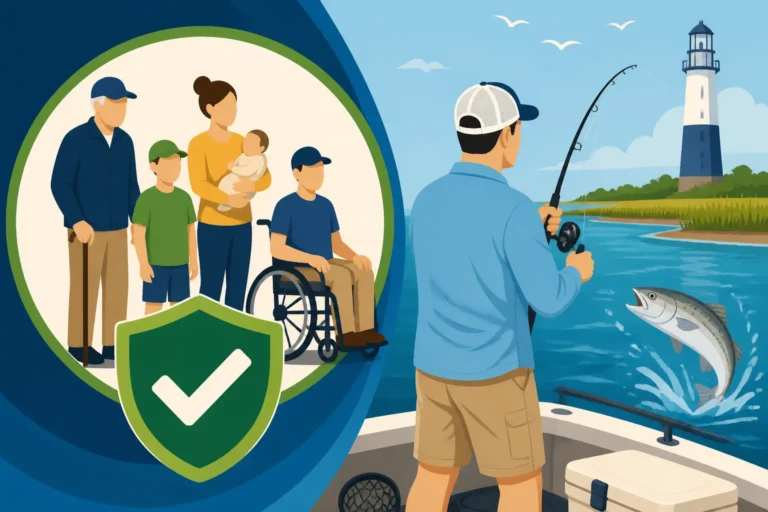
One of the most common misconceptions is whether the boat itself needs a special fishing license. Let's clear this up immediately: no, the boat does not get a fishing license. Instead, every individual on board who is fishing and is of a certain age, unless otherwise exempt, must possess their own valid Mississippi fishing license. It doesn't matter if you're fishing from a million-dollar yacht or a humble kayak – if your line is in the water and you're within the regulated age bracket, you need a license.
This is a critical distinction that often trips up visitors or new anglers. A boat's registration sticker proves its legal to operate on the water, but it has absolutely nothing to do with your right to fish from it. Think of it this way: your driver's license lets you drive a car, but it doesn't give you permission to hunt from it. To dive deeper into what you need, check out our guide on the Mississippi Fishing License Guide. Remember, ignoring this basic requirement can lead to fines, even if you’re just enjoying a peaceful day on the water. Many wonder, Do You Need a License to Fish in Mississippi?, and for most adults fishing from a boat, the answer is a resounding yes.
General Boating Safety Requirements
Beyond individual fishing licenses, the vessel you're operating has a set of safety requirements that must be met. These aren't optional suggestions; they are legal mandates designed to prevent accidents, save lives, and ensure help can be rendered if needed. These requirements cover everything from the number of life jackets on board to distress signals and navigation lights. It's not enough to simply own the equipment; it must be in good working order, readily accessible, and appropriate for the size and type of your vessel and the number of people on board.
For instance, a small Jon boat might have fewer requirements than a larger cruiser, but fundamental items like PFDs are universal. It's your responsibility as the boat operator to ensure your vessel is properly equipped before you even leave the dock. The MDWFP provides clear checklists, and various boating safety courses can help you understand these requirements thoroughly. When stocking up on your essential safety gear, many anglers find a convenient option to browse and purchase items like marine first-aid kits, signaling devices, and emergency whistles on platforms like Amazon, ensuring they have everything they need before hitting the water.
Essential Equipment for Safe and Legal Boat Fishing
Getting on the water requires more than just a fishing rod and bait; it demands a full suite of safety equipment to ensure you and your passengers are protected and compliant with state and federal regulations. This isn't just about avoiding a ticket; it's about being prepared for unexpected situations, from sudden storms to mechanical failures. Every piece of required gear serves a vital purpose, and knowing what you need and how to use it is part of being a responsible angler.
Personal Flotation Devices PFDs
Perhaps the most critical piece of safety equipment on any boat is the Personal Flotation Device, or PFD, commonly known as a life jacket. Mississippi law, mirroring federal regulations, requires that all recreational vessels must carry one wearable PFD for each person on board. This includes children, and for those under 13 years of age, Mississippi law states they must wear an approved PFD at all times while underway on any vessel. This is a non-negotiable rule, and enforcement officers will check for compliance.
But it’s not just about having them; it's about having the right kind and ensuring they are in good condition. PFDs are categorized into different types (I, II, III, V), each designed for specific uses. For most recreational fishing, Type II or Type III PFDs are common, offering flotation and often a comfortable fit. They must be Coast Guard-approved, in serviceable condition (no tears, rips, or missing straps), and appropriately sized for the intended wearer. A PFD that doesn't fit properly isn't safe. Many families will invest in PFDs for all their members, often finding good selections and various sizes on platforms like Amazon, making sure everyone has a comfortable and safe fit. For a complete breakdown of what you need, consult our guide on Mississippi Life Jacket Rules for Anglers.
Navigational Lights and Sound Signals
If you plan to be on the water between sunset and sunrise, or during periods of restricted visibility such as fog or heavy rain, your boat must be equipped with proper navigational lights and a sound-producing device. These are crucial for preventing collisions with other vessels. Navigation lights typically include a red light on the port (left) side, a green light on the starboard (right) side, and a white all-around light or a stern light. The configuration depends on the size and type of your vessel.
For smaller boats under 20 feet, a combination bow light (red/green) and an all-around white light might suffice. Larger vessels will have more specific requirements. The key is that these lights must be visible from a sufficient distance to warn approaching vessels of your presence and direction. Similarly, a sound-producing device – a whistle, horn, or bell – is required to signal intentions or alert others in low visibility. It might seem like a small detail, but being able to signal your presence can be the difference between a close call and a serious accident.
Fire Extinguishers and Ventilation
For many boats, especially those with enclosed engine compartments or permanently installed fuel tanks, a fire extinguisher is a mandatory piece of safety equipment. The type and number of extinguishers required depend on the size of your vessel and the presence of certain features like an inboard engine. Generally, recreational boats with an installed engine or a fuel-carrying capacity of over a certain amount (often 25 gallons) will need at least one Coast Guard-approved marine fire extinguisher.
These aren't your typical household extinguishers; they are specifically rated for marine use and typically address Class B fires (flammable liquids like gasoline) and Class C fires (electrical). Beyond the extinguisher, proper ventilation is critical, particularly for boats with inboard engines or enclosed fuel tanks. Fuel vapors can accumulate in confined spaces, creating an explosive hazard. Ventilation systems are designed to expel these dangerous fumes. Regularly inspecting your bilge blower and ensuring all vents are clear is a non-negotiable pre-trip check to prevent potential disaster.
Specific Rules for Fishing Activities Aboard a Vessel
Once you've ensured your boat is legally compliant and safe, it's time to turn your attention to the specific regulations that apply while you're actually fishing from it. These rules are designed to manage fish populations, ensure fair chase, and prevent overfishing, guaranteeing healthy fisheries for future generations. It's not just about what you catch, but also how you catch it and what you do with it.
Number of Rods and Lines
Mississippi has specific regulations regarding the number of fishing rods or lines an individual angler can use simultaneously. For general recreational fishing in freshwater, anglers are typically permitted to use a reasonable number of rods, often around three per person, though this can vary slightly depending on the specific water body or species targeted. However, it's always best to check the most current MDWFP regulations booklet or website, as these numbers can change.
For methods like trotlines, yo-yos, or jug fishing, which are often deployed from a boat, there are typically very strict limits on the number of devices allowed per person and per boat, as well as identification requirements for these devices. For example, trotlines might need to be tagged with the angler's name and address or license number. Using too many lines, or improperly deployed unattended gear, is a common reason for citations. Our articles on Mississippi Fishing Rules for Multiple Rods and How Many Fishing Poles Can You Use in Mississippi? offer more detailed information to help you stay compliant. It’s crucial to understand these nuances, as a simple misunderstanding could lead to penalties.
Catch Limits and Size Restrictions Aboard Your Boat
This is where many anglers focus their attention, and for good reason. Mississippi enforces strict daily creel limits (the maximum number of fish you can keep) and size restrictions (minimum or sometimes maximum lengths) for most game fish species. These limits are paramount for managing fish populations and vary significantly by species, and even by specific lake or river. For instance, the crappie limit on Grenada Lake might be different from that on Ross Barnett Reservoir.
It is your responsibility to know these limits before you start fishing. Once a fish is caught and kept, it counts towards your daily limit. If there's a size limit, you must measure the fish immediately. If it's undersized, it must be released quickly and gently to maximize its chances of survival. Don't wait until you're back at the dock to sort your catch; law enforcement can, and often does, check your livewell or cooler on the water. Proper measuring devices should always be on board. You can find comprehensive details in our guides, Mississippi Fishing Creel and Size Limits and Mississippi Statewide Creel Limits, which outline the rules for various species.
Fish Cleaning and Disposal Rules
After a successful day of fishing, the thought of fresh fillets is often on an angler's mind. However, there are rules about when and where you can clean your catch, especially when fishing from a boat. In many instances, it is permissible to clean fish on the water, but with some crucial caveats. For species with size or creel limits, you generally must leave enough of the fish intact (often the head and tail, or a fillet of a certain size) so that it can still be measured and identified by a conservation officer. This ensures that the officer can verify compliance with size and bag limits. If you clean a fish down to a mere fillet, it becomes impossible to prove its original length or if you've exceeded your limit.
Disposing of fish carcasses also falls under regulation. While throwing cleaned fish waste overboard in open, deep waters might be acceptable in some areas (and can even benefit other aquatic life), it's generally prohibited in smaller lakes, rivers, or near shorelines, especially in populated areas or designated recreational zones. The goal is to prevent pollution and maintain water quality. Always check local regulations for specific water bodies. Many public boat ramps and marinas provide designated fish cleaning stations precisely for this reason, encouraging proper disposal and adhering to Mississippi Fish Cleaning Station Rules. Always use these facilities when available, or bag your scraps for proper disposal on land.
Navigating Border Waters and Specific Locations
Mississippi is uniquely positioned with vast freshwater resources and a significant coastline along the Gulf of Mexico. This geographical diversity means that regulations can change dramatically depending on where you drop your line. Understanding these variations, especially in border areas or protected zones, is crucial to avoid unintended violations.
Fishing on the Mississippi River
The Mississippi River, being a shared boundary with several states, presents a unique regulatory landscape. Anglers often wonder if their Mississippi fishing license is valid if they venture too close to the Louisiana or Arkansas side, or vice versa. Thankfully, Mississippi has reciprocity agreements with neighboring states like Louisiana and Arkansas for certain portions of the Mississippi River. This means that if you possess a valid resident or non-resident fishing license from either Mississippi, Louisiana, or Arkansas, you may fish in the common waters of the Mississippi River between those states.
However, these agreements typically apply only to the main channel of the river and sometimes immediate tributaries or oxbow lakes. Venturing too far into a neighboring state's interior waters without their specific license can lead to trouble. Always carry your license and be aware of your position on the water. For more clarity on where your license is valid, refer to our articles such as Does a Mississippi License Cover the Mississippi River? and Fishing Rules on the Mississippi-Louisiana Border Waters, which detail these complex arrangements. These agreements make fishing more accessible but demand careful attention to specific boundaries.
Gulf Coast and Saltwater Boating Regulations
Fishing the Mississippi Gulf Coast, from the shallow bays to the open waters of the Gulf, introduces an entirely different set of regulations. Here, state regulations (managed by the Mississippi Department of Marine Resources, or DMR) govern inshore and nearshore waters, typically out to three nautical miles. Beyond that, federal regulations (managed by NOAA Fisheries and the Gulf of Mexico Fishery Management Council) take over. This distinction is vital, particularly for popular offshore species like Red Snapper, which have very specific federal seasons and bag limits that differ from state waters.
For saltwater fishing from a boat, you'll need a Mississippi Saltwater Fishing License Guide in addition to your freshwater license if you plan to fish both environments. The requirements for safety equipment might also be slightly more stringent for offshore vessels due to the increased risks associated with deeper, more unpredictable waters. For instance, more robust communication devices, EPIRBs (Emergency Position Indicating Radio Beacons), and advanced navigation tools might be recommended or required. It’s important to understand these specific saltwater needs, especially when considering Do I Need a Separate License for Gulf Coast Fishing? and preparing for a trip.
State Parks and Specific Lake Permits
While your state fishing license covers most public waters in Mississippi, some specific locations, such as state park lakes or certain privately managed reservoirs open to the public, might have additional permit requirements for fishing or boating. For example, some Mississippi State Park lakes might require a small daily or annual permit fee in addition to your state fishing license. These fees often go directly towards the management and stocking of those specific bodies of water.
It’s never a bad idea to call ahead or check the specific website for any state park or lake you plan to visit, especially if it’s your first time there. These supplemental permits are often nominal in cost but are still mandatory. Failing to secure one could lead to an unexpected fee or even being asked to leave. You’ll want to review our detailed information on Do You Need a License to Fish in Mississippi State Parks? and understand the specific Mississippi State Park Lake Permit Cost to avoid any surprises when planning your trip. Being prepared means knowing all the small print for your chosen destination.
Preventing Violations and Staying Compliant
Nobody wants their fishing trip marred by a citation or, worse, an accident due to negligence. Staying compliant with Mississippi's boat fishing regulations is not just about avoiding penalties; it's about ensuring a safe, enjoyable, and sustainable fishing experience for everyone. A little proactive effort can save you a lot of headache and money in the long run.
Regular Equipment Checks
The single best way to prevent violations and ensure safety is to make regular, thorough checks of all your boating and fishing equipment. Think of it as a pre-flight checklist for your vessel. Before every trip, or at least seasonally, go through your boat systematically:
- Registration and Licenses: Is your boat registration current? Do all anglers on board have their valid fishing licenses? Keep physical copies or clear digital versions readily accessible.
- Safety Gear: Are all PFDs in good condition and readily accessible? Are there enough for everyone on board? Is your fire extinguisher charged and accessible? Do you have working navigation lights, a sound-producing device, and distress signals?
- Boat Condition: Check your battery, fuel lines, bilge pump, and navigation lights. Ensure your boat is seaworthy.
- Fishing Gear: Confirm you have a ruler or measuring device for fish and that you understand the current catch and size limits for the species you're targeting.
Platforms like Amazon offer a wealth of marine safety gear, from updated first aid kits to marine signal horns and rechargeable navigation lights, making it easy to replace or upgrade any equipment that isn't up to par. Staying informed about any changes to regulations, which the MDWFP typically publishes annually, is also crucial.
Understanding Law Enforcement Encounters
It's common to encounter law enforcement on the water in Mississippi, whether it's an MDWFP conservation officer, a sheriff's deputy, or the U.S. Coast Guard. These officers are there to ensure everyone's safety and to protect the state's natural resources. If an officer approaches your vessel, remain calm, polite, and cooperative.
Here's what to expect and how to handle it:
- Approach: Officers will typically approach slowly and identify themselves.
- Stop and Wait: Slow down, stop your boat, and turn off your engine. Remain seated and keep your hands visible.
- Documents: Have your boat registration, fishing licenses, and any required permits ready for inspection.
- Equipment Check: Officers will often ask to see your safety equipment, such as PFDs, fire extinguishers, and sound-producing devices. Make them easily accessible.
- Catch Check: They may also ask to inspect your livewell or cooler to verify compliance with creel and size limits.
Cooperation goes a long way. If you are found to be in violation, the consequences can range from a warning to significant fines and confiscation of your catch or even equipment. Don't let a minor oversight ruin your day or lead to legal trouble. Familiarize yourself with our guides on What Happens If You Fish Without a License in Mississippi? and Mississippi Fishing License Penalties and Fines to understand the potential ramifications of non-compliance. Being prepared for an inspection helps ensure a smooth interaction and a continued enjoyable day on the water.
Essential Boat Fishing Equipment Checklist
To help you keep track of the critical items for your boat fishing trips in Mississippi, here’s a handy checklist. Remember, this is a general guide, and specific requirements can vary by boat size, type, and fishing location (freshwater vs. saltwater). Always consult the latest MDWFP regulations for precise details.
| Item Category | Specific Items Required/Recommended | Purpose |
|---|---|---|
| Documents | Valid Boat Registration | Legal operation of the vessel |
| Valid Fishing Licenses (for all anglers over 16, or as required) | Legal right to fish | |
| State Park/Specific Lake Permits (if applicable) | Access to designated fishing areas | |
| Personal Flotation | USCG-approved PFDs (1 per person, properly sized and in good condition) | Drowning prevention |
| PFDs for children under 13 (must be worn) | Mandatory safety for young passengers | |
| Visual Signals | Navigation Lights (Bow: Red/Green; Stern: White all-around) | Visibility during low light or night fishing |
| Visual Distress Signals (flares, orange flag – often for coastal waters) | Signaling for help in emergencies | |
| Sound Signals | Sound-Producing Device (whistle, horn, air horn) | Signaling intentions and warning others |
| Fire Safety | USCG-approved Marine Fire Extinguisher (required for most powered boats) | Combating onboard fires |
| Proper Ventilation (for enclosed engine/fuel compartments) | Preventing accumulation of explosive fuel vapors | |
| First Aid & Emergency | Marine First Aid Kit | Treating injuries |
| Anchor with sufficient line | Holding position, emergency stopping | |
| Paddle or Oars (for smaller boats) | Auxiliary propulsion in case of engine failure | |
| Bailing Device (bucket, pump) | Removing water from the boat | |
| Spare Kill Switch Lanyard (if applicable) | Immediate engine shutdown for safety | |
| Fishing Specific | Fish Measuring Device (ruler, tape measure) | Ensuring compliance with size limits |
| Cooler or Livewell | Keeping catch fresh and within limits | |
| Tackle Box with appropriate lures/bait | Essential for fishing! |
Disclaimer
The information provided in this guide is for general informational purposes only and is not intended as legal advice. Fishing regulations in Mississippi can change, and specific rules may vary depending on the body of water, fish species, and current conditions. It is the responsibility of every angler to consult the latest official regulations published by the Mississippi Department of Wildlife, Fisheries, and Parks (MDWFP) and any other relevant authorities (e.g., Department of Marine Resources for saltwater, U.S. Coast Guard) before engaging in any fishing activities. Compliance with all applicable laws and regulations is solely the responsibility of the individual.