Speckled Trout Diet and Feeding Habits
One of the most thrilling parts of fishing for speckled trout along Mississippi's beautiful Gulf Coast is trying to figure out what they’re truly after. It can be frustrating when you're out on the water, throwing everything in your tackle box, and getting no bites, all because you haven't quite cracked the code of what's on their menu that day. This guide is all about demystifying the speckled trout's diet and feeding habits, giving you the inside scoop on how these prized fish forage, and how you can use that knowledge to boost your success on the water.
Understanding the Speckled Trout's Natural Forage in Mississippi
Speckled trout, known formally as spotted seatrout, are incredibly adaptable predators, but their diet largely revolves around what's readily available in their estuarine and nearshore habitats along the Mississippi Gulf Coast. They’re not picky eaters in the sense that they'll pass up an easy meal, but they do have their favorites, and understanding these preferences is key to catching them.
The Primacy of Live Baitfish and Shrimp
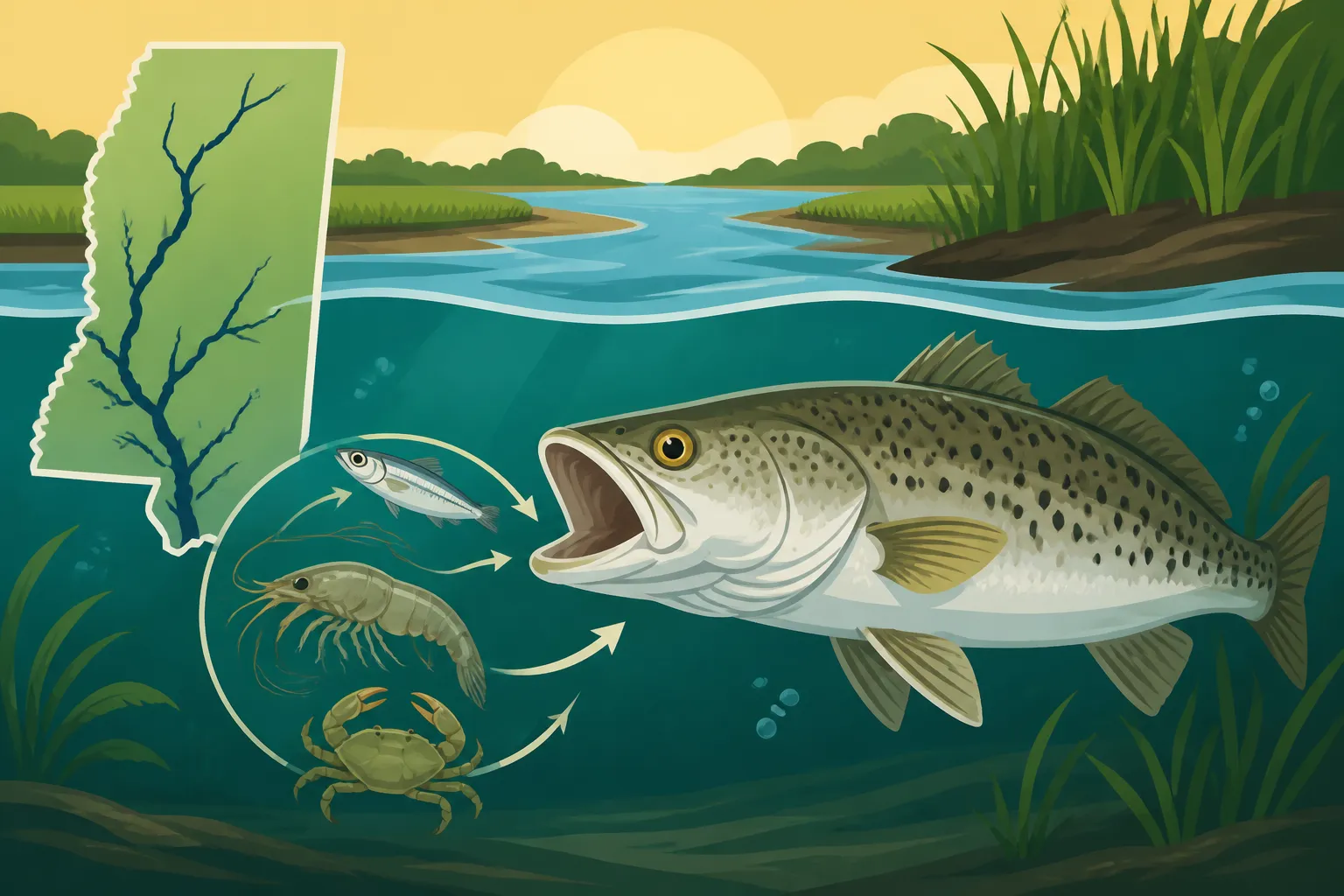
If you were to peek inside the stomach of a typical Mississippi speckled trout, especially a larger one, chances are you'd find remnants of small fish and shrimp. These two food groups form the backbone of their diet, providing the energy and nutrients they need to grow big and feisty.
Small baitfish are absolutely crucial to the speckled trout's survival. Species like menhaden, often called "pogies" by locals, are abundant in the Mississippi Sound and its bayous. These oily, schooling fish are a prime target, offering a substantial meal for a hungry trout. Mullet, another common baitfish, are also high on the list, especially finger mullet that frequent shallow, grassy areas. Other species like pinfish, croaker, and even juvenile white trout will also find their way into a speckled trout's gullet. Trout are ambush predators, often hiding along structure or in grass beds, waiting for these schools of baitfish to swim by. They'll dart out with surprising speed, using their keen eyesight and lateral line to detect vibrations in the water.
Then there’s the mighty shrimp. In Mississippi, particularly during the warmer months, white shrimp and brown shrimp are prolific in the brackish waters of the estuaries and marshes. A succulent shrimp is like candy to a speckled trout, and they will gorge themselves when shrimp are plentiful. The sound of a popping cork, for instance, isn't just attracting the trout; it's mimicking the sound of a startled or injured shrimp trying to escape, triggering that predatory instinct. These crustaceans provide an easy, protein-rich meal, and trout will often hold in areas where shrimp are actively migrating or feeding, such as along oyster reefs or in tidal creeks.
Opportunistic Feeding and Secondary Prey
While baitfish and shrimp are undoubtedly the staples, speckled trout are opportunistic feeders. This means they won't turn their nose up at other readily available food sources, especially if conditions make their preferred prey harder to catch or less abundant. Their diet can be surprisingly varied depending on the specific location and time of year.
Crabs, particularly smaller species like fiddler crabs or juvenile blue crabs, are a common secondary food source. You'll often find these scuttling along the bottom in the same shallow, grassy areas where trout like to hunt. A trout might pick off a crab if it presents an easy meal, especially if baitfish schools are scarce or too fast to catch. Polychaete worms and other invertebrates living in the muddy or sandy bottoms of estuaries can also become part of their diet. While not as high-calorie as a plump shrimp or baitfish, these provide sustenance during leaner times or when trout are less actively hunting.
Environmental factors play a huge role in what secondary prey becomes available. Strong tidal currents might dislodge crabs from their hiding spots, making them an easy target. Heavy rains can wash worms and insects into the water, providing an unexpected buffet. A healthy estuarine ecosystem, like those found along the Mississippi Gulf Coast, provides a rich and diverse food web, ensuring that speckled trout always have something to eat, even if it's not their top choice. This adaptability is part of what makes them such resilient and widespread game fish. Speckled Trout Fishing on the Mississippi Coast explores some of the best places to find these fish.
How Feeding Habits Change with Season and Habitat
Understanding what speckled trout eat is only half the battle; knowing when and where they're eating those things is where you really start to unlock consistent success. Their feeding patterns are heavily influenced by the changing seasons and the specific characteristics of their habitat.
Seasonal Shifts in Diet
Just like us, speckled trout adjust their activity and diet throughout the year. The Mississippi climate dictates a lot of these changes, from water temperature to the availability of certain prey species.
In spring, after the colder winter months and as water temperatures begin to rise, speckled trout really start to get active. This is often their post-spawn recovery period, meaning they're hungry and aggressively feeding to regain energy. Baitfish, like menhaden and mullet, become more prevalent in the shallow estuaries as they return from offshore or grow from juvenile stages. Shrimp also start to emerge in larger numbers. Trout will actively chase down schools of bait in open water, along grass lines, and around oyster reefs. This is a prime time for using both live baits and a wide array of artificial lures that mimic energetic baitfish or shrimp.
Summer brings warmer water, which can be a double-edged sword for trout fishing. While food sources like shrimp and baitfish are incredibly abundant, the high water temperatures can make trout less active during the heat of the day. They might move to deeper grass beds, channels, or shaded areas to find cooler water. Their feeding often shifts to early mornings, late evenings, or even entirely at night when temperatures drop and they feel more comfortable hunting. During this time, they might become more selective, focusing on larger, more substantial meals that are easier to ambush, or feeding more frequently on opportunistic prey.
As fall approaches and water temperatures cool down, it signals a major feeding frenzy for speckled trout. This is arguably the most exciting time to target them, as they're aggressively fattening up for the lean winter months. Baitfish migrations intensify, with huge schools of mullet and menhaden moving through the estuaries and along the coast. Trout will key in on these large bait balls, often forming their own schools to cooperative hunt. This period is famous for fast and furious action, with trout eagerly smashing topwater lures and readily taking live baits. It's a time when you can often catch some of the largest trout of the year.
Winter presents the biggest challenge. Cold water slows down the trout's metabolism, making them less active and less inclined to chase prey over long distances. Baitfish also become scarcer, often moving to deeper, more stable waters offshore or becoming less active themselves. Trout will seek out deeper holes, canals, bayous, and protected areas where water temperatures are more consistent. They'll feed less frequently and prefer easy meals. Small, slow-moving baits, like live shrimp or artificial lures fished very slowly near the bottom, are often the most effective. They're still feeding, but it's a much more lethargic process.
Habitat Influence on Food Sources
The specific environment a speckled trout inhabits also dictates what's on its plate. The Mississippi Gulf Coast offers a diverse range of habitats, each with its own unique food web.
Estuaries and Marshes are the nurseries of the coast and a primary feeding ground for speckled trout. These areas, with their intricate network of tidal creeks, shallow grass beds, and oyster reefs, are teeming with life. Here, trout primarily feed on juvenile shrimp, small crabs, and baitfish like finger mullet and killifish. The protected, nutrient-rich waters support a vast ecosystem, making these areas productive feeding zones. Trout use the grass beds for cover, ambushing unsuspecting prey that wanders too close. Oyster reefs attract a multitude of smaller organisms, creating a natural buffet for trout. Best Spots to Catch Speckled Trout on the Mississippi Coast gives you some great places to explore.
Nearshore Reefs and Structures, such as artificial reefs, jetties, and bridge pilings, offer different feeding opportunities. These structures attract larger baitfish species, like larger mullet and croaker, which seek refuge or food around the hard bottom. Crabs also congregate around these structures. Trout here might encounter a wider variety of larger prey, and they'll often hold tight to the structure, letting the current bring food to them. The deeper water around these areas can also hold different types of crustaceans and bottom-dwelling organisms that trout will occasionally target.
In Deep Channels and passes, especially those connecting estuaries to the open Gulf, trout encounter stronger currents and different prey. These areas act as highways for migrating baitfish and shrimp. Trout will position themselves along the edges or in eddies, waiting for the current to deliver a meal. They might also encounter larger, more powerful baitfish here. The reduced light penetration in deeper channels can also influence their feeding, making them rely more on their lateral line to detect vibrations rather than sight.
Mimicking Nature: Best Baits and Lures for Mississippi Speckled Trout
Since speckled trout are primarily visual predators that also react strongly to vibrations, the key to successful fishing is to present baits and lures that closely imitate their natural food sources. Anglers have a vast array of options, from traditional live bait to cutting-edge artificials.
Live Bait Strategies
When it comes to speckled trout, live bait is often king, especially for finicky fish or when you're targeting larger specimens. Nothing beats the real thing in terms of scent, action, and appearance.
Live shrimp are arguably the most universally effective bait for speckled trout along the Mississippi Coast. Their natural scent and erratic movements are irresistible. You can fish them in several ways: under a popping cork, free-lined with a small split shot, or on a simple Carolina rig near the bottom. The popping cork rig is incredibly popular as it simulates a shrimp flicking on the surface, drawing attention from nearby trout. When fishing a popping cork, give it a sharp twitch every 10-20 seconds to create that "pop," then let it drift naturally. You can find live shrimp at most local bait shops, and some anglers even catch their own. For tips on how to effectively use them, check out How to Fish Live Shrimp Under a Popping Cork.
Live baitfish like finger mullet, croaker, or menhaden (pogies) are fantastic for targeting bigger trout, especially during the fall feeding frenzy. These larger baits offer a more substantial meal. You can hook them through the lip or just in front of the dorsal fin, allowing them to swim naturally. Like shrimp, they can be fished under a popping cork in shallower water, or free-lined with a weight near structure in deeper areas. The key is to match the size of your bait to the size of the prey trout are likely to be feeding on. Sometimes, a larger bait is needed to entice that trophy trout that has seen everything else. Many anglers will purchase these baitfish from bait shops, or use a cast net to catch them fresh themselves.
Artificial Lure Choices
While live bait is hard to beat, artificial lures offer versatility, ease of use, and can often cover more water, helping you locate active fish. Modern lures are incredibly realistic and designed to mimic the natural movements and appearance of a trout's prey. You can find a huge selection of these lures, from topwater to soft plastics, often with competitive pricing on platforms like Amazon.
Soft plastics are a staple in any speckled trout angler's tackle box. Paddle tails, jerk shads, and curly tail grubs, often paired with a jig head, are incredibly effective. The paddle tail, in particular, creates a vibrating action that mimics a swimming baitfish, while jerk shads can be twitched to imitate an injured one. Color choices are important: natural colors like "new penny," "opening night," or "electric chicken" are popular, with brighter colors often performing well in murky water, and more subtle, natural hues in clearer conditions. Anglers frequently experiment with different sizes and weights of jig heads to target various depths, often keeping a good assortment in their tackle box, many of which can be ordered easily online.
Hard baits offer a different approach. Topwater lures, like "walk-the-dog" style baits or poppers, are absolutely thrilling to use, especially during low light conditions in spring and fall. The violent strike of a speckled trout exploding on a topwater lure is unforgettable. These lures imitate a struggling baitfish on the surface. Suspending lures or shallow-diving crankbaits are great for covering water and targeting trout that might be holding a bit deeper in the water column but are still willing to chase. Brands like MirrOlure or Rapala have a long history of producing effective hard baits for speckled trout. Having a variety of lure types and colors, readily available from retailers or through online platforms like Amazon, allows you to adapt to changing conditions and trout preferences. Best Bait for Speckled Trout dives deeper into specific recommendations.
Decoding Trout Behavior: When and Where to Find Them Feeding
Catching speckled trout isn't just about what you throw; it's about understanding when and where they're most likely to be actively feeding. This involves paying close attention to environmental cues, especially tidal movements and the presence of structure.
Tidal Movements and Their Impact
Along the Mississippi Gulf Coast, the tides are perhaps the single most important factor influencing speckled trout feeding. Water movement dictates baitfish and shrimp activity, and consequently, trout positioning.
Incoming tides often bring clearer, saltier water into the estuaries and bayous, along with fresh bait. As the tide pushes in, it washes over oyster reefs, grass beds, and sand flats, stirring up shrimp, crabs, and baitfish. Trout will often move with this incoming water, positioning themselves at ambush points where they can intercept food as it's carried in. Look for them feeding actively in areas like marsh drains, creek mouths, and along the edges of flooded grass flats. The rising water provides them with new foraging grounds and cover.
Conversely, outgoing tides pull water out of the marshes and back towards the open Gulf. This receding water concentrates baitfish and shrimp into deeper channels, cuts, and along current edges, making them easier targets for predatory trout. As water levels drop, trout will often congregate in these deeper areas, waiting for the buffet to flow past. Fishing the last hour of the outgoing tide and the first hour of the incoming tide can often be incredibly productive, as bait is concentrated or moving actively. Slack tide, the period between tides when the water is still, can be more challenging, as baitfish disperse and trout become less active. Best Time of Day to Catch Speckled Trout often correlates strongly with these tidal shifts.
Structure and Ambush Points
Speckled trout are not generally open-water cruisers. They are ambush predators, and they rely heavily on structure to hide, conserve energy, and stage their attacks on passing prey. Understanding these key ambush points is crucial for consistent success.
Grass beds, particularly healthy submerged seagrass or emergent marsh grasses, are prime speckled trout habitat. These areas provide abundant food in the form of shrimp and small baitfish, as well as crucial cover from larger predators. Trout will often sit on the edges of these grass lines, waiting for prey to move out into the open. Casting parallel to a grass line or working a lure over the top of submerged grass can be highly effective.
Oyster reefs are biological hotspots along the Mississippi Coast. They filter water, attract a huge variety of small organisms, and provide structure that baitfish and shrimp love. Naturally, trout love them too. Trout will hold tight to oyster reefs, using the jagged bottom as cover and a feeding station. When fishing oyster reefs, be prepared for snags, but the rewards can be well worth it. Hard-bottom areas, like those created by oyster beds, often hold cooler, clearer water, which can also attract trout.
Other man-made structures like jetties, bridge pilings, and dock lines also serve as excellent ambush points. These structures break currents, create eddies, and often have deeper water nearby, attracting baitfish and providing cover for trout. Fishing the eddies and current breaks behind these structures can be very productive. Points of land that jut out into the water are also excellent, as they funnel baitfish past, creating a natural choke point where trout can lie in wait. By systematically targeting these kinds of structures and understanding how tides influence them, you can significantly increase your chances of finding actively feeding speckled trout.
| Primary Prey Type | Preferred Habitat | Feeding Behavior | Best Time to Target | Recommended Lures/Baits |
|---|---|---|---|---|
| Shrimp (Live) | Estuaries, Marshes, Oyster Reefs | Ambush, opportunistic | Incoming/Outgoing Tide | Popping Cork w/ Live Shrimp, Soft Plastics |
| Small Baitfish | Grass Beds, Tidal Creeks, Jetties | Active chase, ambush | Strong Currents, Low Light | Live Mullet/Menhaden, Paddle Tails, Topwaters |
| Crabs | Shallow Flats, Reefs, Muddy Bottoms | Opportunistic bottom feed | Slow Tides, Around Structure | Carolina Rig w/ Live Crab (less common), Jig Heads |
Disclaimer
This article is for general informational purposes only and does not constitute professional advice. Laws, prices and regulations vary by location and change over time. Consult a qualified professional for guidance on your specific situation.