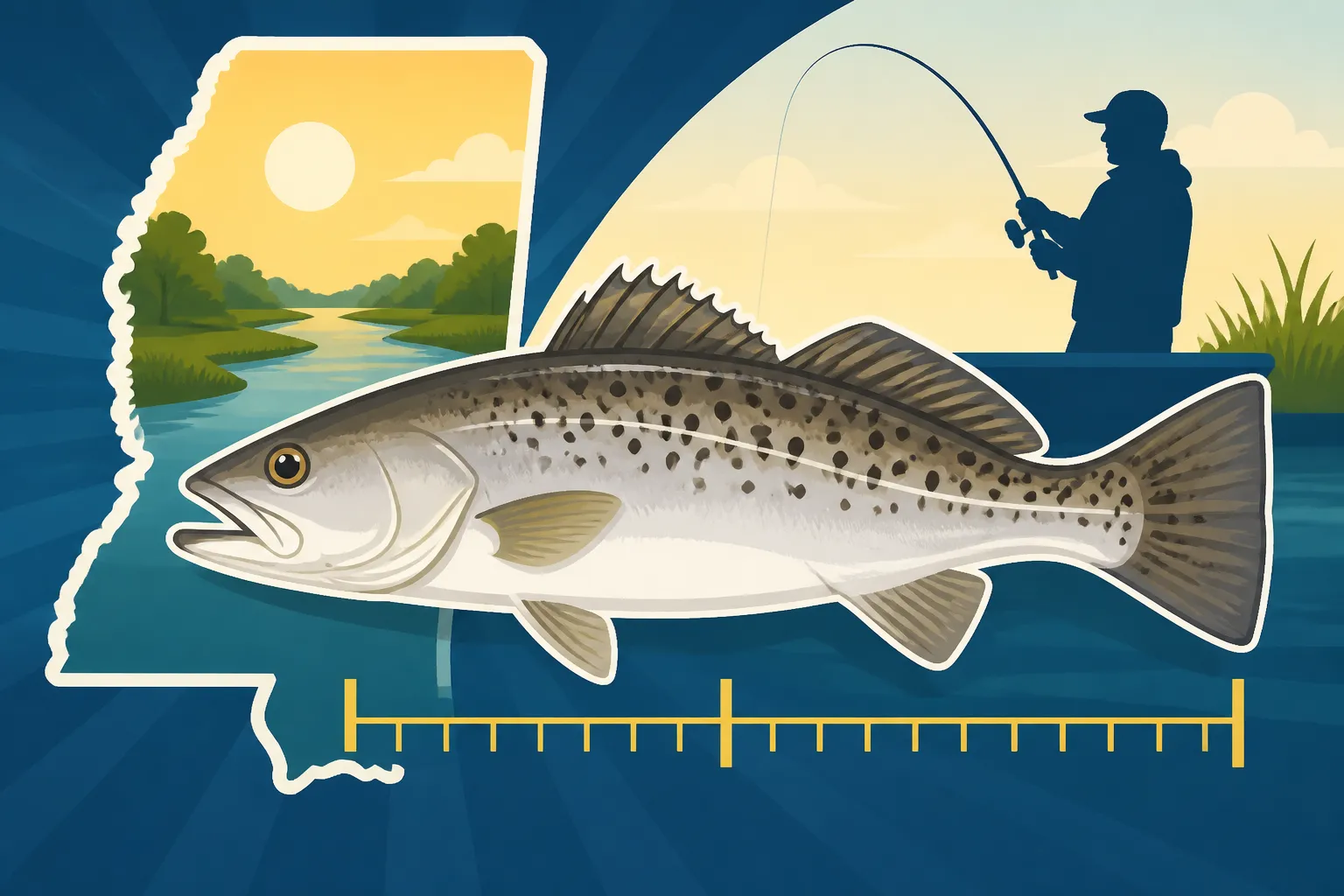
Average Speckled Trout Size
It's a common dream for many anglers hitting the beautiful waters of Mississippi's Gulf Coast: reeling in a trophy speckled trout. But let's be honest, not every cast brings in a monster. You might be wondering what a "good" or "average" size actually is, and frankly, it can be a bit confusing to set expectations when you hear tales of giants. This guide is here to shed some light on the typical sizes you can expect for speckled trout in Mississippi, what factors influence their growth, and how you might just improve your chances of catching a bigger one.
The Allure of the Speckled Trout: More Than Just a Number
The speckled trout, or "speck" as it's affectionately known, holds a special place in the hearts of Mississippi anglers. Its iridescent spots, feisty fight, and delicious white meat make it a prized catch. But for many, the hunt for a truly impressive "gator trout" – a large, mature speckled trout – is what keeps them coming back to the marshes, bays, and barrier islands. It's not just about the numbers on the ruler; it's about the thrill of the chase and the satisfaction of a substantial catch.
When we talk about the average size, it's easy to feel a little let down if your catches don't always measure up to the stories you hear at the bait shop. The reality is, fish populations fluctuate, and conditions change. What was a banner year for big specks last year might be an average one this year. It's important to approach speckled trout fishing with a realistic understanding of what's common, while still holding onto that hope for a true slob. That way, every fish is a victory, and the big ones become truly memorable achievements.
Beyond the Numbers: Why Size Impressions Count
While length and weight are measurable facts, the impression of size is often what sticks with us. A 20-inch speckled trout might feel like a behemoth if you've been catching mostly 14-inchers all day. Conversely, if you're used to consistently landing fish in the 22-inch range, a 20-incher might seem just "average." This psychological aspect is crucial because it influences our perception of a successful trip. The truth is, any speckled trout that puts a bend in your rod and makes it to the cooler is a good fish. However, knowing the general size ranges helps you appreciate your catch in context and understand the potential for growth in the waters you fish. It also helps you determine if you're consistently catching "undersized" fish, which might indicate a need to adjust your tactics or fishing location.
Understanding Average Speckled Trout Size in Mississippi
When you head out fishing for speckled trout along the Mississippi Gulf Coast, you'll encounter a range of sizes. The "average" can really depend on the specific area you're fishing, the time of year, and even the maturity of the fish population. Generally, most recreational anglers will catch speckled trout falling into a certain bracket, but the excitement often comes from the outliers – those bigger fish that break the mold.
Typically, most speckled trout caught by recreational anglers in Mississippi waters will measure somewhere between 12 to 18 inches. Fish in this size range are common, provide a good fight, and are excellent table fare. These are your bread-and-butter fish that make up the bulk of a successful fishing trip. They're strong, healthy, and plentiful, a testament to the thriving ecosystems of the Mississippi Sound and its estuaries.
Mississippi's Typical Catch Range
For many anglers, a typical day on the water might yield a mixed bag of speckled trout, with a good number falling into that 12 to 18-inch range. These fish are generally in their first few years of life, growing quickly and actively feeding. They are abundant in various habitats, from shallow grass flats to deeper bayous, making them accessible to many different fishing styles. You might catch a few just under the legal limit, which is important to remember for Speckled Trout Size Limit in Mississippi, and a good number of keeper-sized fish. It's rare to catch only trophy fish, and setting that expectation can lead to frustration. Instead, appreciate the consistent action these average-sized trout provide.
It's worth noting that smaller speckled trout, those under 12 inches, are often referred to as "schoolies" or "rat reds" (though not actual redfish). While they are fun to catch, they are typically released to grow larger. They're a good sign of a healthy spawning population and future fishing opportunities. When you're out there, you'll see firsthand how diverse the population can be, with a clear bell curve leaning towards these more common sizes.
The "Gator Trout" Phenomenon
Ah, the "gator trout"—the stuff of legends and the goal of many serious speckled trout anglers. These are the truly large speckled trout, often measuring 25 inches or more, and sometimes pushing past 30 inches. While they are not "average" by any means, they represent the peak of the species' growth potential in Mississippi. These fish are typically older, wiser, and much harder to catch, making them an incredible trophy. They are often solitary predators, or found in very small groups, and require a different approach than the typical schoolie trout.
Catching a gator trout is a significant achievement and often takes specialized techniques and patience. These magnificent fish might represent a very small percentage of the total speckled trout population, but they are absolutely present in Mississippi waters. They often prefer specific habitats, frequently targeting larger prey, and are more sensitive to fishing pressure. If you're consistently catching fish in the average range, and suddenly hook into something that feels like a completely different species, you might just have a gator trout on the other end of your line! Remember to handle these special fish with care, especially if you plan to release them.
Comparing Averages: Coast vs. Inshore
The Mississippi Gulf Coast offers a diverse range of fishing environments, and this can definitely impact the average size of speckled trout you'll encounter.
- Inshore/Bayou Fishing: In the calmer, shallower waters of the bays, bayous, and marsh systems like those found around Biloxi Bay Fishing Guide or Pascagoula Bay Fishing Guide, you're likely to find a higher concentration of smaller to medium-sized speckled trout. These areas are excellent nurseries, offering abundant food and protection for juvenile fish. A common catch here might be in the 12 to 16-inch range, with plenty of action. It's a fantastic place for consistent bites and for honing your skills with lighter tackle.
- Nearshore/Barrier Island Fishing: As you venture closer to the barrier islands (like Horn Island or Ship Island) or deeper flats in the Mississippi Sound, the average size tends to increase. These areas often have stronger currents, clearer water, and access to larger baitfish populations. Here, you'll find more trout in the 16 to 22-inch range. This is where many anglers specifically target larger fish, often using different Speckled Trout Fishing Techniques and baits to entice bigger bites. The conditions can be a bit more challenging, but the reward of a larger fish is often worth it.
Understanding these subtle differences can help you decide where to focus your efforts based on your fishing goals, whether you're looking for consistent action or a shot at a true trophy.
Factors Influencing Speckled Trout Size
Why do some speckled trout grow into massive gator trout, while others remain average-sized? It's not just luck. A combination of environmental factors, genetics, and human interaction plays a huge role in how big these fish get. Understanding these influences can help you become a more effective angler and appreciate the delicate balance of the ecosystem.
Habitat and Food Availability
Just like us, speckled trout need a good diet to grow big and strong! The quality and abundance of their habitat directly influence their size. Areas with plentiful baitfish – like shrimp, mullet, and various small schooling fish – provide the fuel for rapid growth. Think about healthy grass beds, oyster reefs, and marsh systems that act as productive feeding grounds. These ecosystems are absolutely vital.
If a particular bay or estuary is rich in forage, the trout there will generally grow faster and reach larger sizes. Conversely, areas with depleted bait populations, perhaps due to environmental changes or excessive predation, might see slower growth rates among their trout. Water quality also plays a critical role; clean, oxygen-rich water with stable salinity levels is essential for trout health and, consequently, their growth. This is why preserving the coastal habitats of Mississippi is so important for the future of our fishing. A well-stocked tackle box from Amazon for varied baits can help you adapt to what the fish are currently eating.
Age and Genetics
It might sound obvious, but older speckled trout are generally larger speckled trout. They've had more time to eat, grow, and avoid predators. However, not all trout grow at the same rate. Just like people, there's genetic variation within the species. Some fish are simply predisposed to grow larger and faster than others. These genetically superior fish are often the ones that become the elusive "gator trout" we all dream of catching.
The age of a speckled trout can be estimated by looking at its scales (much like tree rings), but for anglers, it's more about knowing that the biggest fish have likely lived through multiple seasons and spawns. They are seasoned survivors, and their size reflects their tenacity. Protecting these older, larger fish through catch-and-release practices, especially during spawning seasons, can help ensure their strong genes are passed on to future generations, contributing to a healthier and potentially larger average size for the species overall.
Fishing Pressure and Environmental Stressors
Human activity and natural events can also significantly impact the average size of speckled trout. High fishing pressure, especially in easily accessible areas, can lead to a phenomenon known as "trophy removal." If all the larger, older fish are consistently harvested, the average size of the remaining population naturally decreases. This is why regulations like Speckled Trout Size Limit in Mississippi and daily bag limits are in place – to manage the population and ensure enough fish survive to grow and reproduce.
Environmental stressors like severe cold snaps, hurricanes, or periods of prolonged drought and freshwater intrusion can also affect trout populations and their growth. Extreme weather events can cause fish kills or disrupt their food sources, leading to stunted growth or reduced overall numbers. Pollution, too, can impact the health of the fish and their ability to thrive. These are all real challenges that our coastal ecosystems face, and they directly influence what an "average" speckled trout looks like from year to year.
How to Target Larger Speckled Trout
While catching an "average" speckled trout is always a blast, many anglers are specifically chasing those bigger fish. If you're serious about increasing your odds of landing a gator trout, it takes a bit more strategy than just casting a line anywhere. It's about understanding their habits, knowing where they hide, and presenting the right offering.
Choosing the Right Gear and Lures
Targeting larger speckled trout often means stepping up your gear a bit. While a light spinning rod works for schoolies, bigger fish demand a little more backbone. A medium-light to medium power spinning rod, paired with a reel spooled with 10-15 lb braided line and a fluorocarbon leader of 15-20 lb, is a good starting point. This setup allows for longer casts, better hook sets, and the power to control a strong fish.
When it comes to lures, "big bait, big fish" is often the mantra for gator trout. While smaller soft plastics and live shrimp will catch plenty of average fish, larger trout tend to key in on bigger meals. Think about:
- Larger Soft Plastics: Paddle tails, jerk shads, or curly tails in the 4-6 inch range, often rigged on a heavy jig head (1/4 to 1/2 oz) to get down quickly in deeper water or stronger current. Popular brands like those available on Amazon offer a wide array of options.
- Topwater Plugs: Spooks, poppers, or walk-the-dog style lures in the 4-5 inch range can be deadly during low light conditions or when fish are actively feeding on the surface.
- Live Bait: A frisky live croaker, mullet, or large shrimp can be irresistible to a big trout. Free-lining or fishing them under a popping cork are common and effective methods.
- Hard Baits: Suspending or slow-sinking twitchbaits that mimic a wounded baitfish can also draw strikes from aggressive gator trout.
Remember, presentation is key. Work your baits slowly and deliberately, mimicking a natural forage, and be ready for a powerful strike!
Timing Your Trip for Trophy Fish
Timing is everything when it comes to trophy speckled trout. They are often more active and accessible during certain seasons and times of day.
- Seasonality: The cooler months of late fall, winter, and early spring are often prime time for larger speckled trout. As water temperatures drop, big trout often move into deeper bayous, channels, and nearshore structures, feeding heavily before and after cold fronts. The Best Season to Book a Gulf Coast Charter often aligns with these cooler months for trophy trout.
- Tides: Understanding the tides is crucial. Speckled trout, especially larger ones, use tidal currents to ambush bait. Incoming or outgoing tides, especially around points, cuts, or oyster reefs, can create feeding frenzies. Knowing how to read a tide chart and predicting those optimal feeding windows can make a huge difference.
- Time of Day: Low light conditions—dawn and dusk—are almost universally the best times to target large speckled trout. They are ambush predators and use the reduced light to their advantage. Overcast days can extend this feeding window, and even night fishing can be productive, especially around artificial lights that attract bait. Check out Best Time of Day to Catch Speckled Trout for more detailed insights.
Spot Selection for Bigger Bites
To catch larger speckled trout, you need to fish where larger speckled trout live. They aren't typically found schooling with hundreds of smaller fish. They prefer areas that offer both ambush points and access to substantial baitfish.
- Deeper Channels and Bayous: In cooler weather, big trout often retreat to deeper water where temperatures are more stable. Look for deep holes, channel edges, and drop-offs in estuaries and bays.
- Oyster Reefs and Shell Bottoms: These structures attract baitfish and provide excellent ambush points for trout. They also offer refuge from strong currents.
- Grass Beds and Potholes: Healthy submerged grass beds hold an incredible amount of bait. Larger trout will often cruise the edges of these beds or hide in deeper potholes within them, waiting for an easy meal.
- Artificial Reefs and Structure: Any kind of submerged structure, from bridge pilings to navigation markers, can attract bait and, consequently, bigger trout. These are often great places to target if you know where they are.
- Barrier Islands and Nearshore Rigging: The outer edges of the Mississippi Sound, especially around the barrier islands, often hold clearer, saltier water and larger concentrations of baitfish, attracting bigger trout. Areas near oil rigs or artificial reefs in the sound can also be excellent. Exploring areas described in a Mississippi Gulf Coast Fishing Guide can point you to potential hotspots for larger fish.
Regulations and Responsible Angling
Understanding and adhering to fishing regulations isn't just about avoiding fines; it's about being a responsible angler and ensuring healthy fish populations for future generations. Mississippi has specific rules for speckled trout designed to protect this valuable resource.
Understanding Creel and Size Limits
Mississippi's Department of Marine Resources (MDMR) sets the regulations for saltwater species like speckled trout. These regulations often include both a minimum size limit and a daily creel limit (the maximum number of fish you can keep). These limits are designed to allow enough fish to reach maturity and spawn, contributing to the overall health and stability of the population.
For example, there's a specific Speckled Trout Size Limit in Mississippi. This means any trout you catch that measures below this length must be immediately and carefully released. The How Many Speckled Trout Can You Keep in Mississippi? guide will detail the daily bag limit, which is the maximum number of fish you're allowed to possess in a single day. Always check the most current regulations before you head out, as they can change seasonally or annually based on stock assessments. Carrying a reliable measuring device, like a bumping board or a soft tape measure, is essential, and make sure it's easily accessible on your boat or in your tackle box from Amazon.
The Importance of Catch and Release for Bigger Fish
While keeping a few fish for a delicious meal is one of the great joys of fishing, adopting a "catch and release" mentality, especially for those larger speckled trout, is crucial for conservation. Those "gator trout" are the most valuable breeders in the population. They produce the most eggs and often have the best genetics, contributing significantly to future fish stocks.
Releasing these large, mature fish allows them to continue their spawning cycles, ensuring that more little specks are born. If you're targeting trophy fish, consider taking a quick photo and releasing them unharmed. Use proper handling techniques: minimize their time out of water, support their body weight, and revive them gently until they swim away strongly. A quick release tool, often found in good fishing kits on Amazon, can also help minimize harm. This practice of selective harvesting – keeping smaller, legal-sized fish and releasing the big ones – is a cornerstone of sustainable fishing and helps maintain the "average" size of the population at a healthy level.
| Size Category | Typical Length Range (Inches) | Description | Angler Experience |
|---|---|---|---|
| Juvenile/Schoolie | 6-12 | Young, rapidly growing fish; often found in large schools. Must be released. | Frequent catches, great for beginners and consistent action. |
| Average Keeper | 12-18 | Most common size caught by recreational anglers; excellent table fare. | Consistent action with legal keepers, makes for a successful trip. |
| "Good" Speck | 18-24 | Stronger fighting fish, a highly desirable catch. | Exciting fights, often targeted specifically, impressive for the dinner table. |
| "Gator Trout" (Trophy) | 25+ | Large, mature, often solitary fish; the prized catch for serious anglers. | Rare and challenging; requires specialized tactics, often caught and released to preserve genetics. |
Disclaimer
This article is for general informational purposes only and does not constitute professional advice. Laws, prices and regulations vary by location and change over time. Consult a qualified professional for guidance on your specific situation.