Speckled Trout vs White Trout Differences
There’s a common scenario on the Mississippi Gulf Coast: you’re out on the water, maybe a pier, maybe a boat in the marsh, and you reel in a beautiful, silver-sided fish. It looks like a trout, but then you start to wonder, "Is this a speckled trout or a white trout?" Many anglers, myself included, have stood there pondering the subtle differences, especially when fishing limits and size regulations come into play. It's not just about naming your catch; it's about understanding the species, their habits, and how to fish for them successfully and legally. This comprehensive guide will clear up the confusion, helping you confidently distinguish between these two popular Mississippi saltwater catches.
Speckled Trout The Prized Coastal Gamefish
The speckled trout, or as many locals call them, "specks," are truly the darlings of the Mississippi Gulf Coast inshore fishing scene. Their beautiful spotted patterns, aggressive strikes, and delicious flaky meat make them a top target for both recreational and serious anglers. There’s nothing quite like the thrill of a big speck hitting a topwater lure at dawn.
Identifying Physical Traits
When you bring a speckled trout aboard, the first thing that usually catches your eye are those distinct black spots. These spots are scattered all over their back and dorsal fin, extending down their sides. It’s like they’ve been splattered with a pepper shaker. Their body is generally silver-gray on top, fading to a lighter, often pearly white belly.
Beyond the spots, take a closer look at their mouth. Speckled trout have two prominent canine teeth, often called "fangs," on the roof of their mouth, especially noticeable on larger specimens. Their tail fin is typically somewhat concave, not perfectly straight or deeply forked. They also have a relatively elongated body shape, giving them that sleek, torpedo-like appearance perfect for darting through seagrass beds.
Their dorsal fins are separate: a spiny front dorsal and a soft-rayed rear dorsal. The anal fin is usually soft-rayed as well. Pay attention to the colors too; while generally silver, the back can sometimes have a greenish or brownish tint depending on their habitat, helping them camouflage perfectly in the murky or clear waters of the Gulf.
Preferred Habitat and Behavior
Speckled trout absolutely love the shallow, brackish waters of estuaries, bays, and sounds along the Mississippi Gulf Coast. Think marsh grass flats, oyster reefs, jetties, and structures like docks and bridges. They're ambush predators, often lurking near cover, waiting for an unsuspecting baitfish or shrimp to swim by. This is why you'll often find them tucked into eddies around current breaks or patrolling the edges of submerged grass.
Their diet primarily consists of smaller baitfish like mullet and menhaden, as well as shrimp and small crabs. You’ll often hear about anglers "fishing the tides" for specks, as the moving water flushes bait from the marsh and concentrates it in certain areas. Understanding these movements is key to finding them. They are more active during dawn and dusk, but can be caught throughout the day, especially if you're targeting areas with good current flow and structure.
Speckled trout are also known to move in schools, especially the smaller "schoolie" trout. When you find one, there are often more nearby. Larger, trophy-sized specks, however, tend to be more solitary or found in smaller groups. They can be found deeper in cooler months, but during spring and fall, they are often in very shallow water, sometimes just a foot or two deep, actively feeding. For more on their feeding habits, check out Speckled Trout Diet and Feeding Habits.
Why Anglers Target Them
The allure of the speckled trout for Mississippi anglers is multifaceted. Firstly, their fighting spirit is commendable. Even a modest-sized speck can put up a surprisingly strong fight, head-shaking and making quick runs, especially when caught on light tackle. Catching a "gator trout"—a large, mature speckled trout—is a bucket list item for many coastal fishermen.
Secondly, their reputation as table fare is legendary. Speckled trout meat is white, flaky, and has a delicate flavor that's perfect for frying, grilling, or baking. There's a reason they're often the star of local seafood restaurants and backyard fish fries. Knowing you're taking home a delicious meal certainly adds to the enjoyment of the catch.
Lastly, the challenge of consistently finding and catching speckled trout, combined with their beautiful appearance and culinary value, makes them an incredibly rewarding species to pursue. They require a bit more finesse and understanding of their habitat than some other species, which only adds to their appeal for seasoned anglers. For tips on where to find them, see Best Spots to Catch Speckled Trout on the Mississippi Coast.
White Trout The Abundant Nearshore Catch
While perhaps not as flashy or heavily regulated as their spotted cousins, white trout, also commonly known as sand seatrout, are a fantastic and often overlooked species in Mississippi's waters. They're prolific biters, providing plenty of action and a good meal, making them a favorite for families and casual anglers alike.
Distinct Physical Markings
White trout share a similar elongated body shape to speckled trout, but a quick look reveals key differences. The most obvious one? They don't have those distinctive black spots! Their bodies are generally a uniform silver-gray or slightly iridescent white, with a darker greenish or brownish hue on their backs. They lack the scattered spots that make specks so easy to identify.
Their mouths are also different. While they do have teeth, they lack the prominent canine teeth on the roof of the mouth that speckled trout possess. Their lower jaw usually protrudes slightly beyond the upper jaw, giving them a distinct profile. Their tail fin is typically more pointed or slightly rounded, not concave like a speck's, though this can vary slightly.
Like specks, they have two dorsal fins, but their coloration and overall uniformity make them stand out. Sometimes you might notice a faint, almost vertical banding on their sides when they first come out of the water, but these usually fade quickly. Their bodies are also generally a bit more robust or thicker in comparison to a speckled trout of similar length.
Common Haunts and Schooling Patterns
White trout tend to prefer slightly deeper, often sandier or muddy bottoms than speckled trout. You'll find them in nearshore Gulf waters, deeper bay channels, around artificial reefs, and sometimes in the deeper cuts and passes within the marsh system. They are less reliant on vegetated cover and more on bottom structure or depth changes. They can handle a wider range of salinity, often venturing further into freshwater estuaries or out into the saltier Gulf waters.
They are voracious eaters, primarily feeding on shrimp, small fish, and various invertebrates found on the bottom. Unlike specks, which can be found ambushing prey, white trout are often more actively foraging. They are notorious for schooling heavily, and when you find a school, the action can be non-stop. This makes them a fantastic target for those looking to fill a cooler quickly.
You'll often encounter white trout while bottom fishing near jetties, bridges, or out in the deeper parts of the Mississippi Sound. They are less sensitive to water clarity than speckled trout, often biting well even in murkier conditions. Their schooling behavior means that if you're consistently getting bites, you're likely right on top of a large group.
Ease of Catching and Versatility
One of the biggest appeals of white trout is how readily they bite. They're not particularly shy, and if they're around, they're usually eager to take a bait. This makes them an excellent target for beginner anglers, kids, or anyone just looking for consistent action on the water. They don't always put up the same blistering fight as a larger speck, but they offer plenty of head shakes and pulls.
From a culinary perspective, white trout are also excellent eating. Their flesh is delicate and mild, making them highly versatile in the kitchen. They are perfect for frying whole, baking, or filleting for tacos and other dishes. While they might not reach the trophy sizes of speckled trout, their abundance and good table quality make them a staple catch for many Gulf Coast fishermen.
Their willingness to bite various baits, from dead shrimp to small jigs, also adds to their versatility. You don't need highly specialized gear or complex techniques to catch them, making them accessible to almost everyone with a rod and reel.
Side-by-Side Comparison Navigating the Differences
Now that we've looked at each species individually, let's put them head-to-head to really cement those identification skills. Being able to quickly and accurately tell them apart is key, especially since regulations can differ significantly.
Visual Cues for Quick Identification
When you have a fish in hand, there are a few go-to indicators to instantly tell if you've got a speckled trout or a white trout. Forget everything else for a second and just look at the spots, the mouth, and the tail.
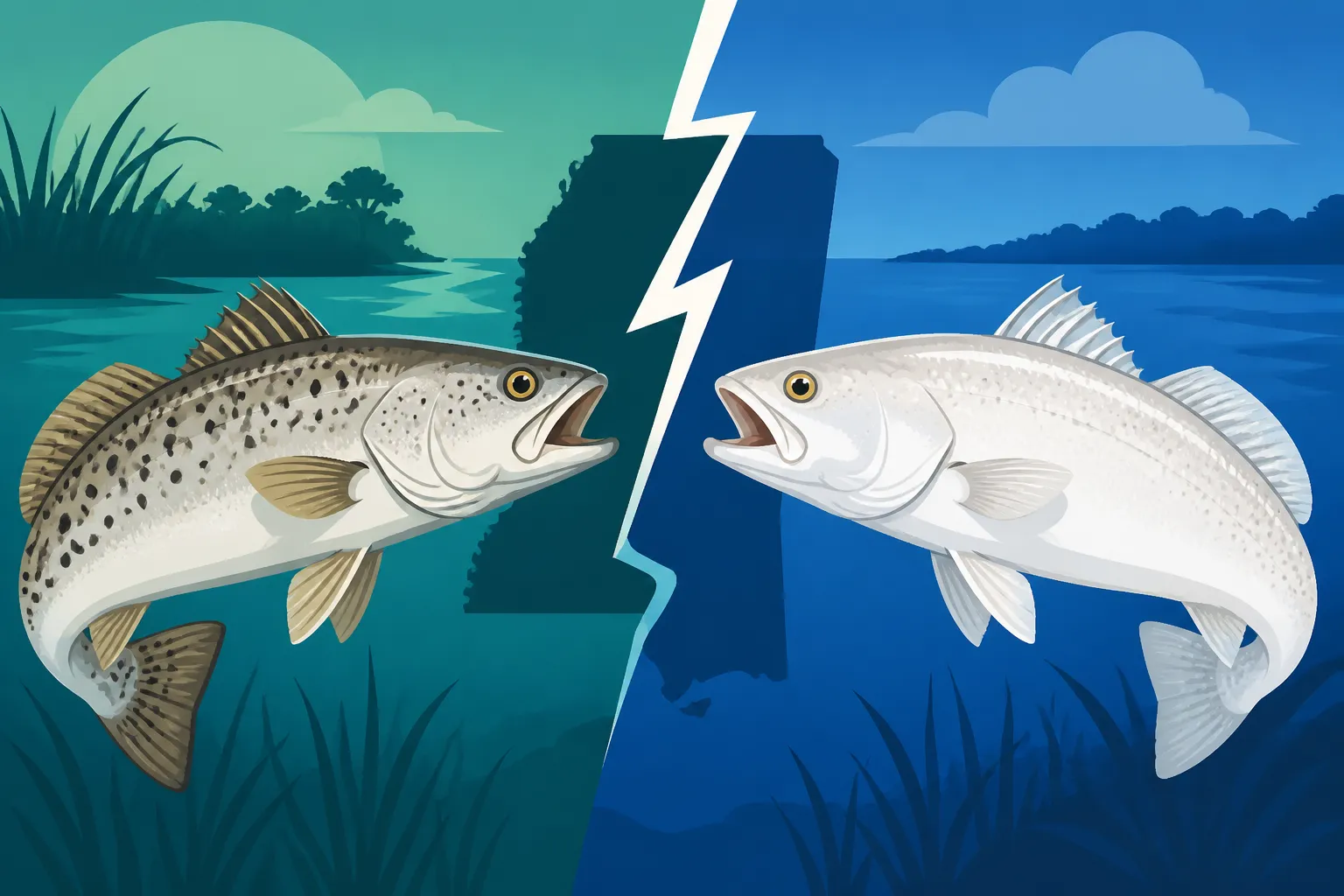
The spots are the number one giveaway. If your fish has distinct black spots scattered across its back, sides, and dorsal fin, it's a speckled trout. No spots? Then it's almost certainly a white trout. This is the easiest and most reliable visual cue. Next, check the mouth. Run your finger carefully along the roof of its mouth. If you feel those two sharp canine teeth, it’s a speckled trout. White trout lack these prominent fangs. Finally, observe the tail. Speckled trout usually have a slightly concave (indented) tail, while white trout often have a more pointed or slightly rounded tail, though this can be subtle.
Here's a quick comparison table to help:
| Feature | Speckled Trout (Cynoscion nebulosus) | White Trout (Cynoscion arenarius) |
|---|---|---|
| Coloration | Silver-gray back, fading to white belly, distinct black spots on back/sides/fins | Uniform silver-gray or iridescent white, darker back, no black spots |
| Mouth | Two prominent canine "fangs" on roof of mouth | Lacks prominent canine teeth |
| Tail Fin | Slightly concave (indented) | More pointed or slightly rounded |
| Body Shape | More elongated, slender | Generally robust, slightly thicker |
| Lower Jaw | Upper and lower jaw typically meet evenly | Lower jaw often slightly protrudes |
| Size | Can grow much larger (up to 30+ inches) | Typically smaller (rarely over 16-18 inches) |
Habitat and Seasonal Preferences
While there can be overlap, especially in transition zones, their preferred habitats also offer clues. Speckled trout are kings of the shallow, grassy estuarine waters. They love seagrass beds, oyster reefs, and marsh edges. Think of them as the inshore brawlers, often found in relatively clear, brackish water. You'll often find them lurking around structures in depths of 2-8 feet.
White trout, on the other hand, are more at home over sandy or muddy bottoms in slightly deeper waters. They frequent bay channels, nearshore Gulf waters, and areas around artificial reefs and deeper structure. They are less tied to vegetation and more to depth contours and bottom composition. It's not uncommon to catch white trout in 10-30 feet of water, especially during cooler months when they school up in deeper channels. Understanding these general preferences can help you predict which species you're more likely to encounter in a given location.
Seasonal movements also play a role. While both can be caught year-round, speckled trout often move into shallower estuaries during the spring and fall for spawning and feeding, while white trout might school up more offshore in deeper areas during colder periods, moving closer to shore in warmer months. These are general patterns, of course, and local conditions always dictate specific movements.
Regulatory Implications and Conservation
This is where knowing the difference really matters. The Mississippi Department of Marine Resources (MDMR) sets specific regulations for different species, and speckled trout often have more restrictive rules than white trout due to their popularity as a gamefish and their slower growth rates. You need to be aware of the Speckled Trout Size Limit in Mississippi and How Many Speckled Trout Can You Keep in Mississippi? to avoid legal trouble.
For instance, speckled trout typically have minimum size limits and daily creel (bag) limits that are strictly enforced. Catching a fish that you think is a white trout, but turns out to be an undersized speckled trout, could result in a citation. White trout, while also having limits, are often less restrictive, reflecting their abundance and generally smaller average size. Always consult the latest MDMR regulations before heading out, as these can change.
Beyond regulations, conservation is a crucial aspect. Understanding which species you're targeting allows you to employ appropriate catch-and-release practices if you're not keeping your fish. For speckled trout, careful handling is paramount, especially for larger breeding females. By knowing your fish, you contribute to the sustainable enjoyment of Mississippi's incredible fishing resources. Remember that a proper Mississippi Saltwater Fishing License Guide is essential for all anglers on the coast.
Tailoring Your Approach Fishing for Each Species
Now that you're a pro at telling them apart, let's talk about how to actually catch them. While there's some overlap in techniques, fine-tuning your approach for each species will dramatically increase your success rate.
Effective Lures and Baits for Speckled Trout
Speckled trout are opportunistic feeders, but they do have preferences that anglers have learned over years of trial and error. Live bait is almost always a winner. Live shrimp, whether fished under a popping cork or free-lined, is arguably the most effective bait for speckled trout. Small live mullet or croakers are also fantastic, especially for targeting larger "gator" trout. You can often find a great popping cork and leader combo on Amazon to get you started quickly.
When it comes to artificial lures, soft plastic baits are king. Jig heads tipped with soft plastic tails, like paddle tails or "cocahoe" minnows, in natural colors such as white, chartreuse, or clear with glitter, are highly productive. Work them with a retrieve that mimics a fleeing baitfish or shrimp: short hops along the bottom, or a slow swim just above the grass. Topwater lures, particularly during low light conditions or over calm water, can provide some of the most exciting strikes in fishing. These are excellent for mimicking injured baitfish on the surface. For detailed lure recommendations, check out Best Bait for Speckled Trout.
Another effective method involves fishing suspended baits. Utilizing a weighted cork or a slip float to present a live shrimp or artificial lure just above a grass bed or oyster reef can be deadly. The key is to match the hatch – observe what baitfish are in the area and try to imitate them with your lure choices.
Best Tactics for White Trout Success
White trout are far less picky than specks, making them a fantastic target for consistent action. When fishing for white trout, simplicity often reigns supreme. The most common and effective method is bottom fishing with dead or live bait. A simple Carolina rig or a high-low rig (also known as a double-drop rig) baited with fresh dead shrimp, cut squid, or small pieces of cut fish will usually get their attention. You can easily find multi-packs of these rigs on Amazon for convenience.
Because white trout often school heavily and are found over sandier bottoms, drifting over productive areas or anchoring on known shell beds and channels is a great strategy. If you're getting bites, stay put; there are likely many more where that came from. Using slightly heavier tackle than you might for specks can also be beneficial, allowing you to get your bait down quickly in deeper water or stronger currents.
Small jigs, especially those tipped with a piece of shrimp or a small soft plastic, can also be very effective. Jig them near the bottom with a steady bounce. White trout are less concerned with subtle presentations and more with readily available food, so a consistent retrieve and fresh bait are often more important than color or intricate lure action. For a great all-around reference, consider exploring Mississippi Gulf Coast Fishing Guide.
When and Where to Find Them
Knowing when and where to fish is just as important as knowing how. For speckled trout, target early morning and late evening, especially around tide changes, in estuaries, marsh grass edges, and oyster reefs. Look for clear to slightly stained water, and areas with good current flow that washes bait to them. Points, potholes in grass beds, and the leeward side of islands are prime spots. The Best Tide for Surf Fishing on the Mississippi Coast article offers excellent advice on reading tides that can be applied to inshore fishing as well.
White trout are often more active throughout the day, though dawn and dusk can still be prime times. Look for them in deeper bay channels, around navigation markers, jetties, and artificial reefs. They are less dependent on grass or specific structures and more on general bottom composition. If you're fishing from a pier, chances are good you'll encounter white trout, especially if you're casting out into deeper water or near the pilings. Fishing charters specializing in Inshore Fishing Charters on the Mississippi Coast can also guide you to the hottest spots for both species. Remember to keep an eye on bird activity too; diving birds often signal baitfish being pushed to the surface by predators, which could be either species.
Ultimately, both speckled trout and white trout offer fantastic fishing opportunities on the Mississippi Gulf Coast. By understanding their unique characteristics, you'll not only become a more knowledgeable angler but also one who can better enjoy and conserve these valuable resources. Tight lines!
Disclaimer
This article is for general informational purposes only and does not constitute professional advice. Laws, prices and regulations vary by location and change over time. Consult a qualified professional for guidance on your specific situation.