Best Bait for Big Bull Redfish
Chasing that elusive big bull redfish on the Mississippi Gulf Coast is a dream for so many of us, and let's be honest, it can sometimes feel like trying to solve a complex puzzle. You’ve got the right rod, the perfect reel, but if you don't offer them exactly what they’re hungry for, you might just be staring at an empty cooler. This guide is here to cut through the confusion and get you rigged up with the absolute best bait to land those monster bull reds.
Understanding the Mighty Bull Redfish and Their Appetite
Before we even talk about hooks and lines, we need to get inside the head, or rather, the mouth, of a bull redfish. These aren't your average panfish; they're powerful, aggressive predators with specific tastes, and knowing what they like is half the battle won.
What Makes a Redfish a "Bull"?
When we talk about "bull" redfish, we're referring to the larger, mature specimens of red drum (Sciaenops ocellatus) that have outgrown the typical slot limits. These aren't just bigger versions of the smaller reds you might catch in the marshes; they're often older, wiser, and possess incredible strength, making them a truly exhilarating fight. They tend to patrol deeper waters, congregating around passes, inlets, and offshore structures, though they'll push into shallower bays during feeding frenzies. Landing one of these giants is a badge of honor for any angler, and they can weigh an impressive amount. To learn more about their size, check out Redfish Size on the Mississippi Coast.
These big reds are built for power and designed to feed on substantial meals. Their broad, muscular tails propel them through strong currents, and their downward-facing mouths are perfectly adapted for rooting out crabs and other crustaceans from the bottom, as well as inhaling baitfish. They’re not shy feeders; when a bull red is on the hunt, they hit baits with a vengeance that can nearly rip the rod from your hands.
General Feeding Habits and Preferred Forage
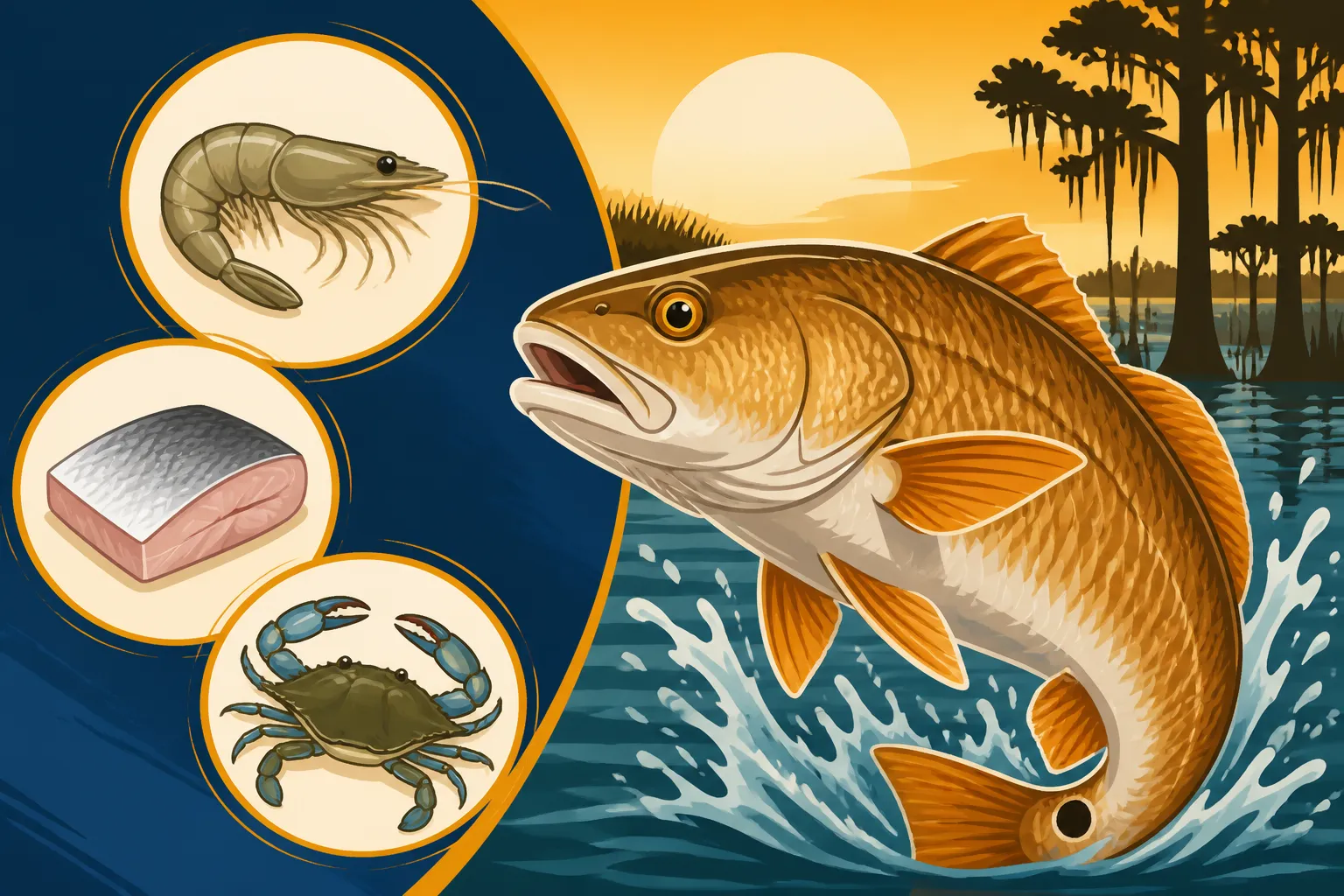
Bull redfish are opportunistic feeders, but they definitely have preferences. Their diet primarily consists of what's readily available in their environment, which typically includes a rich mix of crustaceans and baitfish. Crabs, especially blue crabs, are a huge favorite. Shrimp, while smaller, also make up a significant portion of their diet, particularly in estuarine areas. But when they're truly on the hunt, especially the larger bulls, they're looking for a substantial protein-packed meal like a juicy mullet or a fat menhaden.
Understanding this natural diet is crucial for selecting your bait. If you can present something that mimics what they're already accustomed to eating, your chances of success skyrocket. They rely heavily on scent, sight, and the vibrations of struggling prey, so a lively, natural presentation is often the key. For a deeper dive into what these fish eat, you can refer to Redfish Diet and Feeding Habits.
The Go-To Live Baits for Bull Redfish
When it comes to tempting a truly massive bull red, nothing beats the real thing. Live bait, with its natural movement, scent, and distress signals, is often irresistible to these powerful predators. It taps into their primal hunting instincts, often leading to a more aggressive strike.
Live Mullet: The Undisputed King
If there's one bait that comes to mind when targeting bull redfish, it's the live mullet. These hardy baitfish are a staple in the Gulf Coast ecosystem, and bull reds absolutely gorge on them. A live mullet, especially one in the 5-8 inch range, presents a substantial meal that a trophy redfish can't easily ignore. Their frantic swimming action when hooked sends out irresistible vibrations, signaling an easy meal.
You can rig a live mullet in a couple of ways. For free-lining in areas with lighter current or near structure, a single circle hook through the nose or just behind the dorsal fin allows the mullet to swim naturally. For bottom fishing in stronger currents or deeper channels, a Carolina rig or a fish-finder rig with the hook through the back or tail will keep the bait near the bottom where bull reds often feed. Sourcing live mullet usually means throwing a cast net yourself in shallow, grassy areas or visiting a well-stocked bait shop. Remember, healthy, active mullet are far more effective than sluggish ones.
Pinfish, Croakers, and Menhaden: Excellent Alternatives
While mullet might wear the crown, other live baitfish are incredibly effective and sometimes even easier to acquire. Pinfish, with their spiny fins and lively nature, are another prime target for bull reds. They're often found around grass beds and structure, and their struggles on the hook are a dinner bell for hungry reds. Croakers, known for their distinct "croaking" sound, are also a fantastic choice, particularly when bull reds are feeding aggressively. Their firm bodies hold up well on the hook.
Menhaden, often called "pogies," are oily baitfish that create a strong scent trail in the water, drawing reds in from a distance. While they can be a bit more fragile than mullet or pinfish, their oily content makes them super attractive. When using these alternatives, try to match the size of the bait to the fish you're targeting. For most bull reds, a 4-7 inch baitfish is ideal. Rigging is similar to mullet; a circle hook through the nose or back will give the best presentation. For more general tactics, check out Redfish Fishing Techniques on the Gulf Coast.
Live Shrimp and Crabs: Versatility and Scent Appeal
Even big bull reds can't resist a plump, juicy live shrimp or a struggling blue crab. While they might attract smaller fish as well, the sheer scent and natural movement of these crustaceans are powerful attractants. Live shrimp are incredibly versatile, working well under a popping cork in shallower bays or on a Carolina rig near deeper structure. Just be prepared to go through a few, as everything else in the water seems to love shrimp too!
Blue crabs, especially larger ones, are often reserved for targeting trophy bull reds because of their size and durability. You'll typically use a half or quarter of a larger crab, hooked through a leg socket or the shell, on a Carolina rig or fish-finder rig. The key with both shrimp and crabs is to present them naturally. Don't over-weight them if the current allows, and let them drift or bounce along the bottom. The strong scent and natural appearance of these baits can be absolutely deadly.
Cut Bait and Artificial Lures for Bull Reds
Sometimes, live bait isn't an option, or the situation calls for something different. That's where fresh cut bait and carefully selected artificial lures shine. They offer different advantages, like ease of use or the ability to cover vast amounts of water efficiently.
The Power of Scent: Fresh Cut Bait
When it comes to cut bait, freshness is absolutely paramount. A bull redfish's sense of smell is incredible, and a strong, natural scent trail can call them in from a surprising distance. Oily baitfish like mullet and menhaden are prime candidates for cut bait. Chunks of fresh mullet, cut into 1-2 inch squares or strips, are incredibly effective. The exposed flesh releases oils and blood into the water, creating a chum line that reds follow directly to your hook.
To rig cut bait, you typically want a strong circle hook (sized appropriately for the bait chunk) threaded through the meat, ensuring the hook point is exposed for a solid hookset. You can use a standard Carolina rig, or if you're fishing in really heavy current, a heavy sinker on a fish-finder rig will keep it anchored. Many anglers swear by using a whole half of a blue crab, crushed slightly to release its juices, on a similar setup. It's a no-nonsense approach that consistently produces big fish. You can find excellent bait knives and cutting boards to prepare your cut bait cleanly and efficiently, many of which are readily available on Amazon.
Top Artificial Lures for Aggressive Bull Reds
While live and cut bait are kings, there are times when artificial lures can outfish them, especially when fish are actively chasing or you need to cover a lot of ground. Large soft plastics are incredibly effective. Paddle tail swimbaits, jerkbaits, and even large grub tails, ranging from 4-7 inches, can mimic a struggling baitfish perfectly. Colors like chartreuse, white, natural mullet patterns, and darker shades for murky water are popular.
Spoons, especially those designed to imitate fleeing baitfish, like a gold or silver spoon, are also highly effective, particularly around jetties or passes where reds are ambushing prey. Topwater plugs, especially walk-the-dog style lures, can create explosive strikes during low light conditions or when reds are feeding aggressively on the surface. The key with artificials is matching the hatch and a varied retrieve that mimics natural prey. You might be surprised at the array of high-quality lures available for redfish, and many anglers stock up on their favorites through retailers like Amazon. For more on lure choices, see Best Bait for Redfish.
Scented Soft Plastics: Bridging the Gap
Scented soft plastics offer a fantastic middle ground between the natural appeal of live bait and the versatility of artificial lures. Brands like Berkley Gulp! have revolutionized this category, offering soft plastic baits infused with powerful scents that fish find irresistible. These baits, whether shrimp, crab, or baitfish imitations, release a scent trail that can entice bull reds even when they're not actively feeding.
The beauty of scented soft plastics is their durability and ease of use. You can rig a Gulp! shrimp on a jig head and fish it slowly along the bottom, or use a Gulp! swimming mullet on a weighted hook for a retrieve that mimics a fleeing baitfish. They’re excellent for covering water, and you don’t have to worry about keeping them alive. Many anglers keep a variety of these on hand, especially the larger sizes, and find it convenient to order them in bulk from sites like Amazon to ensure they're always prepared.
Rigging and Presentation Strategies for Success
Having the best bait in the world won't do you much good if you don't present it properly. Bull redfish are powerful, so your terminal tackle needs to be robust, and your rigging methods should be tailored to the specific bait and fishing conditions.
Essential Terminal Tackle for Bull Reds
When you're dealing with fish that can easily top 30 or 40 pounds, flimsy tackle isn't going to cut it. You'll want heavy-duty components that can withstand the brutal fight of a bull red.
- Hooks: For live and cut bait, sharp, strong circle hooks are almost universally recommended. They tend to hook fish in the corner of the mouth, reducing gut hooks and making release easier, which is crucial for conservation, especially with oversized bull reds. Sizes typically range from 6/0 to 10/0, depending on the size of your bait.
- Leaders: A stout leader is non-negotiable. Fluorocarbon leaders, ranging from 50 to 80 lb test, offer excellent abrasion resistance against rough mouths and sharp oyster shells, plus they're nearly invisible underwater. Heavy monofilament can also work. The length of your leader will vary, but usually 18-36 inches is a good starting point.
- Weights: The type and size of your weight will depend on current and depth. Pyramid sinkers are great for anchoring cut bait in strong currents, while egg sinkers allow your line to slide freely, which can be beneficial when a redfish picks up the bait. Make sure your weight is heavy enough to hold bottom but not so heavy that it spooks the fish. Many anglers find it cost-effective to buy their hooks, leaders, and weights in bulk online, and Amazon is a great resource for this, especially for common items you use often. For a more comprehensive look at techniques, consider Redfish Fishing Techniques on the Gulf Coast.
Popular Rigging Methods
Different baits and fishing situations call for different rigging approaches. Mastering these basic rigs will give you a significant advantage.
- Carolina Rig: This is perhaps the most common and versatile rig for redfish. It consists of an egg sinker (or pyramid sinker for heavy current) threaded onto your main line, followed by a swivel. A fluorocarbon leader (18-36 inches) is tied to the other end of the swivel, and your hook is tied to the end of the leader. This rig allows your bait to move naturally while keeping your weight on the bottom, making it excellent for presenting live or cut bait.
- Fish Finder Rig: Very similar to the Carolina rig, but instead of the sinker sliding directly on the main line, it slides on a separate "fish finder" sleeve that attaches to your main line. This is particularly useful in strong currents where you need a heavier weight, as it allows the fish to pick up the bait and run without feeling the resistance of the sinker. It’s ideal for larger live baits or substantial chunks of cut bait.
- Free-lining: For lively baitfish in areas with minimal current or when fish are feeding higher in the water column, free-lining is incredibly effective. Simply tie a hook directly to your leader (or mainline if using heavy braided line) and let your live bait swim freely. The absence of weight allows for the most natural presentation possible, often leading to aggressive strikes.
Here’s a quick comparison of these popular rigs:
| Rig Type | Best Use Case | Bait Type | Advantages | Disadvantages |
|---|---|---|---|---|
| Carolina Rig | Bottom fishing, moderate current, various structures | Live/Cut Bait | Natural bait presentation, good feel for bites | Sinker can get snagged |
| Fish Finder Rig | Strong currents, heavy weights, deep channels | Large Live/Cut Bait | Fish don't feel sinker, better hooksets with big fish | More components, can twist in strong current |
| Free-lining | Calm waters, surface feeding, active fish | Live Bait | Most natural presentation, maximum bait action | Limited to calm conditions, less bottom contact |
Understanding Location and Timing
Even with the perfect bait and rig, you need to be in the right place at the right time. Bull redfish are migratory and influenced by tides, seasons, and bait availability. They love structure, so target areas like jetties, rock piles, oyster reefs, bridge pilings, and the edges of deeper channels. Passes and inlets where large volumes of water move are also prime spots, as baitfish are funneled through these areas.
Tides play a crucial role. Moving water, whether incoming or outgoing, is key. It stirs up the bottom, dislodges crustaceans, and concentrates baitfish, making it easier for bull reds to feed. Often, the hour before and after a tide change can be exceptionally productive. Early mornings and late evenings, or even night fishing, can also be prime times, especially during warmer months, as the fish are more active in cooler temperatures. Always consult local tide charts and scout potential areas. For specific spots along the coast, refer to Best Spots to Catch Redfish on the Mississippi Coast. And don't forget to know your local Redfish Slot Limit on the Mississippi Gulf Coast to ensure you're compliant with regulations. It’s also worth noting that the Best Tide for Surf Fishing on the Mississippi Coast can vary, so local knowledge or a good tide app is invaluable.
Catching a truly massive bull redfish is an unforgettable experience, a testament to patience, skill, and choosing the right bait. It's about understanding their habits, presenting their preferred meal in an irresistible way, and being ready for a serious fight. Experiment with live mullet, embrace the scent power of fresh cut bait, or try a big, tantalizing artificial lure. The thrill of feeling that powerful tug on your line, knowing you've connected with a true Gulf Coast giant, is what keeps us coming back for more. So, gear up, hit those prime spots, and get ready to create some incredible fishing memories!
Disclaimer
This article is for general informational purposes only and does not constitute professional advice. Laws, prices and regulations vary by location and change over time. Consult a qualified professional for guidance on your specific situation.