Largemouth Bass Size and Growth in Mississippi
When you're out on the water in Mississippi, whether you're a seasoned angler or just starting, it's natural to wonder about the bass you're catching. Are they big for their age? Is this a lunker, or just a healthy average? Understanding the factors that influence largemouth bass size and growth in our state's diverse waters can profoundly change how you approach your fishing, helping you appreciate every catch and target those true giants more effectively. This guide is all about demystifying the growth journey of Mississippi's favorite game fish.
Understanding Largemouth Bass Growth Factors in Mississippi
It’s easy to think a bass just grows and grows, but their size is a complex equation influenced by a host of variables. From their genetic blueprint to the dinner menu available, every factor plays a critical role in how big that largemouth in your local pond or reservoir will eventually get.
The Role of Genetics in Bass Size
Let's start with what's in their DNA. Not all largemouth bass are created equal, genetically speaking. Mississippi waters are home to both native largemouth bass and the larger Florida-strain largemouth. The Florida strain is known for its potential to grow significantly larger and live longer than their native cousins, especially in warmer climates like ours. When the Mississippi Department of Wildlife, Fisheries, and Parks (MDWFP) stocks Florida-strain bass into our reservoirs, it's often with the specific goal of enhancing the trophy bass potential.
Imagine you're fishing a lake that's been regularly stocked with Florida-strain genetics, like certain areas of the Ross Barnett Reservoir. You might encounter fish that are inherently capable of reaching weights in the double digits. Contrast that with a smaller, isolated pond that has never seen a Florida-strain introduction; while bass can still grow large, their ultimate genetic ceiling might be lower. It's not a guarantee that a Florida-strain bass will get huge, but the genetic potential is definitely there, and it's a huge piece of the puzzle for why some lakes consistently produce bigger fish.
Environmental Conditions and Habitat Quality
Beyond genetics, where a bass lives dictates much of its growth. Think of it like a gardener cultivating a prize-winning tomato – the soil, sunlight, and water all matter. For bass, that "soil" is the water quality, clarity, and temperature. Mississippi’s long, warm growing season is a huge plus, allowing bass to feed and grow for more months out of the year compared to northern states.
But it’s more than just temperature. A lake or river with abundant cover like submerged timber, lily pads, hydrilla, and rock piles offers both ambush points for feeding and protection from predators. These structures create a diverse ecosystem where baitfish thrive, which in turn means more food for the bass. Conversely, a featureless body of water with poor water quality, whether from pollution or excessive siltation, will stress the fish, slow their metabolism, and ultimately stunt their growth. If a bass is constantly expending energy just to find food or clean water, it has less energy left over for growing big and strong. You'll often find that the Best Bass Fishing Lakes in Mississippi are those with diverse and healthy habitats.
Forage Abundance and Diet
This is perhaps the most critical factor: what’s on the menu and how much of it there is. A bass literally is what it eats, and if it's eating a lot of high-protein meals, it will grow fast and large. Mississippi lakes and rivers are rich in forage species like gizzard shad, threadfin shad, various species of bream (like bluegill and redear sunfish), and crayfish. When these bait populations are booming, bass have a readily available food source, allowing them to pack on the pounds efficiently.
Consider a healthy reservoir like Grenada Lake or Pickwick Lake, known for their abundant baitfish populations. Bass in these waters can gorge themselves, turning those calories directly into mass. On the other hand, if a lake becomes overpopulated with bass, or if there's a sudden decline in baitfish due to environmental changes, the bass will face intense competition for food. This food scarcity leads to slower growth rates and can result in a population of stunted, skinny fish, even if they're genetically predisposed to grow larger. A rich and varied diet is truly the fuel for growth, and understanding Largemouth Bass Diet and Feeding Habits can help you choose the right bait.
Typical Largemouth Bass Sizes Across Mississippi Waters
It's one thing to talk about growth potential, and another to see what's actually biting at the end of your line. While Mississippi is known for its quality bass fishing, the average size can vary wildly depending on where you drop your hook.
Average Sizes in Public Reservoirs
In many of Mississippi's larger public reservoirs – think Ross Barnett, Sardis Lake, or Enid Lake – a "typical" keeper largemouth bass often falls into the 1 to 3-pound range. These are healthy, feisty fish that are a joy to catch. A 4 to 6-pound bass is considered a really good fish, often enough to make your day and definitely worth a photo. When you start getting into the 7 to 9-pound class, you're talking about a legitimate trophy for many anglers, the kind of fish that puts a permanent grin on your face. Anything over 10 pounds is truly exceptional, a "fish of a lifetime" for most, and the focus of the state's trophy bass management programs.
These averages reflect a balance of fishing pressure, diverse habitat, and generally good forage. While you might catch more numbers of smaller bass, the opportunity for a substantial fish is always present, especially if you're exploring Best Fishing Spots in Mississippi and using effective Bass Fishing Techniques for Mississippi Anglers.
Farm Ponds and Private Lakes: A Different Story
Step away from the big public waters and into the countless farm ponds and private lakes scattered across Mississippi, and the size game can change dramatically. In a well-managed private pond, where stocking is controlled, forage is plentiful, and fishing pressure is moderate, bass can grow incredibly fast and reach impressive sizes. It’s not uncommon to hear tales of 8, 9, or even 10-pound bass coming from private waters that receive proper care. This is often because landowners can tailor the fish population and food sources to maximize bass growth, sometimes even selectively harvesting smaller fish to reduce competition.
However, the flip side exists too. Many private ponds suffer from overpopulation, especially if they haven't been properly managed. If a pond has too many bass and not enough food, the growth of all fish can be stunted. You might catch dozens of bass, but they're all 8 to 12 inches long and weigh less than a pound. It's a classic case of too many mouths to feed, and without intervention, these ponds rarely produce larger fish.
Factors Influencing Size Variation by Region
Mississippi is a diverse state geographically, and these regional differences can subtly impact bass growth. In the fertile Delta region, for example, many lakes and oxbows are incredibly rich in nutrients and forage, sometimes leading to faster growth rates, though water clarity can be a challenge. Moving east into the pine forests and hill country, lakes might be clearer but potentially less fertile, requiring a slightly different dynamic for bass to thrive.
The Gulf Coast region, while renowned for its saltwater opportunities, also has freshwater systems where bass fishing thrives. The consistent warmth and often abundant estuarine forage in areas less affected by salinity can contribute to rapid growth. Ultimately, each body of water has its own unique character, and understanding the local conditions is key to anticipating what size bass you might encounter.
The Lifespan and Age of Mississippi Largemouth Bass
When you land a truly big largemouth, it’s natural to wonder just how old that fish is. Is it a fast-growing youngster or a wise old lunker? The relationship between age and size in bass isn’t always as straightforward as you might think.
How Long Do Largemouth Bass Typically Live?
In Mississippi's warm climate, a largemouth bass generally lives between 6 to 10 years in public waters. However, some can certainly exceed that, particularly in well-managed systems with less fishing pressure and ample food. It's rare to see a bass much older than 12-15 years, as factors like disease, predation, and the stresses of spawning and fishing encounters all take their toll.
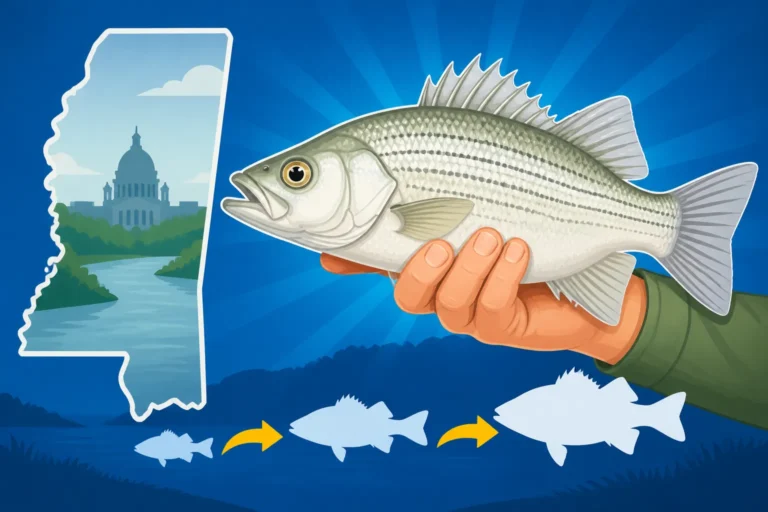
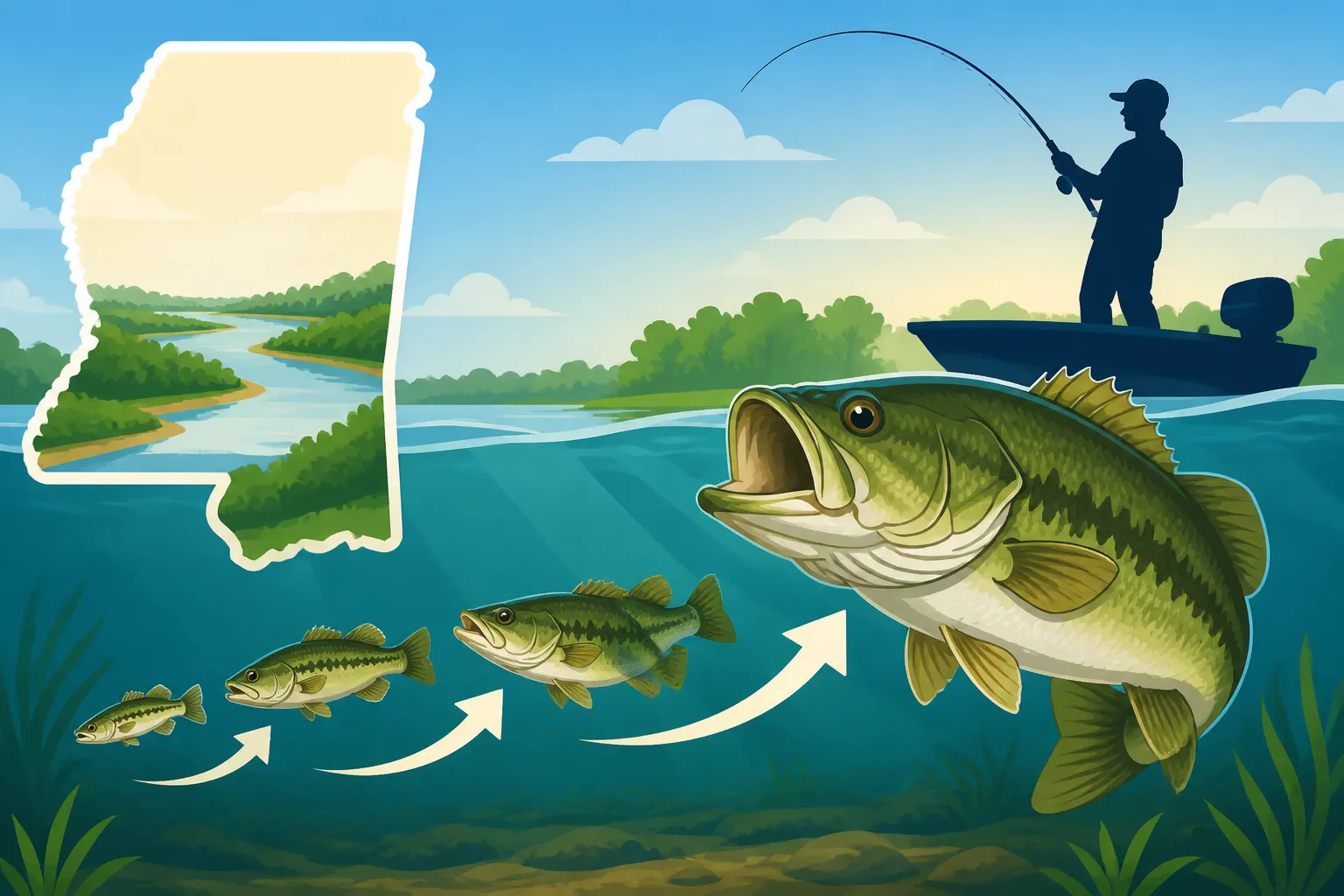
Younger bass grow very quickly, often adding a pound or more per year in their prime. As they age, their growth rate tends to slow down. An 8-pound bass might be 5-7 years old, but a 10-pounder might only be a couple of years older, simply because adding those last few pounds takes more time and energy. Understanding the average lifespan can also influence conservation decisions, like promoting Mississippi Fishing License Exemptions for certain groups to encourage more people to enjoy fishing while still maintaining healthy populations through thoughtful regulations.
Age vs. Size: It's Not Always Linear
Here's where it gets interesting: a big bass isn't always an ancient bass, and a smaller bass isn't necessarily a young one. You could catch a 5-year-old bass that weighs 8 pounds in a rich, fertile lake with Florida-strain genetics and abundant food. In another lake with poor forage or overpopulation, you might catch a 5-year-old bass that barely weighs 2 pounds. This highlights the immense impact of environment and genetics on growth.
Fishery biologists often determine a fish's age by examining its otoliths (ear bones) or scales, which have growth rings much like a tree. This scientific method reveals that two fish of the exact same length can be vastly different ages, and two fish of the same age can have vastly different weights, depending on their individual life story and the conditions of their home waters.
Protecting Our Larger, Older Bass
This non-linear growth brings up an important point about conservation. Those truly large, older bass, especially the females, are often the most prolific spawners and carry the best genetics for future trophy fish. Catching and releasing these giants, particularly during sensitive times like the When Do Bass Spawn in Mississippi?, is crucial for maintaining a healthy and robust bass fishery. Many anglers embrace this philosophy, knowing that allowing these fish to live and reproduce means more trophy opportunities for everyone in the long run. Practicing careful handling, quick release, and minimizing stress are vital steps to ensure these magnificent fish swim away strong.
Mississippi's Pursuit of Trophy Largemouth Bass
There's a special allure to catching a trophy largemouth bass. It’s not just about the size; it’s the culmination of understanding the fish, the water, and often a lot of patience and skill. Mississippi anglers are certainly up to the challenge, and the state has some truly impressive fish swimming in its waters.
What Qualifies as a "Trophy Bass" in Mississippi?
For many Mississippi anglers, a "trophy bass" starts at around 7 pounds. Catching a bass in the 7-9 pound range is a significant accomplishment and often earns bragging rights. A 10-pound bass is truly a milestone, something many dedicated bass anglers spend years, if not a lifetime, pursuing. Of course, the ultimate trophy is the state record, a truly magnificent fish that represents the pinnacle of largemouth growth in Mississippi. You can check out the current Mississippi State Record Largemouth Bass Weight to see just how big they can get!
The MDWFP often focuses its management efforts on producing these larger fish, recognizing their recreational value and the economic boost they bring to local communities. It's a goal that unites anglers across the state, always with an eye toward that next giant.
Strategies for Targeting Larger Bass
If you’re serious about hooking into Trophy Bass in Mississippi Waters, it often means adjusting your approach. Big bass are generally smarter, more cautious, and prefer larger meals. This often translates to using bigger baits, like large swimbaits, deep-diving crankbaits, or substantial soft plastics, which mimic the larger forage items they prefer.
Targeting specific habitats is also key. Trophy bass often relate to substantial structure like deep points, old creek channels, large submerged timber, or dense vegetation mats where they can ambush prey. Understanding seasonal patterns – for instance, when bass move shallow to spawn in spring or feed heavily on shad in the fall – can significantly increase your chances. Fishing during optimal times, such as low-light conditions or after a cold front has stabilized, can also make a difference. Many anglers find success by delving into Largemouth Bass Fishing in Mississippi to learn more advanced tactics.
The Role of Conservation and Management
Mississippi is dedicated to fostering a healthy and productive bass fishery. The MDWFP plays a vital role through various programs, including stocking Florida-strain largemouth bass in key reservoirs to enhance trophy potential. They also implement protective regulations, such as slot limits or minimum size requirements, in certain waters to allow fish to reach larger sizes before being harvested.
Anglers also contribute significantly to conservation. Participating in catch-and-release, especially for larger breeding fish, and adhering to Mississippi Black Bass Regulations are essential. The fees collected from fishing licenses, such as those detailed in the Mississippi Fishing License Guide, directly fund these conservation efforts, ensuring that future generations of anglers will have the opportunity to chase their own trophy bass. It's a collaborative effort between the state and its anglers to protect and enhance this incredible natural resource.
Comparing Largemouth Bass Growth in Different Mississippi Water Types
Let's take a quick look at how the average growth and size potential of largemouth bass can differ across various types of waters in Mississippi. This isn't an exact science, of course, as every body of water is unique, but it gives you a general idea of what to expect.
| Water Type | Typical Growth Rate | Average Adult Size (lbs) | Max Size Potential (lbs) | Key Factors |
|---|---|---|---|---|
| Large Public Reservoir | Moderate to Good | 1-3 | 8-10+ | Abundant forage, Florida-strain genetics, some fishing pressure |
| Well-Managed Private Pond | Excellent, often Fast | 3-6 | 10-14+ | Controlled stocking, rich forage, limited pressure, selective harvest |
| Overpopulated Private Pond | Slow, Stunted | 0.5-1.5 | 3-4 (rare) | Too many bass, insufficient forage, no management |
| River/Flowing Water | Variable (Moderate to Good) | 1-4 | 8-10+ | Current, diverse habitat, flow changes, often good forage |
This table shows a general trend. If you’re looking for numbers of fish, a large reservoir or even an overpopulated pond might be your ticket. But if that true lunker is your goal, a well-managed private pond or a carefully selected public water with a known history of big fish is often where you'll find them.
Disclaimer
This article is for general informational purposes only and does not constitute professional advice. Laws, prices and regulations vary by location and change over time. Consult a qualified professional for guidance on your specific situation.