Largemouth Bass vs Spotted Bass Differences
Largemouth and spotted bass share similar habits in Mississippi waters, creating common identification challenges for anglers.
Know what’s on the line.
Gamefish and panfish profiles — identification, behavior, feeding habits, and species-specific strategies for every catch.

Largemouth and spotted bass share similar habits in Mississippi waters, creating common identification challenges for anglers.
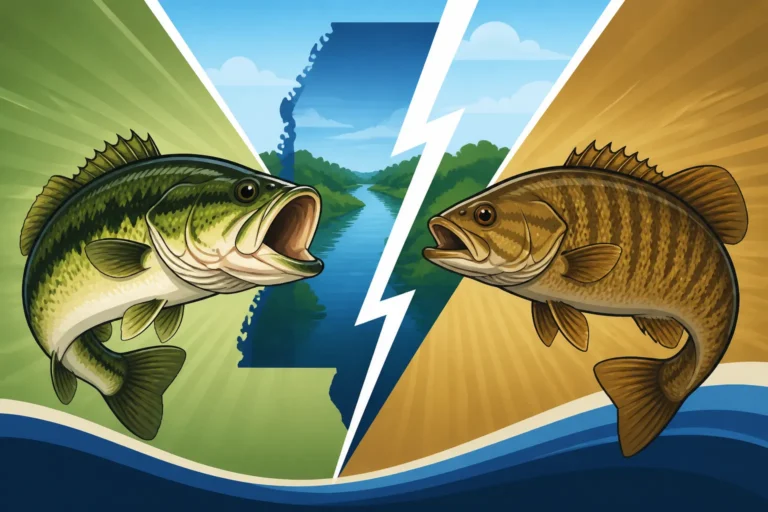
Largemouth and smallmouth bass feature distinct physical differences in jaw length, body shape, and dark green coloration.
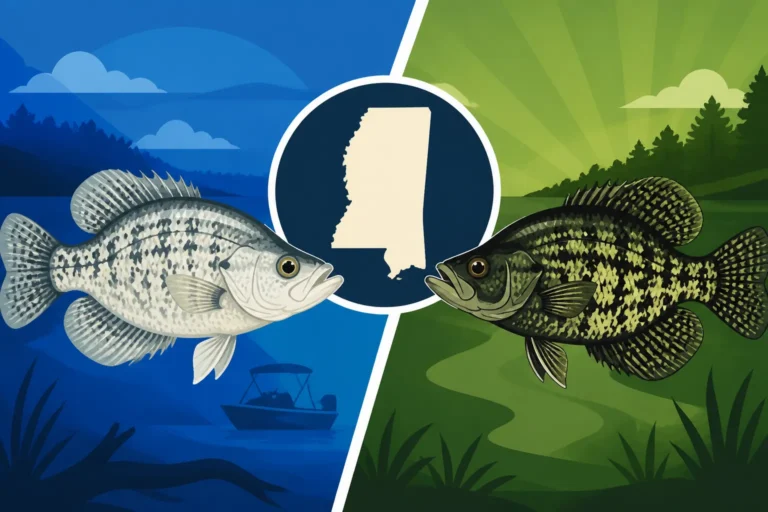
White and black crappie differences include vertical body bars, random speckles, and counts of six to eight dorsal spines.
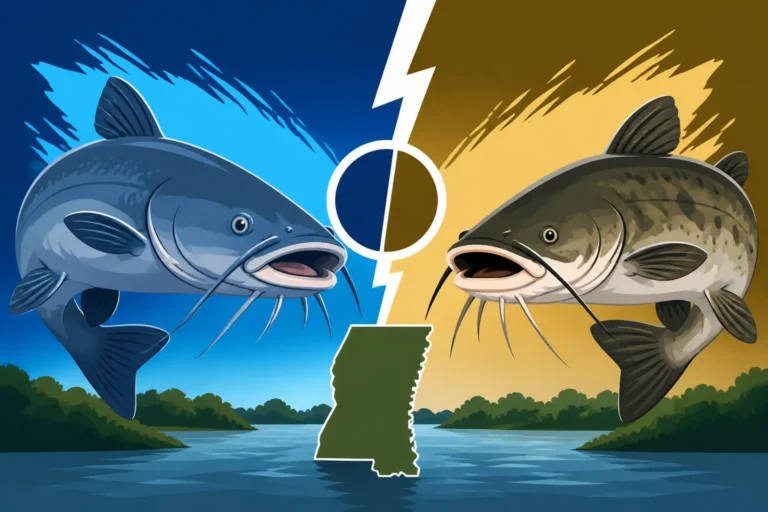
Blue and channel catfish identification in Mississippi waters explained through head shapes, body types, and fin ray counts.
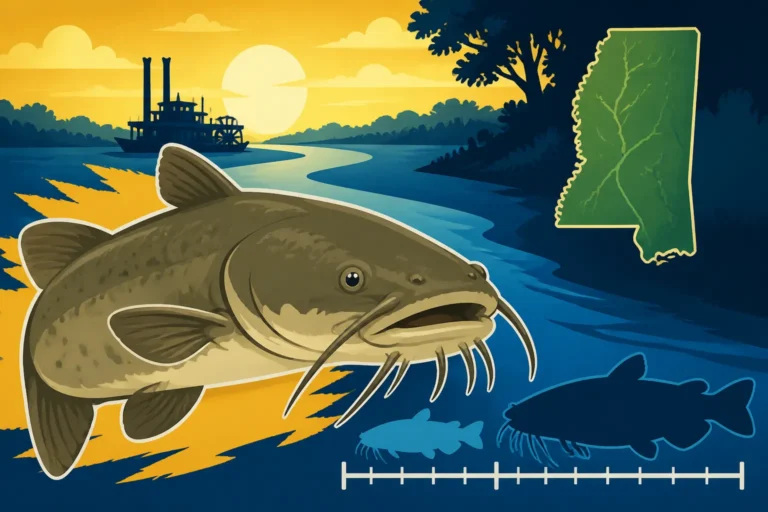
Flathead catfish average and maximum sizes in Mississippi waters, along with food availability and environmental growth factors.

Blue catfish in the Mississippi River live for twenty to thirty years and feed on shad and skipjack herring to reach trophy sizes.

Mississippi state record catfish weights include a 52-pound channel catfish and a 101-pound blue catfish from state waters.

Crappie, nicknamed sac-au-lait or papermouths, are a cherished tradition in Mississippi, and landing a state record is the goal of anglers beyond a fish fry.
The Mississippi state record largemouth bass weighed eighteen pounds and fifteen ounces, caught by Anthony Denny at Natchez State Park Lake.
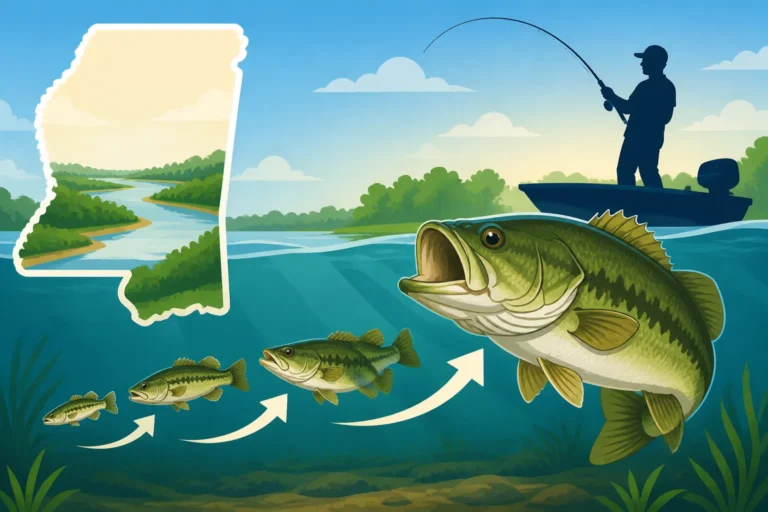
Largemouth bass size and growth in Mississippi depend on Florida strain genetics, water habitat quality, and abundant forage species.