How Wind Direction Affects Bass Fishing
It's incredibly frustrating, isn't it? You spend hours meticulously selecting the perfect lure, scouting prime locations, and checking the water temperature, only to have a successful day turn into a bust because the wind picked up or died down. Many anglers underestimate just how profoundly wind direction influences bass behavior and, by extension, our chances of a good catch. This comprehensive guide is here to demystify the often-overlooked power of wind, explaining precisely how different wind conditions affect bass fishing in Mississippi and, most importantly, how you can adjust your strategy to turn windy woes into angling wins.
The Fundamental Influence of Wind on Water Dynamics
Before we dive into specific wind directions, it's crucial to understand the foundational ways wind impacts the aquatic environment where bass live. Think of wind not just as something that ruffles the surface, but as an invisible hand stirring the pot of an entire ecosystem.
Wind-Driven Currents and Baitfish Movement
One of the most significant effects of wind is its ability to create currents. Unlike river currents that are constant, wind-driven currents are dynamic and can change throughout the day. When wind persistently pushes against a shoreline or across a body of water, it creates a subtle but powerful current beneath the surface. This current is a game-changer for bass anglers because it actively moves baitfish.
Imagine a stiff breeze blowing consistently across a large flat on Ross Barnett Reservoir. That wind will push tiny plankton, which are food for smaller baitfish like shad, towards a particular bank. The shad follow their food, and what follows the shad? You guessed it – hungry largemouth bass. These wind-generated currents act like a conveyor belt, concentrating food sources and, subsequently, the predators that feed on them. Bass, being ambush predators, will instinctively position themselves on the downwind side of structures or along current breaks, waiting for an easy meal to be delivered right to them. Understanding this principle is key to unlocking some of the best fishing spots in Mississippi.
Surface Chop and Light Penetration
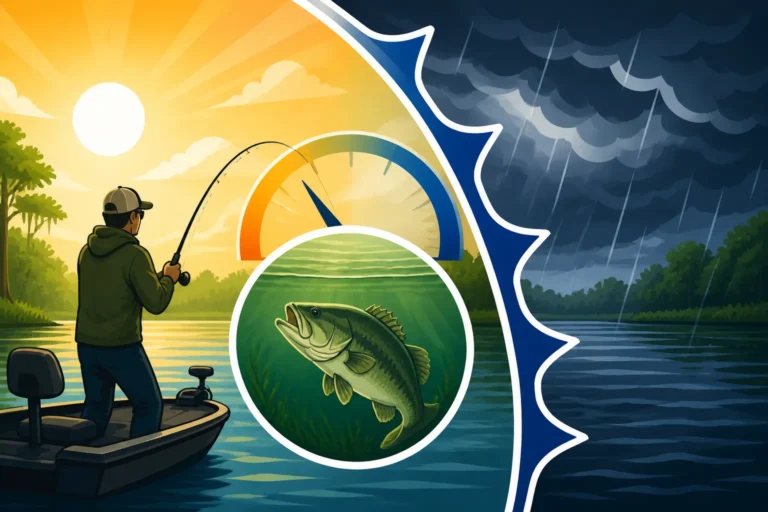
The visible ripple or chop on the water's surface, directly caused by wind, plays a dual role in bass behavior. First, it breaks up the penetration of sunlight into the water. On bright, sunny days, bass often seek shade or deeper water to escape harsh light, which can irritate their eyes. A moderate chop scatters the light, making the water appear dimmer and providing a sense of security for bass, encouraging them to move into shallower, more active feeding areas. It also makes it harder for them to spot you, the angler, from above.
Conversely, on slick calm days, especially in clear water, bass become incredibly wary. The lack of surface disturbance allows maximum light penetration, making them more visible to predators from above (like birds of prey) and more exposed. This often makes them spooky, sending them seeking cover or deeper haunts. The surface chop also helps to "break up their silhouette" from prey underneath, making it easier for bass to ambush unsuspecting baitfish. If you're struggling to catch bass, sometimes a little ripple can be exactly what you need.
Water Oxygenation and Temperature Regulation
Wind also contributes to the overall health and comfort of bass by aiding in water oxygenation. Wave action created by wind increases the surface area exchange between the water and the atmosphere, introducing more dissolved oxygen into the water column. This is particularly important in warmer months when oxygen levels can naturally decrease, especially in shallower areas or stagnant coves. Bass, like all fish, need oxygen, and actively wind-blown areas will often have higher, more favorable oxygen levels.
Furthermore, wind can influence water temperature. While not as drastic as deep currents, a sustained breeze can help cool surface waters during hot summer days or mix warmer surface water with cooler deeper water. Bass are highly sensitive to temperature changes and will seek out their preferred thermal zones. A slight drop in surface temperature caused by wind might make an otherwise too-hot shallow flat comfortable enough for bass to feed actively. This micro-management of the environment by wind means prime feeding opportunities can arise in unexpected places.
Deciphering Wind Directions and Bass Responses
Now that we understand the basics, let's break down how bass react to specific wind directions relative to shorelines and structures. This is where you can really start to put the pieces together on the water.
Wind Blowing Directly Into a Bank or Point
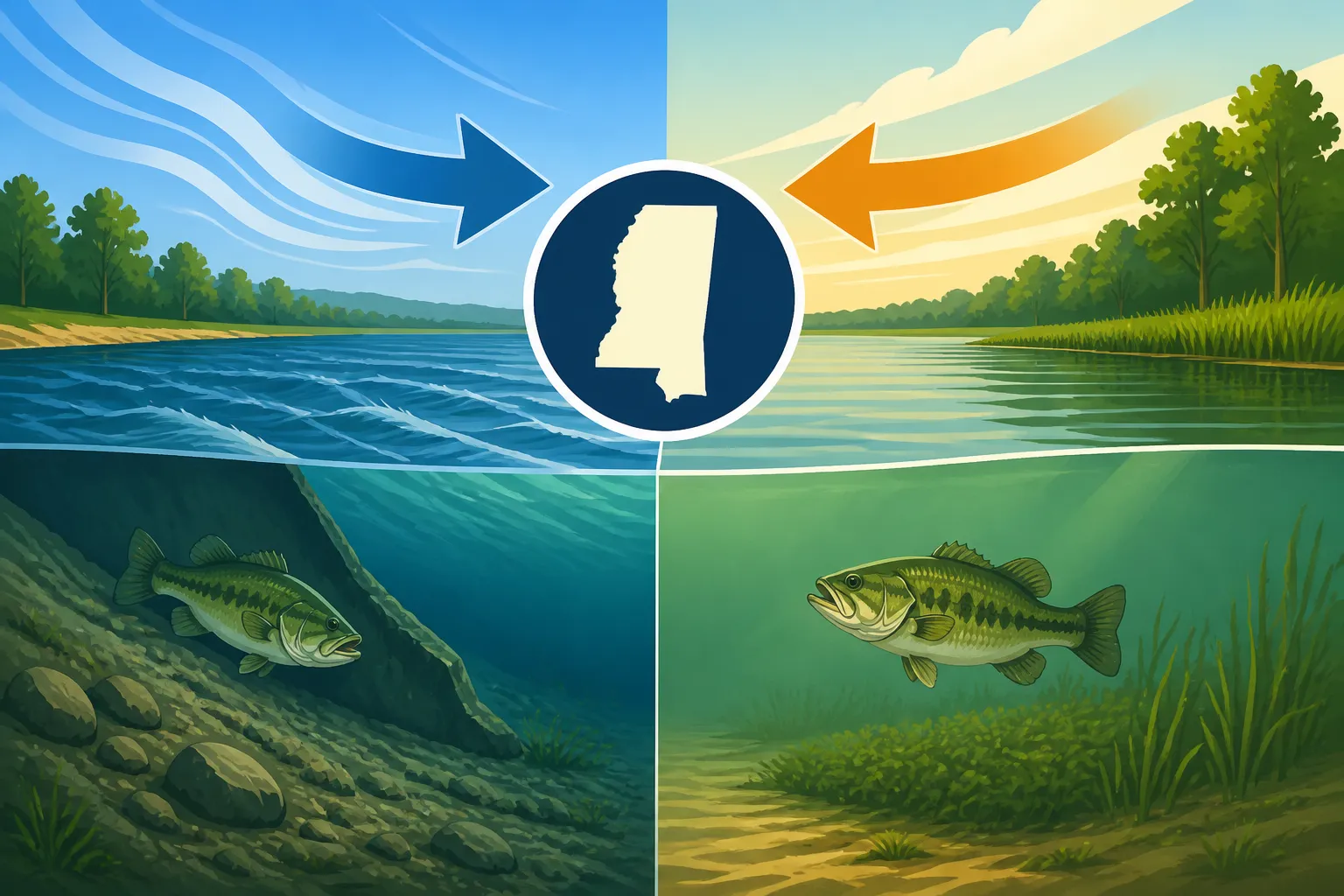
This is often an angler's favorite scenario, and for good reason. When the wind blows directly into a shoreline, a point, or a shallow flat, it acts like a funnel, pushing everything – plankton, baitfish, and warmer oxygenated water – right up against that structure. Bass will instinctively move to these wind-blown areas because it’s where the buffet is being served.
Think about a point extending into Grenada Lake. If the wind is consistently blowing right into the face of that point, baitfish will be concentrated there, often struggling against the current. Bass will set up on the leading edge of the point, or just off to the sides, using the point as a current break and ambush point. This is a classic pattern for many Mississippi bass anglers. You'll want to cast your lures, perhaps a heavier jig or a crankbait you picked up from Amazon, directly into the wind, allowing the lure to be carried back naturally with the current past potential holding areas. Focus on casting to areas where the wind-driven current hits a hard structure or a distinct break in the bottom contour. These can be incredible spots for a trophy catch.
Wind Blowing Across a Bank or Flat
A crosswind can be a bit trickier than a direct headwind, but it still offers excellent opportunities. When the wind blows parallel to a shoreline or across a large flat, it creates a consistent current that sweeps along the length of the structure. Bass won't be as tightly concentrated as they would with a direct headwind, but they will still orient themselves into the current, often on the "down current" side of submerged cover like stumps, brush piles, or weed lines.
Imagine a long, featureless bank on the Mississippi River. If the wind is blowing parallel to it, bass might spread out along the entire stretch, positioning themselves slightly off the bank on any subtle changes in bottom composition or small patches of cover. Your strategy here should be to make long casts parallel to the bank, allowing your lure to drift naturally with the crosscurrent. Covering water efficiently is key in these situations. Spinnerbaits, swimbaits, or even a Carolina rig can be very effective as they mimic baitfish moving with the current. Pay close attention to subtle strikes, as bass might just be "nipping" at the lure as it drifts past.
Wind Blowing Off a Bank or Out From Shore
This is often considered the most challenging wind direction for inshore bass fishing. When the wind blows from the land out across the water, it generally pushes baitfish and warmer surface water away from the immediate shoreline. This can leave the bank-side water calmer, cooler, and less appealing to feeding bass. While it's not impossible to catch fish in these conditions, you usually won't find bass actively feeding right up against the bank.
In an offshore wind scenario, bass tend to move deeper or seek out sheltered areas. Look for coves, pockets, or cuts in the shoreline that offer protection from the direct wind. These areas might become calm "lee" sides where baitfish seek refuge, and bass will follow. Alternatively, you might need to move further offshore yourself and target deeper humps, ledges, or submerged structure where bass are less affected by surface wind. On these days, slower, bottom-oriented presentations like shaky heads, drop shots, or deep-diving crankbaits are often more effective. Don't be afraid to explore offshore contours, perhaps using your electronics to locate fish on structures you might otherwise overlook.
The Dreaded No-Wind, Slick-Calm Scenario
Ah, the "glass lake" effect. While visually appealing, a completely still, slick-calm surface can be one of the toughest conditions for bass fishing. Without any chop to break up the light, bass become incredibly wary and can be easily spooked. They'll often retreat to the deepest available cover or suspend in open water, becoming much less aggressive.
When facing slick calm conditions, especially on bright days, your approach needs to be stealthy and your presentations subtle. Consider fishing during low-light periods like dawn, dusk, or even at night. For daytime fishing, target heavily shaded areas, dense cover, or deep-water structures. Use lighter lines, smaller baits, and slower retrieves. Sometimes, a finesse worm fished weightless, or a small jig worked painstakingly slowly, is all it takes. This is where patience truly pays off. If you're fishing a well-known spot like Sardis Lake, and it's slick calm, you might be better off looking for a different approach or even trying for crappie instead, as they sometimes tolerate these conditions better in deeper water.
Adjusting Your Angling Approach for Optimal Wind Fishing
Knowing how wind affects bass is only half the battle. The other half is knowing what to do about it. Here’s how you can adapt your gear and techniques to fish effectively, no matter which way the wind is blowing.
Lure Selection and Presentation Modifications
Wind directly impacts your lure's castability and its action in the water. In strong headwind situations, lighter lures become almost impossible to cast accurately or reach distant targets. This is when you need to reach for heavier baits. Think about using a heavier jig, a tungsten weight on your Texas rig, or a compact, dense lipless crankbait that cuts through the wind. You can find a fantastic selection of these on Amazon, ready to be shipped right to your door before your next trip. Additionally, windy conditions create a natural current and chop that can make topwater lures and spinnerbaits incredibly effective, as the disturbance they create mimics struggling baitfish.
Conversely, in calm conditions, you'll want to opt for lighter, more subtle presentations. Weightless worms, small flukes, or finesse jigs are ideal. The key is to make quiet entries into the water and work your lures slowly, allowing the natural action to entice wary bass. Furthermore, consider your fishing line. In heavy wind, a heavier fluorocarbon or braided line can help with sensitivity and controlling your bait, while in calm, clear conditions, lighter fluorocarbon might be essential for a stealthy approach.
Here's a quick reference table for adjusting your lure selection based on wind:
| Wind Condition | Surface Chop Level | General Lure Categories | Examples of Specific Lures | Key Presentation Notes |
|---|---|---|---|---|
| Strong Wind | High | Heavy, Wind-Cutting, Surface Agitators | Lipless Crankbaits, Heavy Jigs, Spinnerbaits, Topwater Poppers/Walkers | Cast into or perpendicular to the wind. Utilize current for natural presentation. Fish faster to cover water. Topwater can be excellent. |
| Moderate Wind | Moderate | Versatile, Reaction Baits | Crankbaits, Chatterbaits, Swimbaits, Texas Rigs, Jigheads | Focus on target areas where bait is concentrated. Experiment with retrieve speeds. Good for covering flats and points. |
| Light Breeze | Slight Ripple | Finesse, Natural Presentations | Flukes, Finesse Jigs, Weightless Worms, Jerkbaits | Slower retrieves. Focus on edges of cover. Bass are less pressured, but still sensitive to unnatural movements. |
| No Wind (Calm) | None (Glass) | Ultra-Finesse, Subtle | Drop Shots, Shaky Heads, Neko Rigs, Small Worms | Stealth is paramount. Fish deeper or in heavy cover. Extremely slow retrieves. Use lighter lines. Early morning/late evening bites are often best. |
Mastering Boat Control and Positioning
Unless you're strictly bank fishing, boat control is paramount when dealing with wind. A good trolling motor is your best friend. Instead of fighting the wind directly, try to use it to your advantage. If the wind is blowing into a bank you want to fish, position your boat upwind of your target and use your trolling motor to slowly drift past, allowing you to make repeated, accurate casts into the strike zone. This technique, often called "wind drifting," allows for a natural lure presentation.
Alternatively, you might need to "anchor" yourself with your trolling motor's spot-lock feature on a specific structure like a submerged hump or a brush pile. This lets you thoroughly pick apart a key area without being constantly blown off course. If you're fishing a long stretch of bank with a crosswind, try to maintain a boat position that allows you to cast parallel to the bank, allowing your lure to drift with the wind-generated current for maximum effectiveness. Understanding how to use your boat to manage drift and maintain casting angles is a skill that greatly improves your success rate, especially when fishing for bass in Mississippi.
Locating Wind-Blown Structures and Current Breaks
The wind doesn't affect all parts of a lake equally. Some areas will be heavily impacted, while others remain relatively calm. Your job is to identify the wind-blown "target zones" that bass will likely migrate to. Look for points, humps, and ledges that are directly exposed to the prevailing wind. These are natural current breaks and baitfish aggregation points.
Also, pay attention to visible changes in the water. A muddy "mud line" often forms on the wind-blown side of a structure, indicating where the current is pushing sediment and, very likely, baitfish. In some lakes, like the vast expanse of the Tennessee-Tombigbee Waterway, larger bays or channels can create significant wind tunnels. Understanding how to identify these areas on a map before you even launch your boat can give you a massive advantage. Don't be afraid to travel to the windiest side of a lake if that's where the most productive conditions are, even if it makes for a bumpy ride. You might find some of the best bass fishing you've ever experienced there.
Remember that while wind can be a challenge, it's also a powerful tool for concentrating fish. By understanding its mechanics and adjusting your tactics, you can turn a potentially frustrating day into a rewarding one on the water.
Disclaimer
Fishing conditions and regulations in Mississippi can change. Always consult the latest rules and regulations from the Mississippi Department of Wildlife, Fisheries, and Parks (MDWFP) before heading out. Safety first!