Best Structure to Fish for Bass in a Reservoir
It’s a common scenario: you pull up to a vast Mississippi reservoir, looking out over miles of water, and that familiar question hits you – "Where do I even start looking for bass?" Reservoirs can feel incredibly intimidating compared to smaller ponds or rivers, precisely because they’re so massive and often hide their best secrets beneath the surface. Knowing what structures bass relate to, and why, is the absolute key to unlocking success on these expansive waters. This guide will dive deep into identifying and effectively fishing the best structures in Mississippi reservoirs, helping you narrow down that overwhelming expanse into manageable, fishable zones.
Understanding Reservoir Habitat and Bass Behavior
Reservoirs are unique fishing environments, distinct from natural lakes. They are essentially dammed rivers, which means they often retain characteristics of both a river (current, distinct channels) and a lake (large open water, varying depths). This blend creates a complex ecosystem, and understanding these underlying dynamics is crucial for consistently finding bass. Bass, like most fish, are creatures of habit and efficiency; they'll position themselves on structure that provides access to food, cover from predators, and comfort from environmental factors like light intensity and water temperature.
What makes a reservoir "home" for a bass isn't just the water itself, but the hidden contours and remnants of the landscape that existed before the area was flooded. These submerged features become critical ambush points, travel corridors, and resting areas. The fluctuating water levels common in many Mississippi reservoirs, whether due to power generation or flood control, also constantly reshape how bass use these structures, often pushing them shallower or deeper depending on the conditions. Your ability to read these submerged clues and adapt your approach will set you apart from other anglers.
Key Structures for Targeting Largemouth Bass
When you’re out on the water, the challenge isn’t just finding any structure, but understanding which structures are most likely to hold bass at a given time. Bass don't just hang out randomly; they prefer specific types of cover and contour changes that give them an advantage. Learning to identify these spots, both visually and with your electronics, is paramount.
Submerged Timber and Brush Piles
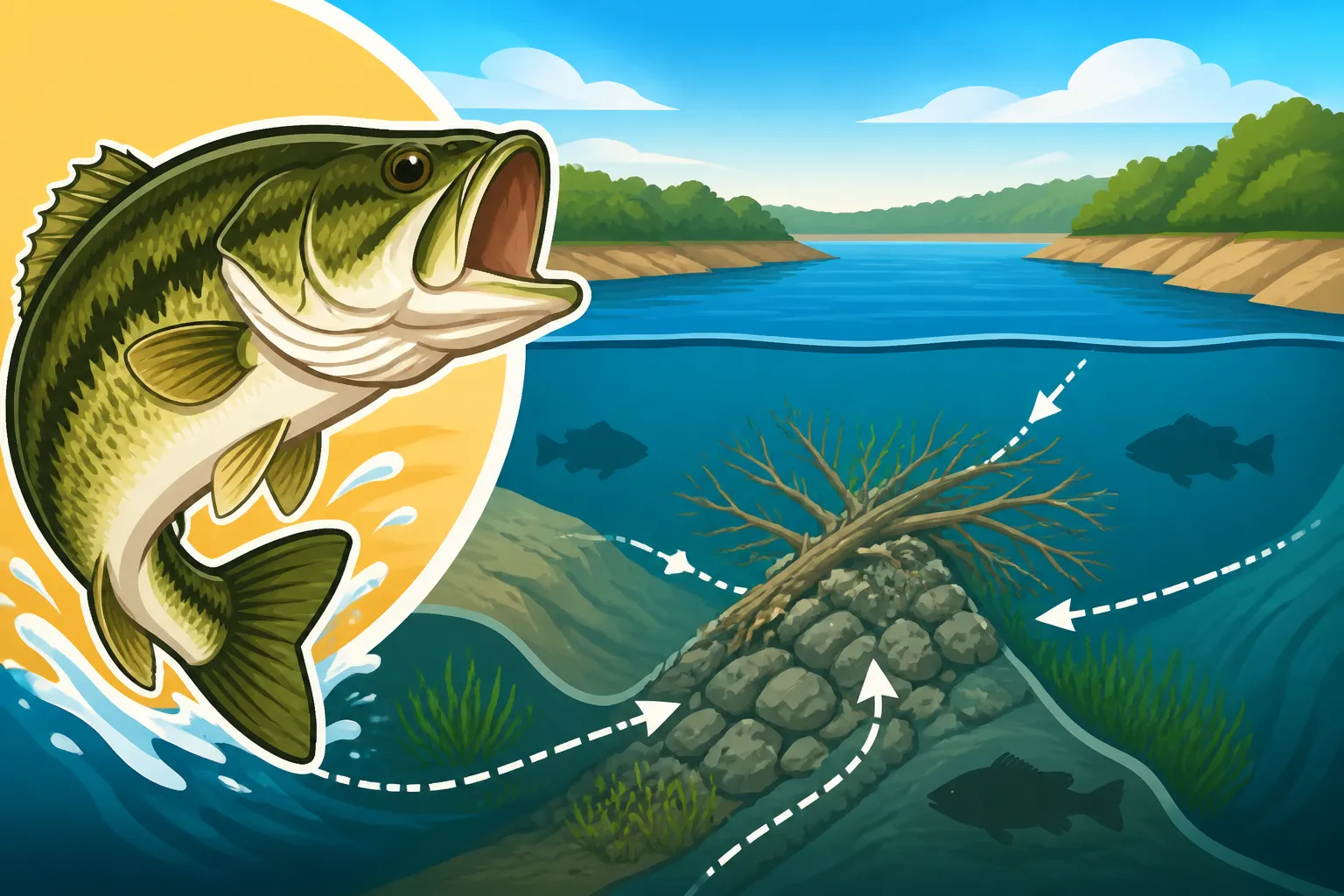
There's a reason submerged timber and man-made brush piles are classic bass magnets: they offer the perfect combination of shade, ambush points, and protection. In Mississippi's major reservoirs like Ross Barnett or Sardis Lake, you'll find vast expanses of standing timber, stumps, and intentional brush piles created by anglers or wildlife agencies.
Bass love to position themselves within the branches, using the cover to hide from prey like shad and bluegill, ready to dart out and strike. The density of these areas also provides refuge from harsh sunlight and can offer cooler water in the summer. When fishing these structures, focus on the edges of the timber lines, isolated stumps, and the deepest portions of a brush pile. Using stout gear, like heavy braided line and a strong rod, is essential to pull fish out of these snag-prone areas. Many anglers even build their own brush piles, sinking them in strategic locations to create their personal hotspots; just be sure to check local regulations first. For more on this, check out our guide on how to find bass around submerged timber.
Old Roadbeds and Foundations
Before a reservoir is flooded, there’s often a whole world beneath it – old towns, farms, roads, and bridges. These remnants of past human activity become fantastic, often overlooked, bass structures. An old roadbed, for example, creates a subtle but significant change in bottom contour. Bass will cruise along these elevated sections, using them as travel routes, or sit just off the edge, ambushing prey moving across the flatter bottom.
Similarly, the foundations of old houses, barns, or bridge abutments provide hard cover and abrupt depth changes that attract baitfish, and in turn, bass. These structures are often located in areas that were once higher ground, creating productive humps or points. Finding these requires good mapping and sonar units. You might mark these spots with waypoints on your GPS for future trips. Imagine a bass sitting right where an old chimney once stood, waiting for an unsuspecting minnow to swim by – it's prime real estate for a predator.
Creek Channels and River Bends
Remember, reservoirs are essentially flooded river systems, so the original creek and river channels are still very much present beneath the water. These channels are crucial bass highways, especially during seasonal migrations. Bass use them to move between spawning areas, summer deep-water haunts, and fall feeding grounds.
Look for areas where these channels swing close to points, humps, or other shallower feeding flats. The sharper bends in a channel can also create scour holes and current breaks, concentrating baitfish and predators. During periods of current, bass will often set up on the upstream side of a bend or on an inside turn, using the current to their advantage as it washes food past them. Good sonar is absolutely invaluable for tracking these submerged channels and understanding their contours, which can lead you to productive areas that many anglers overlook.
Points and Humps
Points are extensions of land that stretch out into the main lake or a major creek arm, offering a gradual or sometimes steep drop-off into deeper water. Humps are submerged islands, essentially underwater high spots surrounded by deeper water. Both are phenomenal bass structures because they act as intersections of different depths and environments.
Bass will patrol the edges of points, especially those with rock, timber, or a significant depth change. They offer convenient access to both shallow feeding areas and deeper, more comfortable water. Humps, especially those with cover like brush or rock, can be honey holes because they aggregate baitfish and provide a strategic position for bass. Key in on how the point or hump transitions into deeper water, looking for ledges, rock piles, or isolated pieces of wood. A subtle point can be just as productive as a prominent one, often holding less pressured fish.
Ledges and Drop-Offs
Ledges are abrupt changes in depth, essentially underwater cliffs or stair steps. Drop-offs are similar, representing areas where the bottom quickly falls away into deeper water. These vertical changes are incredibly important because they allow bass to quickly move between different depths and temperatures without expending much energy.
During the warmer months, bass will often suspend off ledges or position themselves right on the break, moving up to feed during low light or when baitfish push shallower. In cooler weather, they might slide deeper along the ledge. Look for irregularities in the ledge – a small point, a pocket, or a patch of submerged cover – as these breaks in the pattern can concentrate fish. Fishing a deep-diving crankbait, a football jig, or a heavy Carolina rig along these breaks can be extremely effective.
Rock Piles and Riprap
Rocks and riprap (the piled rocks used to stabilize shorelines, bridges, or dams) are often overlooked but can be highly productive structures. Rocks retain heat, making them attractive to baitfish and bass in cooler water, and they provide excellent cover.
Riprap, especially near bridges or dam faces, can hold an incredible amount of forage. Crawfish, minnows, and insect larvae all thrive in these rocky environments, creating a consistent food source for bass. When current is present, bass will often tuck in behind larger rocks, breaking the current and ambushing anything that drifts by. Pitching jigs, crankbaits, or spinnerbaits parallel to riprap can be deadly, especially during windy conditions or when water is moving.
Grass Beds and Lily Pads
While not all Mississippi reservoirs have extensive vegetation, those that do, like certain arms of the Ross Barnett Reservoir or Lake Washington, offer premium bass habitat. Grass beds (hydrilla, milfoil, coontail) and lily pads provide dense cover, oxygenate the water, and harbor countless baitfish and invertebrates.
Bass use these green havens for ambush, shade, and spawning. During the hotter months, the cooler, oxygen-rich water within dense mats can be a sanctuary. Focus on the edges of the grass lines, holes within the mats, or areas where different types of vegetation meet. Topwater frogs, punching jigs, and weedless soft plastics are excellent choices for targeting bass in these thick, snaggy environments. For more detailed tips on vegetated areas, you might find our articles on how to fish grass beds for bass and how to fish lily pads for bass particularly useful.
Advanced Structure Fishing Strategies and Tips
Finding the structure is only half the battle; knowing how to effectively fish it is where experience really comes into play. Modern technology and a thoughtful approach can significantly increase your success rate.
Leveraging Electronics for Structure Identification
Gone are the days when a flasher was your most advanced piece of equipment. Today's sonar units are incredibly powerful tools for identifying and interpreting submerged structure. Side imaging allows you to "see" out to the sides of your boat, revealing entire roadbeds, timber lines, and brush piles that you might otherwise motor right over. Down imaging provides a photographic-like view directly beneath your boat, helping you discern between different types of cover.
GPS mapping, often integrated into your fish finder, is equally crucial. It shows contour lines, old river channels, and can even mark historical submerged features. Before you even launch your boat, spend time studying maps on your electronics or an app like Navionics or C-MAP. Mark potential hotspots based on contour changes and known structures. Once on the water, use your electronics to confirm these spots and locate actual fish. For instance, understanding how to use a fish finder to locate crappie brush piles can easily be adapted to pinpoint bass haunts. You can find excellent depth finders and mapping software options on Amazon to equip your boat for success.
Strategic Presentation and Lure Selection
Once you've identified a promising piece of structure, your lure choice and presentation are paramount. The goal is to imitate natural forage and trigger a strike.
- Timber and Brush Piles: Often require a slower, more deliberate approach. Jigs, Texas-rigged worms, or creature baits pitched directly into the cover are effective. Remember to use heavy line to horse fish out. Spinnerbaits and chatterbaits can be good for covering the edges.
- Roadbeds and Foundations: Crankbaits that "walk" down the slope, football jigs, or Carolina rigs are great for covering these linear structures. Slow-rolling a spinnerbait can also be effective.
- Creek Channels and Ledges: Deep-diving crankbaits are king here, allowing you to bump the bottom and trigger reaction strikes. Large worms, jigs, and slow-rolled swimbaits can also draw bites.
- Points and Humps: Versatility is key. Spinnerbaits, swimbaits, jerkbaits, and even topwater lures can work depending on the depth and activity level of the bass.
- Grass Beds and Lily Pads: Frogs, punching jigs, and weightless worms are ideal. For heavy mats, you'll need a stout rod and heavy braided line to punch through the cover.
Always consider the mood of the fish. Are they aggressive and chasing? Or are they lethargic and requiring a slow, finesse presentation? Carry a variety of lures and be willing to experiment.
Boat Positioning and Angling Angles
Your boat's position relative to the structure can make or break your day. Try to approach a structure from different angles. For instance, when fishing a point, try casting across it, then parallel to one side, then the other. Bass will often orient themselves to ambush prey from a specific direction, and if your lure doesn't come from that angle, they might ignore it.
Maintain a good distance so you don't spook fish, but stay close enough for accurate casts. Wind and current can be your friend, as they often concentrate bait and position bass predictably. Use your trolling motor to control your drift or hold your position precisely over key features marked on your sonar. Many anglers find high-quality trolling motors and GPS units, available on Amazon, to be indispensable tools for this kind of precise boat control.
Seasonal Considerations for Reservoir Structure Fishing
Bass behavior, and therefore their preferred structure, changes dramatically with the seasons in Mississippi. Understanding these shifts is vital for year-round success. Our comprehensive guide on the best time of year to fish in Mississippi can provide broader context, but here's how structure plays a role.
| Structure Type | Spring (Spawn) | Summer (Post-Spawn/Heat) | Fall (Feeding Frenzy) | Winter (Cold Water) |
|---|---|---|---|---|
| Shallow Grass/Pads | Crucial for bedding, sunning, ambush | Shade, oxygen, baitfish haven | Baitfish ambush points | Less active, deeper edges |
| Shallow Timber/Stumps | Spawning cover, early morning feeding | Shade, ambush, slightly deeper edges | Active feeding, ambush | Deeper timber lines, suspended |
| Creek Channels/Bends | Travel routes to spawning flats | Deeper sections, current breaks | Baitfish migrations, ambush points | Deepest parts of channels, bends |
| Roadbeds/Foundations | Travel routes, transition points | Deeper sections, shade | Baitfish congregation, ambush | Deep breaks, vertical drops |
| Points/Humps | Pre-spawn staging, post-spawn recovery | Deeper sides, current breaks | Aggressive feeding on shad schools | Deepest tips, offshore humps |
| Ledges/Drop-Offs | Pre-spawn staging, post-spawn recovery | Primary summer habitat, thermocline | Transition areas, follow bait | Deepest sections, vertical presentation |
| Rocks/Riprap | Early warm-up, spawning sites | Shade, current breaks, food source | Baitfish concentration, ambush | Heat retention, deeper rock piles |
Spring: Pre-Spawn and Spawn
As water temperatures rise, bass move from their deeper winter haunts towards shallower spawning areas. During the pre-spawn, they often stage on intermediate structures like points, humps, and creek channel bends adjacent to spawning flats. They're looking for structure that offers quick access to both deep water (for comfort and safety) and shallow feeding grounds. Ledges near these areas are also key.
During the actual spawn, bass will move into very shallow cover – often seeking out submerged timber, brush, lily pads, or even specific rocky areas that provide a hard bottom and protection for their nests. Our guide on fishing during the spring spawn in Mississippi provides more in-depth strategies for this crucial period.
Summer: Post-Spawn and Heat
Once the spawn is over and water temperatures really climb, bass typically shift to deeper, more comfortable water during the day, often relating to offshore structures. Ledges and deep-water humps become prime targets, especially those with schools of baitfish. Bass will suspend over or adjacent to these structures, moving up to feed during low light periods.
Shade is also paramount. Dense grass beds, lily pad fields, and deep submerged timber provide relief from the intense Mississippi sun. Look for areas with slight current, as this can oxygenate the water and bring food. For more tips on how to catch bass in hot summer weather, check out our dedicated article on Mississippi summer fishing guide. The best depth for summer bass in Mississippi reservoirs can vary greatly, so pay attention to your electronics.
Fall: The Feeding Frenzy
Autumn in Mississippi sees water temperatures cooling, which triggers a major feeding spree for bass. They'll actively chase baitfish, often following schools of shad into creek arms or shallower pockets. Structure remains key, but bass might be more spread out and aggressive.
Points, humps, and creek channels that funnel baitfish are excellent choices. Look for active schooling bait on your electronics and target nearby timber or depth changes. The fall shad run in Mississippi is a prime time to catch some of the biggest bass of the year. Our Mississippi fall fishing guide has more details on this exciting season.
Winter: Slow and Deep
Winter fishing in Mississippi can be challenging, but rewarding. Bass become more lethargic and often retreat to the deepest, most stable water they can find. This means targeting deep creek channels, main lake points that drop into significant depth, and offshore humps with vertical cover.
Slower presentations are absolutely essential. Jigs, spoons, and subtle soft plastics fished painstakingly slow along deep ledges and timber lines can draw strikes. Bass might suspend in tight schools, so once you find one, there are often more nearby. Our Mississippi winter fishing guide offers specific tactics for cold-water bass. Even in winter, there's a best season to target trophy bass in Mississippi if you know where to look.
By understanding how bass utilize different types of structure throughout the year, and by equipping yourself with the right tools and techniques, you'll transform your reservoir fishing experience from overwhelming to incredibly productive.
Disclaimer
Fishing conditions and regulations in Mississippi can change. Always consult the latest rules and guidelines from the Mississippi Department of Wildlife, Fisheries, and Parks (MDWFP) before heading out. Safety should always be your top priority on the water.