Speckled Trout Fishing Techniques
There's nothing quite as frustrating as heading out to the beautiful Mississippi Gulf Coast with high hopes for a fantastic speckled trout bite, only to come back with an empty cooler and a bruised ego. Whether you're a seasoned angler or just starting out, targeting these elusive and delicious fish can be a real challenge if you don't have the right techniques in your arsenal. This comprehensive guide is here to demystify speckled trout fishing, breaking down everything from their behavior to the best gear and tactics, so you can increase your chances of a successful and rewarding trip.
Understanding the Speckled Trout: Habits and Habitat in Mississippi
Before you even think about casting a line, understanding the fish you're targeting is paramount. Speckled trout, also known as spotted seatrout, aren't just random swimmers; they have specific preferences when it comes to where they hang out, what they eat, and when they're most active. Knowing these tendencies is your first step to consistent success on the water.
Where Speckled Trout Live: Inshore Havens
Speckled trout are primarily an inshore species, meaning you'll find them in the shallower, brackish waters of estuaries, bays, marshes, and around barrier islands. They absolutely love structure that offers both ambush points for feeding and protection from predators. Think about vast seagrass beds, oyster reefs, rocky jetties, pilings of docks and bridges, and even the mouths of bayous and small creeks that feed into larger bodies of water. These areas provide abundant baitfish and shrimp, which are the mainstays of a trout's diet.
For example, when you're exploring the Mississippi Sound, don't just randomly drift. Look for those subtle changes in bottom composition, areas where currents bring in food, or places where depth changes abruptly. These are often indicators of prime trout habitat. The expansive flats and marshy areas around Bay St. Louis, Biloxi Bay, and Pascagoula Bay are classic examples of where these fish thrive. They're not usually found far offshore in deep, open water, so focusing your efforts in these protected, nutrient-rich zones will pay dividends. If you're wondering about specific locations, check out our guide on the Best Fishing Spots on the Mississippi Coast for more detailed information.
When They Bite Best: Seasonal Patterns
Speckled trout fishing in Mississippi isn't a year-round, one-trick pony. Their behavior, and thus their biting patterns, change significantly with the seasons.
- Spring (March-May): This is often considered one of the best times to target specks. As water temperatures rise into the 60s and 70s, trout become very active and move into shallower waters to spawn. They'll be found in marsh drains, around oyster beds, and along shorelines, aggressively feeding to fuel their reproductive cycle. The baitfish are also becoming more abundant, making for excellent feeding opportunities. Early mornings and late afternoons are typically prime, but they can be active throughout the day, especially on overcast days.
- Summer (June-August): As temperatures soar, trout will often move to slightly deeper, cooler waters during the heat of the day. You'll find them concentrating around deeper grass flats, near channel edges, or under docks and bridges where shade provides some relief. The bite can slow down considerably during midday, making dawn, dusk, and even night fishing incredibly productive. Early morning topwater action can be absolutely phenomenal before the sun gets too high.
- Fall (September-November): Many anglers consider fall to be the absolute sweet spot for speckled trout. As water temperatures start to drop, trout become highly active again, gorging themselves in preparation for winter. This "fall run" often sees large schools of trout aggressively feeding in bays, along barrier islands, and at the mouths of bayous. Topwater lures, soft plastics, and live shrimp are all excellent choices during this period.
- Winter (December-February): Don't let the colder weather deter you! Winter fishing can produce some of the largest trout. These fish will typically retreat to deeper, more stable waters like deep holes in bayous, protected canals, and river channels. Their metabolism slows down, so they won't be as aggressive, but if you can locate a school, you can often pick them off with slow-fished baits and lures. The bite window might be shorter, often peaking during the warmest part of the day.
Understanding these seasonal shifts helps you anticipate where the fish will be and what mood they'll be in, which directly impacts your Best Time of Day to Catch Speckled Trout.
Their Diet and How They Feed
Speckled trout are opportunistic predators with a diet that primarily consists of baitfish and crustaceans. Their preferred meals include:
- Shrimp: Absolutely a top choice. Live shrimp are like candy to a speckled trout, and artificial shrimp imitations are incredibly effective.
- Menhaden (Pogies): These oily baitfish are a staple for larger trout.
- Finger Mullet: Another common baitfish found in their habitat.
- Glass Minnows (Bay Anchovies): Smaller baitfish that are abundant in the estuaries.
- Other small fish: Anything that fits in their mouth and looks appealing, including pinfish, croakers, and juvenile species.
- Crabs: While not their primary food source, they won't pass up a small crab if the opportunity arises.
When it comes to feeding, speckled trout are ambush predators. They often hide in cover or along structure, waiting for unsuspecting prey to swim by. Once a meal is spotted, they'll make a quick, aggressive strike. You'll recognize this characteristic strike with a distinct "thump" or "pop" on your line. Their feeding is often influenced by current, as tides bring food directly to them. This active feeding behavior is why choosing the Best Bait for Speckled Trout is so crucial.
Essential Gear for Mississippi Speckled Trout Fishing
Having the right tools for the job can make all the difference between a frustrating day and a fantastic one. Speckled trout fishing doesn't require ultra-heavy tackle, but it does benefit from gear that's sensitive, durable, and suited to the inshore environment.
Rods, Reels, and Line Choices
When you're chasing specks, sensitivity is key. Their bite can sometimes be incredibly subtle, especially in colder water or when they're not actively feeding.
- Rods: A medium-light to medium power spinning rod, typically 6'6" to 7'6" in length, is ideal. Look for a fast action tip, which provides the sensitivity needed to detect those light bites and the backbone to set the hook firmly. Graphite rods are generally preferred over fiberglass for their lightness and enhanced feel. Brands like St. Croix or Ugly Stik offer excellent options that can be found on platforms like Amazon, providing a good balance of performance and price. For those starting out, a good combo kit often includes a matching rod and reel.
- Reels: A 2500 or 3000 series spinning reel is a perfect match for the rod. These sizes offer a good line capacity, smooth drag, and are lightweight enough for repetitive casting. A smooth drag is vital for fighting larger trout, which can make powerful runs. Ensure your reel is rated for saltwater use to prevent corrosion.
- Line: This is where opinions can vary, but generally, braid is the preferred main line for its incredible sensitivity and strength-to-diameter ratio. A 10-15 lb braided line is more than sufficient. The thin diameter of braid allows for longer casts and cuts through the water better. However, braid is visible to fish, so you'll always want to use a fluorocarbon leader. A 15-20 lb fluorocarbon leader, typically 2-3 feet long, provides invisibility and abrasion resistance against oyster shells and other structures. Monofilament can be used as a main line in 8-12 lb test, but you'll sacrifice some sensitivity compared to braid. If you're debating your setup, our guide on Choosing the Right Rod and Reel for Mississippi Fishing can offer more insights.
The Best Lures and Baits
This is arguably the most exciting part for many anglers – what to tie on! Speckled trout respond well to a variety of presentations, so having a selection is always a good idea.
- Live Bait: This is often the most effective choice, especially when the bite is tough.
- Live Shrimp: Unquestionably the king of trout baits. Fished under a popping cork, free-lined, or on a slip sinker rig, live shrimp are irresistible.
- Live Minnows/Finger Mullet: Excellent choices for targeting larger trout. Can be free-lined or fished with a small weight.
- Artificial Lures:
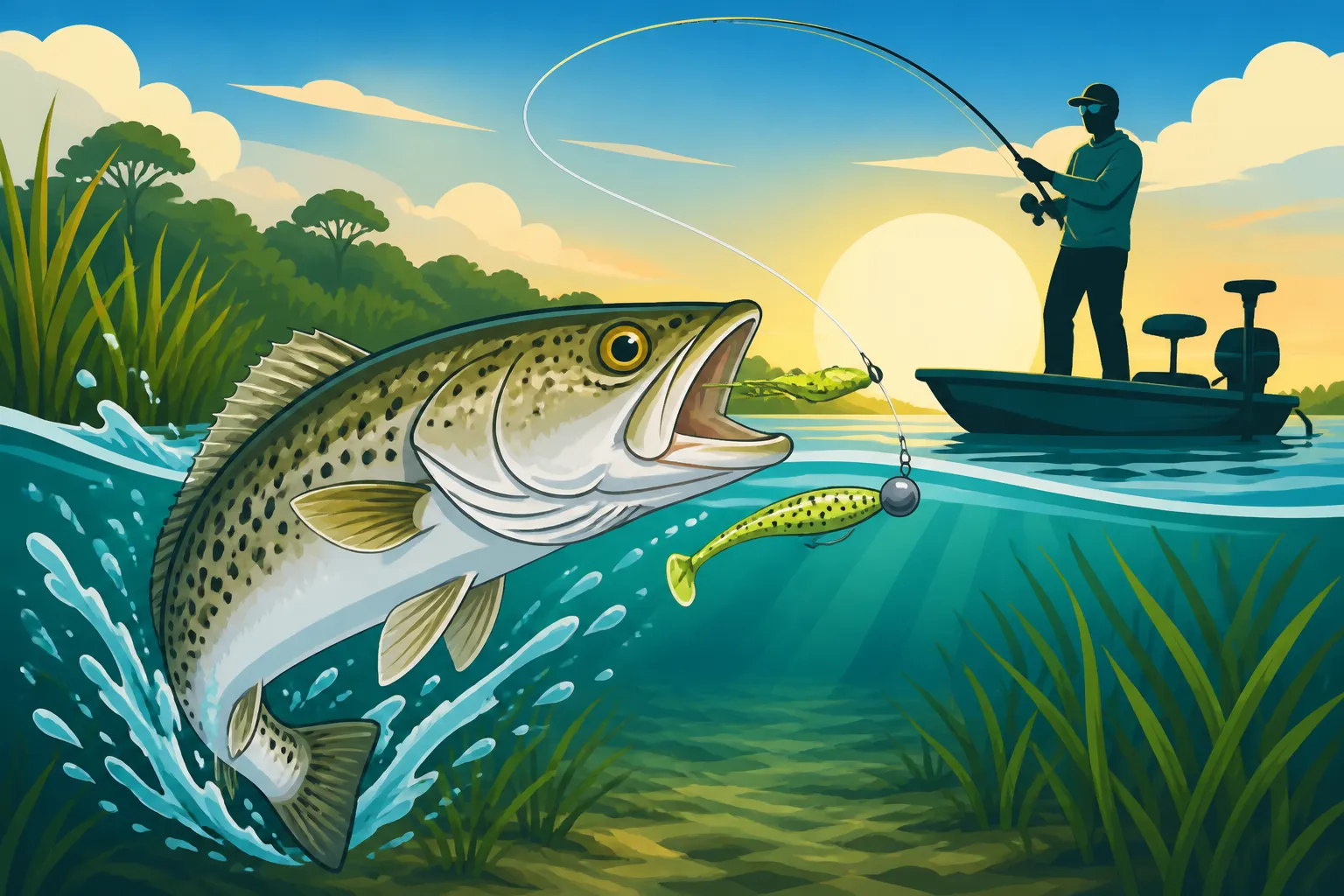
- Soft Plastic Shrimp/Grubs: These are incredibly versatile. Colors like chartreuse, white, clear with glitter, and "opening night" are popular. Rig them on a 1/8 to 1/4 ounce jig head. Brands like Vudu Shrimp or Z-Man provide durable and realistic options.
- Topwater Plugs: Nothing beats the thrill of a topwater strike! Walk-the-dog style lures (e.g., Heddon Super Spook Jr., MirrOlure She Dog) or prop baits (e.g., Rapala Skitter Prop) in natural baitfish colors or bright chrome are fantastic during low light conditions or when trout are feeding aggressively in shallow water.
- Sinking/Suspending Plugs: MirrOlure is a classic brand for a reason. Their 52MR or 17MR series are deadly. These mimic baitfish and are very effective when trout are slightly deeper or less willing to hit topwater.
- Spoon Lures: Silver or gold spoons, like a Johnson Silver Minnow, can be effective in covering water and mimicking fleeing baitfish.
A good tackle box will have a mix of these options, allowing you to adapt to changing conditions.
Terminal Tackle and Accessories
Don't overlook the small but crucial components that connect you to the fish.
- Jig Heads: A variety of weights (1/8 oz, 1/4 oz, 3/8 oz) and hook sizes (1/0, 2/0, 3/0) are essential for soft plastics. Choose quality jig heads with sharp, strong hooks.
- Popping Corks: These are critical for presenting live or artificial shrimp. They create an enticing "pop" sound that mimics feeding fish, drawing trout in. "Cajun Thunder" or "VooDoo" corks are popular choices. Learning How to Fish Live Shrimp Under a Popping Cork is a game-changer.
- Swivels and Leader Material: High-quality barrel swivels (size 10-12) to prevent line twist and 15-20 lb fluorocarbon leader material are necessities.
- Hooks: When fishing live bait, Kahle hooks (sizes 1/0 to 3/0) or small circle hooks (sizes 1/0 to 2/0) are excellent choices. Circle hooks are particularly good for preventing gut hooks, promoting catch and release.
- Pliers/Forceps: Essential for safely removing hooks and cutting line.
- Net: A rubberized landing net is much gentler on the fish (if you plan to release) and prevents hooks from tangling.
- Cooler: For keeping your catch fresh, and of course, your drinks cold!
- Sun Protection: Hat, polarized sunglasses (crucial for spotting fish and structure), and sunscreen are non-negotiable on the sunny Mississippi Coast.
- Wading Belt/Stringer: If you're planning on wade fishing, a secure wading belt with a stringer or a small mesh bag is essential for holding your catch and tackle.
Having these accessories readily available, perhaps even purchasing a compact tackle box organizer from Amazon, ensures you're prepared for whatever the day throws at you.
Top Speckled Trout Fishing Techniques in Mississippi
Now that you're armed with knowledge about the fish and the right gear, let's dive into the actual techniques that will put more speckled trout in your boat or on your stringer. There are multiple effective ways to target these fish, and versatility is your friend.
Live Bait Rigs and Strategies
Live bait, especially live shrimp, is a surefire way to tempt finicky trout. The natural scent and action are often too much for them to resist.
- Popping Cork Rig: This is perhaps the most iconic and effective setup for speckled trout. You'll attach a popping cork to your main line, then a 1-3 foot fluorocarbon leader below it, terminating in a small hook (Kahle or circle hook) with a live shrimp. The key is to retrieve the cork with a series of sharp, downward jerks of the rod tip, creating that "pop" and splash. This noise attracts trout, mimicking a feeding fish or a shrimp flicking its tail. After a few pops, pause for several seconds, allowing the shrimp to flutter naturally below the cork. Many strikes occur on the pause. This method is fantastic for covering grass flats, fishing around oyster reefs, or working shorelines. This technique is so crucial for Speckled Trout Fishing Techniques that it deserves practice.
- Free-Lining (Slip Sinker Rig): When trout are deeper, perhaps along a channel edge or in a bayou, free-lining live bait can be deadly. A simple slip sinker rig involves a small egg sinker (1/8 – 1/4 oz) sliding on your main line, followed by a small swivel, and then a 1-2 foot fluorocarbon leader to your hook and live bait. The slip sinker allows the fish to pick up the bait without feeling immediate resistance. Cast it out, let it sink to the desired depth, and retrieve very slowly, or let the current carry it naturally. This approach is often used in situations where you want your bait to stay close to the bottom.
- Bottom Rigging: Similar to free-lining but with more weight to hold bottom in stronger currents. A Carolina rig or a three-way swivel rig with a heavier sinker can be effective in deeper channels or around structures like bridge pilings. The goal is to present the live bait near the bottom where trout might be holding in cooler water or deeper ambush points.
No matter the rig, always use fresh, lively bait. A sluggish shrimp isn't going to entice a hungry trout.
Artificial Lure Tactics
Artificial lures offer the advantage of covering more water, being more durable, and often provoking a more aggressive strike.
- Soft Plastics on Jig Heads: This is the bread and butter of artificial lure fishing for specks. Rig a soft plastic shrimp, grub, or paddle tail on a lightweight jig head (1/8 to 1/4 oz). The retrieve is paramount here.
- Bounce and Glide: Cast out, let it sink to the desired depth (often near the bottom), then use short, sharp lifts of the rod tip to "hop" the jig along. Let it fall on a semi-slack line, watching for any twitch or stop that indicates a bite.
- Swim and Jerk: A steady retrieve with occasional twitches can mimic a swimming baitfish. This is great for covering open water or when fish are scattered.
- Under a Popping Cork: Just like live bait, soft plastics can be fished effectively under a popping cork. This combines the sound attraction of the cork with the visual appeal of the lure.
- Topwater Lures: The excitement of a topwater strike is unmatched. Use walk-the-dog style lures in the early mornings, late evenings, or on overcast days when trout are feeding aggressively on the surface.
- Walk the Dog: This technique involves a rhythmic twitch, twitch, pause, where you're making the lure "walk" side-to-side on the surface. Experiment with the cadence – sometimes fast, sometimes slow, with longer pauses.
- Pop and Stop: For prop baits or chuggers, cast out and give a sharp pop, let it sit, then pop again. This mimics a struggling baitfish.
- Sinking/Suspending Plugs: These are excellent for mimicking baitfish just below the surface or at mid-depth. Cast them out and retrieve with a slow, steady wobble, occasionally twitching the rod tip to add erratic action. These are particularly effective in slightly deeper water or when trout aren't responding to topwater.
Remember, trout often strike on the pause or when the lure changes direction. Be ready to set the hook!
Wade Fishing and Kayak Approaches
These methods offer unique advantages for accessing prime speckled trout habitat and providing a more intimate fishing experience.
- Wade Fishing: Getting out of the boat and wading into the shallows allows you to move quietly, covering expansive grass flats and oyster beds without spooking fish. This is particularly effective in areas with good bottom structure and moderate depths.
- Approach: Shuffle your feet to avoid stepping on stingrays. Cast ahead of you, working parallel to shorelines or along the edges of grass beds. Pay attention to subtle changes in depth or bottom composition.
- Gear Considerations: A good wading belt with a stringer or mesh bag, a pair of wading boots or protective shoes, and polarized sunglasses are essential. Keep your tackle light and compact.
- Kayak Fishing: Kayaks and paddleboards are fantastic for reaching secluded backwaters, shallow creeks, and marsh ponds that larger boats can't access. The stealth factor of a kayak is a huge advantage, allowing you to get very close to feeding trout. If you're looking for prime locations, check out the Best Kayak Fishing Spots on the Mississippi Coast.
- Stealth and Access: Paddle quietly, casting to productive areas. Focus on shorelines, marsh edges, and drains where baitfish congregate.
- Gear Considerations: A stable fishing kayak, a paddle leash, a PFD (personal flotation device), and a lightweight tackle setup are key. Anchor silently with a small stake-out pole or drag anchor. You can find quality kayak fishing accessories, from paddle leashes to tackle management systems, on Amazon.
- Safety First: Always tell someone where you're going and when you expect to return. Be aware of changing weather and tides.
Both wading and kayak fishing allow you to experience the Mississippi coast in a unique way and can lead to some incredible speckled trout catches.
Mastering the Tides and Weather for Speckled Trout
Understanding environmental factors like tides and weather is as crucial as choosing the right lure. Speckled trout are highly influenced by these conditions, and recognizing patterns can dramatically improve your success rate.
Reading Tide Charts and Current Effects
Tides are the lifeblood of inshore fishing, and nowhere is this more true than for speckled trout. Ignoring the tides is like trying to drive a car without gas – you might get somewhere, but it won't be efficient.
- The Best Tides: Generally, moving water is best. This means incoming or outgoing tides. As the water moves, it stirs up the bottom, dislodges baitfish, and flushes shrimp out of the grass beds and into channels, creating a feeding frenzy for trout.
- Incoming Tide: As the tide rises, it pushes baitfish and shrimp into shallower areas, such as grass flats, marsh edges, and oyster beds. This can be an excellent time for topwater or popping corks in these shallower zones.
- Outgoing Tide: As the tide falls, it pulls bait and nutrients out of the marshes and flats, concentrating them in deeper channels, drains, and bayou mouths. Trout will often position themselves at these pinch points to ambush prey. This is a prime time for soft plastics on jig heads or free-lined live bait.
- Slack Tide: This is the period of minimal water movement between high and low tide. Fishing during slack tide can be slower, as the lack of current means less bait movement and less active feeding. However, trout might still be found concentrated in deeper pockets or around structure where they feel secure.
- Current Rips and Eddies: Look for areas where currents create distinct "rips" or eddies around points, jetties, or bridge pilings. These are classic ambush spots where trout wait for food to be swept past them. Learn more about understanding currents with our guide on Reading Tide Charts for Gulf Coast Fishing.
A simple rule: if the water isn't moving, the fishing is likely to be tough. Always check the tide charts for your specific fishing location before heading out.
Impact of Weather on Speckled Trout Behavior
While we can't control the weather, we can certainly understand how it influences our target species and adjust our tactics accordingly.
- Cloudy vs. Sunny Days: Overcast conditions can sometimes extend the productive bite window, especially for topwater lures, as it reduces light penetration and makes fish feel more comfortable in shallower water. On bright, sunny days, trout tend to be more light-sensitive and might retreat to deeper water or shaded areas, making an early morning or late evening bite more productive.
- Wind: A moderate chop on the water, often caused by a light to moderate breeze, can actually be beneficial. It breaks up the water's surface, making it harder for trout to see you and making your line less visible. It also creates current and stirs up bait. However, very strong winds can make boat control and casting difficult, and often muddy the water, which can negatively impact the bite. Consider fishing on the lee side of islands or land to find calmer water.
- Rain: A light, steady rain can sometimes turn on a trout bite, especially if it cools the water slightly in summer. It also washes bait into the water and reduces light penetration. However, heavy downpours can muddy the water significantly and dilute salinity in certain areas, pushing trout out. Always be mindful of lightning and severe weather when fishing.
- Barometric Pressure: While often debated, many anglers believe that stable or slowly falling barometric pressure (often associated with approaching fronts) can stimulate feeding. A rapidly dropping pressure, often indicating a strong storm, can shut down the bite as fish seek deeper water for safety.
Paying attention to the forecast and understanding these weather dynamics helps you plan your trip for the most opportune conditions.
Water Temperature and Salinity Considerations
These two factors are paramount for speckled trout, as they are very sensitive to changes in their environment.
- Water Temperature: Speckled trout prefer a comfortable range, typically from the mid-60s to the low 80s Fahrenheit.
- Cold Water (below 60°F): As temperatures drop in winter, trout become lethargic. They'll seek out deeper, more stable water, like protected bayous or deep holes. Their feeding slows down, requiring slower retrieves and smaller presentations. You might find them schooling tightly.
- Warm Water (above 85°F): In the peak of summer, excessively warm water can stress trout. They'll look for cooler, deeper areas or places with good current flow that brings in oxygenated water. Fishing during the cooler parts of the day becomes crucial.
- Salinity: Speckled trout are estuarine fish, meaning they thrive in brackish water – a mix of fresh and saltwater. They can tolerate a wide range of salinity but generally prefer areas with a good balance.
- Freshwater Influx: Heavy rains and river discharges can push a lot of freshwater into the bays, reducing salinity. Trout might move closer to the passes or barrier islands where the salinity is higher.
- High Salinity: Conversely, during prolonged dry spells, salinity might increase. Trout generally won't move far out into the open Gulf but will seek comfortable zones within the estuaries.
Having a simple thermometer to check water temperature can give you a significant edge, helping you pinpoint where trout are likely to be holding. For specific regulations related to what you catch, review the Speckled Trout Size Limit in Mississippi and How Many Speckled Trout Can You Keep in Mississippi? before you head out.
Common Mistakes and How to Avoid Them
Even the most experienced anglers make mistakes. Recognizing common pitfalls in speckled trout fishing can help you refine your techniques and avoid frustrating days on the water.
Overlooking Subtle Bites
One of the biggest frustrations for beginners, and even experienced anglers on a slow day, is missing a bite. Speckled trout strikes aren't always a violent rod-bending tug.
- The "Mouthy" Bite: Often, especially in cooler water or when using soft plastics, a trout might just "mouth" the bait. This can feel like a slight "tick," a mushy sensation, or simply a sudden heaviness on your line. Your line might just go slack when it should be tight.
- What to Do: Pay constant attention to your line and the rod tip. Any deviation from the normal feel or movement warrants a gentle, yet firm, hook set. Don't wait for the rod to double over; by then, the fish might have spit the bait. Using braided line with a fluorocarbon leader dramatically increases sensitivity, making these subtle bites easier to detect. Consider a sensitive graphite rod that transmits every bump and whisper from below the surface.
Wrong Time, Wrong Place
Sometimes, it's not your technique, but simply being in the wrong spot at the wrong time that leads to an empty cooler.
- Ignoring the Tides: As discussed, slack tide often means slower fishing. Fishing a beautiful flat that was productive on the incoming tide might be dead during a strong outgoing current.
- Not Adjusting for Season/Weather: Trying to fish shallow grass flats with topwater lures in the middle of a scorching summer day, or deep channels with fast retrieves in the dead of winter, is a recipe for disappointment. Trout move and change their feeding habits based on these conditions.
- What to Do: Always consult tide charts, weather forecasts, and local fishing reports. Don't be afraid to move if a spot isn't producing. Have a mental backup plan or scout multiple locations beforehand. For example, if your usual spot is dead, shift to a deeper channel or an area with more current. Your ability to adapt and be versatile will significantly improve your catch rate.
Improper Hook Set and Retrieval
Once you get a bite, the battle isn't over. How you set the hook and fight the fish can mean the difference between landing it and a heartbreaking loss.
- Weak Hook Sets: Speckled trout have fairly soft mouths, but you still need a firm hook set to penetrate properly. A weak, tentative set might pull the lure out or only snag a small piece of skin, leading to the fish shaking free.
- What to Do: When you feel a bite, drop your rod tip slightly, reel down to take up any slack, and then sweep the rod upwards or to the side with a firm, continuous motion. Don't jerk violently, as this can tear the hook out of their soft mouth.
- Pumping the Rod Incorrectly: "Pumping" or "high-sticking" a fish can be detrimental. High-sticking (holding the rod straight up) puts immense pressure on the rod tip, which can snap it or allow the fish to gain leverage. Pumping too aggressively can also create slack, allowing the hook to dislodge.
- What to Do: Keep your rod tip at about a 90-degree angle to your body during the fight, using the bend of the rod to absorb runs. When you gain line, do it smoothly, reeling down as you lower the rod tip, then lifting again. Maintain constant pressure.
- Overly Aggressive Retrieval: Trout, especially larger ones, can make strong head shakes and last-ditch runs near the boat. Trying to horse them in too quickly can pull the hook or break your leader.
- What to Do: Let the drag do its job. When a fish runs, let it take line. Don't tighten the drag too much, as this puts unnecessary strain on your tackle and increases the risk of the hook tearing out. Keep a steady bend in the rod and be ready to react to sudden surges. When landing, guide the fish into a net rather than lifting it directly by the line.
By avoiding these common errors and applying the techniques outlined above, you'll be well on your way to becoming a successful speckled trout angler on the Mississippi Coast.
| Technique Category | Best Application | Key Lures/Baits | Retrieve Style | Optimal Conditions |
|---|---|---|---|---|
| Popping Cork | Shallow flats, oyster reefs, grass beds | Live shrimp, soft plastic shrimp | Pop-Pop-Pause | Moving tide, early morning/late evening, overcast |
| Soft Plastic Jig | Varied depths, around structure, drains | Grub tails, paddle tails, shrimp imitations | Hop-and-fall, steady retrieve with twitch | Moving tide, anytime water is present |
| Topwater Lures | Shallow water, low light, aggressive fish | Walk-the-dog, chuggers | Walk-the-dog, pop-and-stop | Dawn/Dusk, overcast, calm conditions |
| Free-Lining | Deeper channels, less active fish | Live shrimp, live minnows | Slow drift, subtle retrieve | Moving tide, deeper water, cooler temps |
| Sinking/Suspending Plugs | Mid-depths, around jetties/bridges | MirrOlures (e.g., 52MR) | Slow wobble, occasional twitch | When baitfish are present, moderate current |
Disclaimer
Fishing inherently carries risks, including but not limited to adverse weather conditions, encounters with wildlife, and personal injury. Always prioritize safety, wear appropriate personal flotation devices, and be aware of your surroundings. Fishing regulations in Mississippi can change, so it is your responsibility to consult the latest rules and limits from the Mississippi Department of Wildlife, Fisheries, and Parks (MDWFP) before each fishing trip. This guide is for informational purposes only and does not constitute professional advice.