Mississippi Alligator Snapping Turtle Fishing Ban
It's easy to get confused by fishing regulations, especially when it comes to unique and often misunderstood species like the alligator snapping turtle. Many anglers, curious about these prehistoric creatures, wonder if they can legally target them in Mississippi. The short answer is no, and this guide will dive deep into why, detailing the current ban and how you can identify these incredible reptiles to ensure you're always fishing within the law.
Understanding the Alligator Snapping Turtle in Mississippi
Before we get into the specifics of the ban, it's really helpful to understand just what an alligator snapping turtle is and why it holds such a special place in our state's aquatic ecosystems. These aren't your average pond turtles; they're truly magnificent and ancient creatures.
A Glimpse into This Ancient Reptile
Imagine a turtle that looks like it swam straight out of the dinosaur age – that's the alligator snapping turtle (scientific name: Macrochelys temminckii). These turtles are distinct from their more common cousins, the common snapping turtles (Chelydra serpentina), in several remarkable ways. Alligator snapping turtles are giants among freshwater turtles, often weighing over 100 pounds, with some records pushing well past 200 pounds! They boast a formidable, deeply ridged shell with three prominent keels (rows of raised scutes) that give them a rugged, prehistoric appearance. Their massive heads are triangular and disproportionately large compared to their bodies, featuring powerful jaws and small, piercing eyes set on the sides. What truly sets them apart is a unique, worm-like appendage on their tongue, which they use to lure unsuspecting fish right into their gaping mouths. They're ambush predators, often lying motionless on the river bottom, camouflaged by their algae-covered shells, waiting for prey to come to them.
These incredible animals are also incredibly long-lived. While it's hard to pin down an exact age in the wild, it's not uncommon for them to live for 50 to 100 years, and possibly even longer. This slow maturation and long lifespan contribute significantly to their vulnerability, making conservation efforts all the more critical. They are truly living fossils, playing a vital role in the health of Mississippi's waterways.
Historical Context of Alligator Snapping Turtle Populations
For centuries, alligator snapping turtles were a common sight, albeit often unseen, in the deep rivers, bayous, and oxbow lakes across their native range, which includes much of the southeastern United States, including our very own Mississippi. These creatures thrived in the slow-moving, muddy waters, perfectly adapted to their environment. Anglers and trappers historically harvested them, primarily for their meat, which was considered a delicacy, particularly for turtle soup. They were also sometimes caught for the pet trade, although their aggressive nature and massive size quickly proved them unsuitable for most home environments.
However, unchecked harvesting, coupled with significant habitat degradation and loss throughout the 20th century, took a severe toll on their populations. Rivers were dammed, wetlands were drained, and their preferred deep-water habitats became fragmented or polluted. This combination of factors led to a drastic decline in their numbers across their entire range, pushing them towards a precarious future. Biologists and conservationists began raising alarms as these slow-growing, slow-reproducing animals simply couldn't replenish their populations at the rate they were being lost. It became clear that without intervention, Mississippi's alligator snapping turtles could face local extinction, prompting the need for strict protective measures.
The Mississippi Alligator Snapping Turtle Fishing Ban
Given their dwindling numbers and unique biological characteristics, conservationists and state wildlife agencies realized that protective measures were absolutely necessary to ensure the survival of the alligator snapping turtle. Mississippi has been proactive in this regard, recognizing the importance of safeguarding this iconic species.
When and Why the Ban Was Implemented
The Mississippi Department of Wildlife, Fisheries, and Parks (MDWFP) took significant action to protect the alligator snapping turtle, implementing a ban on their taking in the state. While specific dates can sometimes be tricky to recall off-hand, the ban has been firmly in place for many years, reflecting a broader conservation trend across the species' range. The primary reason for this decisive action was the severe decline in their wild populations. Alligator snapping turtles have a very slow reproductive rate, taking many years to reach sexual maturity, and they produce relatively few offspring compared to many other species. This means that any significant pressure from harvesting or habitat loss can have a disproportionately large and long-lasting negative impact on their numbers. They simply can't bounce back quickly.
The MDWFP recognized that continued harvest, even at seemingly low levels, was unsustainable. By declaring them a protected species and enacting a blanket ban, Mississippi aimed to give these turtles the chance they desperately needed to recover and thrive. The ban is a testament to the state's commitment to preserving its natural heritage and ensuring that future generations can still encounter these magnificent reptiles in their native waters. This move aligns with similar protective measures implemented by other states where the species resides, creating a united front for their conservation.
What the Ban Means for Anglers
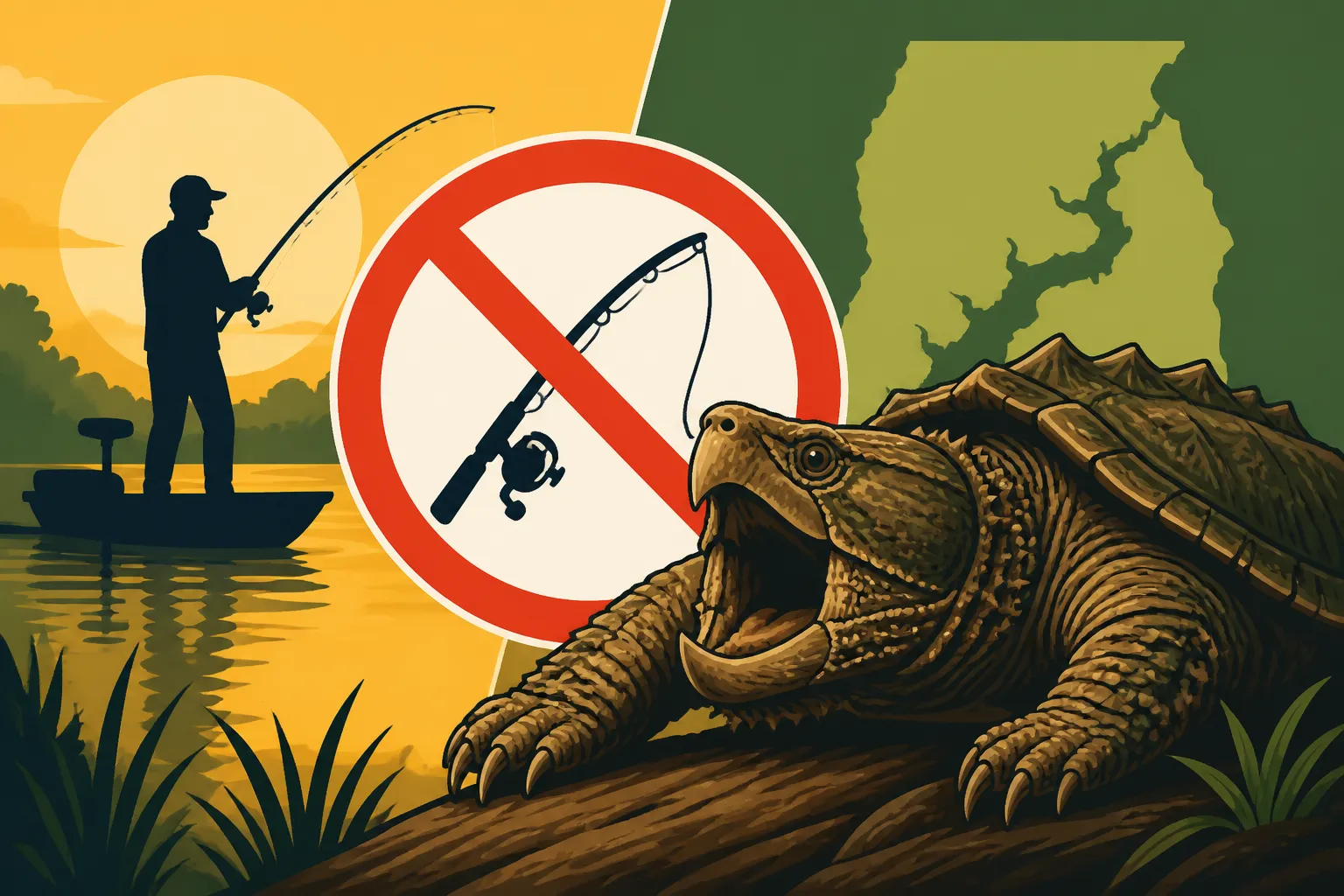
For any angler in Mississippi, the ban is clear: it is illegal to take, capture, or harvest any alligator snapping turtle by any means. This isn't just about fishing with a rod and reel; it extends to trapping, noodling, gigging, or any other method you might think of to try and catch one of these turtles. If you're out on the water and encounter an alligator snapping turtle, whether by accident or observation, the rule is simple: leave it undisturbed.
Violating this ban carries serious consequences. The MDWFP takes the protection of its rare and endangered species very seriously. Penalties can range from substantial fines, potentially reaching thousands of dollars, to jail time, and even the revocation of your fishing license. For more details on what can happen if you don't adhere to the rules, you can refer to our guide on Mississippi Fishing License Penalties and Fines. An accidental capture, while not intentional, still requires immediate and careful release to avoid harm to the turtle and potential legal trouble for the angler. Remember, the goal is conservation, and ignorance of the law is not an excuse. Understanding Mississippi Freshwater Fishing Rules is crucial for all anglers navigating our state's diverse waterways.
If you accidentally hook an alligator snapping turtle, it’s imperative to handle the situation with care and respect for the animal. Cut your line as close to the hook as possible rather than trying to remove a deeply set hook, which could cause irreparable damage. Tools like long-nosed pliers or specialized hook removers (you can find various options on Amazon for safe fish release) can be very useful for general angling, but with an AST, prioritize minimal contact and quick release if the hook is shallow.
Distinguishing Alligator Snapping Turtles from Common Snapping Turtles
One of the biggest challenges for anglers and outdoor enthusiasts alike is telling the difference between an alligator snapping turtle and its more common counterpart. Both species inhabit Mississippi's waters, but only one is strictly protected. Misidentification could lead to accidental harm to a protected species or even legal issues, so knowing the key differences is absolutely essential.
Key Physical Differences
While both are snapping turtles and possess powerful jaws, there are several distinct physical characteristics that can help you differentiate between them, even at a quick glance:
- Shell: This is often the most telling feature. The alligator snapping turtle has a very rugged, prehistoric-looking shell with three pronounced, ridged keels (rows of raised scutes) running lengthwise down its back. These ridges are quite prominent, especially on younger turtles. The common snapping turtle, on the other hand, typically has a smoother, often flatter shell, though it can sometimes have a slightly rough or bumpy texture, it lacks those distinct, almost saw-like ridges of the AST.
- Head: Alligator snapping turtles have massive, triangular heads that are disproportionately large for their bodies, often appearing too big for them to fully retract into their shells. Their eyes are small and set on the sides of their heads. Common snapping turtles have smaller, more rounded heads, and their eyes are positioned more towards the top, giving them a slightly different predatory gaze.
- Tongue Lure: This is a definitive, though often unseen, characteristic. The alligator snapping turtle possesses a small, pink, worm-like appendage on its tongue, which it wiggles to attract fish. This unique lure is absent in common snapping turtles.
- Plastron (Undershell): The alligator snapping turtle has a much smaller plastron relative to its carapace (top shell), which leaves a lot of its body exposed. The common snapping turtle has a comparatively larger plastron.
- Size: While size isn't always a foolproof identifier as young ASTs can be small, adult alligator snapping turtles are significantly larger and heavier than common snapping turtles. Common snappers rarely exceed 50 pounds, whereas adult ASTs regularly weigh over 100 pounds.
Habitat and Behavioral Clues
Beyond physical appearance, where and how you encounter a snapping turtle can offer further clues:
- Habitat Preference: Alligator snapping turtles generally prefer deeper, slow-moving waters found in major rivers, large bayous, and oxbow lakes with abundant submerged timber and soft bottoms. Think deep holes in the Pearl River or the lower Mississippi River tributaries. Common snapping turtles are far more adaptable and can be found in almost any freshwater environment, from small ponds and ditches to larger lakes and rivers. If you're in a shallow pond or creek, it's far more likely to be a common snapping turtle.
- Temperament: In the water, alligator snapping turtles are often described as more docile or sluggish, preferring to remain camouflaged on the bottom. They are ambush predators and don't typically chase prey. However, if handled on land, they can be incredibly aggressive and dangerous due to their powerful bite. Common snapping turtles, especially when out of the water, are notoriously feisty and will readily snap and lunge to defend themselves. In the water, they are more active foragers.
- Basking Behavior: While rare, if you ever see a large turtle basking, it's almost certainly a common snapping turtle. Alligator snapping turtles spend virtually their entire lives underwater, only surfacing to breathe or, for females, to lay eggs.
Here's a quick reference table to help solidify the differences:
| Feature | Alligator Snapping Turtle (Macrochelys temminckii) | Common Snapping Turtle (Chelydra serpentina) |
|---|---|---|
| Shell | Three prominent, ridged keels; rough, prehistoric | Smoother, often flatter; sometimes bumpy |
| Head | Very large, triangular; eyes on sides | Smaller, rounded; eyes more on top |
| Tongue | Has a worm-like lure (pink) | No tongue lure |
| Plastron | Small, cross-shaped, leaves body exposed | Larger, covers more of the underside |
| Size (Adult) | Typically 100-200+ lbs | Typically 10-35 lbs (rarely over 50 lbs) |
| Habitat | Deep rivers, large bayous, oxbows, strong currents | Wide range: ponds, lakes, rivers, marshes |
| Behavior | Ambush predator, generally sluggish in water | Active hunter, often aggressive out of water |
| Conservation | Protected species, illegal to take | Not protected, legal to harvest (with license) |
This distinction is not just academic; it's a critical piece of information for responsible angling in Mississippi. If you're ever in doubt, the safest bet is to assume it's an alligator snapping turtle and leave it completely alone. This ensures you're complying with Mississippi Fishing Regulations Explained and protecting a vulnerable species.
Conservation Efforts and Angler Responsibility
The alligator snapping turtle ban in Mississippi isn't just about preventing harm; it's a proactive step towards ensuring these magnificent reptiles continue to be a part of our state's natural heritage. Every angler and outdoor enthusiast has a role to play in this conservation story.
The Importance of Protecting Alligator Snapping Turtles
These turtles are often referred to as "ecosystem engineers" because of their significant, albeit subtle, impact on their environment. As large, long-lived predators, they help regulate fish populations and act as scavengers, cleaning up the aquatic environment. Their presence is an indicator of a healthy, mature aquatic ecosystem. Given their extremely slow growth rates and even slower reproductive cycles, they are incredibly vulnerable to population declines. It takes many years for them to reach breeding age, and then they only lay a relatively small clutch of eggs. This means that losing even a few adult turtles can have a disproportionate and long-lasting impact on the overall population.
The MDWFP and other conservation groups are actively involved in monitoring alligator snapping turtle populations, conducting research, and working to restore their habitats. Their efforts aim to understand the precise distribution of these turtles, assess the health of existing populations, and identify critical habitats that need protection. Protecting these animals is not just about preserving a single species; it's about safeguarding the intricate web of life that makes Mississippi's waterways so vibrant and unique. This is a key component of the broader Mississippi Freshwater Fish Species Guide, even though ASTs are reptiles.
How Anglers Can Help with Conservation
As anglers, we spend countless hours on the water, giving us a unique perspective and opportunity to contribute to conservation efforts. Even though you can't fish for alligator snapping turtles, your actions can still make a huge difference in their survival:
- Practice Responsible Catch-and-Release: While you should never intentionally target an alligator snapping turtle, accidental catches can happen, especially if you're using bottom baits for species like catfish or fishing in areas known to have turtles. If you accidentally hook one, the absolute priority is to release it with minimal harm. Cut the line as close to the hook as possible. Do not try to pry a deeply swallowed hook out, as this can cause fatal injuries. Prioritize the turtle's safety over retrieving your tackle. Carrying a sharp pair of line cutters on your vest or in your tackle box (available on Amazon) is always a good idea.
- Habitat Stewardship: Respect the aquatic environments you fish in. Avoid littering, and be mindful of your impact on shorelines and submerged habitats. Pollution and habitat degradation directly affect all aquatic life, including turtles.
- Report Sightings (When Appropriate): Some wildlife agencies encourage reporting sightings of protected species to help with population monitoring. Check with the MDWFP's official website or publications to see if they have a specific program for reporting alligator snapping turtle sightings. This information can be invaluable for their research and conservation strategies.
- Support Conservation: Your purchase of a Mississippi Fishing License Guide or a Mississippi Sportsman's License Explained directly contributes to funding the MDWFP's conservation programs, which include efforts to protect species like the alligator snapping turtle. These funds are vital for research, enforcement, and habitat protection.
- Educate Others: Share what you've learned about alligator snapping turtles with fellow anglers and friends. Spreading awareness about the ban, the importance of these turtles, and how to identify them helps foster a culture of responsible outdoor recreation.
By understanding the Mississippi Non-Game Fish Rules Explained and embracing these principles of responsible angling, you become an active partner in the conservation of Mississippi's incredible wildlife, ensuring that the ancient alligator snapping turtle continues to thrive in our waters for generations to come.
Disclaimer
The information provided in this guide is intended for educational and informational purposes only and is subject to change. While we strive to provide accurate and up-to-date information, fishing regulations and wildlife laws can be complex and are regularly updated by the Mississippi Department of Wildlife, Fisheries, and Parks (MDWFP). It is always the responsibility of the individual angler to consult the latest official MDWFP regulations and state laws before engaging in any fishing activities. Compliance with all applicable federal, state, and local laws is mandatory.