Is There a Closed Season for Bass in Mississippi?
It can be incredibly frustrating to plan a fishing trip, only to wonder if your favorite species is off-limits due to a closed season. Many anglers, especially those new to the Magnolia State or visiting from elsewhere, often ask, "Is there a closed season for bass in Mississippi?" This comprehensive guide is here to clear up that common confusion, explaining Mississippi's bass fishing regulations and ensuring you have all the up-to-date information before you hit the water.
Understanding Mississippi's Bass Fishing Regulations
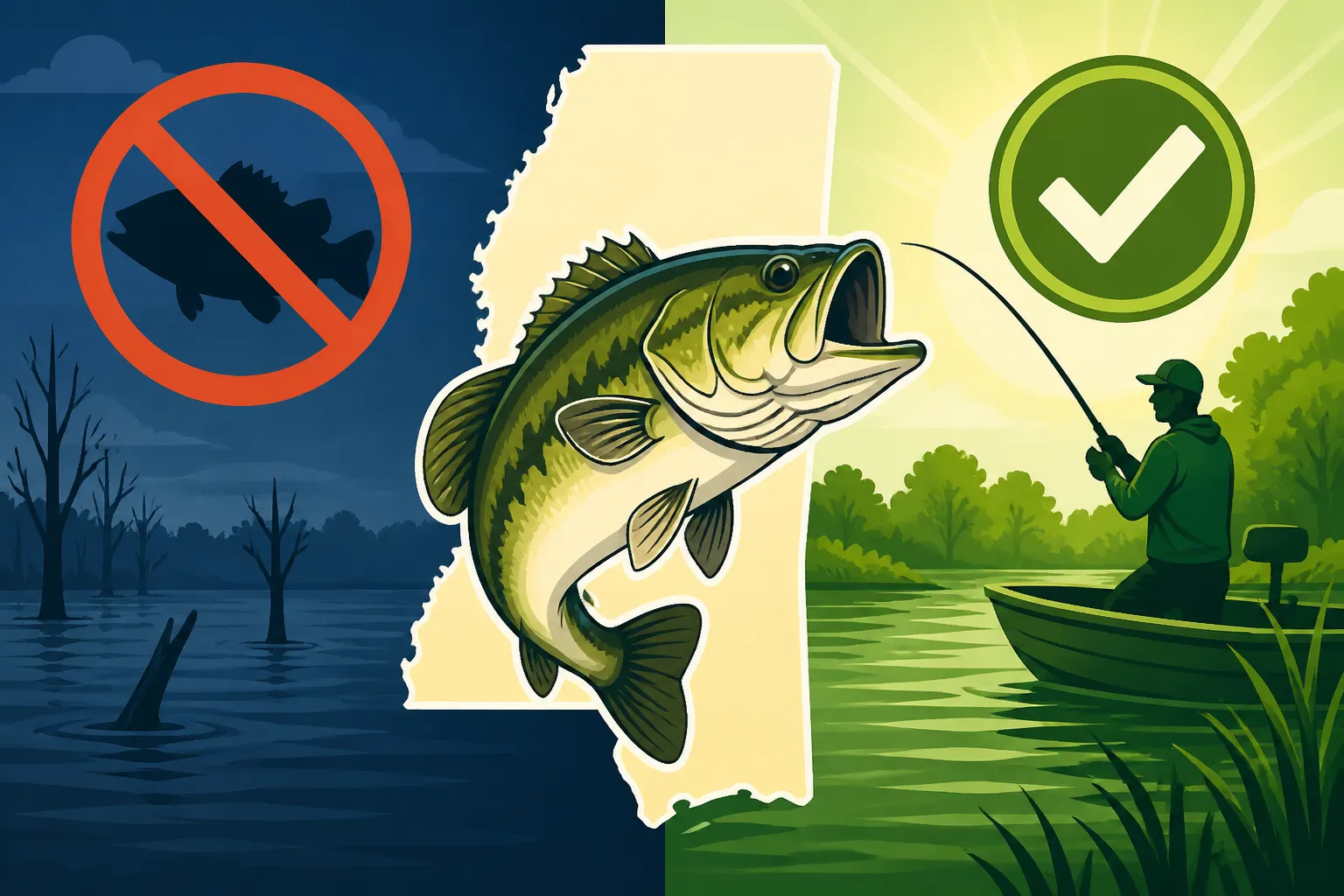
When it comes to bass fishing in Mississippi, there’s often a sigh of relief mixed with a bit of disbelief for newcomers: there isn't a statewide closed season for black bass species. That's right, unlike some other states or even certain species within Mississippi that might have specific closure periods, you can pursue largemouth, smallmouth, and spotted bass year-round here. This continuous access is a testament to the robust and well-managed bass populations across the state's diverse waterways.
This year-round opportunity means you don't have to put your gear away for months on end, eagerly awaiting an "opening day." Whether it's the crisp mornings of spring, the dog days of summer, the vibrant colors of fall, or the quiet chill of winter, Mississippi's bass are always fair game. However, "no closed season" absolutely does not mean "no rules." The focus shifts heavily to daily creel limits and size restrictions, which are the primary tools the Mississippi Department of Wildlife, Fisheries, and Parks (MDWFP) uses to maintain healthy bass fisheries.
General Statewide Rules for Bass
The absence of a formal closed season for bass is a huge plus for anglers who love the sport throughout the year. For most public waters across Mississippi, you can cast your line for bass any day of the year, provided you have a valid Mississippi fishing license. This blanket allowance simplifies planning immensely; you don't have to consult a complicated calendar to know if it's legal to chase bass.
Instead of a closed season, the MDWFP relies on bag limits and size restrictions to manage the fishery and ensure sustainability. These regulations are designed to prevent overharvesting and protect different age classes of bass, allowing them to grow and reproduce effectively. For instance, protecting smaller fish ensures they reach spawning age, while sometimes limiting larger fish can help maintain genetic diversity or protect trophy potential. It's a system that balances angler access with conservation goals, allowing you to enjoy consistent fishing opportunities while safeguarding the future of the sport.
Why No Closed Season for Bass?
You might wonder why bass, a prized game fish, doesn't have a closed season when other species or regions do. The primary reason lies in the inherent biology of bass and the specific management strategies employed by the MDWFP. Largemouth bass, in particular, are incredibly adaptable and prolific breeders in Mississippi's warm climate and abundant habitat. Their spawning success is generally very high, leading to strong, self-sustaining populations in most lakes, rivers, and reservoirs.
Many closed seasons are implemented to protect fish during their vulnerable spawning periods, ensuring they can reproduce undisturbed. While bass do have a spawning season, the MDWFP's data and biological surveys indicate that current creel and size limits are sufficient to protect the spawning population without needing a full-scale closure. This approach allows anglers to enjoy Largemouth Bass Fishing in Mississippi even during the spawn, trusting that the daily limits prevent significant impact. It’s a management philosophy that prioritizes year-round recreational opportunity while closely monitoring population health through other means, like surveys and angler catch data. This differs from, say, trout fishing in colder climates where spawning windows might be much narrower and more susceptible to disruption.
Key Bass Regulations to Know Beyond Seasons
Since a closed season isn't a factor for bass in Mississippi, understanding the other crucial regulations – namely daily creel limits and size restrictions – becomes paramount. These are the rules that truly dictate how many fish you can keep and what size they need to be, playing a vital role in the health and sustainability of the state's bass populations. Ignoring these can lead to penalties and, more importantly, can negatively impact the fantastic fishing opportunities we all enjoy. For a deeper dive into all the rules, check out our guide on Mississippi Fishing Regulations Explained.
Daily Creel Limits and Size Restrictions
The statewide daily creel limit for black bass (which includes Largemouth, Spotted, and Smallmouth Bass combined) is typically 10 fish per person. This means that, regardless of the species, you cannot keep more than a total of 10 bass in a single day. However, it's not quite that simple, as there are often specific size restrictions that accompany this limit. For instance, for Largemouth Bass, there is often a minimum size limit of 12 inches on many public waters, meaning any bass shorter than that must be immediately released.
These regulations aren't arbitrary; they are carefully determined by fisheries biologists. Minimum size limits allow young fish to grow to maturity and reproduce at least once before being harvested, contributing to the next generation of bass. Creel limits prevent any single angler from taking an unsustainably large number of fish, spreading the harvest among more participants. It’s always best practice to double-check the latest regulations, as they can sometimes be updated. Our article on How Many Bass Can You Keep in Mississippi provides even more detail on this critical topic.
Special Lake-Specific Bass Regulations
While statewide regulations provide a baseline, many of Mississippi's premier fishing destinations have their own unique, more specific rules to manage their particular bass populations. These site-specific regulations are often tailored to the unique characteristics of a lake, its fish population dynamics, and angler pressure. For example, some lakes might implement a "slot limit" for largemouth bass, where fish within a certain size range (e.g., 16-20 inches) must be released, while those smaller or larger can be kept within the daily creel limit. This is often done to protect the prime breeding stock or to promote the growth of trophy-sized fish.
Here are a few examples of well-known lakes and the types of special regulations you might encounter:
- Ross Barnett Reservoir: Often has a 12-inch minimum length limit and a daily creel limit of 10 for black bass, but always verify for any subtle changes. This reservoir is a very popular spot for Ross Barnett Reservoir Bass Fishing and its rules are closely managed.
- Grenada Lake: Known for its fantastic crappie fishing, but also holds good bass. Its regulations typically align with statewide limits unless otherwise specified by local signage or MDWFP updates.
- Sardis Lake: Similar to Grenada, Sardis often follows statewide limits, but as with any large body of water, it's wise to consult the MDWFP website or local signage before your trip.
- Okhissa Lake: A designated trophy bass lake, Okhissa Lake often has much stricter regulations, such as an 18-inch minimum size limit for bass, to promote the growth of truly massive fish. This is a prime example of a location where you absolutely must know the specific rules before you even cast your first line.
Always, always consult the MDWFP website or the latest fishing guide for the specific body of water you plan to visit. What's legal on one lake might not be on another, and ignorance of the law is never an excuse. Our detailed guide on Mississippi Black Bass Regulations offers a more thorough breakdown of these nuanced rules.
The Impact of Spawning Season on Bass Fishing
Even though there's no official closed season for bass in Mississippi, understanding their spawning cycle is incredibly important for any responsible angler. While you're legally allowed to fish during this time, being aware of when and how bass spawn can influence your fishing strategy, your success, and even your ethical approach to the sport. It's a time of year when bass are particularly vulnerable and aggressive, making them both easier to catch and more sensitive to disturbance.
When Bass Spawn in Mississippi
The exact timing of the bass spawn in Mississippi isn't a fixed date on the calendar; it's heavily dictated by water temperature and photoperiod (length of daylight). Generally, bass in Mississippi begin their spawning activities in late winter to early spring, typically from late February through May, when water temperatures consistently reach the mid-50s to low-70s Fahrenheit. The peak usually occurs when temperatures are in the 60s. This timeframe can shift earlier or later depending on weather patterns each year – a warm winter might kick things off sooner, while a prolonged cold spell could delay it.
During this period, male bass move into shallow waters, often around submerged vegetation, stumps, logs, or sandy/gravelly areas, to fan out circular nests. They then entice females to lay eggs in these nests. After the eggs are laid and fertilized, the male bass guard the nests aggressively, protecting the eggs and subsequent fry from predators. This territorial and protective behavior is what often makes them more willing to strike lures that invade their personal space, making them a target for anglers. You can find more specific information in our article on When Do Bass Spawn in Mississippi?.
Fishing During the Spawn: Ethics and Strategy
Fishing during the bass spawn presents a unique situation. Legally, you're good to go. Ethically, it becomes a personal choice for many anglers. Because male bass are intensely protective of their nests, they will strike at anything perceived as a threat. This makes them relatively easy to catch, often leading to impressive numbers. However, repeatedly pulling a male bass off its nest, even if immediately released, can leave the eggs or fry vulnerable to predators like bluegill, crawfish, or even other bass. A nest left unguarded for even a few minutes can suffer significant losses, impacting the next generation of fish.
Many ethical anglers choose to avoid targeting bedding bass directly or switch to techniques that minimize disruption. If you do fish during the spawn, consider these strategies:
- Quick Release: If you catch a bedding bass, unhook it gently and release it as quickly as possible, ideally right back over its nest, to minimize the time the nest is unprotected.
- Minimize Handling: Avoid excessive handling, especially if the fish is still on the nest. A good pair of pliers or a de-hooking tool can be invaluable for a fast, clean release.
- Target Pre- or Post-Spawn: Many anglers focus on areas where bass are staging before they move to the beds (pre-spawn) or recovering and feeding heavily after the spawn (post-spawn). These fish are often very aggressive and still offer fantastic action without the ethical dilemma of pulling fish off nests.
- Different Techniques: Instead of sight-fishing for bedding bass, try blind casting to known spawning areas or transitional zones. This allows you to catch active fish without necessarily targeting those actively guarding nests.
Ultimately, while there’s no official "closed season," being mindful of the bass spawning cycle allows you to make informed decisions that support the long-term health of Mississippi’s fantastic bass fisheries. Check out Bass Fishing Techniques for Mississippi Anglers for tips on adjusting your approach throughout the year.
Essential Gear and Licensing for Mississippi Bass Anglers
Embarking on a bass fishing adventure in Mississippi, whether it's on the sprawling Ross Barnett Reservoir or a quiet local pond, requires more than just knowing the regulations. Having the right gear and, crucially, the correct fishing license are non-negotiable steps to a successful and legal outing. Don't let a missing piece of tackle or an expired license cut your trip short!
Must-Have Gear for Bass Fishing
Outfitting yourself for bass fishing in Mississippi doesn't have to break the bank, but having the right essentials makes all the difference. Your primary tools will be your rod and reel. For most bass applications, a medium-heavy to heavy power spinning or baitcasting combo is ideal. This setup provides the backbone needed to cast heavier lures, set hooks firmly, and wrestle feisty bass out of cover. Look for rods in the 6'6" to 7'6" range for versatility.
When it comes to lures, a diverse tackle box is your best friend. Start with some tried-and-true options:
- Soft Plastics: Worms, creature baits, and flukes are incredibly versatile and effective, especially when Texas-rigged or Carolina-rigged. They can be found in a huge array of colors and sizes.
- Crankbaits: Deep-diving, medium-diving, and square-bill crankbaits allow you to target different depths and cover.
- Spinnerbaits and Chatterbaits: Excellent for covering water and fishing around sparse cover, especially in stained water.
- Topwater Lures: Poppers, walk-the-dog baits, and frogs provide thrilling surface strikes, particularly in warmer months or low-light conditions.
- Jigs: Flipping jigs, casting jigs, and football jigs are fantastic for targeting heavy cover or deeper structure.
Don't forget essential accessories like a good pair of fishing pliers, line cutters, a measuring tape (to ensure your catch meets legal size limits), and a comfortable tackle box or bag to organize everything. You can find a huge selection of all these items, from entry-level combos to professional-grade gear, on platforms like Amazon, making it convenient to stock up before your next trip. Always consider buying some good quality fishing line, typically monofilament, fluorocarbon, or braided line, depending on your preferred technique.
Understanding Your Fishing License Requirements
No matter how prepared your tackle box is, fishing without a valid license in Mississippi is a surefire way to ruin your day and incur fines. Even with no closed season for bass, a license is still required for almost everyone. The Mississippi Department of Wildlife, Fisheries, and Parks mandates that nearly all residents and non-residents aged 16 through 64 must possess a valid fishing license to fish in public waters. Children under 16 and adults 65 and older are generally exempt, but it's always wise to check the specifics for any changes to these exemptions. For instance, while seniors are exempt, some still opt to get a free senior exempt license for documentation purposes.
Mississippi offers a range of licenses to fit various needs:
- Resident Annual Freshwater Fishing License: The most common option for Mississippi residents, valid for a full year.
- Nonresident Annual Freshwater Fishing License: For out-of-state visitors planning multiple trips.
- Short-Term Nonresident Licenses (1-day or 3-day): Perfect for tourists or those visiting for a quick fishing getaway.
- Sportsman's License: A comprehensive option that often includes both hunting and fishing privileges, offering great value for multi-sport enthusiasts.
You can typically purchase your license online through the MDWFP website, or in person at various authorized retailers across the state, including many sporting goods stores and even places like Walmart. Remember to carry your license with you whenever you're fishing, either digitally on your phone or as a physical copy. Being found without one can result in significant penalties, distracting from the pure joy of reeling in a beautiful bass. Our comprehensive article, Mississippi Fishing License Guide, details all the options and how to obtain them.
Statewide Bass Limits and Common Lake Exceptions
To help you quickly reference the most common bass regulations, here’s a table summarizing the general statewide limits for black bass in Mississippi, along with examples of how some popular lakes might differ. Remember, this table provides a general overview, and you should always consult the official MDWFP regulations before fishing any specific body of water.
| Regulation Category | Statewide Black Bass Limit (Largemouth, Spotted, Smallmouth Combined) | Example Lake Exception (Okhissa Lake) | Notes |
|---|---|---|---|
| Closed Season | None (Year-round fishing permitted) | None | Bass fishing is permitted 365 days a year across the state. |
| Daily Creel Limit | 10 fish per angler | 10 fish per angler | This is the maximum number of black bass you can keep in one day. |
| Size Limit | 12-inch minimum (for Largemouth Bass on most public waters) | 18-inch minimum (for Largemouth Bass) | Many lakes enforce a minimum size. Okhissa Lake, a trophy lake, has a significantly higher minimum. Always check local signs or regulations. For more, see Is There a Size Limit on Largemouth Bass in Mississippi? |
| Slot Limit | Generally none statewide (check specific lakes) | No slot limit, but a high minimum size to promote trophy fish. | Some lakes may implement a slot limit, where fish within a certain size range must be released. |
| Gear Restriction | Standard rod and reel; no more than 4 poles per angler. | Standard rod and reel. | Ensure you adhere to the maximum number of fishing poles allowed per angler, as outlined in Mississippi Fishing Rules for Multiple Rods. |
This table highlights the crucial point: while there's no closed season, the combination of daily creel and size limits acts as the primary management tool. Always carry a measuring device and, if possible, a portable scale to accurately assess your catch, particularly in areas with strict size regulations. Finding the right tools, including a reliable fish scale, is easy on platforms like Amazon.
Disclaimer
Please note that fishing regulations are subject to change. While this guide provides the most current information available at the time of writing, it is always the angler's responsibility to verify all regulations with the official Mississippi Department of Wildlife, Fisheries, and Parks (MDWFP) before engaging in any fishing activities. This includes checking specific rules for individual bodies of water, which can sometimes differ from statewide guidelines.