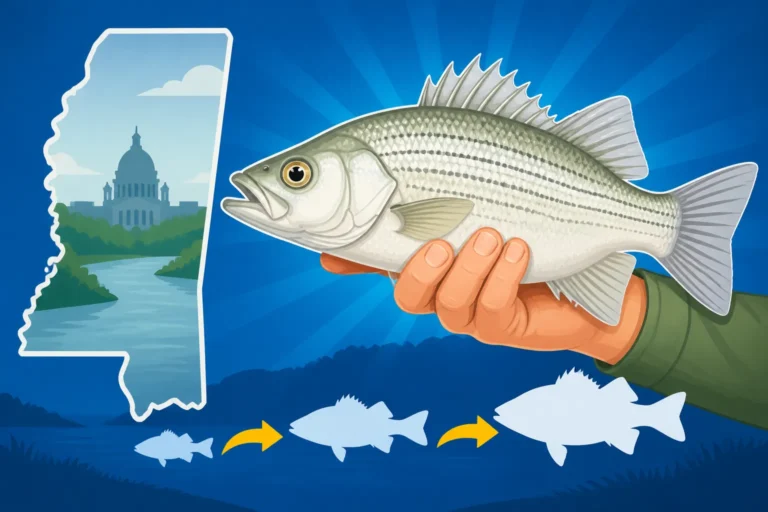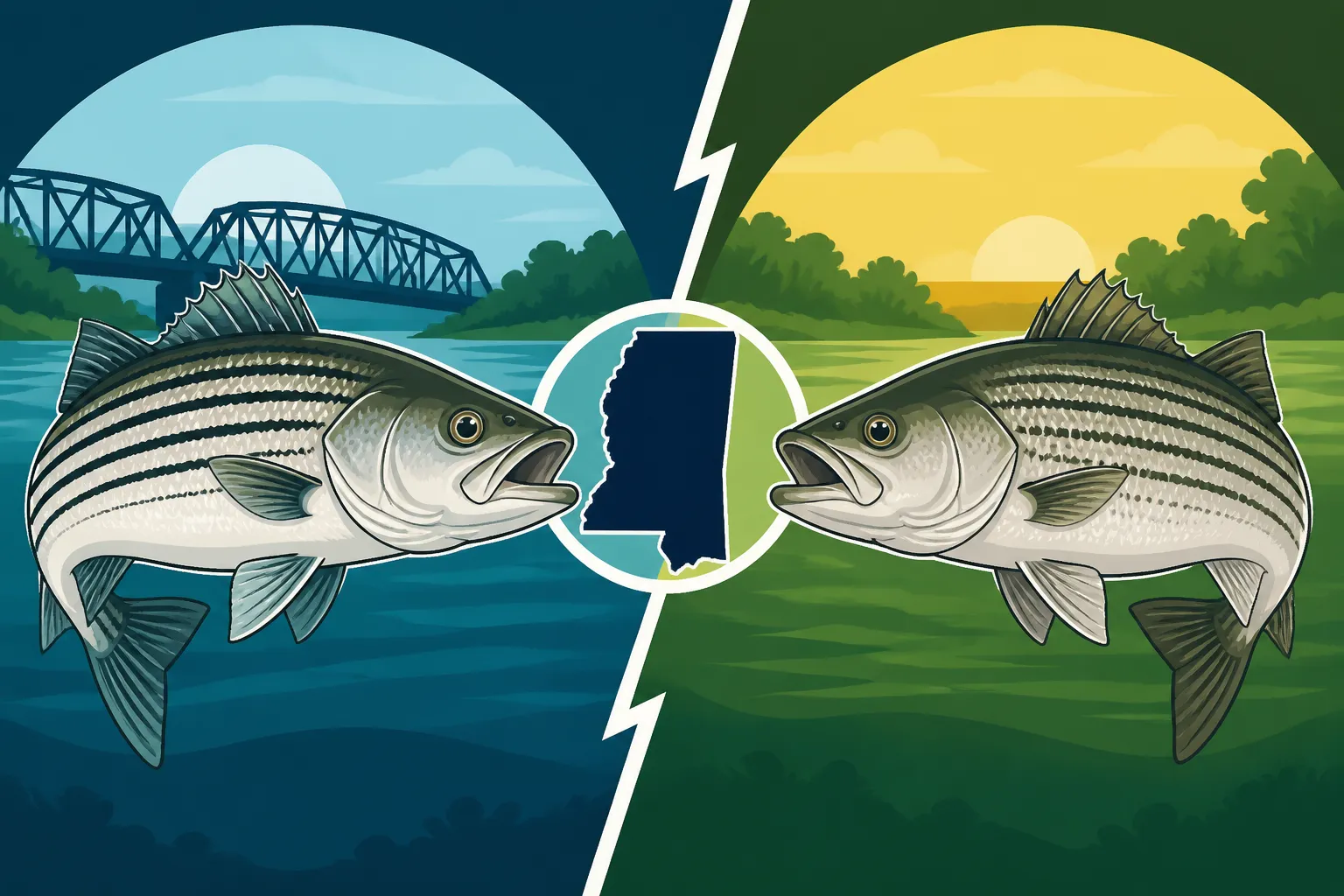
Striped Bass vs Hybrid Striped Bass Differences
If you've spent any time fishing the big waters of Mississippi, from our expansive reservoirs to the wide stretches of the Mississippi River, you've probably encountered a fish that looks an awful lot like a striped bass. But then you hear whispers of "hybrids" or "wipers," and suddenly you're wondering, did I just catch a true striper or something else entirely? It can be genuinely confusing, and correctly identifying your catch isn't just about bragging rights; it's crucial for following local regulations. This guide is here to clear up that common confusion, helping you confidently distinguish between a Striped Bass and a Hybrid Striped Bass in our beautiful Magnolia State waters.
Understanding the True Striped Bass (Striper)
Let's start with the OG, the true Striped Bass, often affectionately called a "striper" by anglers. These powerful, hard-fighting fish are a favorite target for many, and for good reason – they offer an incredible angling challenge and can grow to impressive sizes. Knowing what a pure striper looks like and how it behaves is the first step in telling it apart from its hybrid cousin.
Physical Characteristics of a Pure Striper
When you land a true Striped Bass, the first thing you'll likely notice is its sleek, streamlined body. Imagine a torpedo, built for speed and power. These fish are designed to move quickly through open water, chasing down baitfish. Their body is generally longer and more slender compared to other bass species, including the hybrid.
The most defining feature, and usually the easiest to spot, is their distinctive stripe pattern. Pure stripers will have seven or eight prominent, dark, unbroken lateral lines running from behind their gill plate all the way to their tail. These stripes are typically very clean and continuous, almost like they were drawn with a straight edge. You won't find them zig-zagging or fading out halfway down the body. Their head is also somewhat pointed, and their mouth is fairly large, allowing them to engulf considerable prey. When you look at their overall profile, it just screams "predator."
Native Habitat and Behavior
Pure Striped Bass, Morone saxatilis, are fascinating creatures with a rich history. They are naturally anadromous, meaning they spend most of their lives in saltwater and migrate to freshwater rivers to spawn. However, thanks to stocking efforts and natural adaptation, many landlocked populations thrive in vast freshwater systems like some of Mississippi's largest reservoirs and the mighty Mississippi River itself. These fish prefer cooler, well-oxygenated water, often found in the deeper sections of lakes or areas with good current.
They are highly migratory and schooling fish, constantly on the move in search of baitfish like shad. This schooling behavior is what often leads to those exciting "striper boils" where a massive school of stripers will erupt on the surface, pushing baitfish into a frenzy. Anglers targeting them will often look for these signs or utilize sonar to find large schools of fish in open water. Their diet primarily consists of smaller fish, making them aggressive feeders that will readily strike a variety of lures and live baits. Understanding their natural inclination for movement and schooling can be key to successfully targeting Striped Bass Fishing in Mississippi.
Deciphering the Hybrid Striped Bass (Wiper or Sunshine Bass)
Now, let's talk about the Hybrid Striped Bass. These fish have exploded in popularity in many fisheries across the country, including Mississippi, because they combine some of the best traits of their parent species. But what exactly are they, and how do they differ from a pure striper?
Hybrid Physical Characteristics
The Hybrid Striped Bass, often called a "wiper" (a cross between a White Bass and a Striper) or "sunshine bass" (specifically referring to the female White Bass x male Striper cross), is a man-made marvel. Visually, they share a lot of similarities with the pure Striped Bass, but there are some critical distinctions. The most important one is their stripe pattern. While they also have prominent lateral lines, these stripes are typically broken, interrupted, or uneven. Instead of clean, continuous lines, you'll often see them zig-zag, fork, or fade out and reappear along the fish's body. Some stripes might even appear as a series of dashes rather than a solid line.
Another distinguishing characteristic is their body shape. Hybrids tend to have a deeper, more compact body than the sleeker, more elongated pure striper. Think of it as a stockier, more robust build. Their head might also appear a bit blunter. While subtle, once you've seen a few of each, these differences become much more apparent. This deeper body gives them incredible power for their size, leading to an explosive fight that many anglers absolutely adore.
Stocking Programs and Preferred Environments
Hybrid Striped Bass (Morone saxatilis x Morone chrysops) are a crossbreed, typically produced by fertilizing Striped Bass eggs with White Bass milt (or vice versa). They were developed primarily for their impressive growth rates, hard-fighting nature, and remarkable tolerance to a wider range of water temperatures and conditions than pure stripers. This adaptability makes them ideal candidates for stocking in many freshwater reservoirs and lakes that might not be suitable for sustaining natural populations of pure anadromous Striped Bass. The Mississippi Department of Wildlife, Fisheries, and Parks has stocked hybrids in various lakes to create exciting and productive fisheries.
Like pure stripers, hybrids are schooling fish and are often found chasing baitfish in open water. They thrive in environments where there's an abundance of shad or other forage fish. Because they are often stocked, you'll find them in a broader array of Mississippi's larger impoundments. Their aggressive feeding habits make them a blast to catch, hitting a variety of lures, from topwater plugs to deep-diving crankbaits and soft plastics. They're often seen as a fantastic game fish for recreational anglers due to their powerful runs and willingness to bite. When considering Hybrid Striped Bass Fishing in Mississippi, knowing their preferred environments can greatly improve your chances.
Key Differences for Anglers: How to Tell Them Apart on the Water
Okay, so we've talked about their characteristics individually. But when you've got a fish flopping in the net, how do you quickly and confidently tell if it's a true Striped Bass or a Hybrid? It comes down to a few key visual cues.
Stripe Pattern as the Primary Identifier
This is hands down the most reliable and easiest way to differentiate between the two.
- Pure Striped Bass: Look for those unbroken, continuous, distinct parallel lines. Imagine taking a pencil and drawing a straight line from front to back – that's what a pure striper's stripes will look like. Every single main stripe should follow this pattern. If you run your finger along a stripe, it should feel like one solid, uninterrupted line.
- Hybrid Striped Bass: Their stripes will be broken, interrupted, or irregular. Some might be straight for a bit and then zig-zag, others might completely stop and start again, or fork into two separate lines. It's rare to find a hybrid with perfectly straight, continuous stripes, especially on the lower half of its body. Think of it as a set of stripes that didn't quite get "connected" perfectly.
A common tip is the "pencil test" – if you can lay a pencil along one of the main stripes and it stays on that single stripe all the way to the tail without hitting a break or another stripe merging in, it's likely a pure striper. If the pencil keeps bumping into breaks or zig-zags, you've probably got a hybrid. Many anglers use this simple trick right on the boat or bank.
Body Shape and Fin Characteristics
While the stripes are the ultimate giveaway, paying attention to the overall body shape can also help, especially as you gain more experience.
- Pure Striped Bass: They have that long, sleek, almost cigar-shaped body. They're built like marathon runners.
- Hybrid Striped Bass: They are generally deeper-bodied and more "chunky" for their length. They're built more like sprinters – powerful and compact.
Another less commonly used, but still valid, identification method involves checking the tongue patches. Pure Striped Bass typically have two distinct patches of teeth on their tongue, while White Bass have only one, and Hybrids often have one or sometimes an irregular, small second patch. However, this requires getting your fingers in the fish's mouth, which isn't always ideal or safe on a thrashing fish, so stick to the stripes and body shape first.
Behavioral Clues and Fishing Implications
Beyond physical traits, there can be subtle behavioral differences that hint at which species you're dealing with, though these are less reliable for positive ID than visual cues.
- Pure Striped Bass tend to favor slightly cooler, more stable water conditions and often inhabit deeper, more structured areas or major river channels. They can grow to be much larger than hybrids, offering truly trophy-class opportunities. Targeting them might involve deeper trolling, downlining live bait, or chasing schooling activity in specific temperature zones. Striped Bass Fishing in Mississippi often focuses on these patterns.
- Hybrid Striped Bass are often more tolerant of varying water temperatures and can be found in shallower sections or suspended in open water with less regard for specific depth or structure, as long as there's bait. Their fight is often described as incredibly aggressive and powerful for their size, making them a blast on lighter tackle. You might find them in environments described in Where Striped Bass Are Stocked in Mississippi.
Both species are voracious predators, and a good fish finder is often your best friend for locating the schooling baitfish they pursue. Regardless of which one you're targeting, having versatile lures like lipless crankbaits, swimbaits, or topwater plugs can be effective. Many of these can be found on platforms like Amazon, ready to be added to your tackle box.
Why These Differences Matter to the Mississippi Angler
Understanding the distinctions between Striped Bass and Hybrid Striped Bass isn't just an academic exercise; it has real, practical implications for every angler in Mississippi. Getting it wrong can lead to more than just a misidentified photo – it can lead to legal issues and impact your fishing success.
Regulations and Creel Limits
This is perhaps the most critical reason to learn your bass identification. Mississippi's fishing regulations, like those in many states, often differentiate between species when it comes to daily creel limits (how many fish you can keep) and size limits (minimum or maximum lengths). For example, there might be a specific limit for pure Striped Bass that differs from the limit for Hybrid Striped Bass. Imagine having a cooler full of fish, only to find out you've inadvertently exceeded the limit for one species because you misidentified them. That's a headache no one wants!
Being able to confidently tell them apart ensures you stay within the law, preventing potential fines or citations from wildlife enforcement officers. Always consult the current Mississippi Fishing Regulations Explained or Mississippi Fishing Creel and Size Limits before you head out, and pay close attention to the rules for both Striped Bass and Hybrid Striped Bass in your specific fishing zone. It's your responsibility as a respectful angler to know these rules.
Fishing Strategies and Tackle Choices
Knowing which species you're targeting can also refine your fishing strategy, leading to more successful outings. While both are aggressive predators and will often hit similar baits, there can be subtle differences in their preferred habitats, feeding patterns, and even how they respond to certain presentations.
For instance, if you're specifically after trophy-sized pure Striped Bass, you might focus on deeper water, large live baits, or robust trolling setups. If you're looking for fast action and explosive fights from hybrids, you might target shallower humps, follow bird activity over schooling bait, or use a wider variety of artificial lures. Having the right tackle, whether it's heavy-duty rods and reels for big stripers or a versatile medium-heavy setup for hybrids, is crucial. You can find a huge array of options on Amazon, from specialized reels to a wide variety of lures designed for these powerful fish.
Choosing the right bait can also be influenced. While both love shad, a pure striper might be more selective about size or presentation in certain conditions. Hybrids, being a bit more opportunistic, might smash a wider range of offerings. Understanding these nuances helps you adapt and make smarter decisions on the water, whether you're trying Jig Fishing for Crappie (sometimes these techniques cross over to smaller hybrids) or dedicated striper tactics.
Here's a quick comparison table to help solidify the differences:
| Feature | Pure Striped Bass (Morone saxatilis) | Hybrid Striped Bass (Morone saxatilis x Morone chrysops) |
|---|---|---|
| Common Names | Striper, Rockfish, Atlantic Striper | Wiper, Sunshine Bass |
| Parentage | Pure species | Crossbreed of Striped Bass and White Bass |
| Stripe Pattern | 7-8 distinct, unbroken, continuous lines | 7-8 (sometimes fewer) broken, interrupted, or irregular lines |
| Body Shape | Sleek, elongated, torpedo-like | Deeper, more robust, stockier body |
| Head Shape | More pointed | Slightly blunter |
| Tongue Patches | Two distinct patches of teeth | Usually one patch, sometimes an irregular second |
| Growth Potential | Can reach very large sizes (50+ lbs) | Grow quickly, but generally smaller than trophy stripers |
| Preferred Habitat | Cooler, flowing water; deeper sections of large reservoirs | Tolerant of wider conditions; often found in open water of reservoirs |
| Mississippi Regulation | Specific limits often apply | Specific limits often apply (may differ from pure striper) |
In Mississippi, whether you're chasing the legendary pure Striped Bass or enjoying the aggressive fight of a Hybrid Striped Bass, knowing the difference will enhance your fishing experience. It allows you to appreciate the unique characteristics of each species, comply with local laws, and ultimately become a more skilled and responsible angler. Gear up with the right knowledge, maybe a new lure from Amazon, and get ready to hit the water!
Disclaimer
This article is for general informational purposes only and does not constitute professional advice. Laws, prices and regulations vary by location and change over time. Consult a qualified professional for guidance on your specific situation.