Paddlefish Diet and Feeding Habits
It can be incredibly frustrating to encounter a fish that simply won't bite, no matter what lure or bait you throw at it. For many anglers in Mississippi, the American paddlefish is one such enigma, cruising beneath the surface with what appears to be a giant open mouth, yet seemingly ignoring every offering. This often leads to questions about what these ancient, fascinating creatures actually eat. This guide will dive deep into the unique diet and feeding habits of the paddlefish, demystifying why traditional fishing methods are ineffective and highlighting their crucial role in our aquatic ecosystems.
Understanding the Unique Nature of Paddlefish Feeding
When you picture a fish eating, you probably imagine it chasing down smaller fish, snapping at insects, or perhaps rooting around in the mud for worms. The paddlefish, however, operates on an entirely different level, an almost alien approach to sustenance that sets it apart from nearly every other fish in Mississippi's waters. It's a true filter feeder, a living vacuum cleaner of the aquatic world, and understanding this fundamental difference is key to appreciating their biology.
Filter Feeding: The Primary Method
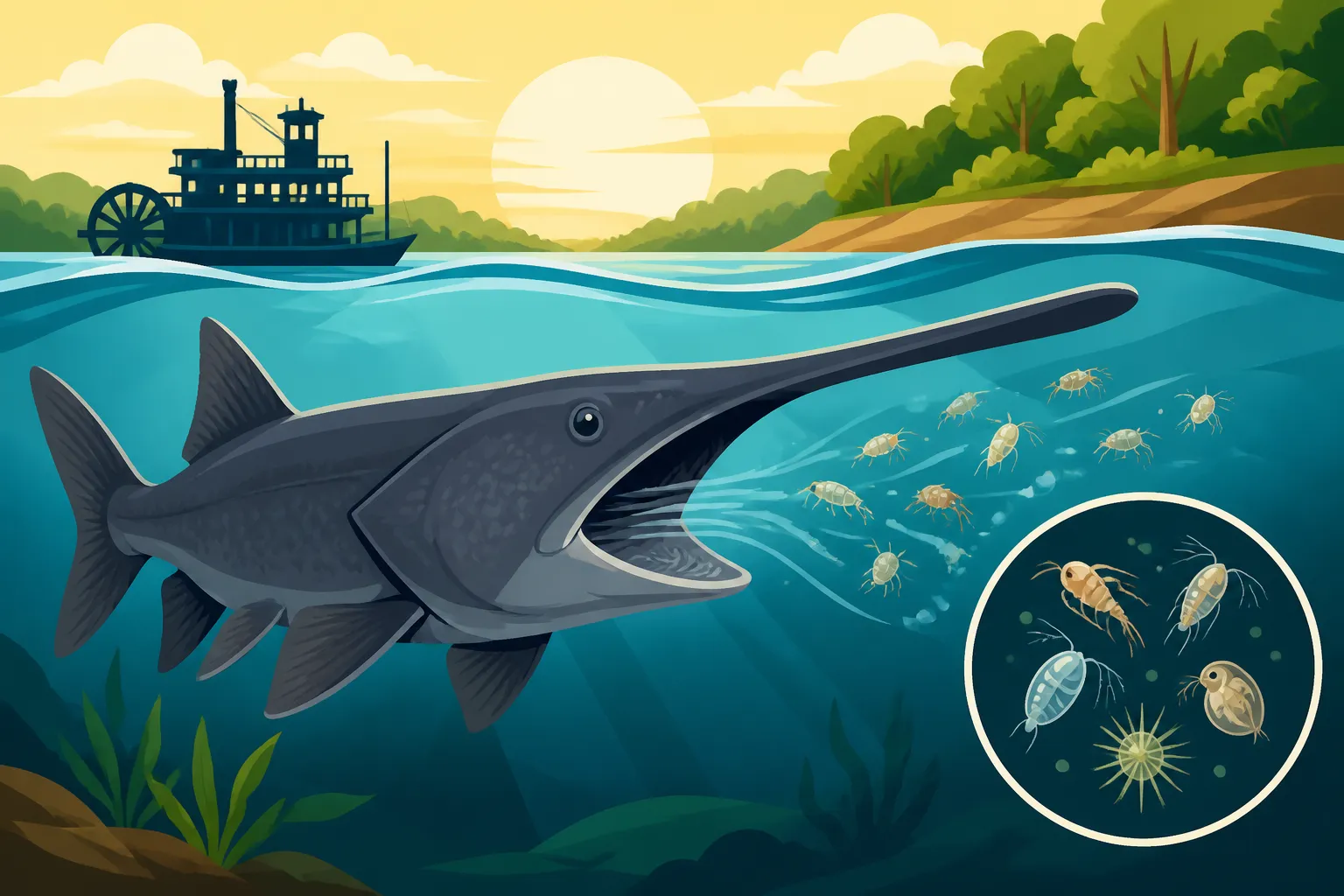
Paddlefish don't hunt in the conventional sense. They don't have teeth to speak of, nor do they actively pursue individual prey items. Instead, they rely on a highly specialized feeding strategy known as filter feeding. Imagine a whale swimming through the ocean with its mouth open, straining krill from the water; the paddlefish does something very similar, but on a microscopic scale, in our freshwater rivers and reservoirs. They simply swim along with their enormous mouths wide open, letting water flow through, and then filtering out the tiny organisms suspended within it. This constant, energy-efficient method allows them to consume vast quantities of minute food particles without expending the energy required for active predation. It's a strategy that has served them well for millions of years, making them truly living fossils.
How Their Anatomy Supports This Diet
The paddlefish's physical characteristics are perfectly adapted for its filter-feeding lifestyle. The most striking feature, of course, is that elongated, paddle-like rostrum or "snout." While it primarily functions as a highly sensitive electroreceptor, helping the fish detect weak electrical fields of its prey, it also acts as a hydrodynamic stabilizer, allowing them to swim efficiently with their mouths open. But the real stars of their feeding show are hidden inside their massive mouths: the gill rakers.
These gill rakers are long, comb-like filaments that extend inward from the gill arches. As the paddlefish swims with its mouth open, water containing tiny organisms flows over these gill rakers. The rakers act like a fine-mesh sieve, trapping the food particles while allowing the water to pass through and out of the gill slits. The trapped food is then swallowed. The sheer number and intricate structure of these gill rakers are phenomenal, a testament to evolutionary efficiency designed to capture the smallest bits of sustenance. Without these specialized structures, the paddlefish wouldn't be able to effectively process the enormous volumes of water necessary to gather enough microscopic food to survive and grow to its impressive size. It's a marvel of natural engineering, finely tuned for a life of continuous, passive consumption.
What Exactly Do Paddlefish Eat?
Given their filter-feeding strategy, it naturally follows that paddlefish aren't interested in your worms, minnows, or plastic lures. Their diet consists almost exclusively of the tiniest forms of aquatic life, often invisible to the naked eye. This focus on microorganisms places them uniquely in the food chain, highlighting their role as primary consumers of the smallest components of the aquatic ecosystem.
The Importance of Zooplankton
The primary, overwhelming component of a paddlefish's diet is zooplankton. These are microscopic aquatic animals that drift or swim weakly in fresh and saltwater environments. Think of them as the "bugs" of the water column, a diverse group including creatures like copepods (tiny crustaceans), cladocerans (like water fleas, Daphnia species), and various rotifers. These minuscule organisms form the base of many aquatic food webs, converting phytoplankton (microscopic plants) into a form that can be consumed by larger animals.
For a paddlefish, which can grow to be many feet long and weigh over a hundred pounds, consuming enough zooplankton requires an incredible effort of continuous filtration. They must process hundreds, if not thousands, of gallons of water every hour to collect a sufficient caloric intake. The abundance and health of zooplankton populations are directly linked to the health and survival of paddlefish populations. If a waterway experiences a decline in its zooplankton community due to pollution or habitat degradation, the paddlefish will inevitably suffer, struggling to find enough to eat. It's a delicate balance, and the paddlefish are extremely sensitive indicators of the overall health of their river systems.
Other Microorganisms and Incidental Intake
While zooplankton are the main course, paddlefish aren't entirely exclusive diners. Given their indiscriminate filter-feeding method, it's inevitable that they will incidentally ingest other microscopic organisms. This can include phytoplankton, which are microscopic aquatic plants, essentially the primary producers of the aquatic world. While phytoplankton doesn't provide the same nutritional punch as zooplankton, it's often present in the same water column and is simply swept in along with their preferred meal.
Additionally, small bits of detritus – decaying organic matter like plant fragments, algae, or bits of dead insects – can also be swallowed unintentionally. Think of it like a human eating a salad; while the lettuce is the main focus, tiny dirt particles or dressing components come along for the ride. However, it's crucial to understand that these are not targeted food sources. Paddlefish digestive systems are primarily adapted to process soft-bodied zooplankton, and they gain minimal nutritional value from these other ingested particles. Their entire feeding apparatus, from their wide gape to their fine gill rakers, is perfectly tuned for the highly specific task of straining out the most abundant and nutrient-rich microscopic animal life available in the water column.
Here's a quick look at the paddlefish diet:
| Diet Component | Primary Role | Nutritional Value | Ingestion Type |
|---|---|---|---|
| Zooplankton | Primary food source (copepods, daphnia) | High | Intentional |
| Phytoplankton | Minor, incidental | Low | Incidental |
| Detritus | Minor, incidental | Very Low | Incidental |
Seasonal and Environmental Influences on Paddlefish Diet
Just like any other creature, the feeding habits and success of paddlefish aren't static. They are deeply intertwined with the dynamic changes in their aquatic environment, particularly the ebb and flow of rivers and the microscopic life that thrives within them. Understanding these influences is vital for anyone interested in this unique species, whether for conservation or simply appreciation.
Impact of Water Flow and Habitat
Water flow is a critical factor influencing where and how paddlefish feed in Mississippi's rivers and reservoirs. When river flows are high, especially after significant rainfall, there's often an increase in nutrient runoff from the land. This influx of nutrients can kickstart the growth of phytoplankton, which in turn fuels an explosion in zooplankton populations. More food generally means more successful feeding for paddlefish. However, extremely high and turbulent flows can also disperse food items, making it harder for paddlefish to efficiently filter feed in specific areas.
Conversely, during periods of low water flow or drought, plankton populations might diminish or become concentrated in smaller areas, forcing paddlefish to cover more ground or gather in specific pools to find enough sustenance. The physical structure of their habitat, such as deep river channels, oxbow lakes, and backwater areas, also plays a significant role. These areas often provide more stable environments where plankton can flourish, offering consistent feeding grounds. Understanding these dynamics is crucial for managing populations and ensuring these magnificent fish have access to vital food sources. If you're looking to learn more about the specific areas where these fish thrive, exploring resources like the Mississippi River Fishing Guide can provide valuable insights into their preferred haunts.
The Role of Plankton Blooms
Plankton blooms are periods of rapid population growth of plankton, often occurring under ideal conditions of sunlight, water temperature, and nutrient availability. For paddlefish, these blooms are like hitting the jackpot at a buffet. When zooplankton populations boom, paddlefish can feed much more efficiently, gaining significant energy for growth and reproduction. These blooms often happen seasonally, particularly during warmer months when biological activity is at its peak.
For instance, a warm spring following a nutrient-rich winter can set the stage for a massive zooplankton bloom in rivers and large reservoirs like the Ross Barnett. Paddlefish will naturally gravitate towards these areas of high plankton concentration. Their sensory rostrum, which can detect minute electrical fields, is believed to play a role in locating these dense food patches, guiding them to the richest feeding grounds. Changes in climate patterns, pollution, or alterations to river systems that disrupt these natural bloom cycles can have profound negative impacts on paddlefish, as their entire existence is built around exploiting these fleeting periods of abundant microscopic food. A robust plankton community is the bedrock of their survival.
Implications for Anglers and Conservation
The peculiar diet and feeding habits of the paddlefish have significant implications, both for those who wish to catch them and for the broader efforts to conserve this unique species. Anglers often find themselves scratching their heads, wondering why the paddlefish seems so uncatchable by conventional means, while conservationists grapple with the challenges of protecting a species so reliant on microscopic food sources.
Why Conventional Baits Don't Work
The most common frustration for recreational anglers is that paddlefish simply don't bite traditional baits. If you've ever tried to catch one with worms, crickets, minnows, or even sophisticated artificial lures, you've likely met with complete failure. This isn't because the fish are particularly shy or discerning; it's because their diet consists of microscopic organisms that are strained from the water, not actively hunted. They lack the teeth and the predatory instinct to strike at larger prey. Their sensory systems are geared towards detecting plankton, not the vibration or scent of a baitfish or a lure.
This fundamental difference means that the only effective method for catching paddlefish recreationally is through snagging. Snagging involves using a large, heavy treble hook, often without bait, and casting it into areas where paddlefish are known to congregate. The angler then sweeps the rod to "snag" the fish in its body. This method is highly controversial and often strictly regulated due to ethical concerns and its potential impact on fish populations. In Mississippi, like many states, regulations regarding paddlefish capture, including methods, seasons, and limits, are very specific. You’ll want to be familiar with the Mississippi Fishing Regulations Explained and specifically the Mississippi Non-Game Fish Rules Explained to ensure you're fishing legally and ethically if you choose to target this species.
Conservation Efforts and Habitat Protection
Understanding the paddlefish diet is absolutely paramount for conservation efforts. Because they are filter feeders at a relatively low trophic level, they are extremely vulnerable to changes in water quality and the health of plankton communities. Pollution, sedimentation, and habitat alteration—such as the construction of dams that fragment their riverine habitats and disrupt natural flow regimes—can all severely impact the availability of their food. If the microscopic foundation of their diet is compromised, the entire paddlefish population can suffer dramatically.
Conservation strategies often focus on protecting and restoring large river systems and their associated floodplains, ensuring clean water and healthy plankton blooms. Efforts to monitor water quality, control invasive species that might compete for plankton, and manage river flows to mimic natural conditions are all critical. For those interested in the broader picture of aquatic life, an excellent resource to deepen your understanding of the diverse ecosystems paddlefish inhabit can be found on Amazon, perhaps through a comprehensive guide to freshwater fish of North America. Programs aimed at sustainable management, including strict limits on harvest and research into population dynamics, are also vital to ensure that this magnificent and ancient species continues to thrive in Mississippi's waters for generations to come. Paddlefish (Spoonbill) in Mississippi Rivers are an important part of our natural heritage, and their future depends on our careful stewardship of their habitats and food sources.
Disclaimer
This article is for general informational purposes only and does not constitute professional advice. Laws, prices and regulations vary by location and change over time. Consult a qualified professional for guidance on your specific situation.