Do Disabled Veterans Need a Fishing License in Mississippi?
It’s a fair question, and one that often causes a fair bit of head-scratching among our brave veterans who want to enjoy the peace and quiet of a Mississippi fishing trip. After serving our country with immense sacrifice, the last thing anyone wants is to be caught off guard by state regulations, especially when dealing with a service-connected disability. Navigating the rules around fishing licenses can feel like another bureaucratic hurdle, but thankfully, Mississippi does offer specific provisions for disabled veterans. This comprehensive guide is here to untangle those rules, clarify who is eligible, and walk you through the process, ensuring you can hit the water with confidence.
Understanding Mississippi's Fishing License Requirements for Veterans
Fishing in Mississippi is a cherished pastime, from the sprawling reservoirs like Ross Barnett to the tranquil backwaters of the Mississippi River, and of course, the vibrant Gulf Coast. For most anglers, a valid fishing license is an absolute must. However, the state recognizes the unique contributions and sacrifices of its disabled veterans, offering specific exemptions to ease their access to these recreational opportunities. It's not always straightforward, but understanding the general framework will help illuminate the specific benefits available.
General License Mandates
For the vast majority of residents and non-residents, fishing in Mississippi requires a license. This isn't just a formality; the fees collected from these licenses are crucial for funding the Mississippi Department of Wildlife, Fisheries, and Parks (MDWFP) conservation efforts. This includes fish stocking programs, habitat restoration, law enforcement to prevent poaching, and maintaining public access points. Whether you're casting a line from the bank of a small pond, dropping a jig from a bass boat on Grenada Lake, or enjoying a day of pier fishing on the Gulf Coast, a license is typically your entry ticket. There are various types of licenses, from annual freshwater or saltwater licenses to combination hunting and fishing options, and even short-term licenses for visitors. Generally, if you're 16 years of age or older and not fishing on your own private property, you'll need to possess a valid license. This baseline understanding is important before diving into the exceptions.
The Special Case for Disabled Veterans
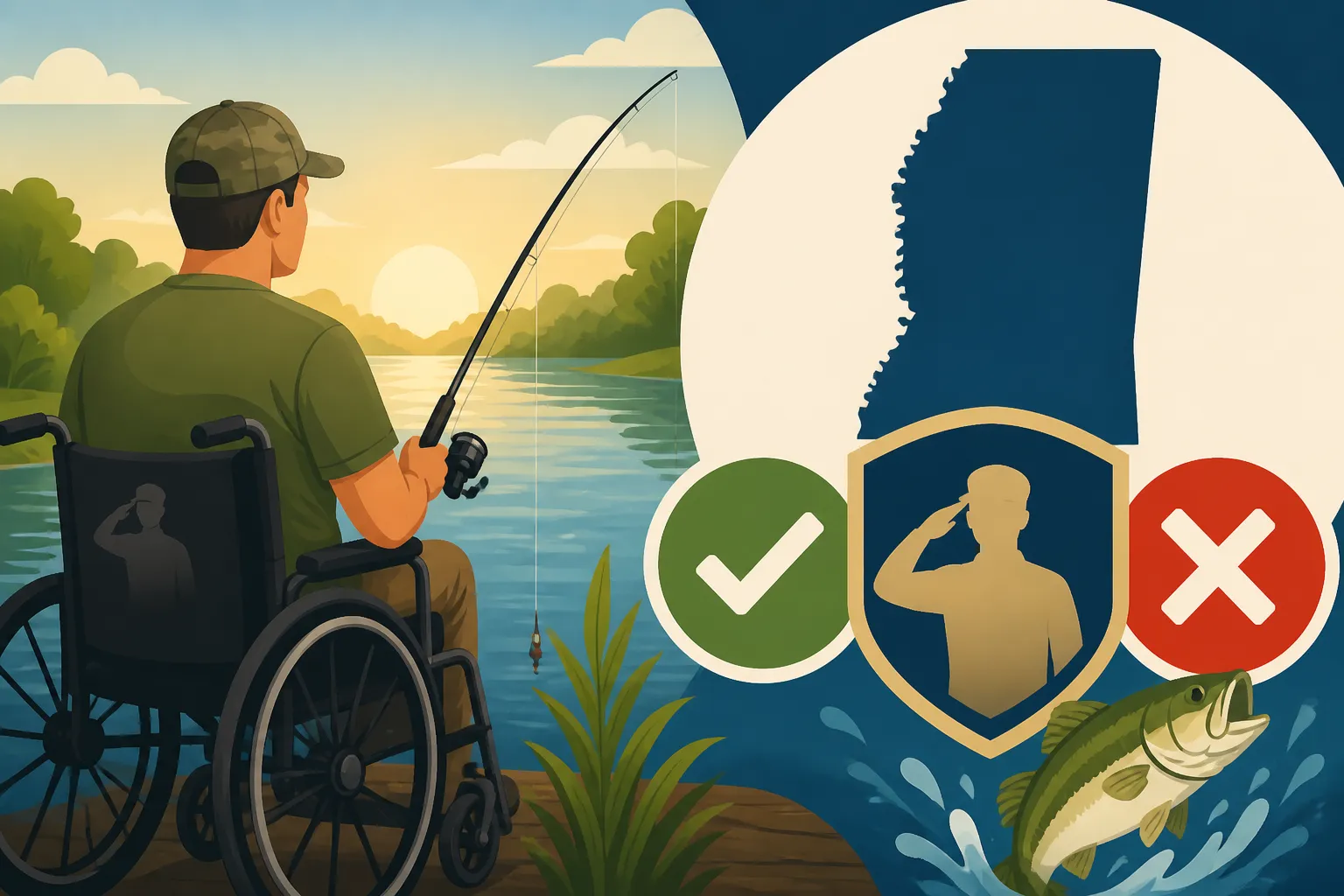
Mississippi extends a specific and much-deserved exemption to certain disabled veterans. This isn't a blanket exemption for all veterans or all levels of disability; rather, it’s tailored to those with the most significant service-connected disabilities. Specifically, Mississippi offers a Lifetime Sportsman License at no cost to resident veterans who are 100% service-connected permanent and totally disabled. This is a significant benefit, as the Sportsman License covers not just fishing, but also hunting and trapping, simplifying outdoor recreation immensely. It’s the state’s way of saying "thank you" by removing financial and administrative barriers for those who have given so much. This specialized license means eligible veterans can participate in a wide range of outdoor activities without the annual renewal hassle or cost.
Eligibility for Disabled Veteran Fishing License Exemptions in Mississippi
While the offer of a free Lifetime Sportsman License is fantastic, it's crucial to understand the specific criteria you must meet to qualify. The Mississippi Department of Wildlife, Fisheries, and Parks has clear guidelines in place, and having the right documentation is key to a smooth application process.
Defining "Disabled Veteran" for Licensing Purposes
In Mississippi, for the purpose of obtaining the free Lifetime Sportsman License, a "disabled veteran" is very precisely defined. This isn't just for any level of service-connected disability. To be eligible, you must be a resident of Mississippi and officially certified by the U.S. Department of Veterans Affairs (VA) as having a 100% service-connected permanent and total disability. This distinction is critical. If your disability rating is less than 100%, or if your 100% rating is not deemed "permanent and total" by the VA, you would not qualify for this specific exemption. This particular wording ensures that the benefit is directed to those veterans whose service-connected conditions are considered to be at the highest level of severity and permanence. It’s designed to honor those with enduring, comprehensive disabilities resulting directly from their military service.
Required Documentation and Proof of Disability
Getting your hands on this valuable license requires providing undeniable proof of your eligibility. The MDWFP needs to verify your residency and your disability status unequivocally. The primary document you will need is an official letter from the U.S. Department of Veterans Affairs (VA). This letter must clearly state that you are a Mississippi resident, and most importantly, it must explicitly certify that you have a 100% service-connected permanent and total disability.
Here’s what that typically entails:
- Official VA Award Letter: This is the cornerstone of your application. Make sure the letter is current and shows all the required information. Sometimes, veterans might have multiple letters from the VA; ensure the one you submit specifically outlines the 100% P&T status.
- Proof of Mississippi Residency: While your VA letter might indicate your residence, additional proof might be required, such as a valid Mississippi driver's license or state ID card. The state wants to confirm that you are a genuine resident to qualify for resident-specific benefits.
- Completed Application Form: The MDWFP will have a specific application form for the Disabled American Veteran Lifetime Sportsman License. You'll need to fill this out accurately, ensuring all personal details match your identification and VA documentation.
It’s a good idea to gather all these documents well in advance. Consider keeping copies of everything in a well-organized folder or even a digital backup on a secure cloud service. You could even use a small, portable organizer from Amazon to keep your important papers, like your VA letter and ID, ready when you need them. Having everything in order before you start the application process will save you a lot of time and potential frustration.
How to Apply for Your Mississippi Disabled Veteran Exemption
Once you've confirmed your eligibility and gathered all your necessary documents, the application process for the Mississippi Disabled Veteran Lifetime Sportsman License is fairly straightforward. It involves submitting your information and proof of disability to the MDWFP.
Step-by-Step Application Process
Applying for this special license isn't something you can typically do online in minutes, as it requires verification of your permanent and total disability status. The process usually looks something like this:
- Obtain the Application Form: You'll need the specific "Disabled American Veteran Lifetime Sportsman License Application" form. This can usually be downloaded directly from the official MDWFP website or picked up at one of their regional offices. Make sure you get the most current version of the form, as requirements can occasionally be updated.
- Complete the Form Accurately: Fill out every section of the application form completely and legibly. Double-check all personal information, including your name, address, date of birth, and contact details, to ensure they match your supporting documents. Any discrepancies could cause delays.
- Attach Required Documentation: Securely attach your official VA letter certifying your 100% service-connected permanent and total disability. Also, include a clear copy of your valid Mississippi driver's license or state ID card as proof of residency. Do not send original documents unless specifically instructed, and always keep copies for your own records.
- Submit Your Application: The most common method for submitting this application is by mail or in person. Given the sensitive nature of the documentation, mailing it via certified mail with a return receipt requested is a wise choice, offering proof of delivery. Alternatively, visiting an MDWFP regional office allows you to hand-deliver your application and potentially ask any last-minute questions.
Where to Submit Your Application
The Mississippi Department of Wildlife, Fisheries, and Parks manages these licenses. While you can often download forms online, you’ll typically need to submit your completed application and supporting documents to their main office or a regional office.
Here's how to find the right place:
- MDWFP Headquarters: The central office in Jackson, Mississippi, is equipped to process these applications. Mailing your application here is a reliable option.
- Regional MDWFP Offices: Mississippi has several regional MDWFP offices spread across the state. These offices can be found in locations like Tupelo, Starkville, Meridian, and Wiggins, among others. Visiting a regional office might be more convenient depending on where you live. It also provides an opportunity to speak with a representative directly, which can be helpful if you have any unique circumstances or questions. You can typically find a list of these offices and their addresses on the official MDWFP website.
- Online Information (but not application): While the application itself usually requires physical submission, the MDWFP website is an invaluable resource for downloading forms, checking the latest requirements, and finding contact information for their offices. For more general information on how to obtain a Mississippi fishing license, you might explore resources like "How to Get a Mississippi Fishing License".
No matter how you submit, make sure you keep a copy of your application and all supporting documents. It's a small step that can save a lot of headaches later if there's ever a question about your submission. You might even find a durable, waterproof document holder on Amazon to protect your application packet if you choose to mail it.
Important Considerations and Limitations
While the Lifetime Sportsman License is a fantastic benefit, it's essential to understand its boundaries and any specific scenarios where other rules might apply. This ensures you're always fishing legally and responsibly.
Reciprocity with Other States and Border Waters
The Mississippi Disabled Veteran Lifetime Sportsman License is valid specifically for fishing within the state of Mississippi. It does not automatically grant you fishing privileges in neighboring states, even if those states offer similar benefits to their own disabled veterans. If you plan to fish in border waters shared with other states, like the Mississippi River where it borders Louisiana or Arkansas, or the coastal waters near Alabama, you need to be aware of each state's individual regulations.
For example, if you're fishing the Mississippi River and cross into Louisiana waters, you would typically need a Louisiana fishing license. Some border water agreements exist, but they are often specific to certain stretches of water and may not exempt you from holding the other state's license, especially if you possess a specialty license like the disabled veteran one. Always check the regulations of the adjacent state before casting a line in waters that might be outside Mississippi's jurisdiction. Information on "Mississippi Border Water Fishing Rules" can offer more specific details for these unique situations. It's a common misconception that a state-issued license is universal, but fishing regulations are very localized.
Specific Rules for Special Activities or Species
While the Lifetime Sportsman License is comprehensive for general hunting and fishing, there can sometimes be additional permits or tags required for highly regulated species or specific types of fishing. For instance, if Mississippi were to implement a special tag for certain trophy fish species or a unique permit for commercial-level harvesting (which is separate from recreational), your Sportsman License might not cover those specific, extraordinary requirements.
However, for standard recreational fishing—targeting bass, crappie, catfish, panfish in freshwater, or redfish, speckled trout, and flounder on the coast—your Lifetime Sportsman License will generally cover you completely. It encompasses the basic freshwater and saltwater fishing privileges. Always keep an eye on the official MDWFP regulations, especially the annual fishing digest, for any new or updated rules that might pertain to specific seasons or species. You can find detailed breakdowns of various species regulations, like "Mississippi Black Bass Regulations" or "Mississippi Crappie Regulations by Lake", which are important to understand even with a license exemption. These rules govern things like daily creel limits, size limits, and legal methods of take, and they apply to everyone, license or no license.
Common Misconceptions and FAQs
It's easy for confusion to creep in when dealing with regulations, especially those that involve exemptions. Let's clear up some common misunderstandings about disabled veteran fishing licenses in Mississippi.
"My VA card is enough, right?"
A common misconception is that simply carrying your VA identification card is sufficient proof of your disabled veteran status for a fishing license exemption. While your VA card is vital for many services, for the specific Mississippi Lifetime Sportsman License, it is not enough on its own. The MDWFP requires a formal, official letter from the U.S. Department of Veterans Affairs that explicitly states your 100% service-connected permanent and total disability status. Your VA card confirms you are a veteran and may indicate a service-connected disability, but it typically doesn't detail the specific rating or the "permanent and total" designation that Mississippi requires for this particular license. Always make sure you have that specific VA letter when applying, as well as when you are out fishing, should a game warden ask for proof of your exemption.
"Does a 50% or 70% disability rating qualify me?"
Another frequent question revolves around lower disability ratings. Unfortunately, no, a 50%, 70%, or even a 90% service-connected disability rating does not qualify a Mississippi resident for the free Lifetime Sportsman License. The Mississippi Department of Wildlife, Fisheries, and Parks is very clear on this: the exemption is strictly for those certified by the VA as having a 100% service-connected permanent and total disability. While other states might have different thresholds or benefits for varying levels of disability, Mississippi's specific provision is limited to the highest level of permanent service-connected disability. If your rating falls below this, you would need to purchase a regular Mississippi fishing license, though you may still qualify for other discounts or benefits unrelated to this specific license exemption. It's always a good idea to check the full spectrum of "Mississippi Fishing License Exemptions" to see if any other categories might apply to your situation, as rules can occasionally evolve.
"Can I apply for this exemption even if I'm not a Mississippi resident?"
This is a firm "no." The Disabled American Veteran Lifetime Sportsman License is exclusively available to residents of Mississippi who meet the 100% service-connected permanent and total disability criteria. If you are a disabled veteran living outside of Mississippi, you would be considered a non-resident. Non-residents, even with service-connected disabilities, are required to purchase a non-resident fishing license to fish in Mississippi waters. While some states offer special non-resident disabled veteran licenses, Mississippi's premier exemption is reserved for its own residents. Information like "Mississippi Nonresident Fishing License Guide" would be more applicable if you're visiting from out of state, or you could explore "Mississippi Nonresident Fishing License Options" to see what kind of temporary or annual licenses are available to you.
Understanding these distinctions is crucial to avoid any potential legal issues or fines while enjoying the great outdoors in Mississippi. The aim of these regulations is not to complicate things, but to ensure that the benefits are distributed according to the legislative intent while maintaining conservation funding.
Here's a quick summary table of key eligibility requirements:
| Requirement | Description |
|---|---|
| Residency | Must be a legal resident of the State of Mississippi. Proof typically includes a valid Mississippi Driver's License or State ID. |
| Disability Status | Certified by the U.S. Department of Veterans Affairs (VA) as having a 100% service-connected permanent and total disability. This specific designation is critical; other disability ratings do not qualify for this particular exemption. |
| Required Document | Official VA letter explicitly stating the 100% service-connected permanent and total disability. A VA ID card alone is insufficient. |
| License Type Issued | The exemption grants a Lifetime Sportsman License, which covers freshwater and saltwater fishing, as well as hunting and trapping within Mississippi, without annual fees. |
| Application Method | Typically via mail or in-person submission to an MDWFP office, accompanied by the completed application form and copies of all supporting documents. |
| Validity | Valid only within Mississippi's state borders. Does not confer fishing rights in other states or their portions of border waters. Always check other states' regulations. |
| Special Activities | Covers general recreational fishing and hunting. Special tags or permits for certain highly regulated species or activities (e.g., commercial fishing) may still be required, but this is rare for typical recreational anglers. Always review the latest "Mississippi Fishing Regulations Explained". |
Remember, your service has earned you this benefit, and Mississippi is proud to offer it. Ensuring you have the correct documentation and understanding the scope of the license will make your time on the water truly relaxing and worry-free. For anyone interested in the financial aspects of licenses, you might find details in "Mississippi Fishing License Costs" useful to understand the value of this exemption. And if you're just starting out, knowing "Do You Need a License to Fish in Mississippi?" is a great first step for all anglers.
Disclaimer
The information provided in this guide is for general informational purposes only and does not constitute legal advice. While we strive to provide accurate and up-to-date information, fishing regulations can change. It is always the responsibility of the individual angler to consult the latest official regulations published by the Mississippi Department of Wildlife, Fisheries, and Parks (MDWFP) or to contact them directly to confirm specific requirements before fishing.