When Do Bass Spawn in Mississippi?
There's nothing quite like the excitement of spring in Mississippi for an angler. The air warms up, the trees green, and our beloved largemouth bass start getting those tell-tale signs of the spawn. But let's be honest, figuring out the exact timing can feel like trying to hit a moving target, right? One year it's early, the next it feels like they'll never get on the beds! If you're tired of guessing and want to understand the rhythm of when bass spawn in Mississippi, this comprehensive guide is for you. We'll break down the triggers, the typical timelines, and how to approach this crucial time of year ethically and effectively.
The Science of the Spawn: What Triggers Bass to Reproduce
It might seem like bass just wake up one day and decide it's time to spawn, but Mother Nature has a very specific set of signals she sends. Understanding these core triggers is key to anticipating when the action will begin, no matter where you're fishing in the Magnolia State. It’s not just about the calendar date; it's about the conditions.
The All-Important Water Temperature Threshold
Without a doubt, water temperature is the biggest factor dictating when bass decide to begin their reproductive cycle. Think of it as their alarm clock. While there's always a bit of fluctuation, largemouth bass typically start moving into their spawning areas when water temperatures consistently reach the mid-50s Fahrenheit, with the actual bedding and egg-laying commencing as temperatures climb into the mid-60s.
In Mississippi, this usually means that as our lakes, rivers, and reservoirs start to shed the chill of winter, usually around March, bass will begin to stage in slightly deeper water adjacent to their eventual spawning grounds. Once those shallow flats and protected coves warm up consistently, that's when you'll really start seeing them on beds. A quick cold front can drop water temperatures, temporarily pausing the spawn, which can be incredibly frustrating when you thought they were "on"!
The Role of Photoperiod and Moon Phases
While temperature is king, it's not the only player. The increasing length of daylight hours, known as photoperiod, also plays a crucial, though less immediate, role. It's a subtle, underlying signal that helps prepare the fish physiologically for the spawn. As days get longer, it tells their bodies to produce the hormones necessary for reproduction.
Beyond daylight, many seasoned anglers swear by the moon phase, particularly the full moon, as a major influencer for peak spawning activity. While scientific evidence can be mixed, anecdotal reports often suggest that some of the most intense bedding behavior occurs during or shortly after a full moon, especially if the water temperatures are already in the optimal range. It’s almost as if the brighter nights give them an added sense of security or a timed push.
Regional Variations Across Mississippi Waters
Mississippi is a diverse state, stretching from the rolling hills of the north to the coastal plains in the south. This geographical spread, coupled with the varied depths and characteristics of our many lakes and rivers, means that the bass spawn isn't a statewide, synchronized event. What's happening on Ross Barnett Reservoir near Jackson might be a week or two ahead of, or behind, what's happening on Pickwick Lake way up north.
Generally, southern Mississippi lakes and oxbows tend to warm up earlier, meaning the bass spawn often kicks off there first, sometimes as early as late February or early March in shallower waters. As spring progresses, the spawn moves northward. Deeper, clearer lakes also tend to warm slower than shallower, stained waters, adding another layer of complexity to predicting the exact timing. It really pays to pay attention to your local lake conditions rather than relying on a general state forecast.
Mississippi's Bass Spawning Calendar: A Month-by-Month Outlook
Let's break down the typical timing you can expect for the bass spawn in Mississippi, keeping in mind that Mother Nature always has the final say. This isn't a hard-and-fast rulebook, but rather a general guideline to help you plan your spring fishing adventures.
March: The Early Birds and Pre-Spawn Frenzy
As March rolls in, especially in southern and central Mississippi, you'll start seeing the first signs of pre-spawn. Water temperatures will likely be in the high 50s. Bass, particularly the larger females, will be making their move from deeper wintering holes towards staging areas adjacent to potential spawning flats. They're feeding heavily, trying to pack on as much weight as possible before the strenuous act of spawning.
This pre-spawn period is often characterized by aggressive feeding. Bass are looking for big meals, and they're usually willing to chase. This is a prime time for throwing lipless crankbaits, jerkbaits, and spinnerbaits in those transition zones. In shallower, warmer impoundments or oxbows down south, you might even see a few early male bass already on beds, bravely trying to start things off, but the bulk of the population is still preparing.
April: Peak Spawning Activity in Most Areas
April is, for most of Mississippi, the absolute prime month for the largemouth bass spawn. As water temperatures consistently hit the low to mid-60s (and sometimes even higher towards the end of the month), the majority of bass will be on their beds. You'll find them guarding their nests in shallow, protected areas like coves, pockets, and along gradual points.
This is when you can often sight-fish for bass, spotting them visually on their circular beds, particularly on sunny days with calm water. Depending on the lake and its unique characteristics, different waves of bass might spawn throughout April. Some lakes, like those known for trophy bass, might see waves of smaller males spawn first, followed by larger females. It's an incredible time to be on the water, but it also demands a careful and ethical approach, which we'll discuss further in the "Fishing Ethics During the Spawn" section. If you're looking for prime spring action, April is typically your best bet.
May: Post-Spawn Recovery and Late Spawners
As we roll into May, especially by mid-month, the main wave of spawning activity will have mostly concluded in many parts of the state. Water temperatures are typically well into the 70s by now. Many bass will be in a post-spawn recovery phase, having exhausted themselves during the reproductive process. They might be a bit lethargic immediately after spawning, but soon they'll start moving to slightly deeper cover or transitioning to summer patterns, feeding again to regain their strength.
However, don't write off May entirely for spawning activity! In deeper, larger reservoirs, or in the northernmost parts of the state that warmed up later, you might still encounter some late-spawning bass, particularly those larger females who took their time. Often, these late spawners might be found on slightly deeper beds than their early-season counterparts. It’s also a fantastic time to target males guarding fry or the recovering females who are starting to put the feedbag on again.
Table: Typical Mississippi Bass Spawning Progression
To give you a clearer picture, here's a general progression for bass spawning activity across different regions and water body types in Mississippi:
| Month | Region/Water Body Type | Average Water Temp (°F) | Bass Activity Stage | Key Characteristics |
|---|---|---|---|---|
| Late Feb | Shallow Southern Ponds/Oxbows | 50-58 | Pre-spawn/Early Spawn | First males on beds, heavy pre-spawn feeding. |
| March | Southern & Central MS (all) | 55-65 | Pre-spawn/Main Spawn | Aggressive feeding, bass staging, main spawn begins. |
| April | Statewide (all waters) | 60-70 | Peak Spawn | Majority of bass on beds, sight-fishing opportunities. |
| Early May | Northern MS, Deep/Clear Lakes | 65-75 | Late Spawn/Post-Spawn | Remaining bass spawning, others recovering and feeding. |
| Late May | Statewide (all waters) | 70-80+ | Post-Spawn | Bass recuperating, transitioning to summer patterns. |
Remember, this is a general guide. Local weather conditions, cold fronts, and even significant rainfall can push these timelines a week or two in either direction. Always check local fishing reports or, even better, get out on the water yourself to see what the fish are doing.
Where to Find Bedding Bass During the Spawn
Knowing when bass spawn is only half the battle; the other half is knowing where to look for them. Bass are quite particular about their spawning grounds, seeking out specific types of habitat to ensure the survival of their eggs and fry.
Ideal Spawning Habitats and Conditions
When bass decide to build their nests, they look for a few key characteristics in an area. First and foremost, they need shallow, protected water. Think of quiet coves, small pockets off the main lake, or the backs of creeks. These areas warm up faster and are less exposed to strong winds and boat traffic that could disturb the nests. On larger bodies of water like the Ross Barnett Reservoir Fishing Guide or Grenada Lake Fishing Guide, look for those sheltered bays.
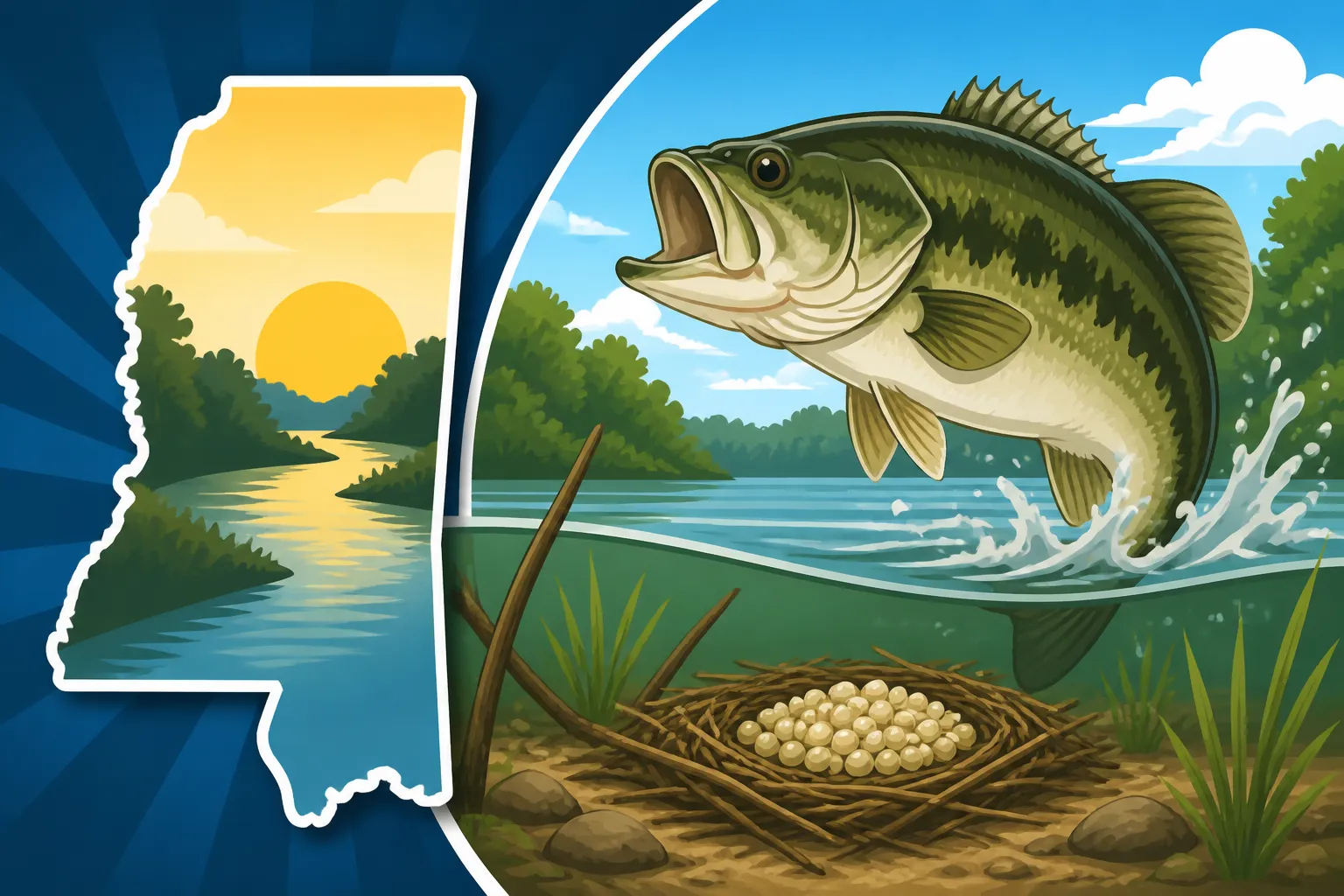
Secondly, they prefer a hard bottom. Bass will literally fan out a circular depression, clearing it of silt and debris to create a clean surface for their eggs to adhere to. This means areas with sand, gravel, or even firm clay are much more desirable than soft, muddy bottoms. You'll often find these hard spots near grass lines, lily pad fields, or submerged timber that offers some additional protection.
Finally, some kind of cover or structure nearby is usually present. While they clear a spot, a little overhead cover from a dock, a laydown tree, or even submerged hydrilla can provide security and shade for the bedding fish. This cover also acts as a point of reference for you, the angler, when searching for beds.
Reading the Water and Visual Cues
Once you're in a likely spawning area, it's time to "read the water." This means slowing down and using your eyes, not just your electronics. On calm, sunny days, especially when the sun is higher in the sky (mid-morning to late afternoon), you can often spot bass beds visually. Look for light-colored, circular depressions on the bottom in 1-5 feet of water. These are the fanned-out nests.
Sometimes, you'll see the bass itself, a male diligently guarding the nest, or a pair of fish circling over it. Polarized sunglasses, like those you can find on Amazon, are an absolute game-changer here, cutting through the glare and allowing you to see into the water much more clearly. Pay attention to how the fish react if you see them. Are they spooked easily, or are they locked down on the bed? Their behavior will tell you a lot about their willingness to bite. For more tips on visual fishing, check out our guide on Bass Fishing Techniques for Mississippi Anglers.
Fishing Ethics During the Spawn
This is an incredibly important point that every angler must consider. While fishing during the spawn is legal and can be very productive, it also presents an ethical dilemma. Bass are at their most vulnerable when they are actively spawning, as they are focused solely on protecting their offspring. Catching a bedding bass, particularly a female, can disrupt the spawning process, leaving eggs or fry vulnerable to predators.
Many anglers choose to practice catch-and-release exclusively during the spawn, and some even opt to avoid actively targeting bedding fish altogether. If you do target bedding bass, consider using a single, barbless hook and releasing the fish as quickly as possible, minimizing stress and ensuring they can return to their duties. Remember, the goal is to enjoy the resource responsibly, ensuring healthy populations for future generations. For more on conservation efforts and How Mississippi Fishing License Fees Are Used it can give you a better idea on how our licenses support the fish.
Effective (and Ethical) Techniques for Spawning Bass
Now that we know when and where bass spawn, let's talk about how to catch them. The spawn demands a different approach than other times of the year, focusing on subtle presentations and targeting the bass's protective instincts.
Lure Choices for Bedding and Pre-Spawn Bass
During the pre-spawn phase, when bass are still feeding aggressively but not yet locked on beds, your lure selection can be quite varied. This is the time for reaction baits that mimic fleeing baitfish or crawfish. Think lipless crankbaits like a Rat-L-Trap, spinnerbaits, or even larger jerkbaits. These lures can cover water quickly and draw strikes from actively feeding fish moving towards their spawning grounds.
Once bass are on the beds, the game changes. They're not necessarily "feeding" in the traditional sense; they're reacting defensively to anything that threatens their nest. Soft plastics are king here. Specifically, creature baits, tubes, lizards, and small jigs are excellent choices. Colors often mimic bluegill or crawfish – natural tones like green pumpkin, watermelon, or black and blue are always good bets. You can find a vast selection of these on Amazon, ready for quick delivery to your tackle box. Don't forget a good pair of polarized sunglasses, also easily found on Amazon, to help you spot those beds. Our guide on Best Lures for Largemouth Bass has even more specific recommendations.
Presenting Baits for Locked-Down Fish
Fishing for bedding bass requires patience and precision. You're not trying to get them to eat; you're trying to annoy them into biting. Cast your bait beyond the bed and gently retrieve it until it's right in the center of the nest. Let it sit there. And sit there. And sit there some more. Give it a gentle twitch, then let it sit again. The goal is to make the bass feel like this intruder isn't leaving, forcing it to pick up the bait and move it off the bed.
Sometimes, it takes multiple casts and a lot of persistence. Watch the bass's reaction closely. If it flares its gills, nudges the bait, or swims over it, you're getting close. The strike itself can be very subtle – often just a slight movement of your line or a feeling of weight, rather than a hard thump. It's a game of observation and subtle coaxing. For more detailed strategies, consider checking out our article on Fishing During the Spring Spawn in Mississippi.
Post-Spawn Strategies for Recovering Bass
After the peak spawn, many anglers shift their focus to post-spawn bass. These fish are often lethargic but will soon begin feeding to recover from the ordeal. They tend to move to slightly deeper cover adjacent to their spawning flats, such as submerged brush piles, deeper grass lines, or shaded areas under docks.
Slow-moving baits like weightless worms, shaky heads, or even shallow-diving crankbaits can be effective during this period. The key is to present baits near cover where recovering bass are resting and ambushing prey. Later in the post-spawn, as they regain energy, topwater lures in the mornings and evenings can also be incredibly productive as bass start actively hunting for an easy meal. This phase is crucial for ensuring the bass continue to thrive and grow throughout the year.
Ensuring Sustainable Bass Populations
The future of Mississippi bass fishing depends on all of us doing our part. Understanding the spawning cycle isn't just about catching more fish; it's about respecting the process that creates them. By being mindful of when and where bass are spawning, practicing responsible catch-and-release, and minimizing disturbance to active beds, we contribute to healthy, thriving bass populations in our beloved Mississippi waters. This ensures that the thrill of a hard-fighting largemouth will be there for generations to come, whether you're fishing Sardis Lake, the Mississippi River, or your favorite local pond.
Remember to always have your Mississippi Fishing License Guide in order, and be familiar with the current Mississippi Freshwater Fishing Rules to ensure you're compliant with all state regulations. Happy fishing, and may your spring be filled with many memorable catches!
Disclaimer
The information provided in this guide is for general informational purposes only. Fishing conditions, regulations, and fish behavior can vary significantly based on real-time environmental factors. Always consult the official Mississippi Department of Wildlife, Fisheries, and Parks (MDWFP) website or local authorities for the most current regulations, advisories, and fishing reports before heading out on the water.