Mississippi Night Fishing Rules
The peace and quiet of a lake or river after the sun dips below the horizon can be incredibly alluring for anglers, but the thought of fishing in the dark often brings a knot of confusion. Many folks wonder if it's even allowed, let alone what special rules might apply. This comprehensive guide will demystify Mississippi night fishing regulations, helping you navigate the darkness safely and legally so you can enjoy those tranquil, productive hours under the stars.
Understanding the Legality of Night Fishing in Mississippi
The good news for night owls and those escaping the summer heat is that night fishing is generally permitted across Mississippi's vast network of waterways. Unlike some states or specific bodies of water that might have outright bans on fishing after certain hours, Mississippi largely embraces the opportunity for anglers to pursue their passion around the clock. However, "generally permitted" doesn't mean "anything goes." There are crucial caveats and specific rules designed primarily for safety and resource management that every angler must be aware of.
General Green Light, Specific Caveats
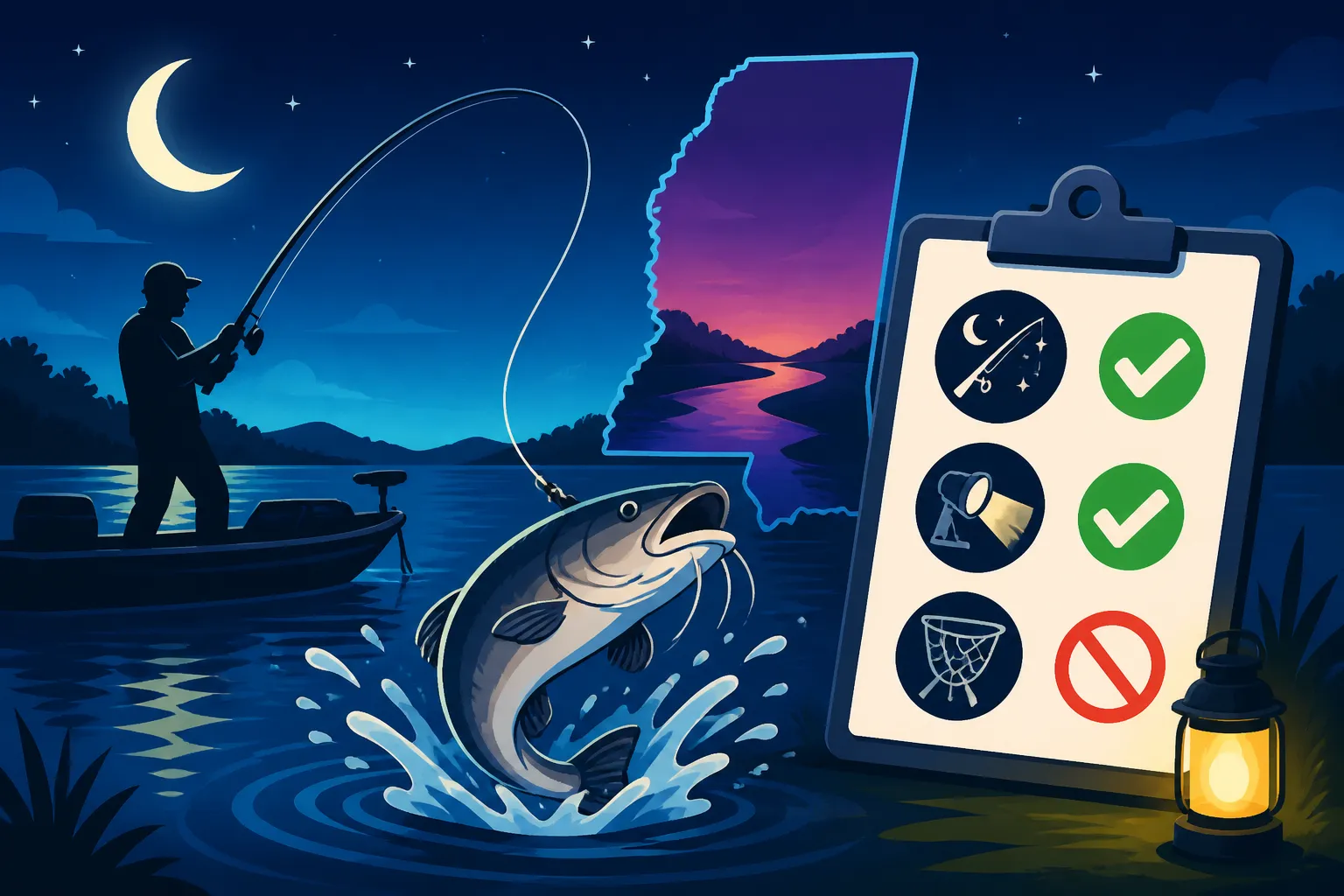
Imagine heading out onto the Ross Barnett Reservoir or one of the sprawling oxbow lakes off the Mississippi River just as dusk settles in. The air cools, the sounds of daytime recreation fade, and a different kind of calm descends. For many, this is the prime time to target species like catfish, crappie, and even some bass that become more active under the cloak of darkness. The Mississippi Department of Wildlife, Fisheries, and Parks (MDWFP) generally allows this, recognizing night fishing as a legitimate and often highly productive angling pursuit.
However, the "specific caveats" are where many anglers, especially those new to night fishing or visiting from out of state, can trip up. These aren't arbitrary rules; they're in place to prevent accidents, maintain order, and ensure fair play. For instance, while you might be allowed to fish, the way you fish or the equipment you use after dark can fall under strict guidelines. This includes everything from the lights on your boat to how you mark your trotlines. It’s a bit like driving a car at night – you can do it, but you absolutely need your headlights on and to follow the rules of the road. Understanding these nuances is key to a successful and trouble-free night fishing experience. For a broader look at all the rules, be sure to check out our guide on Mississippi Fishing Regulations Explained.
Why Regulations Exist for After-Dark Angling
The reasoning behind specific night fishing rules is primarily two-fold: safety and resource protection. When you’re out on the water in complete darkness, visibility drops dramatically, increasing the risk of collisions between boats, or accidents if someone falls overboard. This is why navigation lights are non-negotiable for any vessel operating from sunset to sunrise. It’s not just about you seeing others; it’s about others seeing you.
From a resource management perspective, some rules prevent certain methods that could be overly effective or difficult to monitor in the dark. For example, while jug fishing and trotlines are popular night methods for catfish, they require specific tagging and checking intervals to ensure responsible harvesting and to prevent gear from becoming lost or abandoned, which could pose hazards to other boaters and wildlife. The goal isn't to discourage you from fishing, but to ensure that everyone can enjoy the waterways safely and that fish populations are managed sustainably, regardless of the hour.
Key Regulations for Nighttime Anglers to Follow
When the sun dips below the horizon, the rules don't necessarily change for the fish, but they certainly do for you, the angler, especially if you're on a boat. Mississippi has clear expectations for what you need to have and how you need to operate when fishing after dark. It’s not just about being compliant; it's about staying safe and showing respect for others enjoying the water.
Boating Navigation Lights and Safety Gear
This is perhaps the most critical aspect of night fishing from a boat. Operating a vessel without proper navigation lights from sunset to sunrise is not only incredibly dangerous but also a serious violation of both state and federal boating laws. The U.S. Coast Guard (USCG) rules, which Mississippi adheres to, require specific lighting configurations. For most recreational boats, this means a red light on the port (left) side, a green light on the starboard (right) side, and a white all-around light or a masthead light combined with a stern light. These lights tell other boaters your position and direction of travel. Always ensure your lights are fully functional before you even launch, and carry spare bulbs if possible.
Beyond navigation lights, other safety gear becomes even more crucial in the dark. Think about your personal flotation devices (PFDs). While it's always a good idea to wear them, at night, the consequences of falling overboard without one can be dire, as rescue efforts become significantly more challenging. A sound-producing device like a whistle or horn, a fire extinguisher, and visual distress signals (flares or an electronic signaling device) are also mandatory on boats of a certain size, and their importance is amplified in darkness. Having a good, reliable headlamp or spotlight, perhaps one you can find on Amazon, is not just for finding your tackle; it's an essential safety tool for navigating your boat, tying knots, and handling fish without relying on your main boat lights which could attract bugs. Our detailed guide on Mississippi Boat Fishing Regulations covers all these necessities.
Fishing Methods and Gear Considerations After Dark
For the most part, the legal methods for catching fish during the day remain legal at night. This includes rod and reel fishing, trotlines, and jug fishing. However, there are specific regulations that govern the use of these methods, particularly when they are left unattended or deployed for extended periods.
- Trotlines and Jug Lines: These are classic night fishing tools, especially for catfish. Mississippi requires that all trotlines and jug lines be tagged with the owner's name and address or a MDWFP customer number. They must also be checked regularly – typically at least once every 24 hours. The placement of these lines is also regulated to ensure they don't impede navigation or create hazards for other boaters. You can't just string a trotline across a main channel, for instance. For those interested in this technique, our post on Mississippi Catfish Regulations delves deeper into the specifics.
- Lights for Attracting Fish/Bait: Many night anglers use lights, often submersible green or white LEDs, to attract baitfish, which in turn attract game fish like crappie. While generally allowed, it's wise to double-check local ordinances or specific lake rules, especially in smaller, managed lakes or state parks. Some locations might have restrictions on the intensity or type of light used to prevent disturbance or overly efficient harvesting. A compact, portable green fishing light found on Amazon can significantly improve your night fishing catch rates, but ensure it meets any local specifications.
- Number of Rods: This is a common question, and generally, the number of fishing poles you can use in Mississippi applies whether it's day or night. For most recreational anglers, this means you can use multiple rods, but there are limits, especially when targeting certain species or using specific methods. Our article on How Many Fishing Poles Can You Use in Mississippi? provides the exact details, as exceeding the limit can result in fines.
Specific Rules for State Parks and Managed Lakes
While broad state regulations apply across Mississippi, it's incredibly important to remember that individual state parks and state-managed fishing lakes often have their own specific rules and operating hours. These local rules can sometimes override or add to the statewide regulations. For instance, a state park lake might close its gates at dusk, effectively making night fishing impossible from the bank, even if it's otherwise legal statewide. Similarly, some smaller lakes might have restrictions on certain types of boating or fishing equipment that are generally allowed elsewhere.
Before you plan a night fishing trip to a specific location like Lake Okhissa, one of the state's popular bass fisheries, or a county-managed lake, always check with the local park office or the MDWFP website section pertaining to that specific body of water. A quick phone call can save you a wasted trip or, worse, a citation. These rules are usually posted at boat ramps, park entrances, or available on the MDWFP's official website. Assuming general state rules always apply without checking local variations is a common mistake that can lead to frustration.
Here's a quick summary table of common night fishing considerations:
| Aspect | General Mississippi Rule (Night) | Key Considerations/Caveats |
|---|---|---|
| Boating Lights | Required from sunset to sunrise | Red/Green navigation lights, all-around white light. Always check functionality. |
| PFDs | Required on board (wearing encouraged) | Especially critical at night; makes rescue easier. |
| Sound Devices | Whistle/horn required for most boats | Crucial for signaling in low visibility. |
| Trotlines/Jug Lines | Permitted, but require tagging and regular checks (24hr) | Tag with MDWFP customer number or name/address; avoid main channels. |
| Attractor Lights | Generally permitted | Check local lake/park rules for restrictions on type or intensity. |
| Rod Limits | Same as daytime limits | Varies by species and method; refer to MDWFP regulations. |
| State Parks/Lakes | Varies by location | Always check specific park/lake rules for hours, access, and restrictions. |
| Alcohol | Open container laws apply; BUI is illegal | Impaired operation is dangerous and strictly enforced. |
Essential Safety Practices and Gear for Night Fishing Success
Fishing at night offers a unique experience, a blend of peaceful solitude and the thrill of the unknown. But this tranquility comes with its own set of challenges, predominantly related to safety and navigation. Being prepared and proactive about safety is not just good practice; it’s essential for a memorable, rather than a regrettable, outing.
Visibility and Personal Safety Equipment
Operating in darkness demands maximum attention to visibility – both for yourself and your gear. Beyond the mandatory boat navigation lights, personal illumination is paramount. A high-quality headlamp is your best friend. It keeps your hands free for tying knots, baiting hooks, or unhooking fish, and provides direct light wherever you look. Carrying a backup headlamp or a powerful handheld flashlight is also a smart move. You never want to be caught on the water in complete darkness if your primary light source fails. Brands like Black Diamond or Petzl offer excellent, durable options that you can often find quickly on Amazon.
Wearing reflective clothing or adding reflective tape to your life jacket is another subtle but effective safety measure, especially if you're bank fishing near a road or in an area with boat traffic. Even on a boat, if you fall overboard, that reflective material could be the difference in being spotted quickly. Consider a PFD with built-in reflective elements. It's easy to overlook these small details, but they can make a world of difference in an emergency. Remember, safety isn't just about avoiding tickets; it's about coming home safely after a fantastic night on the water.
Navigating the Dark: Planning and Awareness
Night fishing requires a different level of planning than a daytime trip. Before you even head out, familiarize yourself with the body of water in daylight. Know where the boat lanes are, identify any submerged hazards like stumps or rock piles, and understand the general layout of the shorelines or points you plan to fish. What looks like an open stretch of water during the day can become a minefield in the dark. If you're using a depth finder, ensure its screen brightness is adjusted for night use and that you understand its readings clearly.
Always tell someone your float plan: where you're going, who you're with, and when you expect to return. This simple act can be a lifesaver if something goes wrong. Keep a fully charged cell phone in a waterproof bag, and consider carrying a portable power bank, which can be picked up from Amazon, to ensure it stays charged. Sudden weather changes can be harder to spot at night, so keep an eye on weather forecasts and radar. If storms are predicted, it's always better to reschedule for another night. Our guide on Best Fishing Spots in Mississippi can help you scout your location during the day.
Practical Tips for a Productive Night Out
Beyond safety, there are several practical tips to make your night fishing experience more enjoyable and productive:
- Be Organized: In the dark, fumbling for tackle is frustrating. Organize your tackle box during the day so everything is easily accessible by feel or with minimal light. Have your preferred baits and lures ready to go.
- Insect Repellent: Mississippi nights, especially near water, can be buggy. A good insect repellent is non-negotiable. Repellents containing DEET or Picaridin are highly effective.
- Keep Noise Down: Fish, especially wary species, can be more sensitive to vibrations and noise at night. Move quietly and speak softly.
- Netting and Handling Fish: Have a landing net easily accessible. Handling fish in the dark can be tricky, so be extra cautious with hooks and sharp fins. If you're catching catfish at night, you'll appreciate having a sturdy net nearby.
- Warmth: Even on warm summer days, nights can get cool, especially on the water. Bring extra layers of clothing, even if you don't think you'll need them.
- Waste Management: Pack out everything you pack in. Leaving trash or discarded fishing line behind is detrimental to the environment and disrespectful to other anglers.
Following these safety protocols and practical tips will not only keep you safe but also significantly enhance your chances of a successful and enjoyable night fishing adventure. You’ll be able to focus on the thrill of the bite rather than worrying about what might go bump in the night.
Where to Verify Mississippi Night Fishing Rules
Navigating fishing regulations can sometimes feel like trying to catch a greased hog, especially when you factor in time of day, specific locations, and different species. When it comes to night fishing in Mississippi, the ultimate source for accurate, up-to-date information is always going to be the official channels. Relying on hearsay or outdated internet forums can lead to misunderstandings, fines, or even dangerous situations.
The Official Word from MDWFP
The Mississippi Department of Wildlife, Fisheries, and Parks (MDWFP) is the primary authority for all hunting and fishing regulations within the state. Their website is a treasure trove of information, typically updated annually with the latest rule changes. You'll find sections dedicated to fishing regulations, boating laws, and even specific rules for various state lakes and reservoirs. It’s imperative to consult their official resources directly.
Their website, mdwfp.com, usually has a dedicated section for "Regulations" or "Fishing." Within these, you can often find downloadable booklets or interactive maps that detail specific rules, including creel limits, size restrictions, and general conduct on the water. If you have any specific questions that aren't clearly addressed online, don't hesitate to call one of their regional offices or their main headquarters. Their conservation officers and staff are there to help ensure everyone understands and follows the rules. This is also where you'd learn about purchasing your Mississippi Fishing License Guide or find information on Mississippi Fishing License Penalties and Fines if you were to accidentally break a rule.
Checking Local Ordinances and Private Waters
While the MDWFP covers statewide regulations, don't forget that local governments, municipalities, or even private landowners might have additional rules that apply to specific bodies of water within their jurisdiction. For instance, a small lake managed by a city park might have different operating hours or restrictions on motorboats that would impact night fishing.
When planning to fish on private property, such as a farm pond, it's absolutely crucial to obtain permission from the landowner beforehand. Even if it's a private pond, the fish within it are still often subject to statewide bag limits and seasons, but the landowner might have additional rules about access, fishing hours, or methods. Always ask! Similarly, some larger lakes might have specific "no-wake" zones or speed limits that are particularly important to observe at night when visibility is low. Taking the extra step to check these local nuances can save you a lot of hassle and ensure a respectful relationship with property owners and local communities.
Disclaimer
Please note that while we strive to provide accurate and up-to-date information, fishing regulations can change. It is always the angler's responsibility to consult the most current official publications from the Mississippi Department of Wildlife, Fisheries, and Parks (MDWFP) or relevant local authorities before engaging in any fishing activity. This guide is for informational purposes only and should not be considered a substitute for official legal advice or regulations.