How to Fish Grass Beds for Bass
Finding those elusive largemouth bass in Mississippi can sometimes feel like solving a mystery, especially when they seem to vanish into thin air. Many anglers get frustrated when the bass aren't on typical structure, but often, the answer lies hidden in plain sight: the grass beds. This comprehensive guide will peel back the layers of how to effectively fish these crucial green havens, turning your frustration into triumphant catches.
Why Bass Absolutely Love Grass Beds
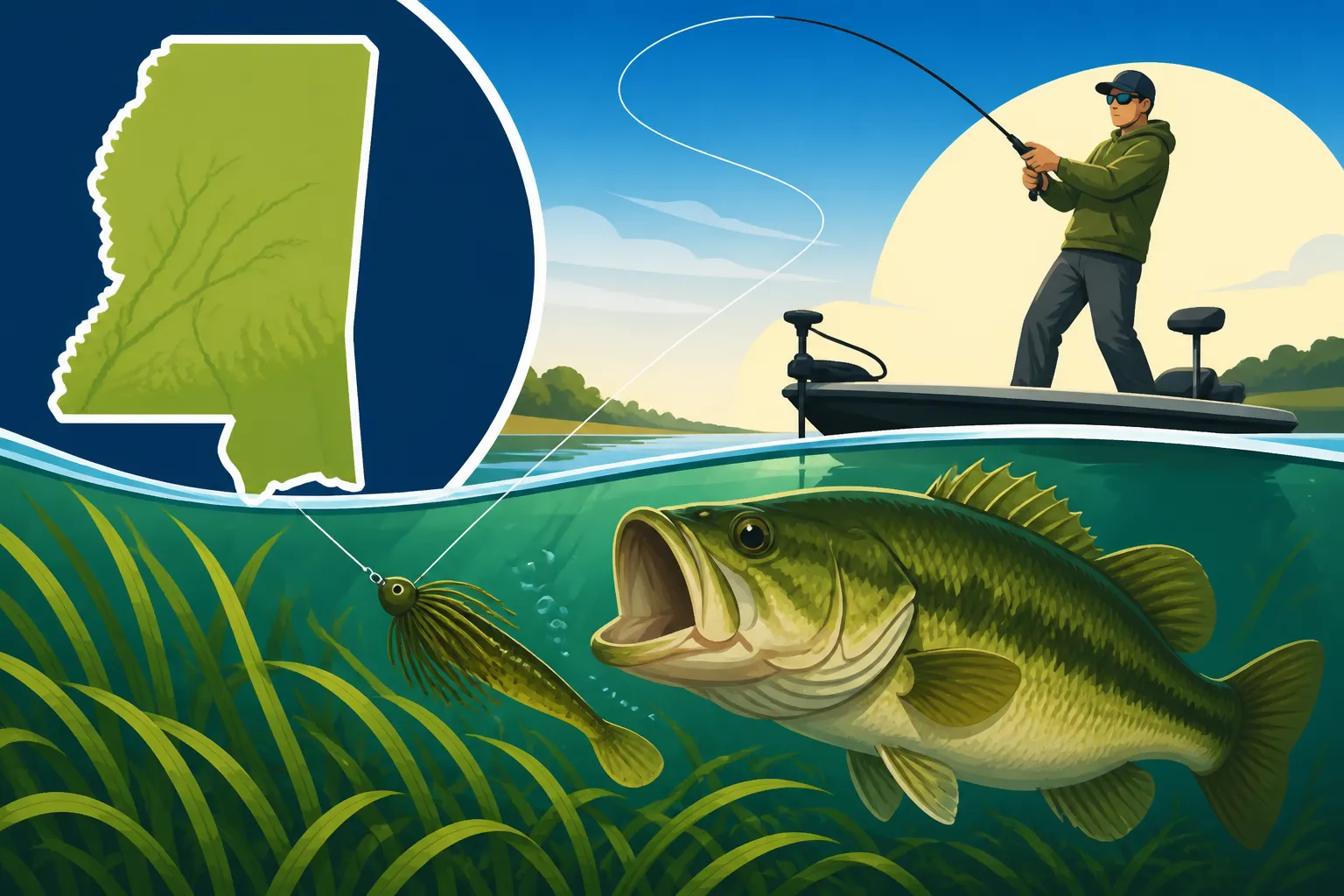
Imagine a perfect hideout, a pantry stocked with food, and a comfortable temperature-controlled home all rolled into one. That's what a grass bed is to a largemouth bass. These submerged or emergent aquatic plants aren't just pretty scenery; they're vital ecosystems that dictate bass behavior, especially in many of Mississippi's prime fishing locations like Ross Barnett Reservoir or Lake Washington. Understanding why bass gravitate to grass is the first step in learning how to effectively fish them.
Cover and Ambush Points
The most obvious benefit of grass beds for bass is the unparalleled cover they offer. Thick vegetation provides a fantastic hiding spot from predators, be it ospreys circling overhead or even larger, more aggressive fish. For a bass, it's a safe zone where they can feel secure and conserve energy. This sense of security is paramount, making them more likely to linger in these areas for extended periods.
Beyond just safety, grass beds are also prime ambush points. Bass are opportunistic predators, and the dense structure of a grass mat allows them to blend in perfectly, waiting for an unsuspecting baitfish or crawfish to swim by. They can rocket out from beneath a mat, snatch their prey, and retreat just as quickly, making these areas incredibly efficient hunting grounds. Think of it like a camouflaged sniper's nest in the underwater world.
Forage and Baitfish Habitat
Grass beds aren't just about the bass; they're teeming with life. These aquatic plants provide critical habitat for countless baitfish species, insects, and crawfish – essentially, the entire menu for a hungry bass. Minnows, shad, and small bream all seek refuge and food within the dense foliage. Where the bait is, the bass will follow. It's a fundamental principle of fishing, and grass beds are often the epicenter of this food chain activity.
Moreover, the vegetation itself can harbor insects and invertebrates that bass will snack on, particularly younger bass. The decomposition of plant matter also creates a rich environment for microorganisms, further fueling the lower levels of the food chain. So, when you're looking at a patch of hydrilla, you're not just seeing plants; you're seeing a vibrant, bustling underwater city that holds everything a bass needs to thrive. This constant supply of sustenance keeps them tethered to these areas throughout the year.
Temperature Regulation and Oxygenation
Mississippi summers can be brutal, with water temperatures soaring to uncomfortable levels for bass. Grass beds act as natural air conditioners, providing shade and often cooler water temperatures beneath their canopy. This thermal refuge is incredibly important during the hottest months, drawing bass into the mats to escape the oppressive heat of open water. Conversely, during colder periods, especially in the mild Mississippi winters, dense grass can actually retain heat better, offering a slightly warmer sanctuary for sluggish fish.
Additionally, aquatic vegetation plays a crucial role in oxygenating the water through photosynthesis. While too much decomposition can lead to oxygen depletion, healthy, growing grass beds actively pump oxygen into the water during daylight hours. This means that even in warmer, less oxygenated parts of a lake, a vibrant grass bed can create a localized zone of higher oxygen, making it more hospitable for bass and their prey. Knowing this helps you understand why fishing certain types of grass at specific times of day can be so productive.
Reading the Grass: Types and Locations for Bass
Not all grass is created equal when it comes to attracting bass. Just like understanding different types of cover on land, knowing the various aquatic plant species and how they grow can drastically improve your success. Mississippi lakes and reservoirs offer a diverse range of vegetation, and recognizing the prime real estate within these green jungles is key to pinpointing where the biggest bass might be lurking.
Common Types of Aquatic Vegetation in Mississippi
Across Mississippi's waters, you'll encounter several prevalent types of aquatic vegetation, each with its own characteristics that appeal to bass in different ways. Understanding these differences can inform your lure choice and presentation.
- Hydrilla: Often considered a bass angler's best friend, hydrilla forms dense, thick mats, sometimes extending from the bottom all the way to the surface. It provides incredible cover and stable habitat for baitfish. When fishing hydrilla, look for irregularities – a distinct edge, a point, a small hole, or a slight depth change. These are often the spots where bass will stack up, waiting to ambush. Think of the expansive hydrilla beds on Ross Barnett Reservoir; finding these subtle differences is crucial.
- Coontail: Also known as hornwort, coontail is a submerged plant that doesn't usually root in the bottom but rather floats or is loosely anchored. It has a feathery, bushy appearance and can form large clumps or mats just under the surface. Bass love coontail because it's slightly less dense than hydrilla, making it easier for them to move through and ambush prey. It's especially good in slightly stained or turbid water.
- Milfoil: Eurasian watermilfoil is another common invasive species that can create thick underwater jungles. Similar to hydrilla, it forms dense mats, but its strands are usually finer. Bass will relate to milfoil in much the same way they do hydrilla, using it for cover and ambush. The key with both milfoil and hydrilla is to find the edges where open water meets the thick stuff, or small pockets within the mat itself.
- Lily Pads and Emergent Vegetation: While technically not "grass," lily pads and other emergent plants like cattails or maidencane provide similar benefits. Lily pads offer fantastic shade and cover on the surface, and bass will often hold directly under them, particularly on sunny days. Fishing around the stems of these plants where they meet the water can be incredibly productive. These are classic spots for topwater frogs.
Prime Locations Within Grass Beds
Just because there's grass doesn't mean every square foot is holding a lunker. Bass are creatures of efficiency, and they'll choose specific spots within the vegetation that offer the best combination of cover, food, and ambush opportunity. Your job is to identify these high-percentage areas.
- Edges: The transition zone where a grass line meets open water is a classic bass hotspot. Bass often cruise these edges, darting in and out of the cover to feed. This could be an outside edge of a large mat, or an inside edge where grass meets a creek channel or a depth drop-off. Fishing parallel to these edges with spinnerbaits, crankbaits, or even Texas-rigged worms can be incredibly effective. Consider the long, distinct grass lines you might find on Grenada Lake – these are prime targets.
- Pockets and Holes: Within a large, unbroken mat of grass, any small opening, hole, or indentation becomes a magnet for bass. These small clearings offer an ideal ambush point, allowing bass to hide in the surrounding cover and dart out into the opening to grab a meal. Flipping or pitching jigs and soft plastics into these isolated pockets is a highly productive technique. Sometimes these are natural openings, other times they're created by boats or wind.
- Points and Irregularities: Any point, finger, or irregularity in a grass line acts as a funnel for baitfish and a prime ambush spot for bass. Instead of a straight line, look for where the grass extends further out, or where there's a distinct bend. Bass will often position themselves on the downcurrent or downwind side of these points, waiting for food to be pushed to them. These areas concentrate both bait and predators.
- Depth Changes: Even within a grass bed, subtle depth changes can be game-changers. A shallow flat with a deeper ditch running through it, or a sudden drop-off near a grass line, will often hold more fish. The bass will use the grass for cover but relate to the depth change for travel or staging. Use your electronics to identify these contours hidden beneath the green canopy.
By understanding these different types of vegetation and where bass prefer to position themselves within them, you're already halfway to unlocking the secrets of grass bed fishing. Don't be intimidated by the thick stuff; learn to "read" it, and you'll find some of the most consistent bass fishing Mississippi has to offer.
Essential Gear for Grass Bed Fishing
When you're diving into the thick stuff, your everyday bass fishing setup might not cut it. Fishing grass beds, especially dense mats, requires specialized gear that can handle the heavy cover, penetrate the vegetation, and wrestle big bass out of their leafy strongholds. Skimping on tackle here will lead to lost fish, broken lines, and a whole lot of frustration. Investing in the right tools is paramount for success.
Rods, Reels, and Line
You're not going for finesse in the thickest grass. This is power fishing at its finest, and your rod and reel combo needs to be up to the task.
- Rods: Think heavy, heavy, heavy. A heavy or extra-heavy power, fast action casting rod is your best friend here. These rods typically range from 7' to 8' in length. The extra power is needed to drive hooks through thick plastic baits and into a bass's jaw, as well as to horse a fish out of heavy cover without snapping. The fast action means the rod bends mostly at the tip, giving you the sensitivity to feel subtle bites and the backbone to control the fight. For punching heavy mats, some anglers even opt for specialized "punching rods" that are extra long and stout.
- Reels: A sturdy baitcasting reel with a high gear ratio (7.1:1 or higher) is essential. The high gear ratio allows you to quickly take up slack line, which is critical for hooksets when a bass bites and runs into the cover, and for rapidly retrieving your bait to make another pitch or flip. Look for reels with strong drag systems, as you'll be putting a lot of pressure on them. Reliability and durability are key when battling big fish in tough conditions. Many reliable options are available on platforms like Amazon if your local tackle shop doesn't have the specific model you're looking for.
- Line: Forget fluorocarbon for the heaviest grass; braided line is the undisputed champion here. Braided line has almost no stretch, incredible strength-to-diameter ratio, and slices through vegetation far better than mono or fluoro. For flipping and pitching, 50-65 lb braided line is standard. For punching heavy mats, you might even go up to 80 lb braid. The heavy line allows you to muscle fish out of the cover and helps prevent break-offs when the line gets wrapped around submerged stems. While it might seem like overkill, you'll thank yourself when you're landing a 5-pounder that buried itself deep in the hydrilla. Choosing the Right Rod and Reel for Mississippi Fishing can offer more general guidance, but for grass, braid is king.
Lure Selection: Penetration and Presentation
The lures you choose for grass fishing need to do two things exceptionally well: penetrate the cover and present an enticing profile to bass. You'll find a variety of styles, each suited for different densities and types of vegetation.
- Jigs (Flipping and Punching): These are absolute staples. A heavy flipping jig (3/8 oz to 1 oz+) with a weed guard is perfect for pitching into holes and sparse cover. For punching through dense mats, a tungsten "punching weight" (1 oz to 2 oz+) rigged with a stout hook and a creature bait or craw trailer is unbeatable. The compact profile and heavy weight allow them to slip through the thickest stuff. The fall rate of these heavier setups can also trigger reaction bites from bass hiding below.
- Soft Plastics (Texas Rigs, Toads, Frogs):
- Texas-Rigged Worms/Creature Baits: These are incredibly versatile. Rigged weedless, they can be dragged over, through, and into grass with minimal snagging. Heavier sinkers (1/4 oz to 3/4 oz) help them penetrate cover. Many anglers swear by creature baits and larger worms for drawing strikes from bass buried in the grass. This is where your heavy braid shines, allowing you to effectively set the hook and extract the fish. You can find a huge variety of these on Amazon, often in bulk. How to Fish a Texas Rig for Bass goes into more detail on this fundamental setup.
- Soft Plastic Frogs/Toads: When bass are feeding on the surface or sitting just under a mat, a weedless soft plastic frog or buzzing toad is dynamite. Work these baits directly over the top of matted grass. The commotion they create often draws explosive, heart-stopping strikes. Colors that mimic natural frogs or provide high contrast are often successful. The key is to wait for the fish to eat the bait before setting the hook.
- Spinnerbaits and Vibrating Jigs: For fishing the edges of grass lines or sparse to medium density grass, a bladed jig (often called a ChatterBait style lure) or a spinnerbait can be incredibly effective. Their vibration and flash call fish out of the cover. A vibrating jig, especially, can be worked through grass surprisingly well, with the blade helping to keep it from fouling up. These are excellent for covering water and finding active fish that are cruising the perimeter of the vegetation. Best Lures for Largemouth Bass would certainly feature these versatile options.
| Lure Type | Ideal Grass Density | Typical Weight Range | Best Presentation | Key Features |
|---|---|---|---|---|
| Flipping Jig | Moderate to Dense | 3/8 oz – 1 oz | Pitching into pockets, slow hops | Weed guard, compact, mimics crawfish |
| Punching Rig (Tungsten/Creature) | Very Dense (Matted) | 1 oz – 2 oz+ | Punching through mats, vertical fall | Heavy, streamlined, weedless |
| Texas-Rigged Soft Plastic | Sparse to Moderate | 1/4 oz – 3/4 oz (sinker) | Dragging, pitching, swimming | Weedless, versatile, many profiles |
| Soft Plastic Frog/Toad | Surface Mats, Sparse Emergent | Light (topwater) | Worked over mats, pop and pause | Weedless, surface commotion, explosive strikes |
| Vibrating Jig (ChatterBait) | Edges, Sparse to Moderate | 3/8 oz – 1/2 oz | Steady retrieve, snapping through grass | Vibration, flash, good weed shedding |
| Spinnerbait | Edges, Sparse | 3/8 oz – 1 oz | Steady retrieve, deflection off cover | Flash, vibration, covers water quickly |
Having the right gear won't just make fishing grass beds possible; it will make it enjoyable and significantly more productive. Don't be afraid to go heavy and equip yourself to win the battle when a big Mississippi bass decides to call a dense grass mat home.
Top Techniques for Targeting Bass in Grass Beds
Now that you understand why bass love grass and what gear you need, it's time to talk about the "how." Fishing grass beds isn't a one-size-fits-all endeavor. The density of the grass, the depth, and the activity level of the bass will all dictate which technique will be most effective. Mastering these methods will allow you to adapt to any grass scenario you encounter on Mississippi's lakes and rivers.
Flipping and Pitching: Precision and Stealth
Flipping and pitching are cornerstone techniques for targeting bass in and around grass beds. They allow for a quiet, precise presentation to specific targets without spooking the fish. These methods are particularly effective when bass are holding tight to cover, such as in small pockets, along distinct grass edges, or around submerged timber mixed within the vegetation.
- The Difference: While often grouped together, flipping and pitching are distinct. Flipping involves using a short amount of line, swinging the bait like a pendulum with your rod tip to drop it into a target close to the boat. Pitching uses a bit more line, an underhand cast, and a roll of the wrist to send the bait a bit further, still with a low trajectory and quiet entry. Both are about getting your bait into tight spots with minimal splash. You’ll be standing or sitting close to the target, allowing the bait to drop straight down.
- Execution: Once your bait (typically a weedless jig or Texas-rigged creature bait) enters the water, let it fall naturally to the bottom on a semi-slack line. Watch your line carefully for any twitch or jump – that's often a bite. If you don't feel a bite on the initial fall, slowly lift and drop the bait a few times, gently shaking the rod tip to impart subtle action. Most bites will occur on the fall or as you lift the bait. If nothing happens after a few lifts, reel in and make another pitch. This is a methodical, patient approach, but it often yields bigger, more reclusive bass that are hiding deep in the cover.
- Optimal Scenarios: This technique shines when bass are holding in isolated clumps of grass, in small holes or pockets within larger mats, or right along the distinct edge of a grass line where it meets open water. It's also great for fishing around any piece of hard cover (like a stump or laydown) that's surrounded by grass. The quiet entry of the bait is crucial in clear water or when fish are pressured. Remember to use your heavy rod and braided line to ensure you can get a solid hookset and extract the fish quickly before it buries itself deeper.
Punching Heavy Mats: Power and Persistence
When the grass beds become so dense that they form a thick, impenetrable canopy on the surface, traditional flipping and pitching won't cut it. This is where punching comes into play – a heavy-duty technique designed to literally "punch" through the thickest vegetation to reach the bass lurking underneath. This method is incredibly exciting and often produces some of the biggest bass.
- The Setup: As discussed in the gear section, punching requires specialized tackle: an extra-heavy rod, an equally stout baitcasting reel, and heavy braided line (65-80 lb). The key is the weight and hook setup. You'll use a tungsten bullet weight, typically ranging from 1 to 2 ounces or even heavier, pegged directly above a heavy-duty straight shank flipping hook. A compact creature bait or crawfish imitator is threaded onto the hook, rigged perfectly weedless. This streamlined, heavy package is designed to fall through the densest cover.
- The Punch: Cast your rig with authority, aiming for any dark spot, irregularity, or thick clump within the mat. The heavy weight will punch through the vegetation, creating a small opening as it descends. Let it fall all the way to the bottom. Once it hits, lift and drop it a few times, shaking your rod tip to give the bait action. Most bites happen on the initial fall or shortly after it hits the bottom. The takes can be subtle – just a slight pressure, a sideways movement of your line, or the line simply stops falling.
- Hookset and Extraction: When you feel a bite, set the hook hard! This is not a gentle wrist flick; it's a full-body, upward sweep to drive that heavy hook through the plastic and into the bass's jaw. Immediately after setting the hook, crank furiously to get the fish's head up and moving towards the surface. Your goal is to keep the fish from burying itself deeper into the mat, which can quickly lead to a lost fish. Use your powerful rod and heavy braid to winch the fish out of the cover. This can be intense, but the reward of a big bass pulled from a seemingly impossible spot is incredibly satisfying. Bass Fishing Techniques for Mississippi Anglers often highlight this power-packed approach.
Topwater Frogs and Toads: Explosive Surface Action
Few things in bass fishing are as exhilarating as a bass exploding on a topwater frog or buzzing toad. This technique is fantastic for grass beds that either sit just below the surface or form a solid mat on top. Bass love to ambush prey from below, and these weedless topwater baits are perfect for triggering those aggressive strikes.
- Working the Bait: Soft plastic frogs and buzzing toads are designed to be fished directly over the top of matted grass, lily pads, or through sparse emergent vegetation. Cast your frog onto the mat and then use a walk-the-dog retrieve (short twitches of the rod tip while reeling in slack) to make it sashay across the surface. For buzzing toads, a steady, fast retrieve creates a gurgling commotion. Vary your retrieve speed and pause frequency. Sometimes a slow, deliberate pace with long pauses works best; other times, a fast, erratic retrieve triggers the most violent strikes.
- The Strike and Hookset: This is the critical moment. When a bass blows up on your frog, your natural instinct will be to set the hook immediately. Resist! Wait until you feel the weight of the fish on your line before sweeping the rod back. Many anglers count to "one Mississippi, two Mississippi" after the splash before setting the hook. This allows the bass to fully engulf the bait and turn its head, leading to a much better hookup ratio. Premature hooksets are the most common mistake with frog fishing.
- Optimal Conditions: Frog fishing truly shines on calm, overcast days or during low-light conditions like early mornings or late evenings. Warmer water temperatures also increase bass activity and their willingness to strike on the surface. Look for large expanses of matted hydrilla or lily pads. This technique isn't just about catching fish; it's about the pure thrill of the strike. Consider picking up a few different frog styles and colors on Amazon to experiment with, as some days bass might prefer a popping frog over a walking frog. Best Time of Day to Catch Bass often points to low-light conditions as prime for topwater.
Bladed Jigs (ChatterBaits) and Spinnerbaits: Searching the Edges
While flipping, punching, and frogging target the dense heart of the grass, bladed jigs (like the popular ChatterBait) and spinnerbaits are phenomenal tools for fishing the edges of grass beds and more sparse vegetation. They excel at covering water quickly and drawing reaction strikes from active bass.
- Bladed Jigs: These lures combine the flash of a spinnerbait with the weed-shedding ability of a jig. The unique hexagonal blade causes the jig to vibrate intensely, creating a lot of commotion and enticing bass. Cast a bladed jig parallel to a grass line or along the edges of a deep grass bed. Vary your retrieve speed, sometimes slow-rolling it, other times giving it erratic jerks to mimic a struggling baitfish. The blade helps the lure slide over and through sparse to moderate grass with fewer snags than a traditional crankbait. If you feel grass on your blade, a quick rip of the rod will often clear it.
- Spinnerbaits: A classic for a reason, spinnerbaits are incredibly versatile for grass fishing. The flash and vibration of the blades (Colorado, Willowleaf, or a combination) are highly attractive to bass, especially in stained water or on windy days. Like bladed jigs, they are best fished along the edges of grass beds, around isolated clumps, or through sparse grass. Experiment with different blade combinations and skirt colors. A slow roll with a large Colorado blade can be effective in deeper, denser grass, while a faster retrieve with willowleaf blades works well for aggressive bass patrolling shallow edges.
- Situational Use: These lures are perfect for searching for active bass before committing to slower, more methodical techniques. If you're unsure where the bass are holding in a larger grass bed, start by working the perimeter with a bladed jig or spinnerbait. They can also be effective when bass are in a more neutral mood, as the vibration and flash can provoke an instinctual strike. Both are excellent choices for fishing after a cold front when bass might be slightly more scattered but still willing to chase.
By understanding and practicing these core techniques, you'll be well-equipped to tackle any grass bed in Mississippi. The key is observation, adaptation, and confidence in your presentation. Don't be afraid to experiment, and soon you'll be pulling those green monsters out of the green stuff like a pro.
Disclaimer
This article is for general informational purposes only and does not constitute professional advice. Laws, prices and regulations vary by location and change over time. Consult a qualified professional for guidance on your specific situation.