Where to Fish Near Ship Island for Red Snapper
There's nothing quite like the thrill of feeling that powerful tug on your line, knowing a hard-fighting red snapper is on the other end, especially when you're casting near a beautiful, historic spot like Ship Island. But let's be honest, figuring out exactly where to drop your lines for these prized bottom dwellers can feel a bit like searching for buried treasure without a map. It’s frustrating to spend precious fishing time just scouting. This guide is designed to cut through that guesswork, detailing the prime locations and essential knowledge you’ll need to target red snapper near Ship Island successfully.
Understanding Red Snapper Habitat Near Ship Island
Red snapper aren't just swimming around aimlessly; they are structure-oriented fish. They love to hang out around anything that provides cover, acts as an ambush point, or attracts baitfish. Near Ship Island, this means a combination of natural and artificial structures that create ideal habitat. You're looking for underwater features that break up the otherwise flat bottom of the Gulf.
The Allure of Nearshore Reefs and Wrecks
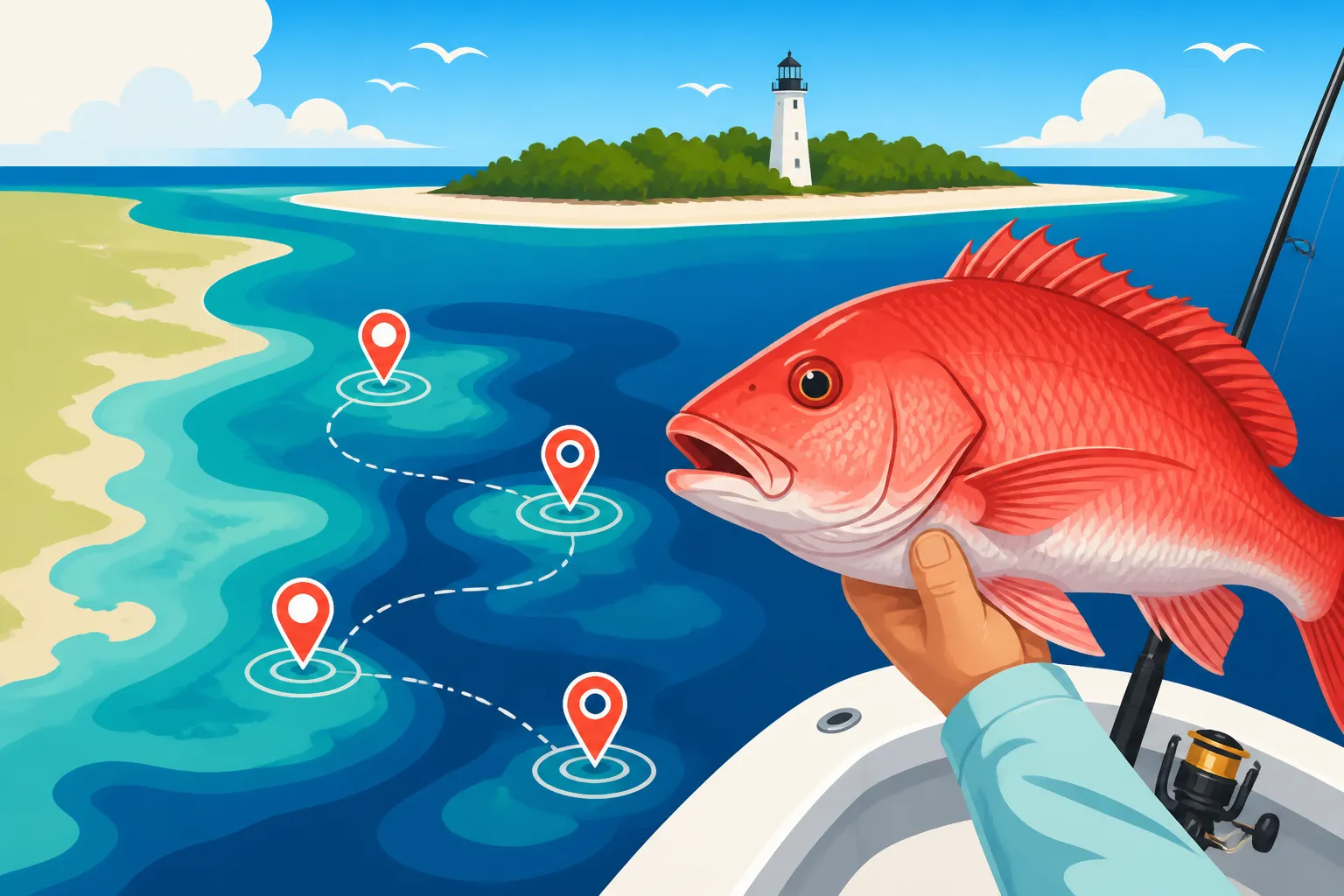
For any angler targeting red snapper along the Mississippi Gulf Coast, the artificial reef system is your best friend. While Ship Island itself is a protected area, the waters surrounding it, particularly offshore, are teeming with intentionally placed structures that act as magnets for marine life, including red snapper. These reefs can be anything from old barges and concrete culverts to specially designed reef pyramids and rubble piles. They create a complex environment that offers protection from predators, provides surfaces for encrusting organisms like barnacles and sponges (which, in turn, attract smaller baitfish), and offers depth variations that snapper love.
Think of these artificial reefs as underwater cities for fish. They provide condos, restaurants, and hiding spots all in one. Because these structures are man-made and their locations are often well-documented (though not always publicly precise, requiring some searching or local knowledge), they become reliable spots to find concentrations of fish. Without these reefs, the sandy bottom would offer little appeal to a red snapper looking for a home.
Importance of Depth and Structure
Red snapper are typically found in deeper waters compared to many other inshore species, usually starting in depths of 50 feet and going much deeper, sometimes over 300 feet. Near Ship Island, your focus will be on the depths available within a reasonable boat ride. The deeper the water, generally, the bigger the snapper you might encounter. But it’s not just depth; it’s about how that depth changes. Snapper often position themselves on the deeper side of a ledge, at the base of a wreck, or nestled within the crevices of a reef.
These structures provide vertical relief. Instead of a flat seabed, you have obstructions that interrupt current flow, creating eddies and upwellings that concentrate plankton and baitfish. Red snapper are opportunistic predators, and they'll use these features to their advantage, ambushing prey as it swims by. Understanding this preference for structure over barren sand is absolutely crucial. You could be in the right depth, but if there's no structure, your chances drop significantly. This is why knowing about specific features or using a good fish finder becomes invaluable.
Prime Fishing Zones Around Ship Island
While you won't be fishing directly on Ship Island itself, the surrounding waters hold some fantastic opportunities for red snapper. Your target areas will be offshore, generally southwest, south, and southeast of the island, where the water deepens and structures abound.
The Nearshore Artificial Reef System
The Mississippi Department of Marine Resources (MDMR) has done a phenomenal job establishing an extensive artificial reef program along the Gulf Coast. Many of these reef sites are within striking distance of Ship Island, though they require a boat capable of handling Gulf conditions. These sites are designed to create prime habitat for a variety of species, and red snapper are a significant beneficiary.
For instance, sites like the Mississippi Artificial Reef Zone 1 (often referred to as the "nearshore reefs") or specific designated sites like the Mississippi Sound Oyster Reefs (though primarily for oysters, they do create some bottom relief) can hold fish. You're looking for areas marked with public coordinates, or often, local captains have their private "honey holes" within these general zones. These public reef sites are generally well-documented by the state, providing anglers with a starting point. When you're out there, look for clusters of boats; often, that's a good indicator that someone has found a productive piece of structure. However, remember that red snapper can be pressured, so don't be afraid to explore slightly off the main clusters.
Natural Bottom Formations and Ledges
Beyond the man-made reefs, the Gulf floor also features natural irregularities that attract red snapper. These can be less obvious and harder to find without a good sonar system. Look for subtle changes in depth, hard bottom areas, or small rock outcroppings. While not as dramatic as a sunken barge, even a few feet of elevation change on the seabed can be enough to hold a school of snapper.
These natural formations are often less fished than the well-known artificial reefs, offering a chance at less pressured fish. Finding them requires patience, a keen eye on your fish finder, and sometimes a bit of luck. Pay attention to your depth contours on your chart plotter; sudden drops or rises, even small ones, are worth investigating. Additionally, areas with a mix of shell hash and sand can be productive, indicating a harder bottom that baitfish and, subsequently, snapper prefer. While these natural spots might not always yield the numbers of a prime artificial reef, they can sometimes produce larger, more solitary fish that aren't competing with hundreds of others for food.
Essential Gear and Techniques for Ship Island Snapper
Catching red snapper is less about finesse and more about power and knowing your equipment. These fish pull hard, and if you're not prepared, they'll make quick work of your tackle, especially around structure.
Rods, Reels, and Line Recommendations
You'll need stout gear when targeting red snapper. Forget your light freshwater bass setup; this is heavy-duty work.
- Rods: Look for a medium-heavy to heavy conventional (boat) rod, typically 6 to 7 feet long, with a fast action. The fast action gives you the sensitivity to feel subtle bites, while the heavy power provides the backbone to pull a large snapper away from structure. Rods rated for 50-80 lb braid are common.
- Reels: A conventional reel (star drag or lever drag) with a high line capacity and a strong drag system is essential. Popular choices include reels from Penn, Shimano, or Daiwa in the 20-30 class for smaller snapper, moving up to 40-50 class for larger fish or deeper water. Make sure your reel can handle at least 300 yards of line.
- Line: Braided line is highly recommended due to its superior strength-to-diameter ratio and lack of stretch, which provides excellent sensitivity and hook-setting power in deep water. You’ll want to spool up with 50 to 80 lb braided line. This heavier line helps prevent break-offs when fish dive into structure. Attach a fluorocarbon leader of 60 to 100 lb test, about 4-6 feet long, to the braid using a strong knot like an FG knot or a double uni-knot. The fluorocarbon is less visible to fish and more abrasion-resistant against teeth and structure.
Best Baits and Rigs
Red snapper are not picky eaters, but some baits and rigs are consistently more effective.
- Live Bait: This is often the undisputed champion. Live cigar minnows, pogies (menhaden), threadfin herring, or even small pinfish are deadly. Hook them through the nose or back, depending on how you want them to present in the current.
- Cut Bait: Freshly cut chunks of pogies, mullet, squid, or bonita are also highly effective. The scent trail they release in the water can draw snapper in from a distance. Cut the bait into palm-sized pieces.
- Artificial Lures: While live or cut bait usually outperforms artificials for snapper, large vertical jigs (butterfly jigs) or heavy bucktail jigs tipped with a strip of cut bait can work, especially when fish are aggressive. Drop them to the bottom and jig them vigorously.
- Rigs: The most common and effective rig for red snapper is a simple Carolina rig (also known as a knocker rig or a paternoster rig). This consists of a heavy lead sinker (4-16 oz, depending on depth and current) sliding directly on your main line or leader, followed by a swivel, and then a shorter leader (1-3 feet) with a stout circle hook. Circle hooks are mandatory for red snapper in federal waters and highly recommended in state waters to minimize gut hooking and improve survival rates for released fish. Use hooks sized 7/0 to 10/0. Another effective rig is a two-hook dropper loop rig, which allows you to present two baits at different depths simultaneously.
Remember to keep your bait fresh and appealing. Don't be afraid to swap out old bait for new, and always check your leader for nicks and abrasions after each fish.
Navigating Regulations and Seasons
Fishing for red snapper is unique in that it's one of the most heavily regulated fisheries in the Gulf of Mexico. Seasons are often short, highly variable, and subject to change, so staying informed is crucial. Trying to fish out of season or with improper gear can lead to significant penalties. Make sure you check out our comprehensive guide on Mississippi Fishing Regulations Explained to stay on the right side of the law.
Mississippi Red Snapper Season Dates
This is the golden ticket, and it changes every year, sometimes even mid-season. The Mississippi Department of Marine Resources (MDMR) sets the state waters season, while the National Oceanic and Atmospheric Administration (NOAA) Fisheries sets the federal waters season. Often, the state waters season is longer or opens on different dates than the federal season.
- State Waters: Mississippi state waters extend 9 nautical miles from the coastline. The MDMR typically announces the private recreational red snapper season for state waters a few weeks or months in advance. These seasons are often in summer, sometimes spilling into fall. For the most current information, you absolutely must check the MDMR website directly before planning your trip. It's not uncommon for these seasons to be just a few days or weekends long.
- Federal Waters: Federal waters are anything beyond 9 nautical miles. The federal season applies to both private recreational anglers and for-hire vessels (charters). These seasons are also typically very short and announced close to the start date.
- Consistency is Key: Always double-check both state and federal regulations, especially if you plan to fish more than 9 miles offshore. There are resources like the MDMR's website and NOAA Fisheries' Gulf of Mexico page that provide real-time updates. Without verifying, you risk having to release a perfectly good catch or facing fines. You can also dive deeper into Mississippi Red Snapper Season Dates to get a better grasp of the historical patterns and upcoming outlooks.
Size and Creel Limits
Beyond the season, there are strict limits on how many red snapper you can keep and how big they must be. These limits are designed to help the red snapper population recover and remain sustainable.
- Size Limits: Generally, red snapper must be at least 16 inches total length to be kept in Mississippi state waters. Federal waters sometimes have a slightly different minimum, so again, verification is key. Always have a measuring device on board your boat.
- Creel Limits: This refers to the number of fish you can keep per person per day. For private recreational anglers, this is typically two red snapper per person per day in Mississippi, whether in state or federal waters.
- For-Hire Vessels (Charters): If you're fishing on a charter boat, the captain is responsible for knowing and adhering to all regulations. Charter vessels often have different rules or allocations than private boats, which is another reason why booking a professional guide is often a wise decision.
- Descent Devices: In Mississippi, it is also highly recommended, and sometimes mandatory, to have a descending device on board when fishing for snapper. These devices help return released fish to depth, increasing their survival rates by reducing barotrauma (the effect of rapid pressure change). Understanding these rules is essential, and our article on Mississippi Fishing Creel and Size Limits offers an in-depth look.
Here's a quick overview of typical red snapper regulations, but always verify current year regulations:
| Regulation Type | Mississippi State Waters (0-9 nm) | Federal Waters (9+ nm) |
|---|---|---|
| Minimum Size | 16 inches total length | 16 inches total length |
| Daily Bag Limit | 2 fish per person | 2 fish per person |
| Season Dates | Variable (check MDMR annually) | Variable (check NOAA annually) |
| Hook Type | Circle hooks recommended | Circle hooks mandatory |
| Descent Device | Highly recommended | Highly recommended (sometimes mandatory) |
Maximizing Your Chances: Tips for a Successful Trip
Fishing for red snapper can be incredibly rewarding, but like any type of fishing, success often comes down to preparation, understanding your target, and adapting to conditions.
Reading the Conditions: Tides, Weather, and Water Temperature
While red snapper are deep-water fish, surface conditions still play a huge role, especially in terms of angler comfort and safety.
- Weather: Always check the marine forecast before heading out. The Gulf can get rough quickly, and you want to be safe. Flat, calm seas make for a much more enjoyable and productive fishing trip. Winds over 15 knots can make anchoring over structure difficult and bottom-fishing nearly impossible due to boat drift and line scope.
- Tides and Currents: Strong currents can make it challenging to keep your bait on the bottom over your target structure. Ideally, you want moderate currents that disperse scent but don't pull your line too far off the mark. Incoming or outgoing tides can concentrate baitfish, leading to better snapper activity. Understanding the tide can help you adjust your sinker weight.
- Water Temperature: While snapper are less sensitive to surface temperature fluctuations than some inshore species, extreme cold fronts can push them slightly deeper or make them less active. Generally, stable water temperatures, especially in the 70s and 80s, are ideal during the summer season. Look into our Best Time of Year to Fish in Mississippi for seasonal patterns.
Considering a Fishing Charter
For many anglers, especially those without their own offshore-capable boat or extensive experience targeting deep-water species, booking a fishing charter is the best way to ensure a successful red snapper trip. There's a reason so many people choose this option.
Charter captains are on the water constantly. They know the current regulations inside and out, possess intimate knowledge of the best fishing spots (including those hidden natural ledges and less-pressured artificial reefs), and have all the necessary gear. They’ll take care of navigation, bait, and even cleaning your catch. This significantly reduces the guesswork and hassle, allowing you to focus purely on the fishing. For specific details, our guide on Mississippi Gulf Coast Fishing Charters has everything you need to know.
Platforms like FishingBooker are excellent resources for finding reputable captains operating out of Gulf Coast towns like Biloxi, Gulfport, or Bay St. Louis. These platforms allow you to browse different captains, read reviews from other anglers, and compare prices and trip durations. You can find captains who specialize in red snapper, ensuring they have the expertise and the right boat for a productive trip near Ship Island.
A good captain will not only put you on fish but also teach you valuable techniques, from how to properly drop your bait to how to fight a big snapper effectively. They often have sophisticated electronics that can pinpoint exactly where the fish are holding on a particular structure. If you’re serious about catching red snapper and want the best chance at success, especially during those notoriously short seasons, booking a charter through a service like FishingBooker is a smart investment. You can find excellent options for Deep Sea Fishing Charters in Mississippi that specifically target red snapper. These captains live and breathe this fishery, making your experience far more efficient and enjoyable.
When preparing for your trip, consider what's included and what you need to bring. Most charters provide all fishing tackle, bait, and safety equipment. You'll typically just need your fishing license (unless the charter license covers you, which you should confirm beforehand), sunscreen, snacks, drinks, and a cooler to take your fillets home. Don't forget your camera to capture those trophy shots! Checking reviews on sites like FishingBooker can give you insights into specific amenities and experiences offered by different captains.
Final Thoughts on Red Snapper Fishing Near Ship Island
Targeting red snapper near Ship Island offers some of the most exciting fishing experiences on the Mississippi Gulf Coast. The key to success lies in understanding their habitat preferences for structure and depth, equipping yourself with appropriate heavy-duty tackle, and rigorously staying on top of the ever-changing regulations. Whether you're navigating your own boat to the myriad artificial reefs or enlisting the seasoned expertise of a charter captain, the thrill of battling a strong red snapper is unmatched. With diligent preparation and a bit of Gulf Coast luck, you'll be bringing home some delicious fillets from the waters surrounding the iconic Ship Island.
Disclaimer
The information provided in this guide is for general informational purposes only and is subject to change. Fishing regulations, season dates, and size/creel limits for red snapper are set by various state and federal agencies and can change frequently. Always consult the official websites of the Mississippi Department of Marine Resources (MDMR) and NOAA Fisheries for the most current and accurate regulations before planning your fishing trip. Adherence to all local, state, and federal laws is the responsibility of the angler.