Mississippi Trotline and Jug Fishing Rules
It can be incredibly frustrating to discover a traditional fishing method like trotlining or jug fishing, only to be met with a confusing maze of regulations. Many anglers, especially those new to these time-honored techniques, often wonder if they're even legal in Mississippi and, if so, what hoops they need to jump through to stay on the right side of the law. This comprehensive guide will walk you through the specifics of Mississippi's rules for trotline and jug fishing, helping you understand the requirements and enjoy these productive methods without worry.
Understanding Trotline Fishing in Mississippi
Trotlining is a popular method, especially for those targeting catfish, that allows anglers to set multiple baited hooks across a stretch of water and leave them to fish passively. It's a technique deeply rooted in the history of fishing in the South, offering a different kind of angling experience. However, with its passive nature, come a specific set of rules designed to ensure fair play, prevent hazards, and protect our precious fish populations.
What Exactly is a Trotline?
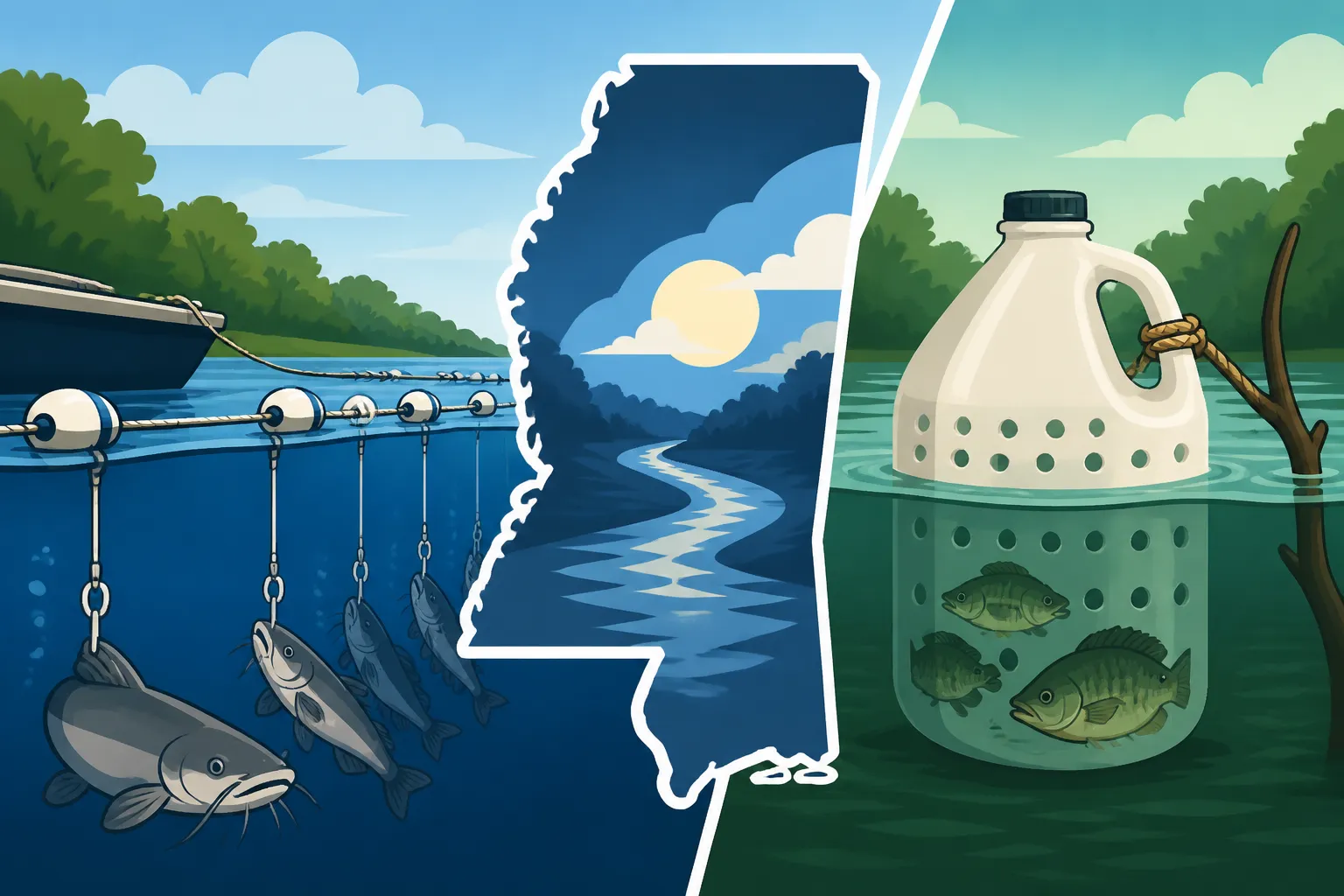
Imagine a main line, often heavy-duty nylon or braided rope, stretched horizontally across a river or lake, either near the surface, along the bottom, or suspended in the water column. From this main line, shorter individual lines, called "droppers," extend downwards, each terminating in a baited hook. This whole setup is what we call a trotline. Anglers typically anchor both ends of the main line to stationary objects like trees, stumps, or heavy weights, allowing it to remain in place.
The beauty of a trotline is its ability to cover a wider area and present multiple baits simultaneously, increasing your chances of a catch, especially when you're targeting those big, hungry catfish. But because these lines are left unattended, they require clear identification and adherence to specific construction rules to prevent them from becoming navigational hazards or ghost fishing gear. For those looking to get started, understanding the mechanics is key, and you can find various durable lines and swivel snaps on platforms like Amazon to build your setup.
General Regulations for Trotlines
Mississippi's wildlife agency, the Department of Wildlife, Fisheries, and Parks (MDWFP), has laid out clear guidelines for trotlines to ensure responsible use. First and foremost, you must have a valid Mississippi fishing license to set a trotline, just like any other method of fishing. You can learn more about securing your license by reading our guide on the Mississippi Fishing License Guide.
When it comes to the line itself, a trotline cannot exceed 100 hooks. That's a generous number, but it's crucial to count them to stay within limits. Each hook must be spaced at least two feet apart. This spacing is important not just for regulation but also to prevent your lines from tangling and to give each fish enough room without becoming overcrowded. The line must also be constructed of non-metallic material, meaning no wire or metal cable for the main line or droppers. Most anglers opt for durable nylon or polypropylene rope for this reason.
Furthermore, every trotline, regardless of whether it's submerged or at the surface, must be clearly identified. This means attaching a waterproof tag or marker that displays your name and address, or your MDWFP customer number. This is vital for identification, ensuring that if there's ever a question about ownership or if a line becomes detached, authorities can trace it back to you. Unmarked lines are subject to confiscation.
Specific Location Restrictions for Trotlines
While trotlines are permitted in many of Mississippi's public waters, there are significant restrictions on where you can deploy them. You absolutely cannot set a trotline in any state-owned or managed public fishing lake. These lakes are typically smaller, more intensively managed, and trotlines would pose an unacceptable risk to other anglers and boaters, as well as being too efficient for their managed fish populations. If you're wondering which lakes fall under this category, our overview of Mississippi State Fishing Lakes Overview can provide clarity.
Beyond state lakes, there are also considerations for navigation. Trotlines must not obstruct navigation in any navigable waterway. This means placing your lines in areas where they won't impede boat traffic, block access to boat ramps, or pose a hazard to swimmers or other recreational users. Common sense and courtesy go a long way here; if you think your line might be in someone's way, it probably is. Additionally, you cannot set a trotline within 100 yards of any dam or spillway. These areas often have strong currents and are popular spots for other types of fishing, making trotlines both dangerous and obstructive. Always refer to the broader Mississippi Fishing Regulations Explained for a complete picture.
Demystifying Jug Fishing Rules in Mississippi
Jug fishing, much like trotlining, is a passive fishing method beloved by catfish anglers across Mississippi. It offers a unique thrill as you watch your jugs bobbing, signaling a bite, and often involves a chase across the water to retrieve your catch. But just like trotlines, these seemingly simple setups have specific rules to ensure they're used responsibly.
The Basics of Jug Fishing
Jug fishing involves using individual, free-floating devices—the "jugs"—each with a baited hook attached. These jugs can be anything that floats and is buoyant enough to support a struggling fish: repurposed plastic soda bottles, PVC pipe sections, foam floats, or even purpose-built fishing jugs. A line, typically 10 to 20 feet long, is tied to the jug, and a baited hook is attached to the other end. Anglers usually deploy a number of these jugs, letting them drift with the current or wind, or sometimes anchoring them lightly.
The appeal of jug fishing lies in its simplicity and the wide area it can cover. It's particularly effective for targeting species like channel catfish, blue catfish, and flathead catfish in large bodies of water like the Mississippi River or our major reservoirs. When a fish bites, the jug will typically start moving erratically, bobbing, or even disappearing underwater, creating an exciting chase to retrieve it. For durable jugs and quality fishing line, checking online retailers like Amazon can be a good starting point.
Required Markings and Identification for Jugs
Just like trotlines, every single jug you deploy in Mississippi waters must be clearly marked for identification. This is not just a suggestion; it's a hard rule. Each jug must have a tag or permanent marking displaying your name and address, or your MDWFP customer number. Without proper identification, your jugs are considered illegal and can be confiscated by game wardens.
This identification rule serves several crucial purposes. First, it prevents "ghost fishing," where unmarked gear is lost and continues to catch fish unnecessarily, leading to waste. Second, it helps enforce regulations on the number of jugs allowed per angler. Third, it ensures accountability; if a jug causes a hazard or is found violating rules, authorities know who to contact. Imagine the frustration of another boater hitting an unmarked jug at dusk—it's a safety issue, plain and simple.
Limitations on Number of Jugs and Hook Spacing
Mississippi regulations are quite specific about the quantity of jugs an individual angler can use. An angler is permitted to use no more than 50 jugs at any one time. This limit is designed to prevent overfishing and to ensure that anglers can reasonably manage and retrieve all their gear. Trying to manage more than 50 jugs effectively would be a monumental task for most, leading to lost gear and neglected catches.
Additionally, each jug is allowed only one single hook. This means no multiple hooks on a single line attached to one jug. The idea is to keep the method straightforward and prevent excessive entanglement. The hook must also be a single hook, not a treble hook, for most species. While the depth of your line can vary, remember that the primary target for jug fishing is typically catfish, and you should tailor your bait and depth to them. Our guide on Catfish Fishing Techniques offers some great insights into targeting these fish.
Practical Considerations and Best Practices for Setlining
Beyond the black-and-white rules, there are practical considerations and best practices that any responsible angler employing trotlines or jug lines should adopt. These aren't just about avoiding fines; they're about being a good steward of our waterways and ensuring a safe, enjoyable experience for everyone.
Safety and Ethical Practices
When using trotlines or jug lines, safety should always be paramount. Always check your lines regularly—ideally at least once every 24 hours. This prevents caught fish from suffering unnecessarily and keeps your bait fresh. Neglected lines can become a navigational hazard, especially for smaller boats, kayaks, or swimmers, leading to potential accidents.
Ethical considerations also extend to the environment. Ensure all your lines and jugs are securely tied and properly weighted so they don't break free and become litter or "ghost fishing" gear. Lost lines can continue to catch and kill fish long after you've left the water, which is detrimental to fish populations. When you're done fishing for the day or season, retrieve all your gear completely. If you're unsure about specific boat safety rules, our guide on Mississippi Boat Fishing Regulations provides crucial information.
Gear Essentials and Where to Find Them
Having the right gear makes a world of difference when setlining. For trotlines, you'll need heavy-duty main line (nylon or braided rope, typically 100-300 lb test), strong swivels, dropper lines, and appropriate hooks (often large circle hooks or J-hooks, sized for catfish). Anchors can be anything from bricks to specialized trotline weights. For jug fishing, buoyant jugs are key—PVC, plastic bottles, or foam are common. You'll also need sturdy fishing line, swivels, and hooks for each jug.
Don't skimp on quality, especially for lines and swivels, as a big fish can easily snap weaker gear. Many sporting goods stores carry these items, but for a wider selection or specialty components, online retailers are often your best bet. A quick search on Amazon can reveal a vast array of trotline components, pre-made jug lines, and even entire jug fishing kits to get you started efficiently. For baits, consider what works best for Mississippi Catfish Regulations, such as cut bait, worms, or stink baits.
Potential Penalties for Non-Compliance
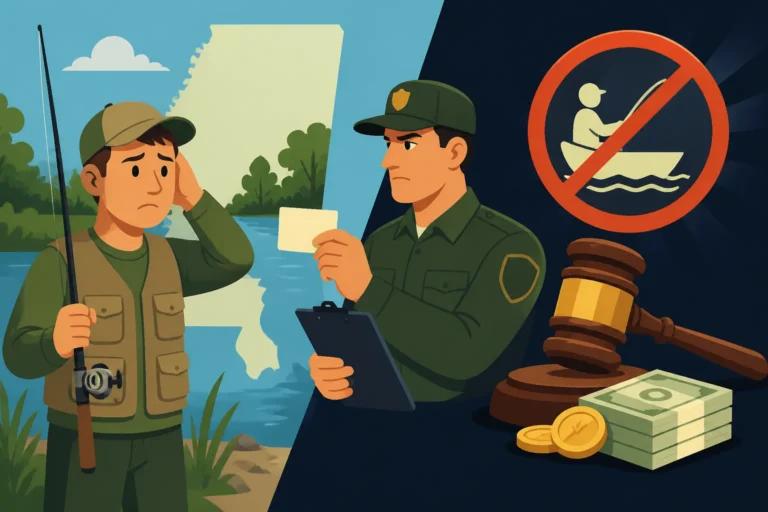
Ignoring Mississippi's trotline and jug fishing rules can lead to serious consequences. The most immediate penalty is typically the confiscation of your illegal gear. Any unmarked jugs or trotlines, lines with too many hooks, or lines set in restricted areas are subject to being seized by MDWFP enforcement officers.
Beyond confiscation, you could face fines, which can range from minor to significant depending on the severity and repeat nature of the offense. In some cases, repeated or egregious violations could even lead to the suspension of your fishing privileges. It's a reminder that these regulations are in place for good reasons, and enforcement is taken seriously. To get a better grasp of the financial implications of violations, you might want to review "Mississippi Fishing License Penalties and Fines." It's always better to take a few extra minutes to ensure compliance than to risk losing your gear and paying a hefty fine.
Comparing Trotlines and Jugs: Which is Right for You?
Both trotlines and jug lines are effective methods for passive fishing in Mississippi, particularly for species like catfish. However, they each have distinct characteristics that make them suitable for different situations and angler preferences. Understanding these differences can help you choose the best method for your next outing.
Advantages and Disadvantages of Each Method
Trotlines offer the advantage of being stationary once set. You know exactly where your line is, making it easy to check and re-bait. They're excellent for fishing specific structures, channels, or holes where you know fish congregate. The main disadvantage is their fixed nature; if the fish aren't in that exact spot, your effectiveness drops. Setting them up can also be more labor-intensive, requiring anchors and careful placement to avoid entanglement. They also pose a more constant hazard to navigation if not properly marked and placed.
Jug lines, conversely, offer mobility. They drift with the current or wind, covering a wider area and increasing the chances of encountering active fish. This mobility can also be a disadvantage, as you might have to chase them down, especially in windy conditions or strong currents. They are generally simpler to set up and retrieve individual units. The excitement of seeing a jug take off is also a huge draw for many anglers.
| Feature | Trotline Fishing | Jug Fishing |
|---|---|---|
| Mobility | Stationary, fixed to anchors. | Free-floating, drifts with current/wind. |
| Setup Complexity | More involved (anchoring, stretching line). | Simpler (individual jugs with line/hook). |
| Number of Hooks | Up to 100 hooks on one main line. | One hook per jug; maximum 50 jugs per angler. |
| Identification | One tag for the entire line (name/MDWFP ID). | Each individual jug must be tagged (name/MDWFP ID). |
| Hazard Potential | Higher risk if not properly marked/placed. | Less overall hazard, but can drift into bad spots. |
| Typical Target | Catfish, often larger ones in deep channels. | Catfish, often active ones roaming shallower water. |
| Retrieval | Can be strenuous to pull in a long line. | Individual jugs, involves chasing. |
Choosing the Right Method for Your Target Species
For targeting large, sedentary catfish that hold in specific deep holes, river bends, or around submerged timber, a trotline can be incredibly effective. Once you've located a prime spot, a well-placed trotline can consistently produce fish. If your goal is to set it and come back later for a potential trophy blue or flathead catfish, trotlining might be your preferred choice. You can find more targeted strategies in our "How to Set Up a Trotline for Catfish" guide.
If, however, you're fishing in a large reservoir or a wide river where fish might be scattered or actively moving, jug fishing allows you to cover more ground. It's fantastic for channel catfish and blues that are actively foraging. The dynamic nature of chasing jugs can also add an exciting element to your fishing trip. Jug fishing can be a great way to introduce beginners or kids to a more active, engaging form of passive fishing. If you're particularly interested in this, check out our "Jug Fishing and Trotline Setup" guide for more details.
Important Dates and Seasons for Setlining
While there isn't typically a closed season specifically for trotline or jug fishing in Mississippi, the effectiveness of these methods will certainly vary with the time of year. Catfish, the primary target, are generally more active and feed more aggressively during the warmer months, from late spring through fall. This is when water temperatures are conducive to their metabolism, and they're often on the prowl for food.
During the colder winter months, catfish tend to become more sluggish and move into deeper, more stable water. While you can still catch them, your success rate with trotlines and jugs might be lower, and you'll need to adapt your placement to deeper channels or thermal refuges. Always remember that regardless of the season, all general Mississippi Freshwater Fishing Rules apply to these methods, including daily creel and size limits for the species you catch. Always consult the most current MDWFP regulations before heading out.
Disclaimer
Please remember that fishing regulations can change. While we strive to provide the most accurate and up-to-date information, it is always your responsibility to consult the official Mississippi Department of Wildlife, Fisheries, and Parks (MDWFP) regulations before engaging in any fishing activity. This guide is for informational purposes only and should not be considered legal advice.